


Germany is widely regarded as a relatively safe country by international standards, but safety conditions vary significantly between cities and regions. For relocating expats and families, understanding which German cities combine low crime rates with predictable, family-friendly environments is essential for evaluating relocation risk. This briefing synthesizes recent police crime statistics and perception data to highlight the safest urban locations in Germany and to clarify how different city types compare from a security perspective.
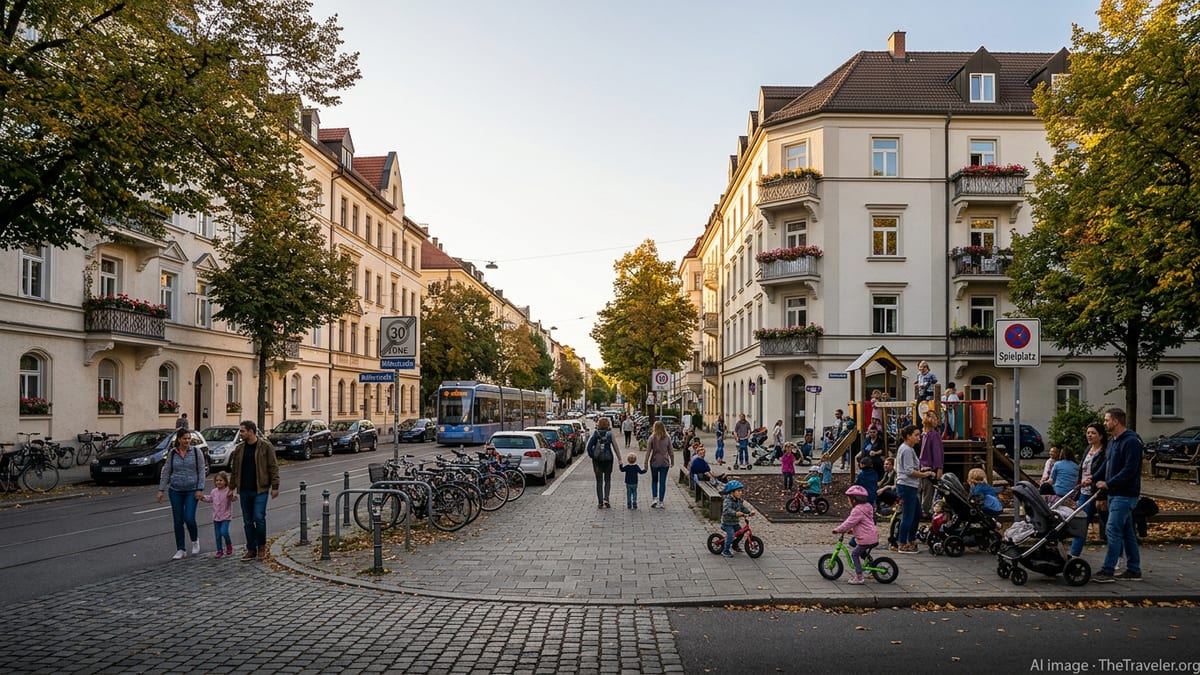
How Safety Is Measured in German Cities
Assessing the safest cities in Germany for expats and families requires looking at both recorded crime and residents’ perceptions. The primary objective benchmark is the annual Police Crime Statistics, which report offences per 100,000 inhabitants for each federal state and larger city. These official figures show that southern states such as Bavaria consistently have the lowest crime rates in Germany, while city states like Berlin and Bremen record the highest levels of reported crime per capita.
Within these national figures, large cities with more than 200,000 inhabitants are compared on total offence rates and clearance rates. Recent comparisons based on the 2023 and 2024 data place Munich at the top of the safety ranking for major cities, followed closely by Nuremberg and Augsburg. Smaller cities in Bavaria such as Erlangen and Fürth rank among the safest German cities with populations above 100,000 residents, confirming a strong structural advantage for the region in terms of internal security.
Perception-based indices, including crowd-sourced crime and safety indexes, broadly align with the police statistics. They typically rate Munich as one of the safest large cities in Europe, with low concern about violent crime and relatively modest fears of walking alone at night compared with other European urban centers. However, perception data can be influenced by who responds, neighbourhood composition, and recent media coverage, so it should be used as a secondary indicator alongside official crime records when evaluating relocation risk.
For expats and families, decision-grade security assessment should therefore combine: (1) recorded crime rates per 100,000 inhabitants, (2) the mix of crimes that are most common in each city, (3) police presence and prevention strategies, and (4) how safe residents actually feel in public spaces and on public transport. This combined perspective provides a more realistic sense of everyday safety than any single ranking alone.
National Safety Context: Germany’s Overall Risk Profile
At a national level, Germany’s overall crime rate places it among the safer large economies in Europe. Property crime such as theft and burglary accounts for the majority of recorded offences, while homicide and other serious violent crimes occur at relatively low absolute levels compared with many non-European countries. Nonetheless, the most recent federal crime reports show that violent crime has risen compared with the low levels recorded during the pandemic years and has reached its highest level in roughly 15 years, driven by increases in assault and certain youth-related offences.
Despite this uptick, the distribution of crime within Germany is highly uneven. The southern states, particularly Bavaria and Baden-Württemberg, report the lowest offence rates nationwide, while the city states and some western regions show higher values. Bavaria’s police authorities emphasize relatively high clearance rates combined with a long-term expansion of police staffing and technology, positioning the state as a benchmark for internal security in Germany. This structural difference largely explains why several of the safest German cities for families are clustered in the south.
For relocating families, it is also important to distinguish between overall offence counts and the types of crimes that are most likely to affect daily life. A city can record a relatively high overall crime rate if it is a major transport hub with more pickpocketing or economic offences, even while residential neighbourhoods remain predictably safe for families. Conversely, a city with fewer total offences can nonetheless feel less secure if serious violent crimes or visible antisocial behavior are concentrated in particular districts that expats are likely to encounter.
From a risk-management perspective, Germany offers a comparatively predictable safety environment. Most expat families will primarily be exposed to non-violent risks such as petty theft, bicycle theft, and occasional public disorder near nightlife areas or major stations. With appropriate neighbourhood selection and routine precautions, the residual risk of serious harm remains low in most German cities, especially in the locations highlighted below as among the safest options.
Safest Large Cities (200,000+ Residents)
For expats and families who prefer the services and connectivity of a major city, the safest choices are currently concentrated in Bavaria. Recent nationwide comparisons of cities with more than 200,000 inhabitants rank Munich in first place for safety, with Nuremberg second and Augsburg third. This reflects a combination of relatively low offence rates per 100,000 inhabitants, strong police visibility, and consistently high clearance rates for recorded crimes.
Munich, with a population of roughly 1.5 million, combines the scale of a major European metropolis with crime levels more typical of a mid-sized city. Official data show that its overall crime rate per capita is significantly lower than those of Berlin, Hamburg, or Cologne. Perception-based indices likewise rank Munich among the safest large cities in Europe, with respondents reporting low levels of fear of walking alone after dark in most central districts and relatively rare experiences of serious violent crime. For families who require international schools, corporate headquarters, and an international airport, Munich stands out as the safest high-density option in Germany.
Nuremberg and Augsburg, with populations in the 300,000 to 550,000 range, provide an intermediate scale between Munich and smaller regional centers. Both cities occupy top positions in recent Bavarian and national safety rankings for large cities, with offence rates that are well below the German average for urban centers of similar size. These cities benefit from Bavaria’s broader security strategy while offering a more compact urban environment, which can translate into shorter commutes and clearer separation between nightlife zones and primarily residential districts.
Outside Bavaria, several other large cities provide comparatively favorable safety conditions, though they may not match the Bavarian benchmarks. Stuttgart, for example, is frequently described in municipal surveys as one of the safest big cities in Germany. City-conducted safety surveys in 2023 combined with police data show that a large majority of residents feel safe in public spaces during the day and that reported crimes remain concentrated in a limited number of hot spots such as the central station area. For risk-averse families who need a large-city labor market but cannot or do not wish to relocate to Bavaria, Stuttgart merits consideration as a relatively secure alternative.
Safest Medium and Smaller Cities for Families
Many expat families prioritize predictable, low-crime environments over big-city amenities. In Germany, this typically means focusing on medium-sized cities with populations between 100,000 and 300,000 residents, where crime rates tend to be lower and urban stress is reduced. Within this category, Bavarian cities such as Erlangen and Fürth repeatedly achieve leading positions in national safety rankings for municipalities above 100,000 inhabitants.
These medium-sized Bavarian cities feature significantly lower offence rates than the national urban average, combined with relatively high clearance rates. While comprehensive English-language breakdowns of crime types are limited, available data suggest that the bulk of recorded offences are non-violent, including theft, minor property damage, and traffic-related violations. For families, these profiles translate into everyday conditions where serious safety incidents are rare and where children can generally move independently within residential districts, subject to the normal cautions expected in any modern city.
Similar patterns can be observed in selected mid-sized cities in Baden-Württemberg and other southern regions. Urban centers oriented around universities, technology clusters, or advanced manufacturing often record lower levels of street crime and public disorder than logistics hubs or port cities. This does not mean that crime is absent, but rather that risk is more limited to opportunistic property offences and isolated incidents that rarely affect daily routines of resident families.
For expats who do not require a major international airport or large financial district in their immediate vicinity, these medium-sized cities often offer the best balance between safety, manageable size, and essential services. From a relocation-planning point of view, they can be particularly attractive for assignee families with young children, where neighborhood-level security and predictable school runs weigh more heavily than extensive nightlife or high-density urban culture.
Cities With Higher Risk Profiles and Mitigation Considerations
While Germany is broadly safe, some major cities show higher recorded crime rates and more visible public disorder, which expats and families should factor into their decision-making. Berlin, for example, consistently records the highest total number of criminal offences among German cities due to its size and role as the national capital. Its per capita offence rate is also significantly above the national average, with elevated levels of theft, drug-related incidents, and certain forms of violent crime compared with southern cities.
Other large cities such as Cologne, Hamburg, and Frankfurt also show higher crime rates than the Bavarian benchmarks, influenced by their roles as transport hubs, nightlife centers, or financial districts. Public spaces around major railway stations and entertainment quarters in these cities can experience concentrated petty crime, aggressive begging, and occasional violent incidents, particularly at night and on weekends. Families relocating to these cities need to take a more granular view at district level, differentiating between central hot spots and quieter residential areas that may still offer acceptable safety conditions.
It is important to recognize that high recorded crime does not necessarily mean that an entire city is unsafe for everyday family life. German cities usually have well-defined neighbourhoods where crime is relatively rare and where schools, parks, and local services are considered secure. However, living in cities with higher overall crime rates requires more active risk management, including careful neighbourhood selection, attention to school catchment areas, and clearer household rules regarding night-time travel, especially for teenagers.
Employers and relocation providers should ensure that assignees heading to cities with above-average crime rates receive realistic, neighborhood-specific safety briefings rather than generalized reassurances. This includes explaining which areas to avoid at night, how to use public transport safely, and how to protect against common risks such as pickpocketing, bicycle theft, and vehicle break-ins. When these mitigation measures are in place, even higher-risk German cities can still be manageable relocation destinations for families with appropriate risk tolerance.
Key Safety Indicators for Comparing German Cities
When comparing potential German destinations, expats and mobility managers should use a consistent set of indicators rather than relying on headline labels such as “safest” or “most dangerous.” Official statistics and perception data point to several practical metrics that can be used to frame a structured comparison between cities or neighbourhoods.
First, the overall offence rate per 100,000 inhabitants provides a baseline sense of how common reported crime is in a given city. Cities in Bavaria and some neighbouring regions typically show values well below the national urban average, while city states like Berlin and Bremen sit at the higher end of the spectrum. Second, the composition of offences matters: a city where most crimes relate to theft and fraud presents a very different risk profile from one with high levels of violent assault or robbery per capita, even if total offence counts are similar.
Third, clearance rates and police resourcing levels are key indicators of institutional capacity to manage crime. Bavaria’s long-term increase in police staffing and use of technology is often cited as a factor behind its relatively low crime rates and high clearance ratios. Fourth, perception-based safety scores, including resident surveys on fear of crime and subjective feelings of safety in public spaces, add an important qualitative dimension, especially for evaluating whether parents and children are likely to feel comfortable walking or cycling in their neighbourhood.
Finally, family-focused expats should evaluate micro-level factors that do not appear in national rankings, such as lighting and visibility around schools and playgrounds, the presence of youth outreach programs, and the degree of social control in local residential streets. A city may rank well nationally yet still contain pockets that feel unsafe after dark, while a city with a challenging overall profile can still host exceptionally calm and secure residential districts suitable for risk-averse families.
The Takeaway
For expats and families evaluating relocation to Germany, the safest overall choices are clustered in the south, especially in Bavaria. Munich stands out as the safest major city, offering a large metropolitan labor market with comparatively low crime and strong policing. Nuremberg and Augsburg follow closely as secure large-city options, while medium-sized Bavarian cities such as Erlangen and Fürth provide particularly low-crime environments suited to families that prioritize day-to-day predictability over big-city scale.
Germany’s overall safety profile remains comparatively strong by international standards, but recent increases in violent crime and persistent differences between regions mean that destination choice still matters. City states and some large western cities record higher offence rates and more visible public disorder, requiring more careful neighbourhood selection and everyday risk management, especially around major transit hubs and nightlife areas.
Decision-grade relocation planning should rely on a structured comparison of offence rates, crime composition, clearance rates, and residents’ feelings of safety, supplemented by on-the-ground neighbourhood assessments. When these factors are considered together, expat families can identify German cities and districts that align with their risk tolerance and lifestyle needs, ensuring that safety is an asset rather than an uncertainty in their move.
FAQ
Q1. Which large German city is generally considered the safest for families?
Munich is widely regarded as the safest large German city, combining comparatively low crime rates, strong police presence, and favorable perception-based safety scores for a metropolis of its size.
Q2. Are smaller German cities significantly safer than big cities?
On average, medium-sized cities between 100,000 and 300,000 residents in southern Germany record lower offence rates than the largest metropolitan areas, which can translate into more predictable day-to-day safety for families.
Q3. Is Germany experiencing a long-term increase in violent crime?
Recent data show that violent crime has risen compared with the low levels during the pandemic years and is at a multi-year high, but overall levels remain moderate by international standards.
Q4. Are southern states like Bavaria really safer than the rest of Germany?
Yes, official statistics consistently place Bavaria among the states with the lowest crime rates and high clearance rates, and several of Germany’s safest cities for their size are located there.
Q5. How safe is Berlin for expat families compared with Bavarian cities?
Berlin records higher crime rates and more visible public disorder than Bavarian cities such as Munich or Nuremberg, so expat families in Berlin need to be more selective about neighbourhoods and take stronger everyday precautions.
Q6. What types of crime are most relevant for expat families in German cities?
Most expat families are primarily exposed to non-violent offences such as pickpocketing, bicycle theft, and occasional property damage, while serious violent incidents remain relatively rare in most residential districts.
Q7. How reliable are crowd-sourced safety rankings for German cities?
Crowd-sourced rankings provide useful insight into how residents feel about safety, but they can be influenced by respondent mix and media coverage, so they should be used alongside official crime statistics rather than on their own.
Q8. Do German cities have clear “safe” and “unsafe” neighbourhoods?
Most German cities have well-defined districts where crime is concentrated, often around central stations and nightlife areas, as well as residential neighbourhoods with comparatively low crime levels that can be suitable for families.
Q9. Are public transport systems in German cities generally safe for children and teenagers?
Public transport in German cities is generally considered safe during the day, though families are usually advised to exercise more caution late at night and to brief older children on how to respond to harassment or disorderly behavior.
Q10. What should employers consider when assigning families to higher-risk German cities?
Employers should provide city- and neighbourhood-specific safety briefings, highlight higher-risk areas near stations or nightlife zones, and support families in choosing residential districts that align with their safety expectations.