


More news on this day
Recovery work is steadily advancing along the Welland Canal corridor after a recent Canadian National (CN) Rail freight train derailment, as crews continue clearing wreckage, rebuilding track infrastructure and coordinating repairs to an affected lift bridge that has constrained vessel movements.
Get the latest news straight to your inbox!
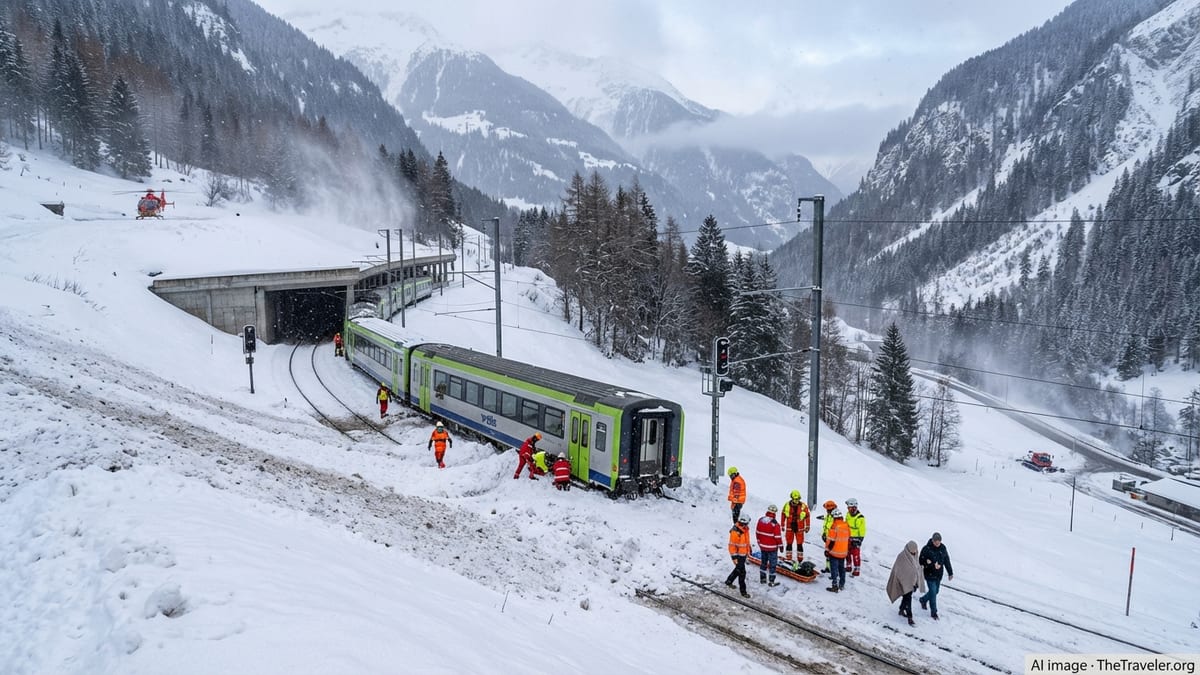
Track clearance and equipment recovery near the canal
Publicly available information indicates that the derailment involved more than a dozen CN freight cars leaving the tracks near the Welland Canal, prompting a large-scale cleanup operation and a closure of a stretch of the Welland Canals Parkway. Early reports from regional coverage and rail community updates described cars strewn along the right-of-way and adjacent rail bridge infrastructure impacted by the incident.
Recovery teams have focused first on stabilizing and removing derailed equipment. Rail-focused reports describe a mix of techniques, including the use of heavy cranes to lift damaged cars, the cutting up of wrecked rolling stock that cannot be safely re-railed, and the loading of scrap onto flatbed trucks or work trains for removal. Where cars remained upright or only partially off the rails, rerailing equipment has been used to guide wheelsets back onto the track, a standard practice in North American freight recovery work.
Once the rolling stock is cleared, maintenance crews move in to inspect the rail bed, ties and ballast. In similar recent derailments reported in Canada and abroad, workers have typically had to replace tens to hundreds of metres of track, swap out damaged concrete or wooden sleepers, and restore the crushed ballast profile to its original geometry. Observers of the Welland-area site indicate that a comparable level of reconstruction is underway as CN works to restore the corridor for both freight trains and passenger services that share the line.
Travel impacts have extended beyond rail passengers. The closure of part of the Welland Canals Parkway has forced local detours for drivers and cyclists, and residents following municipal updates have been told to expect intermittent lane restrictions as heavy equipment moves in and out of the work zone during the most intensive stages of the recovery.
Bridge and canal operations affected by the derailment
The derailment’s proximity to a key rail bridge across the Welland Canal has had knock-on effects for marine traffic. According to community and regional transportation reports, the west rail bridge over the waterway has remained in the lowered and out-of-service position while inspections and repairs proceed. As a result, vessel movements through the nearby twin flight locks have been funneled through a single operational lock, temporarily reducing capacity through this busy section of the canal system.
For ship operators, this kind of infrastructure disruption can translate into schedule adjustments or short delays, particularly at the start of the navigation season when traffic typically ramps up. Industry commentary notes that canal authorities generally prioritize safe clearance beneath any affected structures, meaning lifts may be suspended until bridge components, signalling systems and power supplies have been fully checked following an incident involving rail equipment on or near the span.
Rail infrastructure specialists point out that a derailment on or near a movable bridge requires additional engineering checks compared with an event on an open stretch of track. Technicians must verify not only the condition of the rails and ties but also the integrity of the bridge deck, counterweights, lifting machinery and alignment systems. Any distortion to the bridge structure, no matter how minor, must be addressed before regular lift cycles and full train speeds can resume.
In the Welland corridor, those assessments appear to be progressing in parallel with ground-level cleanup. Public information suggests that marine traffic has continued under modified procedures, with operators working around the temporary bottleneck while CN and infrastructure partners concentrate on bringing the affected bridge track back to service.
Environmental safeguards and site remediation
Early reports on the Welland-area incident and recent CN derailments in western Canada emphasize how closely environmental safeguards are now integrated into response plans. In this case, rail community updates and regional media coverage indicate that the train was carrying non-dangerous goods, easing immediate concerns about chemical contamination in the canal or surrounding neighbourhoods.
Even where cargo does not fall under hazardous classifications, standard practice in Canada, described in Transportation Safety Board reports on other CN derailments, involves rapid testing of nearby waterways and soil whenever equipment leaves the track. Response teams typically deploy absorbent booms around any sheen on the water, collect samples and monitor for hydrocarbon traces from locomotive fuel or lubricants released during recovery.
Longer term, remediation can include removal and replacement of contaminated ballast and topsoil, careful handling of any debris that has entered the water, and restoration of shoreline vegetation disturbed by heavy machinery. Public documents from earlier CN events in British Columbia and the Prairies show that these efforts can extend for weeks or months after train service resumes, as environmental specialists continue monitoring and reporting on the state of local ecosystems.
In the Welland corridor, publicly available updates so far suggest that environmental impacts are being managed within this familiar framework, with authorities and company specialists working to keep the canal open to commercial navigation while also safeguarding water quality and adjacent parkland.
Rail and passenger service disruptions for travelers
The derailment has had an immediate effect on both freight and passenger operations that depend on the CN-owned corridor. Regional rail observers and passenger advocacy forums report that intercity services using the Niagara-bound route have faced cancellations or bus substitutions around the affected segment, mirroring previous disruptions seen during other freight incidents on this line.
For travelers, this has meant longer journeys and changes in connections as operators route passengers around the damaged stretch of track. Rail users sharing experiences online describe temporary replacement buses bridging the gap between stations on either side of the derailment zone, with revised timetables issued on short notice while crews focus on reopening at least one track.
Freight customers moving bulk commodities and manufactured goods through southern Ontario have likewise encountered delays. Industry commentary notes that CN may reroute some traffic over alternative corridors where capacity allows, but bottlenecks are difficult to avoid when an incident occurs on a mainline that also serves a strategic waterway crossing.
Travel planners indicate that passengers heading toward Niagara and other destinations along the affected route are being encouraged, via service alerts, to check schedules frequently and to allow extra time for connections. Experience from previous derailments on the same network suggests that once a single track is restored and temporary speed restrictions are in place, operators can gradually rebuild a near-normal timetable, though residual delays may persist until full double-track capacity is back in use.
Next steps for repairs and investigation
As heavy recovery work winds down, attention is shifting toward permanent repairs and the formal investigation into what caused the cars to leave the rails near the canal. Publicly available information confirms that the Transportation Safety Board of Canada has deployed personnel to examine the site, collect data from track and rolling stock components, and review operating conditions at the time of the incident.
Investigations into previous CN derailments documented in Transportation Safety Board reports typically focus on factors such as rail wear, track geometry, wheel and axle condition, train handling and weather-related issues like washouts or mudslides. Findings from those cases often result in recommendations aimed at tightening inspection regimes, improving detection technology and refining operating practices on key freight and passenger corridors.
In the short term, CN maintenance teams in the Welland area are expected to complete rail replacement, tamping and alignment work, before conducting test runs with light locomotives and then full freight trains. Travel and freight observers note that speed restrictions are usually imposed over newly rebuilt sections until engineers are satisfied that the track is performing as designed under heavy loads.
For travelers and shipping customers who rely on this multi-modal corridor, the coming days and weeks will determine how quickly normal patterns can resume. While the derailment has highlighted the vulnerability of shared rail and marine infrastructure, it has also drawn attention to the coordinated recovery capabilities that have become standard in Canada’s rail sector, where rapid reconstruction of damaged track and careful management of navigation routes are essential to keeping people and goods moving.