


For most visitors, Plaça de Catalunya is the true front door to Barcelona. It is where airport buses arrive, metro and commuter trains converge, grand boulevards begin, and first impressions are formed. It is also, unfortunately, where countless travelers get overcharged, disoriented, or pickpocketed before they have even checked in to their hotel. Understanding how this square actually works on the ground can save you money, stress and, in some cases, your passport.
Get the latest updates straight to your inbox!
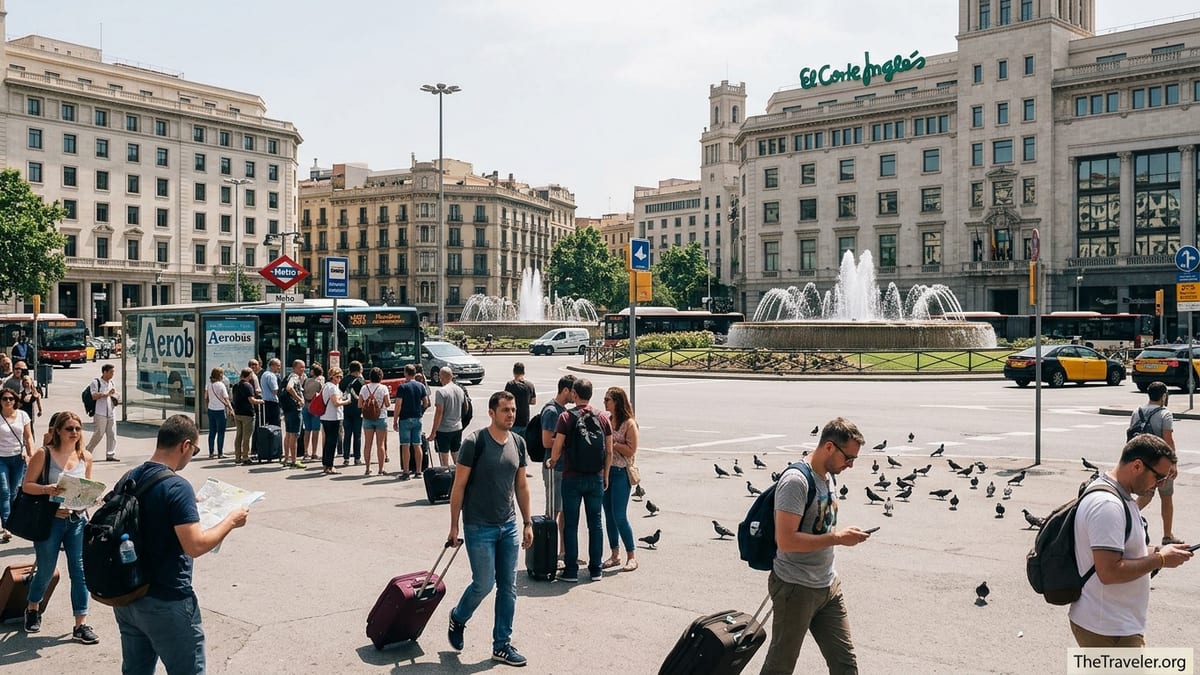
Underestimating How Big and Confusing the Square Really Is
On a map, Plaça de Catalunya looks like a simple circle. On foot, especially after a red-eye flight, it is an overwhelming knot of traffic lanes, bus stops, metro entrances and people. Many travelers assume that “meet at Plaça de Catalunya” is specific enough, then spend 45 minutes searching for each other because they are on opposite corners near different landmarks. One person might be waiting by the giant El Corte Inglés department store, while the other stands across the square near the Hard Rock Cafe and cannot even see them through the traffic and fountains.
The square is ringed by multiple bus bays for the Aerobus, local TMB buses, regional coaches and tour buses. Metro entrances serve several lines and operators: the L1 and L3 metro, FGC suburban trains and Rodalies commuter services all have access points labeled “Catalunya.” It is easy to descend into the wrong system and end up on a train to Sabadell instead of the green line to Barceloneta. First-time visitors often tap into the first entrance they see, then discover it is the FGC hall they did not need.
A practical way to avoid this is to mentally divide the square into clear reference points and use those in your plans. For example, agree on “outside the main door of El Corte Inglés facing the fountains,” or “next to the large black and white ‘Catalunya’ sign by the Aerobus stop.” When you exit any metro or train, take a moment to look for these big, fixed landmarks rather than walking off immediately. This simple step prevents the classic scene of couples or groups wandering in circles with luggage.
If you are connecting between airport transport and the metro, factor in a few extra minutes to cross the traffic lanes safely and find the correct entrance. Jaywalking across Gran Via or La Rambla in frustration is common, and also one of the fastest ways to start your Barcelona trip with a near miss from a taxi or motorbike.
Ignoring Transport Options and Overpaying for the Wrong Ticket
Plaça de Catalunya is the city’s main transport hub, yet many travelers arrive with no plan beyond “we will just figure out the metro when we get there.” That lack of preparation usually means buying the first expensive ticket a machine suggests or sticking with single rides when more flexible passes would be far better value. Around the square you can connect to the Aerobus to the airport, the city’s L1 and L3 metro lines, Rodalies commuter trains, FGC lines to Tibidabo and northern suburbs, and dozens of city buses, all integrated under the ATM fare system.
A common mistake is paying separately for an Aerobus return ticket and then piling single metro tickets on top. As of 2026, a one-way Aerobus ticket is roughly the cost of three or four standard metro journeys. For a couple staying in Eixample and riding the metro daily, it is usually more economical to consider integrated passes rather than paying for each segment as if it were an isolated trip. The Hola Barcelona travel card, T-usual and T-casual all cover most city journeys, though they differ in whether they include the airport metro, how many days they last and whether they are individual or shareable.
Another trap is misunderstanding the new T-mobilitat system. Many of the machines around Catalunya station now default to loading passes onto a contactless card rather than issuing traditional magnetic cardboard tickets. Visitors often panic when they see references to personalized cards or ID numbers. In reality, you can still buy a simple, anonymous cardboard T-mobilitat support at metro machines for a small fee and load products like T-casual or T-familiar onto it, then use it immediately at any turnstile. The more complex personalized plastic cards and mobile app options are largely aimed at residents, not short-stay tourists.
The best approach is to decide roughly how much you will use public transport before you reach the square. If you plan to ride only a couple of times a day for a few days, a T-casual or T-familiar on a cardboard T-mobilitat card, shared between partners or family, can be cost effective. If you expect to zigzag across town several times a day and use the airport metro, then a Hola Barcelona or similar unlimited pass may make sense, even if its headline price looks higher. What matters is avoiding the default pattern of buying single tickets out of confusion every time you see a machine in Plaça de Catalunya.
Not Using the Underground Tourist Information Centre
One of the best resources in Barcelona is hiding in plain sight directly under Plaça de Catalunya. The main official Tourist Information Centre sits in the underground level of the square, with its entrance on the interior side near El Corte Inglés. Inside, you will find multilingual staff, detailed city maps, information on current exhibitions and festivals, and the ability to book official tours and transport products at standard prices. Despite this, many travelers walk straight past, relying entirely on random blogs or social media posts they saw months earlier.
A typical scenario: a family emerges from the Aerobus, opens a ride-hailing app that is not even widely used in Spain, and spends half an hour struggling to connect with a driver in chaotic traffic. Right behind them, a clearly signed staircase leads down to the tourist office, where staff could have directed them to an easy metro route to Sagrada Família or a licensed taxi rank at the edge of the square. Instead of up-to-date information on strikes, route changes or museum closures, they move through the city based on outdated screenshots.
The information centre is particularly useful for navigating new developments like the expansion of T-mobilitat, temporary metro closures for maintenance, or special shuttle buses for major events. Staff can print route plans, explain which passes make sense for your stay, and warn you about active scams around the square. Because it is an official office run in cooperation with local authorities, prices for transport cards, museum passes and standard tours match or closely track the official tariffs, without the mark-ups that some hotel desks or private kiosks around the square add.
Before you commit to any big-ticket purchase in or around Plaça de Catalunya, from hop-on hop-off bus passes to stadium tours, walk down into the tourist information centre and ask. Spending ten minutes there can easily save you the cost of a decent dinner, especially for families or groups comparing several options.
Falling for Common Scams and Pickpocket Tactics
Plaça de Catalunya sits between La Rambla and Passeig de Gràcia, two of the busiest visitor corridors in Barcelona. That makes it a magnet for pickpockets and small-time scammers who rely on crowds and distraction. New arrivals, dazed from flights and focused on finding their hotel, are exactly the targets they look for. While violent crime is rare, petty theft is common enough that local police and city authorities repeatedly highlight this square and the surrounding streets as risk areas, especially in summer and on weekend evenings.
One widespread tactic involves group distraction. A stranger might “accidentally” spill something on your clothes near an Aerobus stop or metro entrance, then fuss over cleaning it while an accomplice lifts your backpack or unzips your suitcase. Another popular move is the fake petition scam. Someone approaches with a clipboard asking you to sign a petition for a worthy cause, steering you to a quieter edge of the square while they hold the board close to your body. As you sign, a partner eases your phone or wallet out of your pocket. By the time you realize, the clipboard carrier has melted into the crowd.
There are also informal ticket resellers and unofficial guides who work the fringes of the square. They may offer “discount” Hop On Hop Off tickets, football match tickets or flamenco shows that are either fake or significantly marked up. Because Plaça de Catalunya is an official stop for several sightseeing bus companies, it is easy for scammers to blend in with the legitimate queues and signage. Travelers sometimes buy what they think is a full-day bus ticket, only to discover it is a used paper pass or a single-route ticket with heavy restrictions.
The most effective protection is both physical and behavioral. Keep passports, cash and cards in a money belt or interior pocket, with a decoy wallet in a more accessible place if you like. Zip bags fully and wear them in front of your body when crossing the square or standing at bus stops. If anyone touches you unexpectedly, even in a friendly way, assume it could be a distraction and check your belongings immediately. When you need to consult your phone for directions, step inside a shop doorway or stand with your back to a wall instead of in the flow of pedestrians. None of this should make you paranoid, but in Plaça de Catalunya it should be as automatic as looking both ways before crossing the street.
Eating and Drinking Poorly Around the Square
After a long trip, the cafés and terraces that ring Plaça de Catalunya look irresistible. Many visitors collapse into the first open seat they see and order coffee, drinks or a meal without looking at the menu. This is how you end up paying far more than necessary for mediocre food. Rents on the square are some of the highest in the city, and a portion of that cost is passed directly to anyone who sits down with luggage. It is not unusual to see basic sandwiches, bottled water or tourist cocktails priced noticeably higher here than just a few blocks away in the Eixample grid or the Gothic Quarter backstreets.
An example: a traveler might pay a premium for a lukewarm paella and a drink at a terrace facing the fountains simply because they are exhausted and afraid to stray far from the Aerobus stop. Ten minutes’ walk up Rambla de Catalunya or along Carrer de Pelai, however, leads to neighborhood bars and bakeries where locals buy coffee and snacks at everyday prices. The difference over a couple of days can easily add up to the cost of a museum ticket or a decent sit-down dinner in a better setting.
Another mistake is assuming that chains and familiar international brands around the square offer the safest or best value option. While it may feel comforting to duck into a global coffee shop near the metro entrance, you will often pay more than in independent cafés a short stroll away. Better tactics include using Plaça de Catalunya as a navigation anchor but planning to eat slightly off the square. For breakfast, head a few streets into Eixample to find local bakeries with fresh croissants and coffee at local prices. For lunch, follow Carrer Tallers or the small streets towards Universitat for menus del dia aimed at residents rather than day-trippers.
If you must eat directly on the square, at least check the menu carefully before sitting. Ensure prices are clearly marked and be wary of vague “tourist menus” that do not spell out what is included. Ask whether bread, sauces or terrace surcharges are added automatically. Staff at honest places will answer directly, while more problematic spots may dodge the question, which is your cue to move on.
Dragging Luggage Everywhere Instead of Using Nearby Services
Because so many airport connections terminate at Plaça de Catalunya, the square is often filled with people hauling large suitcases among commuters and cyclists. One of the biggest practical mistakes is trying to explore the city center while still loaded down with luggage. Visitors arriving around check-in time often decide to “just walk down La Rambla” with their bags until their room is ready. In reality, this makes them slower, more conspicuous targets for theft, and it is physically exhausting in Barcelona’s heat.
There are several luggage storage options within a short walk of the square, from staffed left-luggage counters to smart-locker facilities. While you will pay a modest daily fee, dropping your main bags for even a few hours can transform your first day. Instead of weaving between traffic islands and fountains with roller bags, you can walk freely into the Gothic Quarter, explore the shops on Portal de l’Angel, or take the metro to your first museum without constantly watching over your belongings.
Another often overlooked issue is accessibility. The transport complex under Plaça de Catalunya involves stairs, escalators and some long corridors that can be challenging if you are carrying oversized luggage or pushing a stroller. By lightening your load at a luggage service near the square, you reduce the risk of accidents or strained backs on steep metro staircases, especially if you are transferring between systems like the metro and the Rodalies commuter rail.
If you are staying near the square and arriving by train, consider walking first to your hotel with just hand luggage, then returning to collect larger suitcases via taxi or short metro ride. This is a simple way to avoid maneuvering heavy bags across busy intersections like Ronda de Sant Pere or Passeig de Gràcia at peak times when traffic signals change quickly and crossings are crowded.
Misjudging Safety, Especially Late at Night
By day, Plaça de Catalunya feels like a grand European square: families at the fountains, office workers cutting across to lunch, tour groups gathering by statues. At night, particularly after midnight, the atmosphere changes. Many visitors mistake the bright lights and central location for a guarantee of safety and lower their guard, sitting on benches with phones in hand or wandering between the square and the lower end of La Rambla with valuables exposed.
While there is a regular police presence and CCTV coverage, the combination of nightlife foot traffic, alcohol and tourists carrying cash creates opportunities for opportunistic theft. Solo travelers, especially, sometimes treat the square as a late-night hangout spot, lingering with luggage after checking out of accommodation or waiting for early transport. Being visibly in transit with suitcases at 3 a.m. is an invitation to unwanted attention, even if most passers-by are harmless.
Another nuance is that the streets feeding into Plaça de Catalunya vary in character once you are a block or two away. The elegant upper Rambla de Catalunya and Passeig de Gràcia feel very different from some of the narrow lanes leading into the lower Raval or the more boisterous stretches of La Rambla. Visitors who do not know the city often drift without a plan and end up in areas that feel less comfortable than they expected, particularly if they are alone, tired or slightly lost after a night out.
The safest practice is to treat Plaça de Catalunya as a transit node at night rather than a destination in itself. If you are catching an early Aerobus or late Rodalies train, plan to arrive with enough time but not so early that you are waiting around for ages. Keep valuables packed away, stay in well-lit areas, and if something feels off, step into a 24-hour café or hotel lobby until your transport arrives. Taxis lined up on the square are usually a safer late-night option than wandering on foot if you are unfamiliar with the side streets.
The Takeaway
Plaça de Catalunya is more than just another tourist sight. It is the central knot where Barcelona’s transport lines, shopping streets and historic districts meet. That makes it enormously convenient, but it also concentrates many of the challenges that can sour a city break: confusion over tickets, overpriced food, crowded pavements and skilled pickpockets.
By recognizing the square’s complexity, planning your transport before you arrive, making strategic use of the underground tourist office, and staying alert to common scams, you can turn Plaça de Catalunya into a helpful ally rather than a stressful obstacle. Step a few streets beyond the most obvious terraces, lighten your load by using luggage storage, and treat the square as a functional hub rather than the main attraction. Do that, and you will pass through Plaça de Catalunya quickly, safely and with more of your budget and energy intact for the Barcelona experiences that really matter.
FAQ
Q1. Is Plaça de Catalunya safe for solo travelers?
It is generally safe during the day, with a steady police presence, but pickpocketing is common in crowds. At night, especially very late, it is wiser to treat the square as a transit hub rather than a place to linger. Keep valuables out of sight and use official taxis or well-lit metro entrances if you feel uncomfortable.
Q2. What is the best way to get from Barcelona Airport to Plaça de Catalunya?
Most visitors use the dedicated airport bus that terminates at the square or the metro and commuter rail combination that connects via the city’s integrated ATM network. The right choice depends on where your accommodation is and whether you plan to buy an unlimited travel pass or a standard multi-trip card.
Q3. Which public transport ticket should I buy at Plaça de Catalunya?
If you will ride several times a day and include the airport metro, an unlimited tourist card can be convenient. For lighter use, a T-mobilitat cardboard card loaded with a T-casual or T-familiar, which cover multiple trips within the central zone, often works out cheaper. Staff in the tourist information centre or at metro ticket machines can help you compare options.
Q4. Where exactly is the main tourist information office in Plaça de Catalunya?
The main office is underground, beneath the central part of the square, with entrances on the interior side close to the large department store buildings. Look for signs pointing to the Tourist Information Centre as you approach the middle of the square, then follow the stairs or escalators down.
Q5. How can I avoid pickpockets in and around the square?
Use bags that fully zip, wear them in front of your body in crowded areas, and avoid keeping phones or wallets in back pockets. Be cautious if someone bumps into you, offers to clean a stain from your clothes, or approaches with clipboards and petitions. When checking maps on your phone, stand with your back to a wall or in a shop doorway.
Q6. Are the cafés and restaurants on Plaça de Catalunya worth the price?
Some are decent, but prices are often higher than in nearby neighborhoods because of the prime location. For better value and usually better food, walk a few minutes into Eixample, the Gothic Quarter or towards Universitat, where you will find more local-oriented cafés, bakeries and lunch spots.
Q7. What is the easiest metro entrance to use at Plaça de Catalunya?
The easiest entrance depends on where you are heading. Entrances on the Portal de l’Angel side are convenient for the L1 line, while those closer to La Rambla work well for L3. Always check the colored line symbols at each entrance before going down, as some lead to commuter or FGC trains rather than the metro line you want.
Q8. Can I store my luggage near Plaça de Catalunya?
Yes. There are several luggage storage services and locker facilities within a short walk of the square, along with some hotels that offer paid storage even if you are not staying there. Using one of these is far more comfortable than dragging suitcases through the busy streets and narrow alleys of the old town.
Q9. Is it a good idea to stay in a hotel directly on Plaça de Catalunya?
Staying on or just off the square is very convenient for transport and first-time navigation, but it can be noisy due to traffic, events and late-night activity. Many visitors prefer accommodation a few blocks into Eixample or the Gothic Quarter, which keeps them close to the hub while offering a quieter atmosphere.
Q10. How long should I plan to spend in Plaça de Catalunya itself?
You do not need long to see the square; most people experience it while passing through on the way to other sights. Allow extra time if you are changing between airport buses, metro lines and trains, or if you want to visit the underground tourist information centre, but think of Plaça de Catalunya primarily as a gateway rather than a destination.