


Arriving in Ganja after a few days in fast-paced Baku, I expected Azerbaijan’s second-largest city to feel like a smaller, rougher version of the capital. Instead, Ganja surprised me in the most disarming way: by being deeply, quietly relaxed. From the shade of century-old trees in Khan’s Garden to slow walks along Javad Khan Street at dusk, the city’s atmosphere felt less like an industrial hub and more like a university town that had collectively decided to take a deep breath.
Get the latest updates straight to your inbox!
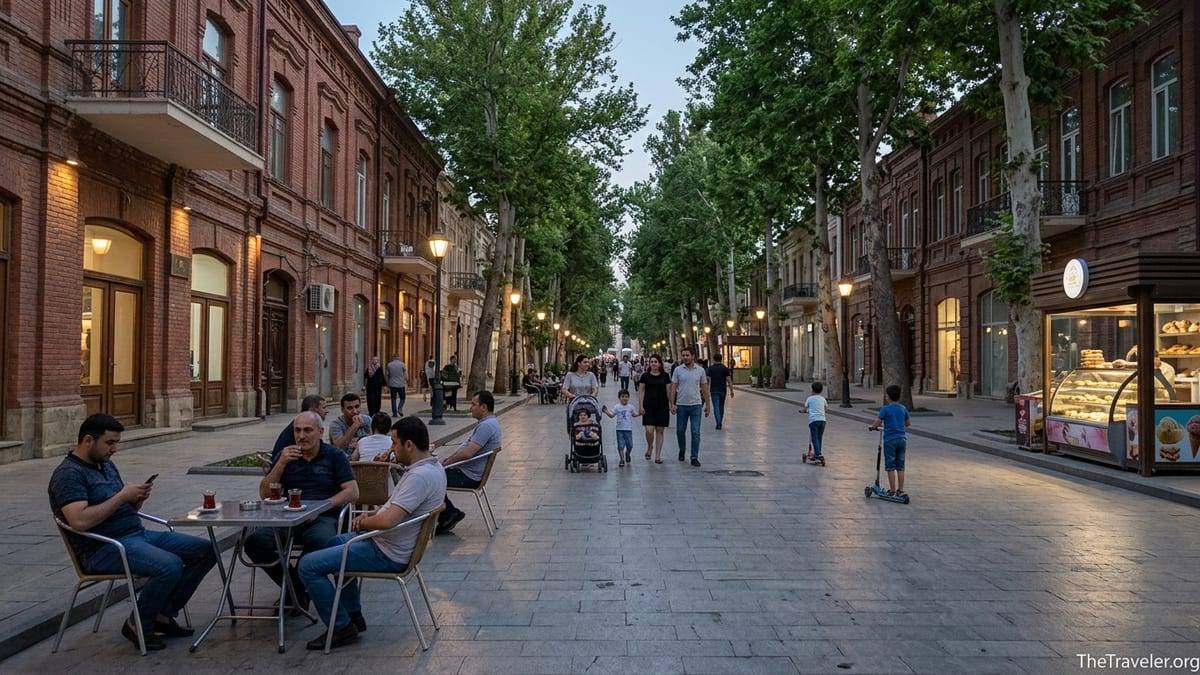
A City That Unwinds After Work
Ganja is home to more than 300,000 people, a significant industrial and cultural center in western Azerbaijan. On paper, that sounds like a busy regional capital, full of traffic and tension. In reality, the city’s pace shifts markedly after office hours. Around 6 or 7 pm, the wide avenues near City Hall and Heydar Aliyev Avenue are still lively, but the energy feels unhurried. Friends meet in small clusters, older couples stroll arm in arm, and families drift toward the parks rather than shopping malls or nightlife districts.
On Javad Khan Street, Ganja’s main pedestrian artery, this slow rhythm is especially noticeable. The street runs between rows of brick buildings that now house small clothing stores, pharmacies, bakeries, and simple restaurants. In the early evening, shopkeepers lean in their doorways, chatting with neighbors as children race on scooters between the benches. Instead of the insistent soundtrack of big-city life, you mostly hear muted conversations, the occasional pop song from a nearby cafe, and the distant clatter of a tram or bus turning off the main road.
What struck me most was how little pressure there seemed to be to turn the center into a spectacle. There are no neon-soaked photo zones or choreographed street performances. The pleasure is in the simple act of being out: drinking tea from small glasses at a plastic table, nibbling on sunflower seeds, or sharing a plate of qutab and kebab at a modest local restaurant where a full meal might cost the equivalent of 6 to 10 US dollars per person, including a soft drink or tea.
Even the traffic feels unusually patient. Taxis are plentiful, and while drivers occasionally nudge their way into gaps, they tend to stop willingly for pedestrians drifting across smaller streets. Typical short trips of about 5 kilometers within the city might cost around 6 to 8 Azerbaijani manat according to recent taxi fare calculators, making it affordable to move slowly in comfort rather than sprint to catch crowded buses.
Khan’s Garden: The Heart of Ganja’s Calm
If Ganja has a single symbol of its relaxed atmosphere, it is Khan’s Garden, often referred to locally as Xan Bağı. One of the oldest parks in the Caucasus, it predates much of the modern city and still feels like a sanctuary for residents of all ages. Walking through its gates, the temperature seems to drop a degree or two as dense canopies of mature plane and chestnut trees block the sun and dampen the city noise.
On a typical afternoon, you will see older men gathered at wooden tables, playing backgammon or dominoes, a pot of black tea between them. Nearby, young parents push strollers along paved paths while teenagers sit in loose circles on benches scrolling their phones or sharing music. The park’s ornamental fountains burble quietly, and the smell of damp earth and leaves mixes with drifting hints of grilled meat from nearby snack kiosks.
Tea houses tucked along the park’s edges are among the most relaxed spaces in Ganja. For a few manat, you can order a pot of tea, some lemon slices, and a simple plate of sweets like pakhlava or halva. Nobody rushes you to leave. It is common to linger for an hour or more over conversation or people-watching. I met one university student who said he came most evenings during exam season not to study, but to “reset his brain” by watching families and listening to the birds instead of the city traffic.
The layout of Khan’s Garden encourages wandering without a plan. Curving paths lead to small clearings where you might find a lone reader on a bench; other paths branch toward slightly raised viewpoints where you can see the tops of the trees and fragments of the city skyline. Despite being close to key administrative buildings, the park never feels ceremonial or stiff. It feels lived in, like an outdoor living room that the whole city shares.
Slow Evenings on Javad Khan Street
As the sun softens over Ganja, Javad Khan Street transforms from a daytime shopping strip into an evening promenade. Streetlights cast a warm, slightly yellow glow over the red-brick facades, and the tall trees that flank the street create a high, leafy tunnel. Couples walk slowly up and down the pedestrian zone multiple times, sometimes with ice creams from corner kiosks that charge around 1 to 2 manat for a generous scoop.
The cafes that line the street are not flashy, but they are deeply social. A typical sidewalk cafe might offer cappuccinos, Turkish coffee, simple pastries, and a handful of savory dishes like dolma or grilled chicken. Prices tend to be modest: a good coffee might cost 3 to 4 manat, while a light dinner could be 8 to 12 manat. Many have television screens quietly showing football, but the sound is low enough that conversations dominate.
What impressed me was the mix of people. Groups of young women in fashionable clothes sit beside families with small children in strollers, older men in flat caps, and students hunched over shared hookahs. Despite this diversity, the mood remains easygoing. There is very little visible drunkenness, and almost no aggressive salesmanship. Waiters hover just enough to keep tea glasses topped up and ashtrays cleared, then retreat to chat among themselves when their customers settle into longer conversations.
Even at peak times, Javad Khan Street never felt claustrophobic. Because it is wide and fully pedestrianized, there is room to pause and watch a street musician or peek into a bakery display without blocking the flow. Stray cats weave through outdoor tables, hopeful but largely ignored. For visitors used to intense tourist strips in European capitals or Turkish resorts, this soft, sociable energy comes as a refreshing surprise.
From City Streets to Mountain Lakes
Part of Ganja’s relaxed character comes from how closely it is tied to nature. Around 45 kilometers to the south lies Goygol National Park, home to the famously blue Lake Goygol set at roughly 1,550 meters above sea level in the Lesser Caucasus. Local tour companies and minivans from Ganja run regular trips here during the warmer months, often for modest fares that make it practical for residents to escape the city on weekends.
From the park entrance, a paved path leads down through thick forest to a series of viewpoints over Lake Goygol. The water lives up to its name: on clear days, it reflects the surrounding slopes in a deep, almost lapis hue. Families often bring picnic spreads, laying out blankets on designated areas, while small snack stalls sell sunflower seeds, fresh bread, and bottles of local mineral water. There is no blasting music or aggressive entertainment here; visitors are gently encouraged to keep noise down and leave no litter.
A short drive or shared van ride away lies Maralgol, another alpine lake connected hydrologically to Goygol. The route involves slightly steeper slopes and more basic infrastructure, which helps keep the numbers down and the atmosphere quiet. Hikers swap stories on the trail, but once they reach the lakeside, conversations usually drop to a murmur. You can sit on a rock watching the wind ripple through the grass and the clouds move across the peaks, the city temporarily reduced to a distant idea.
Back in Ganja, even those who do not make it to the mountains sense their presence. Clear days reveal glimpses of the nearby ranges from higher points in the city, and local wine bars sometimes serve bottles from vineyards in the Goygol region just beyond the urban area. One evening, I sampled a glass of semi-sweet red from a nearby winery at a small bar not far from the center. The price, around 7 or 8 manat for a generous pour, felt like a bargain for the chance to literally taste the landscape that helps shape Ganja’s culture.
Cafes, Wine Bars, and Everyday Indulgences
Ganja does not rival Baku in terms of trendy coffee shops or high-end wine bars, but the venues it does have operate with a similar sense of unhurried hospitality. In side streets off Javad Khan, you may find small cafes with only five or six tables, serving strong coffee, homemade cakes, and simple sandwiches. Many open late into the evening, their windows fogged slightly by steam from the kitchen and the warmth of prolonged conversations inside.
Several spots around the center now showcase Azerbaijani wines, including bottles from vineyards near Ganja and the Goygol region. A typical wine bar might offer tastings of dry whites from Caucasian foothill grapes, robust reds, and the occasional pomegranate wine that locals sometimes recommend to visitors. Prices are usually lower than in Baku; glasses often range between 6 and 10 manat, with small plates of cheese and nuts available for similar amounts. Unlike in some European cities, there is no expectation that you constantly order to keep your seat. Sitting with a single glass of wine for an hour while you read or write is entirely acceptable.
Daytime coffee culture has a similar feel. University students, teachers, and freelancers share tables in modest cafes that double as informal study halls. Outlets are not always plentiful, and Wi-Fi speeds vary, but the tolerance for customers who linger is nearly universal. One owner told me that having people sit with laptops and notebooks makes the place “look alive,” even if they only order one drink every couple of hours.
Perhaps the most telling detail is the background volume. In many of these venues, music plays at a level that fills silences but never forces you to raise your voice. Televisions, if present, are often muted except during major football matches. The effect is subtle but powerful: you rarely feel pushed to act or spend, only invited to stay as long as you like.
Practical Details That Support a Relaxed Stay
Part of what makes Ganja’s atmosphere feel easy for visitors is its practicality. Accommodation options in the city center include mid-range hotels like Ganja Hotel, Ramada Plaza Gence, and several smaller local properties. Standard double rooms in mid-range hotels often fall in the range of 60 to 90 US dollars per night, depending on season and availability, while simpler guesthouses and apartments can be significantly cheaper. Many cluster within walking distance of the main parks and pedestrian streets, which means you can base yourself in the quiet heart of the city without relying constantly on taxis.
Getting around is similarly undemanding. Local buses remain an option for those comfortable with crowded vehicles and minimal English signage, but many travelers rely on ride-hailing apps such as Bolt, which operate in Ganja. A 10 to 15 minute ride within the city usually stays under 8 to 10 manat, and drivers are often happy to chat briefly or offer suggestions, especially if they discover you are visiting from abroad. Traffic can be busy at rush hour, yet it rarely has the frantic edge of larger capitals.
Food prices contribute to the overall sense of ease. A filling lunch at a casual spot near the center might include lentil soup, a main course like lula kebab with rice, and tea, totaling perhaps 8 to 12 manat. At slightly nicer restaurants, sharing several dishes among friends, plus drinks, commonly ends up between 20 and 35 manat per person. For travelers on a budget, bakeries selling fresh bread, pastries stuffed with cheese and herbs, and simple sweets can keep daily food expenses pleasantly low.
Even small tasks feel a little less stressful. The regional tourism information center near central squares offers maps and assistance in multiple languages. Mobile eSIMs and local SIM cards are reasonably priced, making it straightforward to navigate or translate on the go. Street crime levels are generally low, though normal city precautions still apply. All of this practical stability helps visitors shift their attention away from logistics and toward simply absorbing the city’s mood.
The Takeaway
In a country better known for Baku’s futuristic skyline and the drama of the Caucasus mountains, Ganja tends to slip under the radar. That relative obscurity might be part of what preserves its gentle pace. The city feels like a place primarily built for the people who live there, not tailored for transient guests. Visitors are welcome, but they are not the main event.
What surprised me most was how this relaxed atmosphere cut across every layer of experience: from the deep shade of Khan’s Garden and the hushed shores of Lake Goygol to the slow drift of locals along Javad Khan Street at dusk and the forgiving prices of tea, coffee, and wine. Ganja offers a kind of soft landing in the South Caucasus, a chance to meet Azerbaijan not as a spectacle but as a lived-in, quietly confident everyday reality.
If your idea of travel involves long walks, plentiful park benches, and conversations that unfold at their own pace, Ganja deserves a place on your itinerary. Stay two or three nights, take a day trip to the lakes, and let the city’s easy rhythm reset your expectations. You might arrive planning a quick stop, but you are likely to leave feeling as though Ganja has gently insisted you slow down, breathe, and simply enjoy being there.
FAQ
Q1: How many days should I spend in Ganja?
Most travelers find 2 to 3 full days enough to explore the city center, enjoy Khan’s Garden and Javad Khan Street, and take a day trip to Goygol National Park. If you like to move slowly or plan multiple hikes, consider 4 days.
Q2: Is Ganja safe for solo travelers?
Ganja is generally considered safe, including for solo travelers, with low levels of violent crime. Normal urban precautions apply: avoid poorly lit areas late at night, keep valuables secure, and use licensed taxis or reputable ride-hailing apps.
Q3: What is the best time of year to experience Ganja’s relaxed atmosphere?
Late spring and early autumn are ideal, typically May to June and September to early October. Temperatures are mild, parks are green, and it is comfortable to sit outdoors in the evenings without the summer heat or winter chill.
Q4: How much should I budget per day in Ganja?
Excluding accommodation, a typical traveler might spend the equivalent of 20 to 40 US dollars per day on food, coffee, local transport, and small entrance fees. Those who cook or focus on budget eateries can spend less, while more restaurant-heavy days may cost a bit more.
Q5: Can I visit Lake Goygol and Maralgol without a tour?
Yes, it is possible to visit using shared taxis or minivans from Ganja to the park area, then arranging local transport onward. However, organized day tours are popular because they simplify logistics and often include stops at multiple viewpoints or both lakes in a single day.
Q6: What should I wear in Ganja?
Ganja is relatively liberal in terms of dress. T-shirts, jeans, light dresses, and modest summer clothing are all common. When visiting mosques or religious sites, it is respectful to cover shoulders and knees, and women may be asked to cover their hair.
Q7: Is English widely spoken in Ganja?
English is less common than in Baku, but younger people and those working in hotels, larger cafes, and tourism services often speak at least basic English. Simple phrases, translation apps, and a willingness to gesture go a long way.
Q8: How do I get from Baku to Ganja?
Common options include intercity buses, trains, and domestic flights. Buses and trains are usually the most economical, with travel times of several hours, while flights are faster but more expensive and less frequent.
Q9: Are there good vegetarian options in Ganja?
While traditional Azerbaijani cuisine is meat-heavy, vegetarians can usually find salads, lentil soups, vegetable stews, rice dishes, and bakery items like cheese or herb-filled pastries. It helps to learn or show simple phrases indicating you do not eat meat.
Q10: Do I need cash, or are cards accepted in Ganja?
Major hotels, supermarkets, and some restaurants accept bank cards, but smaller cafes, taxis, markets, and kiosks often prefer cash. It is wise to carry some Azerbaijani manat, especially for everyday purchases and in more residential areas.