


More news on this day
A coal train derailment on Colorado’s Western Slope has disrupted a vital rail corridor used by both freight operators and long-distance passenger services, prompting cleanup efforts, safety reviews, and travel disruptions across the state.
Get the latest news straight to your inbox!
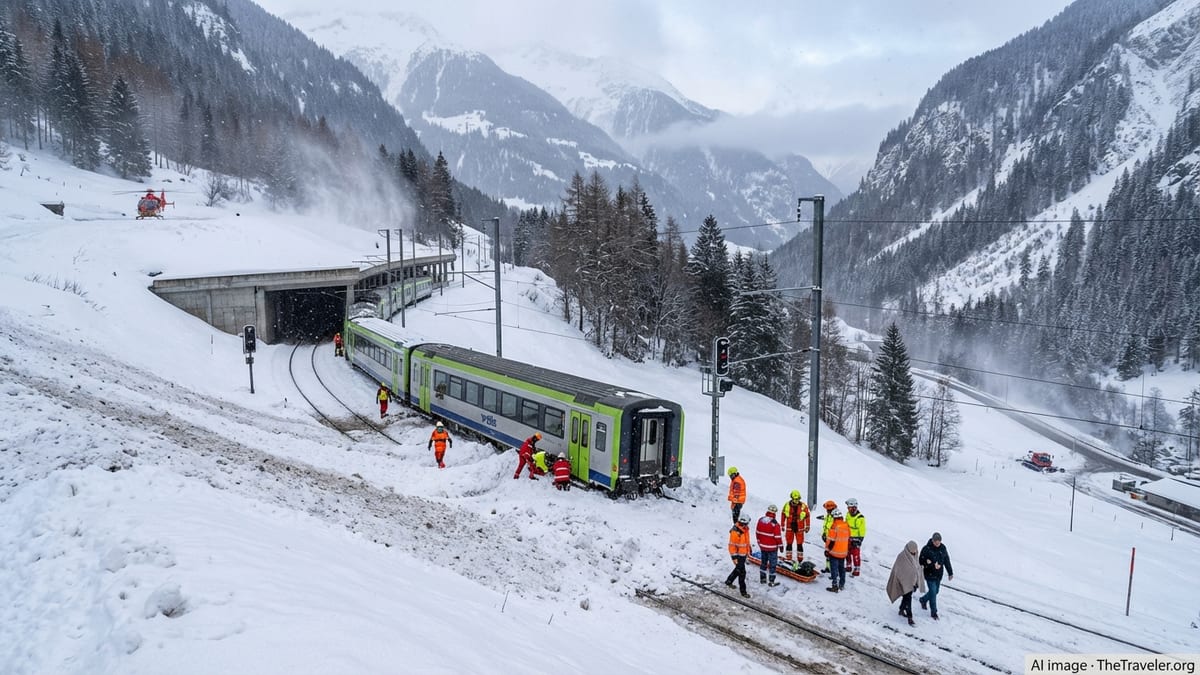
Derailment near Rifle halts Western Slope rail traffic
Publicly available information indicates that a freight train hauling coal derailed near the small city of Rifle in western Colorado, along the busy rail line that parallels U.S. 6 and the Colorado River. Initial reports describe multiple loaded coal cars leaving the tracks, scattering debris along the right-of-way and damaging sections of rail infrastructure. The incident occurred on a stretch of track that serves as a critical east west artery for both commodity shipments and intercity passenger trains.
Coverage from Colorado-based outlets indicates that the derailment happened in daylight hours and was confined to freight wagons, with no passenger equipment involved. Imagery shared through official channels and local reporting shows overturned gondola cars and maintenance crews working among piles of spilled coal on the ballast. Early accounts suggest that there were no serious injuries, but the damage to track and signaling forced an immediate suspension of service through the area.
Rail operators declared the line out of service while inspections and recovery began, a standard procedure after a derailment of loaded freight cars. Heavy equipment was brought in to re-rail salvageable cars, remove wreckage, and clear coal from the track bed, while engineering teams assessed whether rails, ties, and underlying structures needed full replacement before trains could safely pass again.
The derailment site sits on a section of the Western Slope corridor that threads between steep terrain and the Colorado River, leaving little alternative routing for through trains. That geography has amplified the impact of the incident, transforming a local infrastructure failure into a statewide transportation issue.
Amtrak’s California Zephyr and tourist itineraries affected
According to published coverage, the derailment near Rifle led Amtrak to suspend service temporarily on the California Zephyr route across Colorado. The Zephyr, which connects Chicago and the San Francisco Bay Area, is a marquee long-distance train for domestic and international travelers seeking to experience the dramatic scenery of the Rockies and Glenwood Canyon. With the main line blocked, trains were either held short of the affected area, rerouted using buses, or cancelled outright on certain dates.
Travel discussion forums and passenger updates describe rail travelers facing same-day itinerary changes, including substitute bus transportation around the closure and missed connections further along the route. Some visitors on multi-day itineraries through Denver, Glenwood Springs, and points west reported needing to adjust hotel bookings or switch to rental cars when it became clear that normal rail operations would not resume immediately.
The interruption comes at a busy time for tourism on Colorado’s Western Slope, when visitors flock to hot springs resorts, rafting trips on the Colorado River, and national parks and monuments across the region. The California Zephyr and other rail services are often part of these plans, either as the primary means of reaching the mountains or as a scenic component of a longer road-and-rail journey. The derailment has highlighted how closely leisure travel in the area is tied to a single stretch of track.
Local tourism businesses, from lodging providers in Glenwood Springs to outfitters in the Roaring Fork and Colorado River valleys, have been monitoring official advisories and rail operator bulletins for signs of when regular passenger service will fully return. While the bulk of visitors continue to arrive by car via Interstate 70, rail disruptions can reverberate through tour itineraries and package trips that feature the Zephyr as a signature experience.
Freight corridor complications for coal and other commodities
The corridor affected by the derailment is an important route for unit trains hauling coal from western Colorado and neighboring states to power plants and industrial customers. The incident has therefore had implications beyond passenger travel, affecting time-sensitive freight flows and logistics chains linked to the energy sector. Reports indicate that rail companies have been working to stage trains on either side of the damaged segment and, where possible, reroute traffic over alternative lines.
Coal unit trains are typically long, heavy consists, and when derailments occur they can cause extensive damage to both rolling stock and infrastructure. Photographs and descriptions from the Rifle area indicate that several cars ended up on their sides, spilling coal onto the right-of-way and, in some spots, close to the embankments that separate the track from roads and the river. Cleanup crews have focused not only on restoring train operations but also on collecting coal and other debris to reduce the risk of environmental runoff.
Western Colorado’s freight network also moves agricultural products, building materials, petroleum-related commodities, and intermodal shipments. Any extended closure of a mainline segment can require shippers to accept delays, arrange temporary storage, or shift certain moves to highway trucks. Analysts note that while rail remains one of the most efficient modes for bulk commodities such as coal, derailments on constrained mountain corridors can expose the system’s limited redundancy.
Industry data and recent research into heavy-haul rail operations suggest that factors such as track geometry, weld integrity, and extreme temperatures can all contribute to derailment risk on busy freight routes. The Rifle incident is expected to be examined within that broader context as safety specialists and regulators seek to determine whether any long-term changes in inspection or maintenance practices are warranted along this stretch of the Western Slope.
Safety scrutiny on a shared passenger and freight route
The derailment has renewed attention on the safety of Colorado’s mountain rail lines, particularly sections that host both heavy freight and popular passenger services. Previous high-profile incidents involving coal trains elsewhere in the state have already focused public and regulatory attention on track maintenance standards, weld quality, and monitoring of known problem areas. The Western Slope route, which threads through tunnels, canyon walls, and tight curves, presents additional engineering challenges that can magnify the consequences of any failure.
Rail safety advocates often highlight the risks associated with unit trains of bulk commodities, noting that while derailments are relatively rare, the volume of material involved can complicate both emergency response and environmental cleanup. In the case of a coal train, the principal concern is typically contamination of nearby waterways and soils, particularly in corridors that hug major rivers. The Rifle derailment has therefore prompted questions about how effectively the spilled coal is being contained and removed in an area closely tied to outdoor recreation and river-based tourism.
Publicly available records indicate that federal investigators typically review significant derailments to determine root causes and recommend corrective actions. These can range from enhanced track inspections and accelerated replacement schedules to changes in how railroads manage speed, train length, or axle loads in specific territories. While the precise cause of the Rifle incident has not yet been formally detailed in the public record, the findings are likely to inform how operators balance heavy freight needs with the expectations of passenger services and communities along the line.
Local governments and advocacy groups on the Western Slope have previously raised concerns about increasing volumes of energy-related freight in the same corridor used by long-distance passenger trains and recreation-focused tourism. The latest derailment is adding real-world urgency to those discussions, as residents, businesses, and travelers weigh the economic benefits of robust rail service against the potential disruptions when something goes wrong.
What travelers should know as service gradually resumes
As repair work progresses, updates from rail operators and transportation agencies indicate that service through the Rifle area is gradually being restored, sometimes with speed restrictions or adjusted schedules as track conditions are monitored. Travelers planning to ride the California Zephyr or other trains across Colorado in the coming weeks are advised, through publicly shared advisories, to check the status of their specific departures close to travel dates and to be prepared for last-minute adjustments.
For visitors whose itineraries hinge on scenic rail segments between Denver, Glenwood Springs, and Grand Junction, travel planners recommend holding flexible reservations on lodging and connecting transport until the rail picture fully stabilizes. In practice, this can mean choosing hotel rates with free changes or cancellation, or booking rental cars and tours that allow date modifications without heavy penalties.
Highway travel remains the primary fallback for most visitors to the Western Slope. Interstate 70 and U.S. 6 generally provide reliable alternatives when rail service is disrupted, though drivers may face seasonal challenges such as summer construction zones, rockfall mitigation work, or short-term closures from mud and debris flows. For many travelers, combining a rail journey on the sections that are operating with a road trip around any remaining bottlenecks offers a way to preserve Colorado’s trademark alpine and canyon scenery in their plans.
The Rifle-area derailment underscores how intertwined Colorado’s travel economy is with the reliability of a few key transportation corridors. As freight operators, passenger carriers, and public agencies work to restore full service and address underlying safety questions, travelers are likely to remain attentive to how this critical rail link performs in the months ahead.