


More news on this day
Travelers across Colombia are facing a new wave of disruption as a mix of fresh flight cancellations and an abrupt airline shutdown ripple through Bogotá, Medellín, Cartagena, San Andrés, Santa Marta, and key routes to U.S. gateways such as Newark.
Get the latest news straight to your inbox!
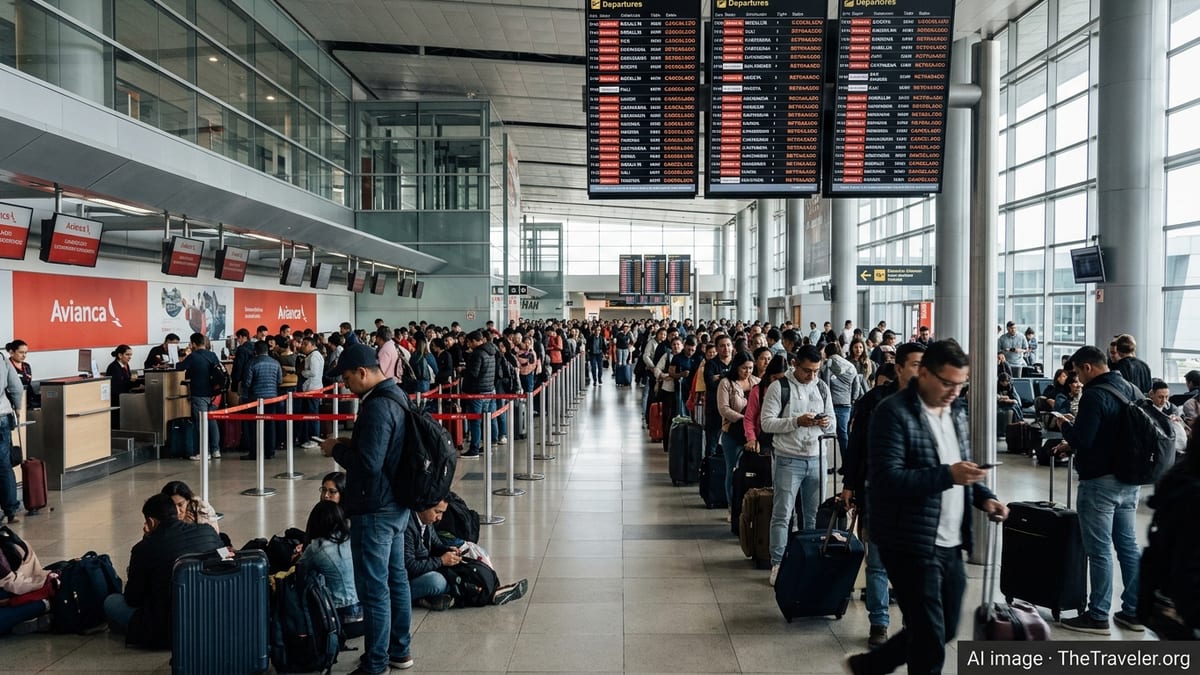
New Cancellations Hit Colombia’s Busiest Hubs
Publicly available flight-tracking and schedule data show a patchwork of cancellations and significant schedule cuts affecting major Colombian airports in early May 2026. Bogotá’s El Dorado International, the country’s main hub, has seen repeated disruption on high-demand routes to Medellín, Cartagena, and Santa Marta, with multiple operators adjusting or pulling services at short notice.
Reports indicate that Avianca and smaller regional carriers have scrubbed more than a dozen flights over recent weeks on trunk routes linking Bogotá with Medellín and Cartagena, as well as select coastal destinations. Coverage focused on disruptions around Bogotá and Medellín in late March and April already pointed to an elevated rate of cancellations, and updated reports through early May describe further adjustments as airlines continue to recalibrate their schedules.
The impact is being felt well beyond the capital. Cartagena, one of Colombia’s top tourist draws, along with beach destinations such as San Andrés and Santa Marta, has experienced repeated schedule reshuffles. Travelers report day-of-travel cancellations and re-timings that compress available options and force last-minute changes to hotel and tour plans.
Operational challenges appear to vary by carrier, but the net result for travelers is the same: less predictability across some of the country’s busiest leisure and business corridors just as the high season for international visitors gets under way.
Spirit’s Sudden Shutdown Deepens Disruption on Colombia U.S. Routes
The most dramatic development affecting Colombia-linked travel is the complete shutdown of Spirit Airlines. According to published coverage and the airline’s own restructuring site, Spirit ceased all operations on May 2, 2026, canceling every remaining flight in its network with immediate effect. The move ended more than three decades of low-cost flying and removed thousands of flights from the North American market virtually overnight.
Before the shutdown, Spirit had been steadily trimming its 2026 schedule and canceling or restructuring numerous flights, including services touching Colombia and major hubs such as Newark. Industry analysis and traveler accounts in the weeks leading up to May 2 described a rising number of advance cancellations and drastic schedule changes, with Colombia-bound passengers reporting scrapped itineraries and unannounced adjustments.
Spirit’s historic network included links between U.S. cities and Colombian destinations such as Bogotá and Cartagena, as well as routes connecting Newark with key leisure markets. With the carrier now grounded, that capacity has vanished, intensifying pressure on remaining options for price-sensitive travelers between the United States and Colombia.
Consumer-rights sites note that passengers with Spirit tickets dated on or after May 2 have been instructed not to go to the airport, and that refunds and other remedies will be handled through the airline’s wind-down process and applicable consumer-protection rules. In the interim, many travelers bound for or returning from Colombia have been left to rebook same-day or next-day travel at significantly higher fares on other airlines.
United, Avianca and Others Adjust Schedules Around Newark
United Airlines, Avianca, and several other carriers are now at the center of efforts to absorb displaced demand on Colombia U.S. routes, especially those touching Newark Liberty International Airport. According to recent travel-industry coverage, major U.S. airlines have been offering rescue or capped fares for passengers who can show documentation of a Spirit cancellation, with Newark highlighted as one of the key pressure points.
Flight-search data and schedule filings indicate that United, which has a strong presence at Newark, is maintaining and in some cases tweaking frequencies on Colombia-facing routes as the market reshuffles after Spirit’s exit. Avianca, which has historically linked Bogotá and coastal Colombian cities with multiple U.S. gateways, is also playing a central role in moving stranded travelers, though its own recent cancellations within Colombia add a layer of complexity for passengers relying on domestic connections.
The rapid pullback of Spirit’s operation has coincided with earlier schedule cuts that had already reduced capacity into May, meaning the total number of available seats between Newark and popular leisure destinations is well below levels seen a year ago. As a result, travelers trying to reach Cartagena, San Andrés, or Santa Marta via connections in the United States, including through Newark, are encountering higher prices, tighter availability, and fewer same-day alternatives when flights cancel.
Airline analysts warn that even if larger carriers eventually increase capacity, there may be a sustained period of elevated fares and fuller flights on U.S. Colombia routes, particularly on peak days and popular holiday weekends.
Knock-on Effects Across Bogotá, Medellín, Cartagena and Island Getaways
Inside Colombia, the wave of cancellations and schedule changes is producing knock-on effects for regional connectivity. Recent reports on Bogotá’s departure boards show a tightly packed schedule of departures for Medellín, Cartagena, and Santa Marta, but with more frequent last-minute time changes and occasional scrubbed flights compared with typical off-peak patterns.
Travel blogs and regional travel outlets have highlighted frustrated passengers stuck overnight in Bogotá or Medellín after late cancellations on routes to the Caribbean coast and island destinations. In some cases, travelers bound for San Andrés or Santa Marta after long-haul flights into Bogotá describe having to rebook onto next-day departures, sometimes at their own expense, when previously confirmed connections disappear from the board.
Coastal airports serving Cartagena and Santa Marta are experiencing similar volatility, with operators modifying flight times to align with updated fleet plans and demand forecasts. While day-to-day operations continue with a steady stream of arrivals and departures, the overall environment for trip planning has become less predictable, particularly for those piecing together complex itineraries involving both U.S. long-haul and Colombian domestic legs.
Regional carriers and newer low-cost operators are attempting to capture some of the displaced demand, but their smaller fleets and limited frequencies mean that any single cancellation can have an outsized impact on available seats and connection options across the network.
What Travelers Should Expect in the Coming Weeks
Publicly available guidance from consumer advocates and travel-industry experts suggests that disruptions tied to Spirit’s shutdown and ongoing schedule shifts in Colombia are likely to persist in the short term. The sudden removal of a major low-cost player, combined with domestic operational challenges, has created a fragile environment in which any additional weather, technical, or staffing issue can quickly cascade into broader cancellation waves.
Travelers planning routes through Bogotá, Medellín, Cartagena, San Andrés, or Santa Marta, especially when connecting via Newark or other busy U.S. hubs, are being urged by travel advisers to monitor their bookings closely in the days leading up to departure. Many airlines are allowing limited same-day changes or waiving certain fees during periods of disruption, but those options are generally capacity-constrained and time-sensitive.
Experts also emphasize the importance of building extra time into itineraries, particularly for those relying on separate tickets for U.S. international and Colombian domestic segments. With fewer backup flights available on some routes, missing a connection because of an upstream delay or cancellation can mean an unplanned overnight stay and higher out-of-pocket costs.
While airlines such as United and Avianca work to stabilize schedules and absorb new demand in the wake of Spirit’s collapse, the broader message for travelers is clear: flying to, from, and within Colombia in the current environment requires more flexibility, closer monitoring, and a willingness to pivot quickly when cancellations and unexpected changes arise.