


More news on this day
Travelers across Argentina are facing another wave of flight disruptions as low cost and regional carriers report fresh cancellations and delays on some of the country’s busiest domestic and regional routes, affecting links from Buenos Aires to Córdoba, Bariloche, Salta, Iguazú, Lima and other key destinations.
Get the latest news straight to your inbox!
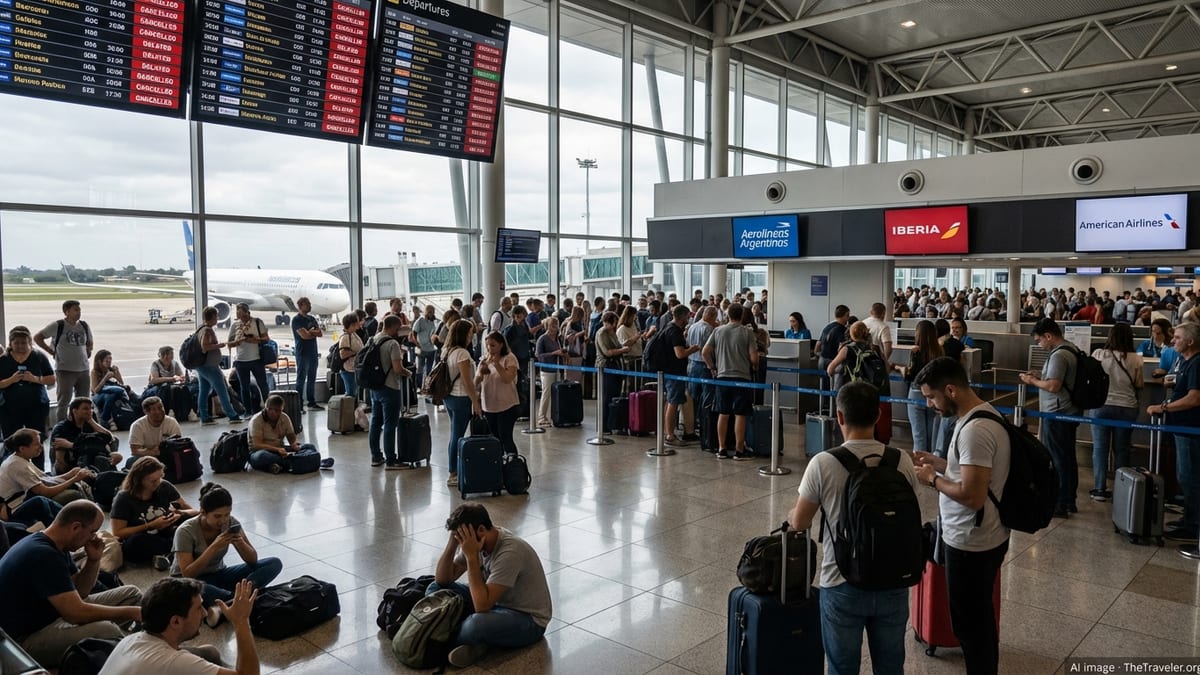
Fresh Cancellations Hit Popular Domestic and Regional Routes
Recent days have brought a new round of operational problems for several airlines serving Argentina’s core travel corridors, with more than ten flights reportedly canceled across multiple carriers on routes touching Buenos Aires, Córdoba, Bariloche and other high-demand cities. Flybondi, identified in aviation registries by the ICAO code FBZ, has again been at the center of many traveler complaints, while other regional and low cost operators have also been affected on select services.
The latest disruptions have been particularly visible on point to point domestic routes connecting Buenos Aires with tourism hubs such as San Carlos de Bariloche, Salta and Puerto Iguazú, as well as on services radiating out of Córdoba. Publicly available route data shows these cities remain key pillars of Argentina’s domestic network, yet social media posts, traveler forums and local coverage indicate that a cluster of flights in and out of these markets has been withdrawn or re-timed at short notice.
International connections have not been immune. Flights linking Argentina to regional capitals such as Lima have seen schedule changes and scattered cancellations, affecting itineraries that combine domestic hops to Iguazú or Bariloche with onward connections in Peru. For many passengers, the combination of domestic and regional changes has created cascading disruptions across multi-city South American trips.
Reports from passengers suggest that in several cases, cancellations were communicated within days or even hours of departure, leaving limited options on already busy routes. Travelers have described having to rebook on alternative airlines or reroute through Buenos Aires when originally planned point to point services between secondary cities were removed from schedules.
Flybondi and Other Low Cost Carriers Under Scrutiny
Low cost operators remain central to Argentina’s domestic air travel landscape, providing competitively priced links from Buenos Aires and Córdoba to tourism centers throughout the country. Flybondi, operating under the corporate name FB Líneas Aéreas and code FBZ, has expanded quickly since its launch, fielding dense schedules to Bariloche, Salta, Puerto Iguazú and other gateways popular with international visitors and local travelers alike.
However, a growing body of online commentary highlights an elevated rate of last minute changes and cancellations compared with more established full service carriers. Recent posts by passengers describe entire daily schedules being thinned on select dates, including overnight flights between Buenos Aires and Patagonia and early morning departures to Iguazú and Salta. In some accounts, travelers say that multiple flights on the same route disappeared from the departure boards within a short window.
Other budget and regional players have also featured in recent disruption reports. Travelers have shared experiences of re-timed or canceled services on domestic routes linking Córdoba with Salta and Bariloche, and on cross-border flights between Argentina and Peru. While official statistics for the most recent wave of cancellations are not yet consolidated in public datasets, anecdotal reporting points to more than ten flights across several airlines being dropped in a single operating period, with knock-on effects for subsequent rotations.
The uneven reliability has prompted some travelers to recommend a cautious approach when booking with ultra low cost carriers on complex itineraries, especially where same day connections are involved. In online discussions, passengers increasingly describe building extra buffer days into trips that include Patagonia, the northwest region around Salta, or Iguazú, given the combination of weather-related disruptions and schedule adjustments.
Travelers Report Knock-On Effects Across Argentina’s Tourism Circuit
The cities most affected by the latest cancellations form the backbone of Argentina’s tourism circuit. Buenos Aires remains the primary international gateway, with Aeroparque and Ezeiza airports feeding domestic services to Bariloche in northern Patagonia, Salta in the northwest, and Puerto Iguazú near the famous waterfalls. Córdoba serves both as a major domestic hub and a secondary international entry point, including connections to Lima and other regional cities.
When flights on these routes are canceled or heavily delayed, the consequences extend beyond the airports. Travelers with pre-booked hotel nights in Bariloche or Salta, time-sensitive excursions in Iguazú National Park, or onward tours into neighboring Chile and Peru report scrambling to rearrange itineraries. Some recount losing nonrefundable reservations or having to shorten stays at destinations reached later than planned due to rebooked flights via Buenos Aires.
Ground transport has emerged as a fallback option when air links fail, but long distances between cities such as Buenos Aires and Bariloche or Iguazú mean overland journeys can take more than a full day. Passenger anecdotes describe last minute long-distance bus trips or shared car hires, particularly on dates coinciding with labor actions or operational slowdowns when flight availability becomes scarce.
These ripple effects are being felt during a period when Argentina’s tourism sector is working to sustain a post-pandemic recovery and capitalize on favorable exchange rates that have attracted international visitors. Disruptions on key air corridors risk undermining that momentum, especially for travelers planning once-in-a-lifetime Patagonia or Iguazú itineraries with limited flexibility on dates.
Labor Actions, Operational Strain and Regulatory Backdrop
The current wave of disruptions is unfolding against a broader backdrop of labor tensions and structural challenges in Argentina’s aviation sector. Recent months have seen periodic calls for strikes by transport unions and worker groups, which have occasionally led to large-scale cancellations at airports serving Buenos Aires and other cities. Online travel communities contain detailed accounts of days when flights into and out of multiple airports, including Bariloche, Iguazú and Salta, were largely grounded.
Operational strain also plays a role. As airlines attempt to match capacity with fluctuating demand and manage aircraft utilization across vast distances, changes in fleet availability or maintenance schedules can trigger short-notice adjustments. In some cases, low cost carriers have been reported consolidating frequencies, canceling lightly booked rotations or shifting capacity to higher-yield routes, leaving passengers on affected flights to seek alternatives.
On the regulatory front, Argentina’s government has been reshaping elements of its transport framework, including slot allocations and oversight of domestic aviation policy. Public documents and official bulletins published earlier this year outline efforts to recalibrate the competitive landscape and encourage connectivity beyond Buenos Aires, particularly through hubs like Córdoba and Rosario. At the same time, traveler experiences suggest that regulatory and consumer protection mechanisms are still being tested by the volume of recent changes and cancellations.
In international markets, passengers affected by cancellations and long delays often rely on clear compensation frameworks, yet in Argentina the practical process of securing refunds or alternative arrangements can be time-consuming. Accounts shared online indicate that some travelers have needed to pursue multiple channels to obtain reimbursements or rebooking options, particularly when dealing with ultra low cost carriers that emphasize digital customer service over traditional in-person support.
What Passengers Can Do as Disruptions Persist
With reports pointing to continued volatility in flight schedules across Argentina, travelers planning trips in the coming weeks are taking extra steps to protect their itineraries. Many are opting to book critical domestic legs on earlier dates than strictly necessary, building a buffer before connecting to international departures in Buenos Aires, Lima or other regional hubs.
Travel forums and consumer advisories increasingly recommend checking flight status frequently in the days leading up to departure, as airlines may adjust schedules several times before travel. Passengers are also encouraged to monitor both email and app notifications from carriers, since some changes are communicated digitally rather than through airport announcements.
Another emerging strategy is to favor itineraries that allow flexibility. Travelers report choosing refundable or changeable fares on at least one key segment, particularly on routes where low cost carriers such as Flybondi have a dominant presence and where alternative options with full service airlines exist. In some cases, travelers have booked backup seats on different carriers or at different times on the same day when critical connections are at stake.
As Argentina moves deeper into its shoulder travel seasons, the balance between attractive fares and operational reliability is likely to remain a central consideration for visitors. For now, publicly available information and traveler accounts indicate that while air links between Buenos Aires, Córdoba, Bariloche, Salta, Iguazú, Lima and other destinations remain extensive, passengers should expect continued disruptions and plan accordingly.