


Saint-Tropez is one of those names that conjures instant images of bronzed celebrities, glossy yachts and impossibly chic beach clubs. The reality on the ground can be just as dazzling, but it can also be crowded, expensive and frustrating if you arrive unprepared. From traffic jams and overbooked beach clubs to sticker shock in restaurants and off-season disappointments, many visitors repeat the same avoidable errors. Here are the most common mistakes travelers make when visiting Saint-Tropez today, and how to sidestep them for a smoother, more satisfying trip.
Get the latest updates straight to your inbox!
Underestimating Summer Traffic and Parking Chaos
Many first-time visitors assume that because Saint-Tropez is a village, driving in and parking will be straightforward. In July and August, the opposite is true. The narrow RD 98A coastal road between Sainte-Maxime and Saint-Tropez frequently grinds to a crawl, especially from mid-morning to late afternoon. Local parking guides now warn that central car parks like Parc des Lices or Parking Foch can fill before 9 am on peak days, and day rates in high season commonly reach around 30 to 40 euros for secure underground parking near the port. Travelers who set off from Nice or Cannes for a “quick” day trip by car often arrive frazzled, late and already over budget before they have even stepped onto the cobblestones of the old town.
A better strategy is to treat the last leg to Saint-Tropez as part of the experience rather than a chore. From Sainte-Maxime, fast shuttle boats run regularly across the gulf, turning an hour of standstill traffic into a 15-minute cruise with harbor views. Visitors staying along the coast near Saint-Raphaël or Les Issambres can also use regional boat lines instead of driving all the way in. If you must arrive by car in peak season, aim to reach the peninsula before 8 am, use larger outlying car parks and then walk or use local shuttles into the center. Giving yourself that buffer not only reduces stress but also opens up time for a relaxed breakfast on Place des Lices rather than a desperate hunt for a parking meter.
Misjudging the Cost and Culture of Beach Clubs
Pampelonne Beach, technically in the neighboring commune of Ramatuelle, is the stage on which many Saint-Tropez dreams are set. The setting is real: a five-kilometer stretch of pale sand and blue water lined with famous beach clubs such as Club 55, Nikki Beach, Les Palmiers, and newer fashion collaborations like designer-branded pop-ups at La Réserve à La Plage. What many travelers misjudge is just how expensive and structured this scene has become. It is no longer a place where you simply drop a towel and order a drink. At clubs like Les Palmiers, official rate sheets list high-season front-row sun loungers around 90 euros, second row around 70 euros, and beach “beds” exceeding 200 euros, with towels and parasols extra. A casual lunch of grilled fish and a bottle of local rosé can easily push a couple’s bill into the high hundreds.
The second mistake is treating all clubs as interchangeable. Each has its own clientele, atmosphere and expectations. Club 55, for example, draws a loyal, multigenerational crowd with a relatively understated, old-school Riviera feel. Nikki Beach skews toward high-energy pool parties with live DJs and bottle service. New fashion-branded clubs can attract a younger, social media driven audience who are there as much for the logo-striped loungers as for the sea. Turning up at the wrong beach club for your mood can be just as disappointing as the price. Research the vibe beforehand and reserve well in advance in July and August for both the restaurant and beach loungers. If the idea of paying triple-digit sums for a sunbed makes you uneasy, you will be much happier using the public sections of Pampelonne and nearby beaches, then choosing one special lunch at a club rather than building your entire stay around them.
Ignoring Public Beaches and Simpler Sea Days
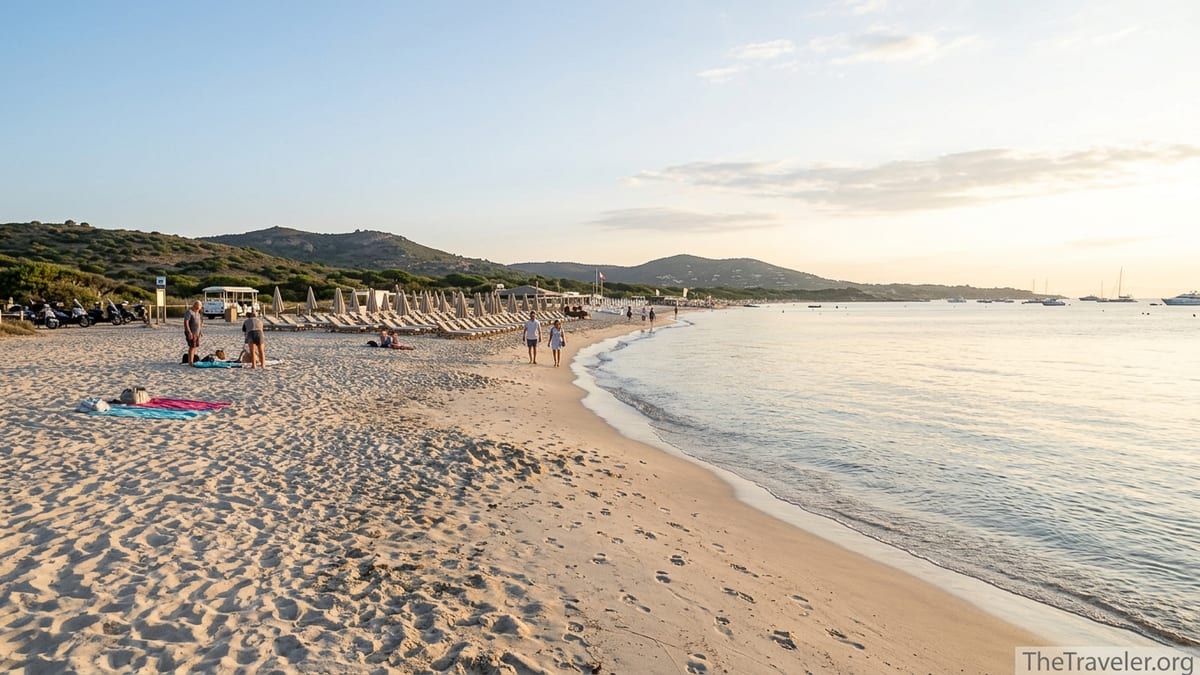
A surprisingly common mistake is assuming that Saint-Tropez is “only for” private clubs and that access to the sea requires a reservation and minimum spend. In reality, the peninsula has several attractive public options that offer the same water and sky at a fraction of the price. Sections of Pampelonne remain public, with municipal access paths and basic showers. Within Saint-Tropez itself, in-town beaches such as La Bouillabaisse, La Ponche and La Fontanette provide spots where locals swim before work or at sunset, with no entry fee beyond the cost of a cold drink from a nearby café.
Travelers used to resort complexes sometimes overlook these public stretches because they lack glossy signage or valet parking, yet for families or relaxed couples they can be the highlight of a trip. For example, a morning on the sand near La Bouillabaisse might cost only a few euros in parking at a nearby lot, plus snacks from a bakery, compared with more than 200 euros for loungers and lunch for two people at a premium club in peak season. Many visitors also forget that local municipalities operate summer shuttle buses between the village and Pampelonne, so you can leave the car at your accommodation and reach the beach with minimal stress. Planning one or two “simple sea days” using these public options balances out the glamour of a club visit and keeps your budget and expectations under control.
Arriving in the Wrong Season With the Wrong Expectations
Saint-Tropez is not the same place in May as it is in late July, and certainly not in November. A recurring mistake is booking outside high summer with a mental picture drawn entirely from August social media posts. In early spring and late autumn, the village reverts much closer to its roots: a small Provençal port where many restaurants and boutiques shut or keep shorter hours, beach clubs operate on limited schedules or close altogether, and the nightlife becomes much quieter. Weather can still be pleasant, especially in April and October, but cool evenings and occasional storms mean sunbathing is not guaranteed every day.
Conversely, arriving in late July or early August expecting a sleepy fishing village can be just as disorienting. This is when megayachts line the quays, ferries discharge streams of day-trippers into the old town, and luxury brands operate late into the night along the harbor. Locals who love Saint-Tropez often speak fondly of late May, June, and September as the sweet spot, with most venues open but crowds and traffic still manageable. Before you book, decide whether you are looking for nightlife and people watching, or quiet lanes and morning markets. Check recent opening dates and seasonal schedules for any beach club, restaurant or hotel that is central to your plans instead of assuming that “summer” or “off-season” has fixed boundaries.
Overplanning Around Instagram Spots and Ignoring the Village
Another frequent misstep is reducing Saint-Tropez to a checklist of photogenic clichés: the line of pastel facades along the Vieux Port, a recognizable beach club table shot, the view from the Citadel, and an obligatory glass of pale rosé. Visitors power through these scenes in a few hot hours and then conclude that the town is overrated. What they miss are the quieter experiences that give the village its character. Early in the morning, before cruise visitors and day-trippers arrive, Place des Lices is filled with locals setting up the Provençal market or playing pétanque under the plane trees. Narrow streets behind the port reveal small art galleries, bakeries and family-run boutiques that have survived decades of change.
To avoid this mistake, build at least half a day into your schedule with no agenda at all. Wander uphill to the Citadel not just for the panorama but also to visit its maritime history museum, which shows how the port evolved long before it became fashionable. Venture out to nearby hilltop villages such as Gassin or Ramatuelle for dinners where the view is of vineyards and the gulf rather than yacht sterns. These small detours cost far less than a single night at a harbor-front restaurant yet offer a far richer sense of place. Travelers who take time to sit with a coffee and simply watch life unfold along Rue Gambetta or Place aux Herbes often come away with a deeper appreciation than those who sprint between the most photographed corners.
Overreliance on Cars Instead of Local Transport
Because Saint-Tropez lacks a direct train station, many visitors default to renting a car for their entire stay, expecting it to offer total freedom. In practice, a car can become a burden. Aside from the entrance traffic jams and steep parking fees in high season, moving between beaches, villages and viewpoints can turn into a daily negotiation with congestion and one-way streets. Local information now underlines that regional bus lines connect Saint-Tropez with nearby towns, and dedicated routes link the village with Pampelonne beaches and Ramatuelle during the summer. Shuttle boats across the gulf offer another relief valve for day-trippers staying on the opposite shore.
A practical real-world alternative is to combine modes. For example, travelers staying in Nice or Cannes can take a train to Saint-Raphaël, then a boat to Saint-Tropez, eliminating the slowest road stretch. Once in the gulf area, you can rely on buses and occasional taxis to move around. Cyclists increasingly take advantage of the coastal bike routes linking Sainte-Maxime, Saint-Tropez and Ramatuelle, especially outside peak heat hours. If you still choose to rent a car, treat it as a tool for exploring the wider Var countryside and inland villages, not as your primary way of bouncing between the port and Pampelonne every day. That small shift in mindset can save you hours in traffic over a week.
Misreading the Luxury-to-Value Balance
Saint-Tropez has a reputation for eye-watering prices, and it can certainly live up to it. Another common mistake, however, is assuming that every transaction must be extravagant or that high cost always equals high quality. Some first-time visitors book only the most talked-about restaurants along the port, then feel stung by hundred-euro plates that do not match the view. Others aim to “do Saint-Tropez properly” by stringing together consecutive days of top-tier beach clubs, harbor-front bars and designer shopping, only to find that the novelty wears off while the bills keep climbing.
Looking closely at local patterns reveals a more nuanced approach. Many long-time visitors stay in nearby towns such as Sainte-Maxime, Gassin or in the countryside around Ramatuelle, where accommodation prices are often significantly lower, then come into Saint-Tropez for selected evenings or experiences. They might splurge on a long lunch at an iconic spot like Club 55 one day, then enjoy a simple seafood dinner at a beachside cabin or a village bistro the next. House wines from regional producers are generally better value than global brands heavily marked up for the setting. In beach clubs, asking in advance about minimum spends and fixed menus helps prevent surprises. By mixing luxury moments with local, low-key experiences, you keep both your budget and your memories balanced.
Overlooking Local Etiquette and Environmental Impact
Beyond logistics and prices, travelers often underestimate how much local etiquette and environmental awareness matter in a small coastal community like Saint-Tropez. The peninsula has made a visible effort to promote responsible tourism, including campaigns that ask visitors to conserve water, respect protected dunes, and keep beaches and lanes free of litter. Ignoring these guidelines can create friction with residents and contribute to long-term damage. For example, walking over fenced-off dune areas to reach “secret” corners of Pampelonne may seem harmless in the moment, but repeated over a season it accelerates erosion and forces authorities to restrict access further.
On the social side, Saint-Tropez is used to wealth, but ostentatious behavior is not universally admired. Staff in high-end venues increasingly deal with crowds who treat every interaction as a performance for social media, which can lead to tension and slower service for everyone. Visitors who greet servers, dress respectfully for the setting, and avoid filming other guests without consent usually find the atmosphere more welcoming. Small gestures like learning a few basic French phrases, keeping noise down late at night in residential lanes, and separating waste according to local recycling rules go a long way toward maintaining a positive relationship between guests and the community. When you treat Saint-Tropez as a living village rather than just a backdrop, you will notice how much warmer it can feel.
The Takeaway
Saint-Tropez can be a glittering disappointment or a quietly memorable escape, and the difference often comes down to preparation and mindset. Travelers who underestimate high-season traffic, overcommit to the most expensive beach clubs, or arrive with social media fantasies that ignore the village’s rhythms are most likely to leave frustrated. Those who build in time for simple pleasures, use public and water transport, explore local markets and hilltop villages, and respect both the environment and local etiquette tend to experience a richer, more authentic side of the peninsula.
Before you book, decide what you truly want from your time there: a single glamorous day on Pampelonne, a week of exploring the wider Var region with occasional evenings in town, or a shoulder-season stay that swaps nightlife for quiet harbor walks. Adjust your transport, budget and expectations accordingly, and you will be better placed to enjoy Saint-Tropez not just as a name on a map, but as a complex, evolving place where everyday life continues behind the postcard scenes.
FAQ
Q1. Is Saint-Tropez worth visiting as a day trip from Nice or Cannes?
Yes, but only if you plan carefully. The drive can be very slow in summer, so many travelers prefer taking the train to Saint-Raphaël and then a shuttle boat to Saint-Tropez, or driving only as far as Sainte-Maxime and crossing the gulf by ferry. That approach turns hours of traffic into a scenic cruise and gives you more time in the village itself.
Q2. How much should I budget for a day at a Saint-Tropez beach club?
Costs vary widely, but in high season expect around 70 to 90 euros for a standard sun lounger in a prime club, plus food and drinks. A simple lunch with wine can easily push a couple’s total into the 200 to 300 euro range or higher. Public beach sections, bakeries and casual beach bars offer a far cheaper way to enjoy the sea if that level of spending does not appeal.
Q3. Do I really need reservations for beach clubs and restaurants?
From late June through August, reservations are strongly recommended for the most popular beach clubs and harbor-front restaurants, especially for lunch and sunset hours. Walk-ins sometimes succeed at off-peak times or in less famous venues, but relying on spontaneity at the height of summer can mean long waits or settling for places you did not really want.
Q4. When is the best time of year to visit Saint-Tropez?
It depends on your priorities. July and August offer the liveliest atmosphere, with all clubs and boutiques open, but also the heaviest crowds and highest prices. Many regular visitors prefer late May, June, and September, when the weather is usually warm, most places are operating, and traffic is somewhat lighter. Outside these months, expect a quieter village with some seasonal closures.
Q5. Is it possible to enjoy Saint-Tropez on a moderate budget?
Yes, if you are selective. Staying in nearby towns such as Sainte-Maxime or in villages like Gassin can significantly reduce accommodation costs, and using public beaches instead of beach clubs saves a lot. Mix one or two special splurge meals or club days with market picnics, local bakeries and simple bistros, and use public transport or boats where possible.
Q6. Do I need a car to get around Saint-Tropez and Pampelonne Beach?
You do not strictly need a car, especially in high season. Local buses and summer shuttles connect Saint-Tropez with Pampelonne and nearby villages, and boat services link the village with other ports around the gulf. A car is most useful for exploring inland villages and countryside, but within the immediate area it can be more of a hassle than a help during peak months.
Q7. What are some common etiquette mistakes visitors make?
Common missteps include filming or photographing other guests without asking, ignoring fenced dune areas on beaches, speaking loudly late at night in residential streets, and treating staff brusquely. Simple courtesies like greeting people with a “bonjour,” dressing appropriately for the venue, and following basic environmental rules make interactions smoother and more pleasant.
Q8. Are there things to do in Saint-Tropez besides beach clubs and nightlife?
Absolutely. You can explore the Citadel and its maritime museum, wander the old fishing quarter around La Ponche, browse Provençal markets on Place des Lices, visit small art galleries, and take short trips to nearby hilltop villages such as Gassin and Ramatuelle. These experiences often give a stronger sense of place than the most photographed party scenes.
Q9. Is Saint-Tropez suitable for families with children?
Yes, as long as you pace your days and choose your locations carefully. Public beach sections and quieter clubs are often more comfortable for families than high-energy party spots. Morning and early evening strolls in the village, boat trips around the gulf, and simple meals in relaxed bistros work well with children, while late-night venues are best skipped.
Q10. How can I reduce my environmental impact when visiting?
Use public transport or boats where practical, refill a reusable water bottle, avoid walking on protected dunes, dispose of rubbish in designated bins, and respect local recycling rules. Choosing accommodations and activities that emphasize sustainability, and limiting single-use plastics during beach days, helps Saint-Tropez remain enjoyable for residents and visitors alike.