


Few coastal towns inspire the same mix of beach bliss and jet set fantasy as Saint-Tropez. Perched on the sun-drenched Gulf of Saint-Tropez on France’s Côte d’Azur, this former fishing village has spent decades at the center of Mediterranean glamour. Yet despite new hotspots emerging from Ibiza to Mykonos and beyond, travelers keep circling back here for a very specific combination of sand, style and spectacle that is hard to replicate anywhere else.
Get the latest updates straight to your inbox!
Beaches Where the Saint-Tropez Myth Was Born
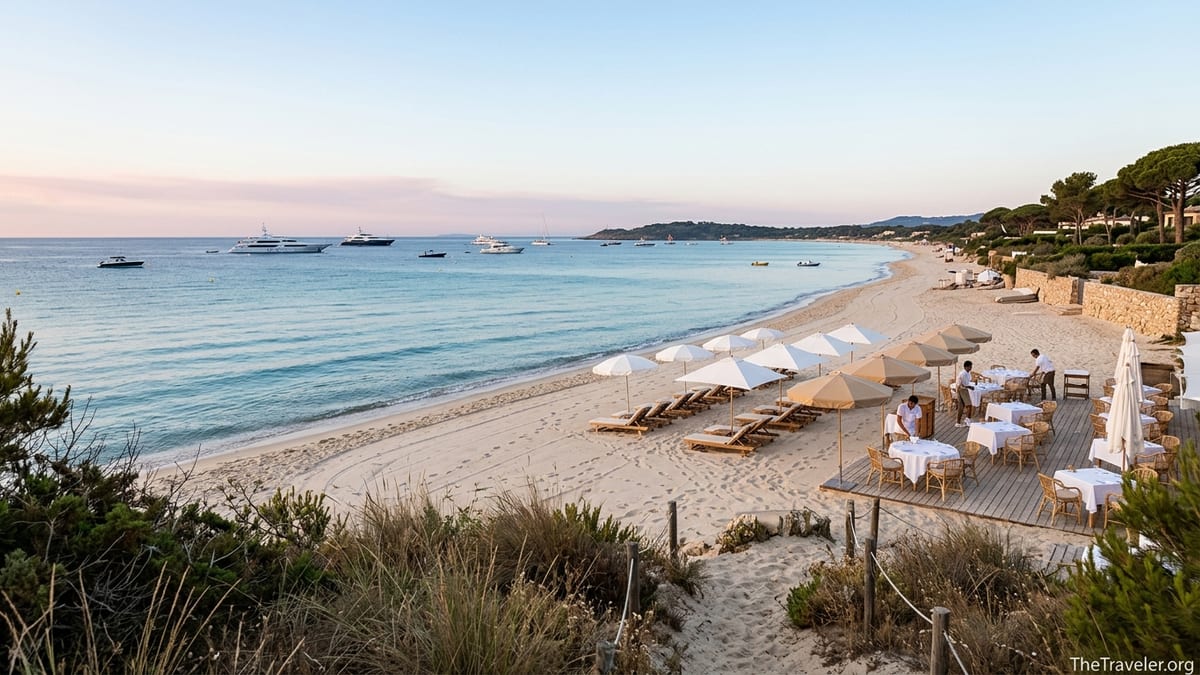
For many visitors, the love affair with Saint-Tropez starts on the sand. The area’s beaches fall into three broad zones: the small in-town strands close to the old port, the long sweep of Pampelonne, and a scattering of quieter coves along the peninsula. Pampelonne is the showpiece. Stretching for around 4.5 kilometers and classed as a protected natural area, it is often described by local tourism officials as the birthplace of the “Tropezian myth,” a place where people come not only to swim and sunbathe but to drink rosé, dance, and watch a parade of boats drift just offshore.
First-timers are often surprised to discover that Pampelonne technically sits in the neighboring commune of Ramatuelle rather than Saint-Tropez itself. In practice, no one draws that boundary on a beach day. A taxi from the port to Pampelonne usually takes about 15 to 20 minutes, and many hotels now offer complimentary shuttles that drop guests directly at their partner beach clubs. Travelers arriving by yacht will often anchor in the bay and send a tender straight to the sand.
On peak summer days, the water at Pampelonne often appears as a gradient of pale turquoise near shore deepening to darker cobalt further out, with superyachts anchored like a second horizon. Early risers might share the beach with locals walking dogs or doing a quick morning swim before the loungers fill. By midday in July and August, the mood turns distinctly Riviera festive, but even then you can still find quieter stretches of public sand between the private concessions if you prefer to lay down your own towel.
Closer to town, compact beaches such as La Ponche or La Bouillabaisse offer an entirely different feel, with views back over terracotta rooftops and the citadel. These are places for a more local slice of life: an early evening dip followed by an ice cream from a gelateria in the old streets, or a casual plate of grilled fish at a waterside bistro instead of a full beach-club production.
Pampelonne’s Beach Clubs: From Bohemian Chic to Iconic Institutions
If Saint-Tropez has a signature setting, it is the scene on the private sections of Pampelonne where beach clubs combine restaurant, bar and daybed service with carefully curated music and design. Long-running institutions and newer openings coexist along the same stretch of sand, each with its own personality. At Moorea, one of Pampelonne’s historic clubs, guests arrive under gray, white and turquoise parasols to find a classic Riviera mix of teak decking, seafood platters and champagne in ice buckets. Indie Beach, described by the local tourism office as having a refined bohemian spirit with light wood, white canvas and sand tones, leans into a barefoot chic look that feels current without chasing every trend.
For travelers, the practical question is often cost and access rather than ambience. At many clubs, a pair of sun loungers with towels and an umbrella can run from roughly 60 to 120 euros for the day in high season, depending on how close you are to the water and how in-demand the address is. Some clubs require or strongly recommend advance reservations for beds, especially during late July and August or around major events such as Les Voiles de Saint-Tropez. Others keep a few spots aside for walk-ins, particularly earlier in the day. Food and drink add to the bill: a main course like grilled sea bass or a truffle pizza will often sit around 30 to 45 euros, while a bottle of local rosé can start close to 40 euros and climb steeply from there.
Not every traveler needs the full champagne-spraying experience to enjoy Pampelonne. Many people split the difference by booking a single front-row lounger at a more relaxed club, using it as a base while spending much of the day swimming or walking the shoreline. It is also perfectly acceptable to move between club and public zone, perhaps swapping an expensive beach bed for a simple towel later in the afternoon once you have had your long lunch in the shade.
What unites these very different venues is the underlying promise: an all-day beach ritual where you never have to think about logistics. Staff carry drinks to your lounger, DJs curate the soundtrack, and the only decisions are whether to order another plateau de fruits de mer or head down the wooden steps for another swim. That comfort and convenience, coupled with a strong sense of being at the center of the Riviera social calendar, keeps many visitors returning to Pampelonne year after year.
Hotels and Villas that Redefine Discreet Luxury
Beyond the sand, Saint-Tropez’s pull is tied to a particular approach to luxury that balances indulgence with a home-like scale. Rather than high-rise resorts, many of the area’s most coveted addresses are low-slung villas, converted farmhouses and village hotels that occupy only a few dozen rooms but invest heavily in service, gardens and design. Condé Nast Traveler has repeatedly highlighted properties such as Hotel Lou Pinet, where Provençal-style villas wrap around what is described as the largest hotel pool in the area, creating a setting that feels more like a private estate than a traditional resort.
Hotel Byblos remains a headline-making grand dame. Built in the 1960s with the explicit goal of impressing Brigitte Bardot, it became a magnet for rock stars and actors, from Mick Jagger to Cher. Recent seasons have brought a new generation of upgrades with interior designer Laura Gonzalez creating a set of color-drenched suites, and the hotel unveiling its first rooftop bar along with overhauled food and beverage spaces. The nearly 100-room property is arranged in tiers around a central courtyard and pool, with buildings painted in sun-warmed shades of ochre, terracotta and rust red that echo the town’s lanes just beyond.
On the hills above the bay, Althoff Villa Belrose offers a different perspective, quite literally. Set amid pine trees and Mediterranean scrub, this member of a global luxury hotel collection looks out over the gulf with a large terrace restaurant and rooms that emphasize wide balconies and floor-to-ceiling windows. The hotel’s seasonal opening schedule, usually running from April to October, aligns with the period when sea views and pool decks are at their most appealing. Many rooms pair that panorama with high-touch amenities such as partnerships with Swiss skincare brands in the spa and gourmet tasting menus that lean into the area’s seafood and produce.
Travelers who prefer even more privacy often turn to stand-alone villas around Gassin, Ramatuelle or the inland side of the peninsula. Agents report consistent demand for houses with at least four bedrooms, a pool and easy access to both Pampelonne and the port, especially from multigenerational families or groups of friends sharing costs. Nightly rates in peak season can rival five-star hotels, but the trade-off is the feeling of having your own corner of the Riviera, complete with breakfast on the terrace and late-night swims under a sky rarely dimmed by city lights.
Old Port, New Energy: Superyachts and Village Life
Walk through the port on a July evening and you see one of the clearest reasons people keep returning to Saint-Tropez: the contrast between everyday village rhythms and the spectacle of superyachts moored side by side. On one side of the quay, fishermen unload crates and locals queue at a small fish stall for dorade and sea urchins. On the other, crews hose down glossy decks while guests step off tender platforms directly onto the promenade. The harbor has fast links across the bay on shuttle boats to Sainte-Maxime and seasonal ferries onward to destinations like Cannes and Nice, yet its scale remains human enough that you can cross from one side to the other in minutes.
Travelers who are not staying on the water can still sample the yacht lifestyle through day charters or shared excursions. In high season, smaller motorboats that take four to eight people out for a half-day cruise towards beaches or nearby islands often start in the range of several hundred euros, plus fuel. Full-scale superyacht charters with cabin accommodation and crew can run to tens of thousands of euros per week, but many agencies now highlight more modest options such as RIBs for snorkeling or classic wooden boats for sunset cruises that put this side of Saint-Tropez within reach of more visitors.
Ashore, evenings begin with an apéritif in one of the cafés that line the quay, where a glass of rosé might cost between 8 and 15 euros depending on how prime the terrace is. The people-watching is as much a draw as the drinks. Owners of vintage sports cars rumble past, designers and DJs in town for pop-up collaborations wander in groups, and local families steer strollers through the same square they have used for generations. The architecture beyond the waterfront is surprisingly simple: narrow lanes, pastel façades, and the ochre bell tower of the Église de Saint-Tropez rising above it all.
Even with its international profile, the town still maintains routines that remind visitors they are in a lived-in place rather than an open-air set. There are weekly markets selling Provençal textiles, cheeses and olives, bakeries where people argue amicably over who makes the best tarte tropézienne, and schoolchildren navigating the same cobbled alleys that travelers photograph every day. That layering of glamour atop ordinary life gives Saint-Tropez a texture that pure resort towns often lack.
Dining, Fashion and the Art of Riviera Indulgence
Saint-Tropez’s restaurant and shopping scene gives travelers more reasons to book another trip. At the highest level, the area is home to some of the most acclaimed fine-dining venues in the south of France, including three-Michelin-starred kitchens where chefs reimagine Mediterranean flavors with elaborate tasting menus. Dishes might include local red mullet prepared with braised fennel and rockfish broth, or seasonal asparagus served in multiple textures, all designed to showcase regional produce and seafood alongside serious wine lists.
Recent seasons have also brought headline-grabbing brand collaborations that reinforce the link between fashion and food. A new Dior-branded restaurant concept in Saint-Tropez, helmed by a chef famous for his work at a three-star restaurant on the Riviera, creates a garden setting where haute couture motifs appear in everything from rattan furniture to the detailing on parasols. The entrance is tucked beside the Dior boutique and leads into a jasmine-scented courtyard, blurring the line between flagship store and destination restaurant. Reservations for high summer dinners here can be challenging, emphasizing how much demand there is from visitors wanting to fold fashion storytelling into their dining plans.
At more casual levels, travelers can expect to pay perhaps 20 to 30 euros for a main course at a mid-range brasserie in town, or closer to 15 euros for a generous salad at a café off the main square. Lunch at a more upscale beach club restaurant, including a starter like a burrata with tomatoes followed by grilled fish and dessert, can easily reach 70 euros per person before drinks in busy months, though set lunch menus and off-season specials sometimes soften the blow.
Shopping follows a similar spectrum. Global luxury houses line streets near the port with seasonal pop-up boutiques, often open only from late spring to early autumn. Here, visitors browse capsule collections of resort wear, sandals and sunglasses at prices comparable to Paris or Milan. A few streets away, independent shops sell straw baskets, espadrilles and linen dresses that might not carry big-name labels but capture the same sense of effortless Riviera style for a fraction of the cost. For many repeat visitors, returning to a favorite artisan jeweler or linen store becomes almost as important a ritual as booking their usual table on Pampelonne.
Events, Regattas and a Year-Round Social Calendar
Saint-Tropez’s appeal is not limited to the simple idea of summer vacation. A dense calendar of events keeps the town in the headlines well into the shoulder seasons, drawing both international visitors and dedicated regulars. Chief among these is Les Voiles de Saint-Tropez, the sailing event often described by local and regional tourism bodies as the premier regatta on the Mediterranean coast. Created in 1999, it brings together an extraordinary mix of classic wooden yachts and cutting-edge racing boats, with lengths ranging from small 8-meter craft to giants measuring more than 50 meters.
The 2024 edition of Les Voiles is scheduled from 28 September to 6 October, with races held across different classes and special competitions such as the Club 55 Cup and a regatta reserved for century-old traditional boats. During this period, the port area transforms into a village dedicated to the event, complete with hospitality tents, sponsor stands, live music and viewing points. Shuttle services make it easier for spectators to move between the harbor office, the regatta village and different vantage spots around the gulf.
Other months carry their own draws. Autumn often sees additional smaller regattas such as Les Voiles d’Automne, a more intimate series of races that still brings excitement to the waterfront. In some years, Saint-Tropez also appears on the itinerary of international circuits like SailGP, underlining its status as a venue capable of hosting high-profile competition. Cultural festivals, open-air art shows and music nights round out the mix, particularly in June and September when weather remains pleasant but crowds are somewhat thinner than in the August peak.
For travelers, timing a visit around one of these events can completely change the feel of a trip. A July weekend might be about sunbathing and seeing-and-being-seen on Pampelonne. A late-September stay during Les Voiles layers the same daytime beach appeal with evenings spent watching race crews analyze tactics on café terraces. Repeat visitors often experiment with different weeks from year to year, discovering that there is no single “right” season for Saint-Tropez, just different versions of the same underlying glamour.
Practical Realities: Getting There, Getting Around and Managing Costs
Understanding the logistics of Saint-Tropez helps explain why many visitors choose to return despite the challenges. The town does not have its own commercial airport or train station. Most travelers come via Nice, Marseille or Toulon-Hyères airports and continue by rental car, private transfer, helicopter shuttle or seasonal boat. In peak July and August, road traffic into the peninsula can slow to a crawl during late-morning and late-afternoon peaks, which is why some regulars favor shoulder-season visits in June or September when driving remains more manageable.
Once in town, many people get around on foot or by taxi. Distances within the center are short, and strolling between the port, old streets and nearby Plage de la Ponche seldom takes more than fifteen minutes. Reaching Pampelonne without a car usually involves a pre-booked taxi that might cost in the region of 25 to 40 euros each way depending on distance and time of day, or a shuttle service run by certain hotels. Boat shuttles across the bay run to Sainte-Maxime and other small ports, providing an alternative way to explore without ever getting back into a car.
Saint-Tropez is undeniably one of the more expensive destinations on the Riviera, but there are ways to dial spending up or down. Hotel rates for five-star properties in high season regularly reach four figures per night, while simpler guesthouses or rooms in nearby villages like Cogolin or La Croix-Valmer come in significantly lower, especially outside late July and August. Eating one main meal a day at a mid-range brasserie instead of every lunch at a beach club can trim hundreds of euros from a week-long stay. Some travelers also time their main shopping for larger regional centers like Toulon or Nice, keeping Saint-Tropez purchases to a few special items.
For many repeat visitors, the higher prices are justified by the intangible dividend of atmosphere. They talk about a first coffee on a quiet harbor terrace before the crowds wake up, or a late-night walk through lanes that still smell of pine and salt after the last bar has closed. Those small, unscheduled moments are often what tip the balance when deciding where to book the next summer break.
The Takeaway
Saint-Tropez continues to draw travelers back because it offers a rare combination of elements that each visitor can mix in different proportions. For some, the town is almost entirely about Pampelonne’s beach clubs and the satisfaction of securing a sought-after front-row lounger in August. For others, the highlights are quiet swims in shoulder season, long dinners in village gardens and slow mornings wandering the port while race crews rig their boats.
The destination has adapted to changing tastes without losing its core identity. New hotel suites and fashion-branded restaurants join historic properties and classic cafés rather than replacing them. Regattas add spectacle to a port that still serves working fishing boats. Luxury remains present, but often behind high hedges and shaded terraces rather than in high-rise towers. That blend of sun, sea, discretion and spectacle is what keeps Saint-Tropez at the top of many seasoned travelers’ lists, even as they explore an ever-expanding map of coastal escapes.
FAQ
Q1. When is the best time of year to visit Saint-Tropez?
The most popular period is late June to early September for hot beach weather and nightlife, while May, early June and late September offer milder temperatures, fewer crowds and slightly lower prices.
Q2. How do I get to Saint-Tropez without a car?
Most visitors fly into Nice, Marseille or Toulon-Hyères, then continue by shuttle, private transfer or seasonal boat. From Nice and Cannes, summer ferries run directly to the port, and local boats connect Saint-Tropez with nearby towns such as Sainte-Maxime.
Q3. Is Saint-Tropez only for luxury travelers?
Saint-Tropez has many high-end options, but it is not exclusively for luxury travelers. You can stay in simpler guesthouses or in nearby villages, use public sections of the beach, and focus spending on a few special meals or experiences instead of constant indulgence.
Q4. How expensive are beach clubs on Pampelonne?
Prices vary, but in high season a pair of loungers with an umbrella can often cost between 60 and 120 euros per day, with food and drink extra. Some clubs offer more modest options or off-season deals, and public beach areas remain free apart from what you choose to bring or buy.
Q5. Do I need to reserve restaurants and beach clubs in advance?
In July and August, reservations are highly recommended for popular restaurants and beach clubs, especially at lunchtime and for sunset dinners. Outside peak weeks you may find walk-in availability, but it is still wise to book ahead for any venue at the top of your list.
Q6. Can I enjoy Saint-Tropez if I am traveling with children?
Yes. Many hotels and villas welcome families, and Pampelonne’s gentle slope into the sea suits older children and confident younger swimmers under supervision. Early dinners at casual restaurants, morning beach visits and boat trips are particularly family-friendly; very late-night venues are best reserved for adults.
Q7. What should I wear in Saint-Tropez?
Daytime dress is relaxed: swimwear with cover-ups on the beach, light linen or cotton in town, and comfortable sandals or espadrilles. Evenings tend to be smart casual, with many visitors choosing simple dresses, tailored shorts or chinos and shirts rather than formalwear; beach clubs often appreciate but rarely formally enforce dress codes at dinner.
Q8. Is it necessary to rent a yacht to experience the “Saint-Tropez lifestyle”?
No. While yachts are a visible part of the scene, many visitors experience the atmosphere from the port, join more affordable shared boat trips or book a smaller day charter for a few hours. The essence of Saint-Tropez life is as much about terrace cafés, village streets and beaches as it is about time on the water.
Q9. How crowded does Saint-Tropez get in summer?
July and especially August can be very busy, with traffic jams on access roads and fully booked hotels and beach clubs. Streets and beaches are lively from late morning through late at night. If you prefer more space, consider late June or September, when the town remains vibrant but daily crowds are easier to navigate.
Q10. Is Saint-Tropez worth visiting outside the main summer season?
Spring and autumn visits can be rewarding, particularly if you time your trip around events such as sailing regattas. Some beach clubs and hotels close in winter, but the town retains a local feel, and milder weather suits hiking, coastal walks and quieter cultural exploration more than all-day sunbathing.