


For many visitors to France, TER regional trains are an affordable, scenic way to move between villages, wine regions and mid‑size cities. Yet the very things that make TER services flexible and local can also trip up travelers used to high‑speed TGV rules or tightly controlled long‑distance trains. Confusion about tickets, timetables and on‑board etiquette leads to missed connections, fines and frayed nerves every season. Understanding how TER actually works in practice will help you ride these regional workhorses with confidence.
Get the latest updates straight to your inbox!
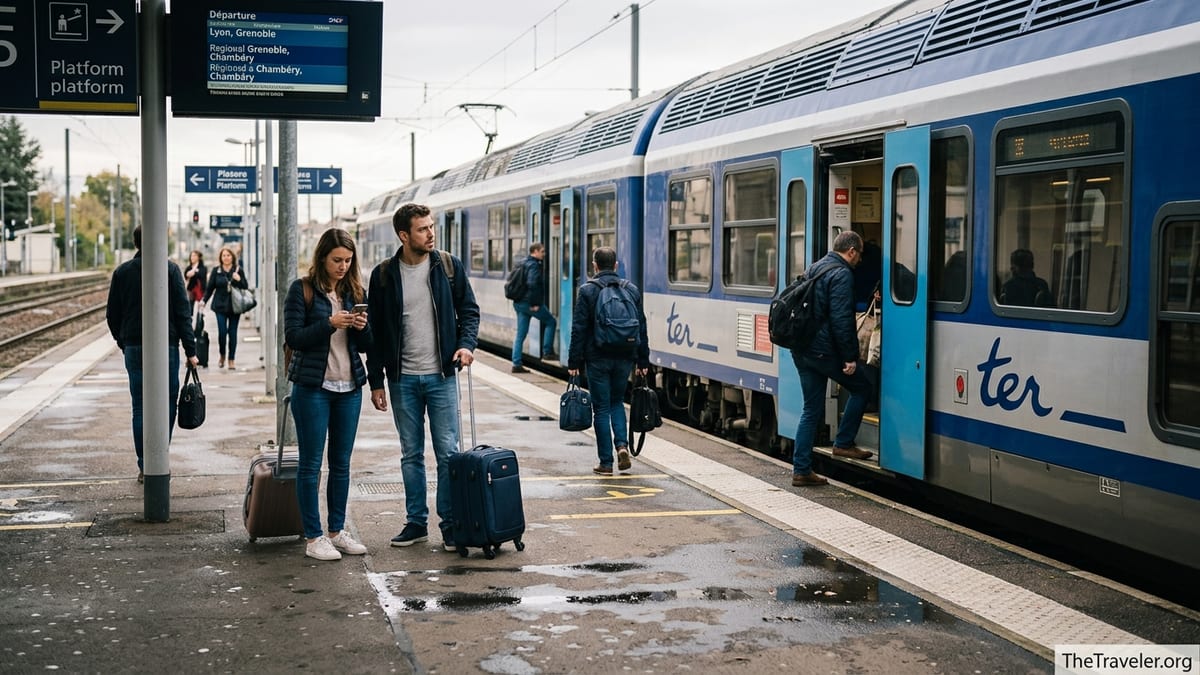
Not Understanding What TER Trains Are (and Are Not)
One of the first mistakes visitors make is assuming TER trains are just slower TGVs. TER stands for Transport Express Régional, and these are regional services operated by SNCF that criss‑cross almost every French region, from Brittany to Provence and the Alps. A TER from Bordeaux to Arcachon or from Lyon to Grenoble behaves very differently from a Paris–Nice TGV. Schedules are oriented around commuters and local trips, not long‑distance tourism, and rolling stock varies from modern double‑deck units to older single‑deck trains with basic fittings.
Unlike TGV InOui or Ouigo, most TER routes do not offer or require seat reservations. You simply board and sit in any free seat in your class. That surprises travelers who are used to assigned seats printed on the ticket. A couple coming from Paris to Strasbourg, for instance, might connect to a TER Strasbourg–Colmar service and waste time searching for car and seat numbers that do not exist, getting stressed in a perfectly normal open‑seating situation.
Another common misunderstanding is expecting the amenities of high‑speed trains. Many TER services do not have food or drink counters, and onboard Wi‑Fi is limited or absent. Air conditioning can be weaker in older trains, and luggage racks smaller. Someone who boards a summer TER from Marseille to Avignon expecting a TGV‑style bar carriage and generous luggage space may end up hot, hungry and annoyed simply because they assumed all French trains offer the same experience.
Finally, travelers sometimes confuse TER with suburban systems like the RER around Paris or with long‑distance "Intercités" trains. This matters when you plan a rail pass itinerary. A Eurail or Interrail user may know that TER trains typically do not require reservations, yet accidentally book an Intercités Bordeaux–Toulouse, which often has different rules and sometimes mandatory seat reservations. Reading the train category carefully on booking platforms and the SNCF Connect app helps avoid these surprises.
Mistakes When Buying and Using TER Tickets
A second cluster of problems appears at the ticket‑buying stage. With TER, the biggest conceptual shift is that many tickets are flexible for the whole day of travel on a given route, not tied to a specific departure. A traveler flying into Marseille who books a TER to Arles at 10:02 often panics about flight delays, not realizing that the same ticket is usually valid for the 11:02 or 12:02 train on that date between the same stations. Visitors sometimes stand in long lines trying to exchange tickets unnecessarily, or worse, buy a second ticket that they do not need.
Another frequent error is expecting TER trains to show as "sold out" and giving up. On some international agencies or aggregator websites, TER options may simply not appear, or a specific departure may be hidden while others remain available. Because TER services do not generally have a strict seat cap in the way TGVs do, the train may still run with space on board. A traveler planning a Paris–Chamonix trip might see a TGV Paris–Annecy plus TER Annecy–Chamonix combination and think the regional leg is sold out, then pay far more for a different route or a flight. In many cases, checking directly in the SNCF Connect app or the relevant regional TER site reveals more realistic availability or day‑pass products.
Ticket validation can also cause stress, especially for travelers used to old‑style paper tickets in Italy or Spain. In much of France, TER tickets purchased online or through SNCF Connect are e‑tickets with QR codes that do not need to be stamped in a yellow machine. Yet some regions still issue paper tickets from station vending machines that must be composted (validated) before boarding. A traveler who buys a paper ticket in Dijon, pockets it, and boards a TER to Beaune without validating may worry when they see locals using the machines. Conductors are often lenient if you walk straight to them at boarding and ask, but they are less forgiving if they find you hiding in a corner with an unstamped ticket during inspection.
Lastly, travelers often ignore regional special offers and therefore overpay. Regions like Occitanie, Hauts‑de‑France or Nouvelle‑Aquitaine regularly promote day passes or summer discounts on TER, sometimes as low as a few euros for unlimited regional travel on specific days. A family exploring the Loire Valley who buys four separate single tickets Tours–Blois–Amboise–Tours may spend much more than if they had purchased a regional TER day pass valid on that Saturday. Because every region brands these products differently, it pays to search specifically for "Pass TER" plus the region name when planning.
Mismanaging Connections Between TER and TGV
Another classic pitfall is underestimating the complexity of connections between TER and high‑speed TGV services. In many French itineraries, you might take a TER from a smaller town such as Avignon Centre, Colmar or Annecy to connect with a TGV from Avignon TGV, Strasbourg or Lyon Part‑Dieu. On paper, the transfer times offered on official booking sites are generally realistic, but problems arise when travelers tighten these margins on their own or buy separate tickets instead of a through fare.
Consider a traveler booked on a morning TGV from Lyon Part‑Dieu to Paris. They notice that a TER from Grenoble arrives at Lyon 10 minutes before the TGV departure and decide to save an hour by choosing it. If they book the TER and TGV separately, a minor delay on the regional train can make them miss the high‑speed service. Because those tickets are on separate contracts, SNCF staff may treat it as the traveler’s responsibility. By contrast, if they had booked the full Grenoble–Paris route as a single journey through SNCF Connect, the itinerary would generally include a safer connection time and give them more protection in case of delays.
Travelers also get caught by misreading station names. Major cities often have multiple stations, and TGVs sometimes use out‑of‑town stations while TERs serve central ones. In Avignon, for example, the high‑speed station Avignon TGV is several kilometers from Avignon Centre. A visitor may book a TGV to Avignon TGV and then a hotel next to Avignon Centre, assuming they are the same place. Late at night, they discover they still need a short TER or bus connection. The same happens between Aix‑en‑Provence TGV and Aix‑en‑Provence Ville, or between the suburban stations around Marseille and the main Gare Saint‑Charles.
Another overlooked risk is scheduling tight TER connections in rural areas, particularly on weekends or late evenings when frequencies are low. A traveler using a Eurail pass might chain together a TER from La Rochelle to Niort and a second TER to Angoulême with only 7 minutes between them. If the first regional train is slightly late or a platform change is announced at the last minute, they may face a long wait for the next service. Building in a larger buffer, especially for the last connection of the day, avoids unexpected hotel nights in intermediate towns.
Underestimating Crowds, Luggage and Seating on TER
Because TER tickets are often flexible and non‑reserved, many visitors imagine they will always find a comfortable seat with room for their suitcases. In reality, regional commuter patterns and holiday peaks can create severe crowding. On Monday mornings or Friday evenings around large cities such as Lille, Lyon or Toulouse, TER trains fill with commuters and students. Add tourists with large suitcases in August or on long weekends, and certain services become uncomfortably packed.
For example, summer TER trains from Nice to Ventimiglia or from Bordeaux to Arcachon can be standing‑room‑only after popular beach stops. A traveler boarding in the middle of the line with two hard‑shell suitcases may find both vestibules crammed, luggage racks overflowing and aisles blocked. They might assume that staff will find them space or upgrade them somehow, but on TER there is usually just one class of service and limited intervention from conductors beyond ensuring safety. Planning to travel slightly earlier in the morning or later in the evening, or choosing shoulder‑season dates when possible, significantly improves comfort.
Luggage management is another recurring issue. TER coaches are not designed for the kind of oversized, multiple‑bag setups common among international visitors. Overhead racks are sized for smaller suitcases and backpacks, and lower racks at carriage ends can fill quickly. It is not unusual to see a family trying to wedge three 23‑kilogram checked bags into the narrow gap between back‑to‑back seats, blocking others from passing. French passengers expect people to keep luggage compact and out of doorways, and conductors may ask you to move bags away from emergency exits even if it means standing nearby to watch them.
Finally, some regions run two‑level TER trains where first‑time users misjudge where to wait on the platform. Electronic screens in stations from Strasbourg to Montpellier indicate where the front and rear units will stop, and which cars are likely to be busiest. Locals often line up near doors that will be close to station exits at their destination. Visitors, unfamiliar with this choreography, pile near the first set of open doors they see. On a rush‑hour Lyon–Grenoble TER, choosing the middle of the train instead of the very front might be the difference between standing in a crowded vestibule and finding a quiet upstairs seat.
Confusion Around Bikes, Pets and Local Rules
France promotes rail as a climate‑friendly way to explore, and many regions advertise "TER + vélo" or bike‑friendly lines through the Loire à Vélo or Canal du Midi corridors. Yet rules around bicycles, pets and special equipment still vary by region and by train, and travelers frequently get caught out. A cyclist who has happily wheeled their bike onto a TER in Brittany might assume the same is allowed on every route. On another line, such as a busy summer TER along the Côte d’Azur, they may discover that only a limited number of bikes are accepted and that boarding can be refused if the space is full.
Practical problems arise on the platform. Bike symbols on the outside of carriages show where dedicated spaces are, but these zones can be only a few hooks or floor areas per train. On a July TER from La Rochelle to Royan, it is common to see four or five touring cyclists rush towards the bike logo while local passengers are already crowding the same door. If you arrive late with heavy panniers, you may end up blocking the doorway or standing in the vestibule for the entire journey. Checking in advance how many bikes are allowed, and aiming for off‑peak trains when possible, makes the experience far smoother.
Pets follow their own set of region‑dependent rules. Small dogs and cats in carriers usually travel for a modest fee or sometimes free, while larger dogs often require a muzzle and a reduced‑fare ticket calculated as a percentage of the standard second‑class price. Misunderstandings occur when travelers assume that a dog allowed onboard a TGV with a simple supplement will face identical treatment on a TER. Conductors in some regions are strict about muzzles and leashes, and fellow passengers may complain if animals occupy seats or wander through the carriage. French norms expect owners to keep animals under close control and out of aisles.
What complicates matters is that TER rules are set at the regional level, and websites for each region outline details in French. A visitor riding a TER in Provence–Alpes–Côte d’Azur may face different bike reservations, pet surcharges or group rules than on a Nouvelle‑Aquitaine TER the next day. Using the SNCF Connect app for tickets is convenient, but it does not always surface these nuances clearly in English. Taking a few minutes to look up the specific TER region and its dedicated site before traveling with a bike or pet can prevent heated conversations on board.
Misreading Strike Disruptions and Real‑Time Info
France has a well‑known culture of strikes, and rail is often at the center of national or regional labor actions. Travelers sometimes make two opposite mistakes: ignoring the risk of disruption entirely, or assuming that every strike announcement means the entire rail system will shut down. In reality, many strike days involve reduced but still significant TER service, with a minimum timetable guaranteed on key routes. Others may target only certain regions or peak hours.
Take a traveler planning to go from Toulouse to Carcassonne by TER during a national strike. If they only glance at headlines and cancel their hotel booking, they may miss the detail that one train per hour is still planned at specific times, which could still fit their itinerary. Conversely, another traveler might see a note about "perturbations" on the SNCF website, assume it is minor, and show up at Bordeaux‑Saint‑Jean station for a mid‑day TER to Arcachon, only to find that half the trains have been canceled and replacement buses are limited.
Real‑time information tools are crucial. Many visitors depend on third‑party apps that work well in Germany or Italy but are less reliable with last‑minute French schedule changes. On strike days, regional storms or technical incidents, the most accurate updates for TER are typically on SNCF Connect and station departure boards. Conductors on board may not always have more information than what appears in these systems. A traveler who follows only the timetable they printed at home weeks earlier can be caught by a last‑minute platform change in Lyon or a partial cancellation that requires a TER plus bus combination.
Language also plays a role. Station announcements in smaller towns may only be in French, and scrolling messages on departure boards use abbreviations such as "supprimé" (canceled), "retard" (delay) or "interrompu" (service interrupted). Visitors sometimes wait on the wrong platform for a train that has been canceled for 30 minutes already. Taking a moment to learn these key words, or to compare what you hear with what the app shows, reduces confusion. If in doubt, station staff in yellow vests are usually the best option for clarification, especially on busy days when many travelers are asking the same questions.
Ignoring On‑Board Etiquette and Regional Norms
While TER trains are generally relaxed, they still have unwritten rules that, if ignored, can create friction. One recurring issue is seat etiquette. Because most TERs have free seating, locals tend to spread out when carriages are half‑empty, but they also expect people to move bags off seats when trains fill. A traveler who leaves a backpack or shopping bags occupying the adjacent seat on a packed Friday evening TER from Paris‑Montparnasse to Chartres may receive pointed comments from other passengers. Moving bags promptly and offering seats to elderly or pregnant travelers aligns with local expectations.
Noise levels can be another source of tension. Groups of tourists sometimes treat a TER as an extension of their hostel common room, with loud video calls and music on speakers. In many regions, conductors will make announcements asking passengers to lower their voices, and some carriages are designated as "espace calme" or quiet areas. Even when there is no formal quiet‑zone marking, French passengers often appreciate a calmer environment, especially on early‑morning or late‑evening services. Wearing headphones, keeping phone calls short and stepping into vestibules for longer conversations avoids conflict.
Eating and drinking habits also differ from what some travelers expect. While there is no nationwide ban on bringing food aboard, strong‑smelling meals or open alcohol can be frowned upon, particularly on morning commuter trains. A group opening large takeaway boxes on a TER between Lyon and Annecy at 7:30 a.m. may receive disapproving looks even if no staff intervene. Simple snacks, pastries from the station bakery and bottled drinks are widely accepted; full hot meals are better kept for stations or destination cafés.
Finally, local fare inspectors occasionally conduct checks at station exits as well as on board, particularly in larger cities like Marseille, Lille or Montpellier. International visitors sometimes treat TERs like metro systems and forget that possession of a valid ticket is mandatory even when no conductor has come through the carriage. Being stopped without a ticket or with the wrong fare type can result in on‑the‑spot fines that are both time‑consuming and expensive to resolve. Keeping tickets or e‑passes accessible until you are fully out of the station is a small but important habit.
The Takeaway
Used well, TER trains are one of the most enjoyable and budget‑friendly ways to explore France beyond its high‑speed corridors. They connect wine villages to regional hubs, beachfront towns to inland cities, and mountain valleys to the national network without the stress of driving or parking. The challenges most travelers face on TER have less to do with the trains themselves and more to do with mismatched expectations and unfamiliar rules.
By understanding that TER is a flexible, largely unreserved regional system, paying attention to station names and connection times, and checking real‑time information on days with strikes or storms, you can avoid the most common pitfalls. Add in a bit of homework on regional bike and pet policies, plus a sensitivity to local etiquette around luggage, noise and seating, and your journeys are likely to be smooth and memorable. With a little preparation, those blue‑and‑white regional trains become not a source of stress but a highlight of your French adventure.
FAQ
Q1. Do I need a seat reservation on TER trains in France?
Most TER trains do not offer or require seat reservations; you simply board and choose any available seat in your travel class. The notable exception is a few specific regional services, such as some TER Normandy routes, which may require seat booking on busy lines.
Q2. Are TER tickets valid only for the specific time printed on my ticket?
In many regions, standard TER tickets bought for a given day between two stations are valid on any TER on that route on that date, not just the departure shown at purchase. However, special promotional fares or cross‑border tickets may be more restrictive, so always check the conditions shown during purchase.
Q3. How early should I plan connections between TER and TGV trains?
If your itinerary is sold as a single journey on an official booking channel, the connection time is generally considered acceptable by the operator. If you buy separate tickets, aim for at least 30 to 45 minutes at major hubs such as Lyon Part‑Dieu, Bordeaux‑Saint‑Jean or Marseille‑Saint‑Charles to allow for minor delays and platform changes.
Q4. What happens if my TER is late and I miss my TGV?
If both legs are on one through ticket, staff can usually rebook you on the next available TGV at no extra cost when the missed connection is due to a delay. If you purchased separate tickets, assistance is discretionary and you may need to buy a new TGV ticket, especially on busy days.
Q5. Can I bring my bicycle on a TER train?
Many TER trains accept bicycles, often for free or for a modest fee, but capacity is limited and rules vary by region and route. On popular tourist lines in summer, bikes may be refused once designated spaces are full, so it is wise to check regional TER information and avoid peak‑hour trains when traveling with a bike.
Q6. Are TER trains safe to use at night?
TER trains are widely used by locals in the evening, and most routes are uneventful, but late‑night services can be quieter and feel less supervised. As in any public transport, keep valuables out of sight, stay in well‑lit carriages with other passengers and avoid sleeping deeply if you are traveling alone on very late trains.
Q7. How can I know if a strike will affect my TER journey?
Strike announcements are usually posted on SNCF channels several days in advance, with details refined closer to the date. On the day itself, the SNCF Connect app and departure boards in stations provide the most reliable information on which TER services are running, canceled or replaced by buses.
Q8. Do TER trains have Wi‑Fi and food service?
A few modern TER units offer Wi‑Fi, but coverage is far from universal and there is rarely a full café bar like on TGVs. It is best to assume there will be no onboard catering, and buy snacks and drinks in the station before boarding, especially for journeys longer than one hour.
Q9. Can I use a Eurail or Interrail pass on TER trains?
Most Eurail and Interrail passes are valid on TER services operated by SNCF, and you usually do not need a reservation. You still have to record the journey in your pass app or paper log before boarding, and be prepared to show both the pass and a passport or ID when conductors check tickets.
Q10. How far in advance should I buy TER tickets?
Because many TER tickets are flexible and prices are relatively stable, you often gain little by buying them months in advance. Purchasing a few days ahead in the SNCF Connect app is usually enough, and in many cases you can buy on the day of travel, though special regional promotions or passes may have limited availability.