


MakeMyTrip has become a go-to platform for booking flights, hotels and holiday packages across India and beyond. For many travelers, it works smoothly enough: you compare prices, pay online and receive instant confirmations. But a growing number of recent complaints and consumer cases show that when something goes wrong, small mistakes at the time of booking can turn into weeks of stress, lost money and endless support chats. Understanding how MakeMyTrip really works, and where travelers most often trip up, can save you a significant amount of time, money and frustration.
Get the latest updates straight to your inbox!
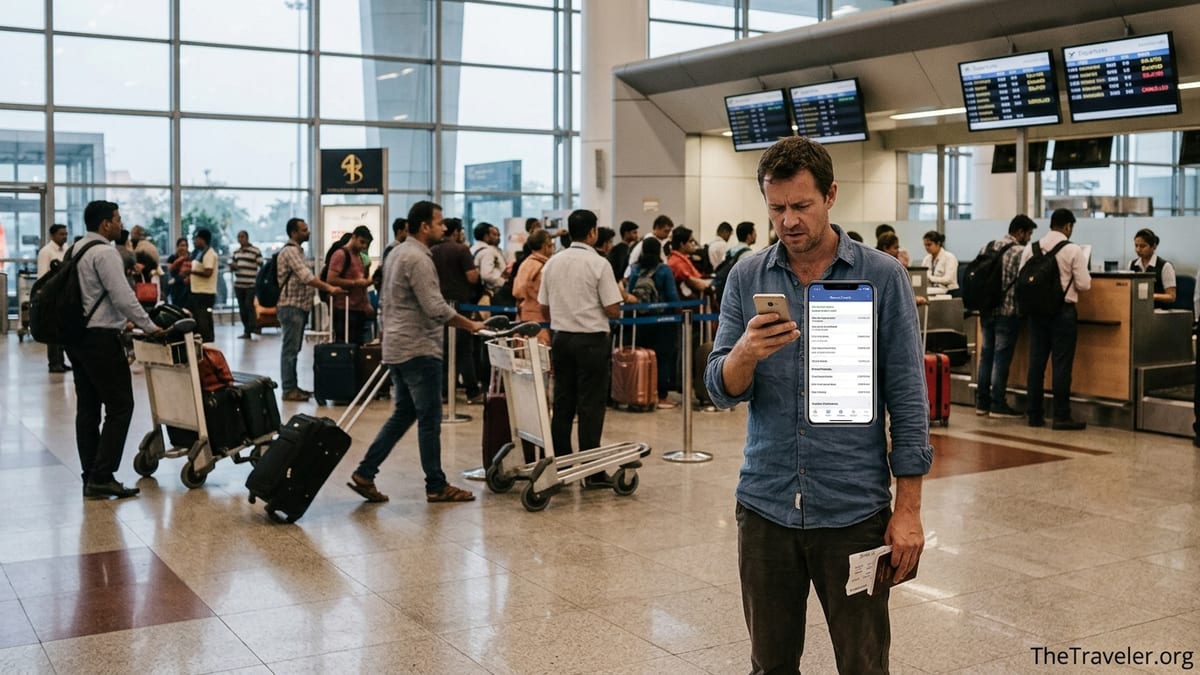
Relying on Headline Prices and Ignoring the Fine Print
One of the most common mistakes travelers make on MakeMyTrip is treating the first price they see as the full and final cost. Recent customer reviews on consumer sites and forums describe situations where a hotel that looked like a bargain at the search stage suddenly became far more expensive at check-in, once taxes, service charges and local fees were added. For example, a traveler booking a budget hotel in Jaipur for around ₹1,400 per night reported being asked to pay an extra ₹600 per night on arrival for local taxes and a so-called “facility fee” that were not clearly highlighted in the initial listing. The final price ended up almost 40 percent higher than what appeared in the search results.
Hidden or lightly disclosed charges become particularly painful with international bookings. Indian travelers recount reserving hotels in Dubai, Bangkok or Bali through MakeMyTrip, only to discover undisclosed resort fees or tourism taxes when they reached the front desk. These might add the equivalent of ₹1,000 to ₹2,000 per night to a mid-range stay. Because resort or destination fees are often collected directly by the hotel, travelers assume MakeMyTrip will shield them from surprises, but the platform typically passes on the hotel’s own practices. If you gloss over the “Important information” and tax breakdown on the checkout page, you may not realize how much extra you will ultimately pay.
The problem is not unique to MakeMyTrip. Many global online travel agencies highlight a low “base rate” to win your click, then tuck the true total into small text on later screens. But given the volume of recent complaints targeting MakeMyTrip specifically for misleading or confusing price displays, it is essential to slow down. Before clicking “Pay now,” expand every fee breakdown, check whether breakfast is actually included, and look for language about “pay at hotel,” “resort fee” or “local taxes payable at property.” A few extra seconds of scrutiny can prevent an unpleasant check-in argument.
For flights, travelers also overlook that the cheapest fares shown by MakeMyTrip are often “light” or “hand baggage only” tickets. A Delhi to Dubai fare that looks attractive at around ₹14,000 one-way may not include any checked baggage at all. If you later add a 20 kg bag at the airport, you could easily pay another ₹3,000 to ₹5,000 each way. Many customers only discover this at the check-in counter, when it is too late to change their booking or shop around.
Misunderstanding Refundable, Zero Cancellation and Promo Offers
Another major source of disappointment is confusion over what “refundable,” “free cancellation” and “zero cancellation” really mean on MakeMyTrip. In theory, these tags are supposed to reassure cautious travelers. In practice, the conditions behind them can be far more restrictive than people expect. Multiple recent complaints describe travelers who booked hotels or flights with a “100 percent refund on cancellation” badge, only to learn later that part of the refund was in MakeMyTrip wallet credits or promotional cashback that could not be withdrawn to their bank accounts.
Consider a typical example from a recent Indian traveler who booked a mid-range hotel with a prominently displayed “100 percent refund on cancellation” tag because their travel dates were uncertain. When plans changed, they canceled well within the allowed window and expected the entire amount to return to their card. Instead, they received only the base room charge as a refund, while the promotional cashback portion remained locked in the MakeMyTrip wallet. When they contacted support, they were told that “cashback refund is out of policy,” a detail that had been buried in small print. To the traveler, this felt like a broken promise, but from MakeMyTrip’s perspective, the offer had been honored exactly as written.
Similar confusion surrounds MakeMyTrip’s “zero cancellation” or “trip guarantee” add-ons that are heavily marketed during the booking flow. Customers have paid extra for these services assuming they would be protected from any cancellation penalties, only to discover that the zero-cancellation guarantee applies only to specific scenarios, such as voluntary cancellations within strict time limits, and not to airline schedule changes, no-shows or date changes. There are recent reports of travelers who bought zero cancellation on domestic flights, faced an airline-initiated cancellation, and then struggled for months to get even a partial refund processed through MakeMyTrip, despite documentation from the airline that the full fare had been returned to the agency.
The key mistake is taking marketing labels at face value rather than reading the actual conditions that govern them. Before you pay extra for any “assured”, “guaranteed” or “zero cancellation” badge, open the terms and conditions linked near the price, look for time limits, exclusions such as “cashback only,” and understand whether refunds return to your original payment method or into a closed MakeMyTrip wallet. A refundable fare that sends money back to your credit card is worth more flexibility than a seemingly generous cashback scheme that traps value inside a single platform.
Assuming MakeMyTrip Will Handle All Airline Cancellations Smoothly
Flight disruptions are where many travelers discover the limits of booking through a third-party platform like MakeMyTrip. Recent social media threads and consumer complaints are filled with cases where airlines say they have processed a refund, but the money remains stuck with the intermediary for weeks or months. For instance, in one widely shared incident, a traveler’s Gulf airline flight was canceled by the carrier. The airline confirmed in writing that the full refund had been sent back to MakeMyTrip, yet the traveler spent weeks chasing the agency without success, with status messages such as “awaiting funds from airline” continuing to appear in their app.
Another real example involved a traveler who booked an international itinerary worth well over ₹2 lakh. At the time of booking, MakeMyTrip’s interface displayed an approximate refund of around ₹2.07 lakh if canceled within a certain window. When the traveler canceled within that window, they eventually received only about ₹26,000 back, according to their account, and had to start preparing a complaint for a district consumer commission. In yet another complaint, an Indian expatriate in the UAE stated that their airline had refunded over 6,000 AED to MakeMyTrip after a cancellation, but the platform paid them less than 300 AED, forcing them into a long and frustrating dispute.
Part of the problem is that many travelers do not understand the chain of responsibility. When you book directly with an airline and your flight is canceled, any refund flows straight back from airline to passenger, often within a couple of weeks. When you book through MakeMyTrip, the airline refunds MakeMyTrip, and then MakeMyTrip is supposed to pass the amount on to you after deducting any fees disclosed at the time of booking. Regulators in India have reminded airlines and travel agents that they must remit refunds within certain time frames, but in practice, communication gaps and internal processing delays can lead to weeks or months of waiting.
Travelers also often assume that if an airline cancels their flight, they should immediately cancel the booking in the MakeMyTrip app. In reality, that action can sometimes be recorded as a “customer-initiated cancellation,” which may reduce your entitlement to a full refund. Several recent posts describe travelers discovering that MakeMyTrip recorded their cases as voluntary cancellations even when the airline’s system showed an involuntary cancellation at the carrier’s end. A safer approach is to first check the airline’s website or app directly using your six-character booking reference, confirm the flight status, and take screenshots of any “flight canceled by airline” messages before you take any action through MakeMyTrip.
Overlooking Hotel Policies, Guest Details and Property Realities
Another pattern emerging in recent reviews involves hotel bookings where the details entered on MakeMyTrip do not match what the traveler expects at check-in. For example, some travelers have reported selecting a room that they believed was suitable for two adults and one child based on photos and brief descriptions, only to reach the property and be told that the MakeMyTrip voucher shows a booking for a single adult occupancy. At that point, the hotel has grounds to demand a substantial extra charge per night or even deny check-in unless the guest pays the difference. A recent reviewer described a gap of several hundred rupees per night when this happened during a property stay in central India.
MakeMyTrip often acts as a conduit for hotel inventory from different suppliers, and occasionally the room category that appears in the app is not a perfect match with the hotel’s own system. Travelers make the mistake of assuming that a photo of a large bed or a line like “ideal for couples or small families” guarantees that three people will be accepted in the room at the same rate. Hotel policies about extra adults, children and breakfast inclusion can be quite strict. If your voucher clearly lists “1 adult,” the front desk is unlikely to bend the rules, especially at peak times or in popular destinations like Goa, Manali or Jaipur.
Another frequent complaint is that the real condition of a property does not match glossy photos on the MakeMyTrip listing. Recent reviews across consumer platforms talk about damp rooms, poor hygiene, or even hotels refusing to honor confirmed vouchers during busy holiday periods, claiming they never received the booking from the aggregator. While these experiences can happen on any booking site, travelers increase their risk by skipping the most recent user photos and reviews. A hotel that had excellent reviews in 2019 may have changed management or deteriorated sharply after the pandemic, even if its professional photos remain the same.
To avoid these pitfalls, carefully review the “hotel policies” section before confirming any booking. Look at details such as check-in age requirements, ID rules for couples, extra guest charges and specific language about local ID restrictions, which are especially important in some Indian states and cities. Cross-check your MakeMyTrip voucher immediately after booking to ensure that the number of guests, bedding type and inclusions such as breakfast match your expectations. If something looks wrong, contact both MakeMyTrip and the hotel within 24 hours and request written confirmation, rather than waiting until you arrive tired at midnight with family and luggage.
Underestimating Customer Support Limitations and AI-First Service
As MakeMyTrip has scaled, it has increasingly leaned on automated chatbots and self-service flows to handle customer issues. Many recent reviewers complain that it is now very difficult to reach a human agent, especially for complex problems involving partial refunds, schedule changes or errors that occur mid-trip. Travelers describe being stuck in loops where the in-app help section directs them to standard FAQs, while calls to helplines result in long hold times followed by dropped connections. In some accounts, even email channels for overseas offices are not clearly listed, leaving customers in the UAE or elsewhere unsure where to turn.
In one widely shared case, a traveler based in the Gulf region reported that their flight to Krabi was canceled and that the airline had already refunded over 6,000 AED to MakeMyTrip. Weeks later, the traveler said they had received less than 300 AED from the platform and could not reach a responsible agent by phone despite hours in call queues. Others recount cases where complaint tickets were marked “resolved” without any clear explanation or were never reopened even when new evidence from the airline was provided. These experiences feed a perception among some frequent travelers that MakeMyTrip is reliable when everything goes according to plan, but offers poor support at exactly the moments when travelers need help the most.
The mistake many travelers make is assuming that MakeMyTrip will act as a full-service travel agent the way a traditional brick-and-mortar agency might. In practice, the company is structured as a large-scale online platform optimized for automated, low-cost interactions. Its business model expects travelers to manage simple date changes, cancellations and check-in issues themselves, often through airline or hotel channels, with MakeMyTrip stepping in mainly for payment-related matters and to enforce its own policies. When you go in expecting real-time, personalized problem-solving by phone, the gap between expectation and reality can feel like a broken promise.
To protect yourself, document every interaction carefully. If you speak to a call center agent, note the date, time and any reference numbers. Save screenshots of airline messages, hotel emails and in-app status updates. If you face long delays or suspect that MakeMyTrip is holding a refund that has already been released by an airline, you may need this paper trail to escalate your case to a bank chargeback, an ombudsman or a consumer forum in India or the country where you are traveling. Recognize that while MakeMyTrip may be the friendliest option when booking a simple weekend trip, it is not a substitute for travel insurance or a dedicated corporate travel desk when stakes are high.
Ignoring Direct Booking Benefits and Over-Relying on Aggregators
Many travelers in India and abroad now default to MakeMyTrip because it is familiar and offers various coupon codes, bank offers and wallet cashbacks. Yet one mistake that often emerges only when things go wrong is the assumption that booking through MakeMyTrip is always cheaper and more flexible than booking directly with airlines or hotels. In a number of recent cases, travelers who booked direct with the same airline or hotel received faster and fuller refunds after cancellations than those who used third-party platforms, even when they had paid similar total prices initially.
Take, for example, two friends who booked similar flights to Southeast Asia, one directly with a low-cost carrier and one through MakeMyTrip. When their flights were canceled due to changing schedules, the direct customer received a full refund or free date change directly in the airline app within a couple of weeks. The MakeMyTrip customer, on the other hand, spent weeks chasing status updates and saw a portion of the fare retained as a service fee. Both had started with ticket prices in the same range, but the indirect booking introduced an extra layer between traveler and airline that slowed relief.
Hotels can be similar. A mid-range resort in Goa might offer a nightly rate of ₹4,000 including breakfast on MakeMyTrip, sweetened by a coupon that reduces it to around ₹3,600 after discounts and cashback. The same hotel’s own website might list a rate of ₹4,000 or ₹4,200 but include more flexible cancellation, on-arrival payment and special perks like early check-in or free room upgrades for direct bookers. If you only look at the initial headline price on MakeMyTrip, it seems like the better deal. But if a family emergency forces you to cancel the trip, the direct booking’s more generous refund conditions may leave you financially better off despite the slightly higher sticker price.
The lesson is not that MakeMyTrip should never be used. Aggregators are extremely useful for comparing options across multiple brands, especially for complex itineraries or unfamiliar destinations. The mistake is treating the aggregator as the final step instead of using it as the research tool it is best suited to be. Once you have used MakeMyTrip to narrow down your preferred airline or hotel, always check the direct channel’s price and policies for the exact same dates and room or fare type. If the difference is small, consider whether faster support, simpler refunds and clearer accountability might be worth paying a few hundred rupees more.
Failing to Prepare a Backup Plan When Things Go Wrong
Finally, many MakeMyTrip users underestimate how much planning they must do for worst-case scenarios. On social platforms, there are recent accounts from travelers stranded at airports after last-minute cancellations, unsure whether to call the airline or MakeMyTrip first, and losing valuable time waiting on hold while cheaper alternative flights sold out. Others have been turned away at hotels late at night because their booking voucher could not be found in the property’s system, with MakeMyTrip support unreachable and no clear plan for where to stay instead.
These situations feel particularly stressful when children or elderly family members are involved, or when you are standing in a foreign airport late at night after a long-haul journey. The common mistake here is assuming that a digital confirmation from a large, recognizable brand guarantees that you will be looked after in all circumstances. In reality, once money has changed hands, both airlines and intermediaries may point to each other when disruptions occur, and your ability to resolve things quickly will often depend on your own preparation.
Before traveling, always save the airline’s booking reference (the six-character code) separately from the MakeMyTrip reference, and add the booking directly to the airline’s own app where possible. This allows you to manage check-in, seat selection and schedule changes without necessarily depending on MakeMyTrip’s interface. For hotels, note the property’s direct phone number and email address and, if arriving late at night, consider sending a short email a day in advance to reconfirm your booking and arrival time. If you have booked a non-refundable room or a complex multi-city flight through MakeMyTrip, consider travel insurance that explicitly covers supplier default or agency failure, and read carefully how it interacts with bookings made via online travel agencies.
Equally important, know your rights. In India, aviation regulations set out time frames and responsibilities for refunds when flights are canceled, including when tickets are purchased through travel portals. Having a basic understanding of these rules, even at a high level, can help you push back if you are told that a refund will take an indefinite period or that no compensation is possible. Combine that knowledge with careful documentation, and you stand a better chance of a fair outcome if you need to escalate beyond MakeMyTrip’s own support channels.
The Takeaway
MakeMyTrip remains a powerful tool for discovering and booking travel, especially within India and to popular international destinations. Many trips go perfectly well, and for simple point-to-point journeys or short hotel stays, the platform can be convenient and cost-effective. But recent real-world experiences show that when something goes wrong, the smallest oversight at the time of booking can determine whether you receive a smooth resolution or months of frustration. Headline prices that seem too good to be true, tempting “zero cancellation” badges and one-click promo codes all deserve closer scrutiny.
If you choose to use MakeMyTrip, treat it the way a seasoned traveler would treat any aggregator: a powerful comparison engine that demands careful reading of fine print, a clear understanding of who is responsible for refunds and cancellations, and a willingness to cross-check prices and policies directly with airlines and hotels. Keep meticulous records, verify every important detail on your voucher and the supplier’s own systems, and have a backup plan for disruptions. Those extra steps take a little more effort upfront but can save you large sums of money and countless hours of stress later.
FAQ
Q1. Is it safe to book flights and hotels through MakeMyTrip?
Yes, MakeMyTrip is a well-established brand and millions of trips are booked through it each year. The main risk is not safety in the sense of fraud, but rather confusion about refunds, hidden fees and support when things go wrong. As long as you read the fare rules, hotel policies and cancellation terms carefully, and keep documentation of your bookings, it can be a safe and convenient option.
Q2. Why do some travelers say their MakeMyTrip refunds are delayed?
Refund delays often happen because the money has to flow from the airline or hotel back to MakeMyTrip and then on to you. If there are disputes about whether a cancellation was voluntary or airline-initiated, or if MakeMyTrip applies additional service fees, that can slow things down. In many recent complaints, airlines confirmed that they had refunded the full amount to MakeMyTrip, but travelers had to chase the platform for weeks to receive their share.
Q3. How can I avoid hidden charges on MakeMyTrip hotel bookings?
Always expand the full price breakdown on the checkout page and read the “hotel policies” section. Look for mentions of resort fees, facility charges, local taxes payable at the property and extra adult or child fees. Check whether breakfast is included and whether the booking is for one or two adults. If anything is unclear, contact the hotel directly after booking and get written confirmation so that you are not surprised at check-in.
Q4. What is the difference between refundable, free cancellation and zero cancellation on MakeMyTrip?
A refundable fare usually means you can cancel and receive money back, but there may still be penalties. Free cancellation typically refers to a specific window before check-in or departure during which you can cancel without a fee. Zero cancellation is an additional product that you pay for, promising to cover certain penalties. Each of these comes with specific conditions, so do not rely only on the label. Always open and read the detailed terms attached to your booking.
Q5. Should I contact the airline or MakeMyTrip if my flight is canceled?
Ideally you should contact both, but start by checking the status directly on the airline’s website or app using your booking reference. Take screenshots that clearly show if the flight is canceled by the airline. Then reach out to MakeMyTrip through the app or helpline to request your refund or rebooking, and share any documents from the airline. If you booked through MakeMyTrip, they usually control your ticket, so the airline may refer you back to them for actual refund processing.
Q6. Is it better to book directly with airlines and hotels instead of using MakeMyTrip?
For simple, flexible bookings, direct channels often provide clearer policies, faster refunds and more straightforward support. However, MakeMyTrip can still be useful for comparing options across many airlines and hotels and for taking advantage of specific bank or wallet offers. A smart strategy is to research on MakeMyTrip, then compare with direct prices and policies. If the difference is small, the direct option may be better value once you factor in flexibility and support.
Q7. What should I do if a hotel refuses to honor my MakeMyTrip booking?
First, stay calm and show your confirmation voucher with the booking ID and payment details. Ask the hotel to check again in their system and with any channel manager they use. If the issue persists, call MakeMyTrip support immediately from the property and document the situation with photos or videos if appropriate. If you must pay again to secure a room, keep all receipts. These records will help you claim a refund or compensation later from MakeMyTrip or, if necessary, through a consumer forum or your bank.
Q8. How can I reduce the chance of refund disputes with MakeMyTrip?
Double-check the names, dates and route before paying, avoid last-minute voluntary cancellations if possible, and always capture screenshots of refund estimates or free cancellation windows at the time of booking. If an airline cancels your flight, do not rush to cancel it yourself in the app without first confirming the status in the airline’s system. Keep all emails, SMS messages and chat logs from both the airline and MakeMyTrip. The clearer your evidence, the easier it is to resolve disputes.
Q9. Are MakeMyTrip wallet refunds as good as cash refunds?
MakeMyTrip wallet credits can be useful if you are a frequent user of the platform and plan to book again soon. However, they are not the same as a cash refund to your bank account or card, because they usually cannot be withdrawn as money and may expire after a certain period. Treat wallet credits as store credit with restrictions, not as a full replacement for a proper refund.
Q10. What kind of traveler is MakeMyTrip best suited for?
MakeMyTrip works best for travelers who are comfortable managing bookings online, reading detailed terms and conditions, and handling basic issues themselves through apps and chat support. It is convenient for straightforward domestic trips, short city breaks and price comparisons across multiple airlines and hotels. For very complex itineraries, expensive once-in-a-lifetime holidays or situations where you need hands-on assistance, a combination of direct bookings, comprehensive travel insurance and, in some cases, a traditional travel agent may serve you better.