


More news on this day
American Airlines and United Airlines are ramping up their transatlantic networks for 2026, setting up a sharper contest for Europe and United States travelers as both carriers add capacity, launch new routes and refine their premium products on key corridors.
Get the latest news straight to your inbox!
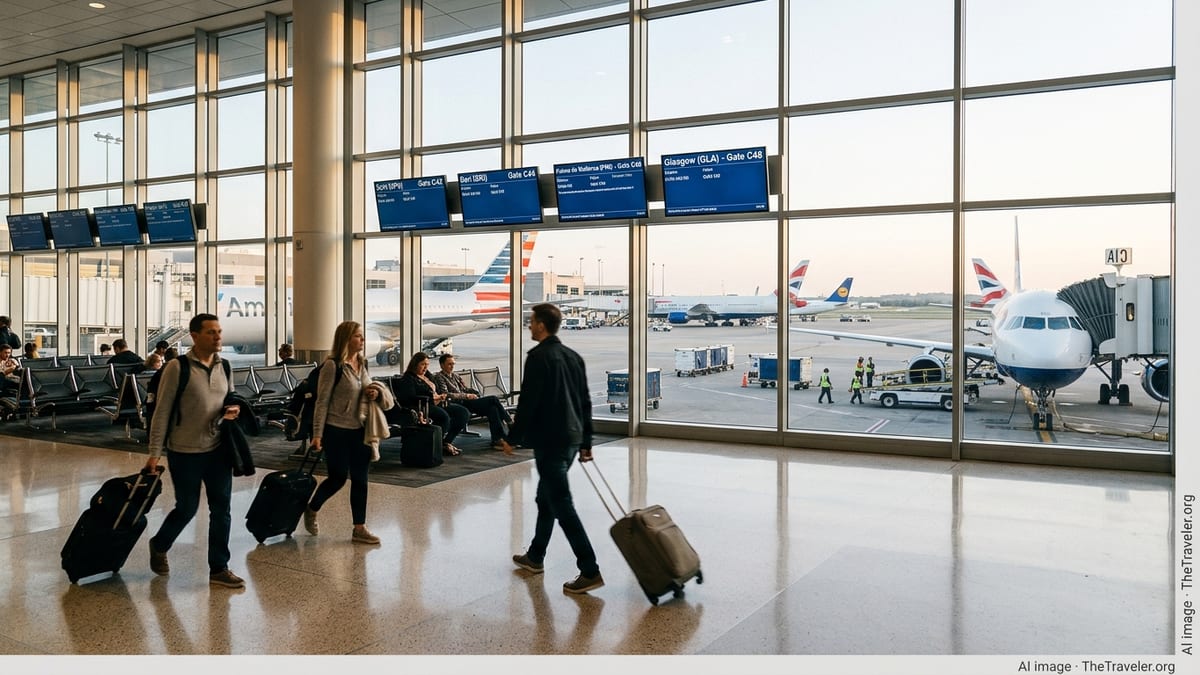
Expanded Transatlantic Networks Reshape Summer 2026
Public schedules and company updates for the 2026 summer season show both American Airlines and United planning more seats across the Atlantic, with a particular focus on big U.S. hubs and major European gateways. For leisure and business travelers, the result is likely to be more nonstop options and denser schedules on routes where the two U.S. giants already compete, alongside fresh city pairs that broaden the map.
American has outlined 15 new routes for 2026 that deepen its long haul reach, including additional connections from Chicago and Dallas to Europe, while maintaining a strong presence at London Heathrow, one of its most lucrative international markets. Network filings indicate that larger Boeing 787-9 aircraft will be used on select services such as New York to London and Philadelphia to Lisbon during the peak season, boosting capacity on corridors where demand has remained resilient.
United, meanwhile, continues to position itself as the largest U.S. airline across the Atlantic by destination count. Schedules and investor materials show that the carrier is preparing to add summer 2026 service from Newark to Split in Croatia, Bari in Italy, Glasgow in Scotland and Santiago de Compostela in Spain, complementing an already extensive European network built around hubs at Newark, Washington Dulles and Chicago.
As both airlines load their 2026 timetables, analysts suggest that the combination of new leisure destinations, extra frequencies on core business routes and incremental widebody capacity will apply fresh pressure on fares, especially outside peak holiday periods.
New York and London Emerge as a Battleground
The New York to London corridor remains one of the most contested long haul markets, and recent schedule information highlights how American and United are pursuing distinct strategies there. American’s services concentrate on John F. Kennedy International Airport to London Heathrow, often timed to feed its wider U.S. domestic network and joint business partner British Airways, while also offering select Newark departures under its own brand.
Industry schedule data for the upcoming seasons shows American deploying its higher capacity 787-9 and 777-300ER aircraft on several daily New York to London rotations, reflecting strong demand for both premium cabins and economy travel. The airline has also invested in upgrading cabins on Chicago and Philadelphia routes to Heathrow, which indirectly intensifies competition on transatlantic corporate travel beyond the New York market.
United has taken a different approach, concentrating its New York area London flights at Newark rather than JFK. Operational statistics released in 2025 highlighted Newark’s role as the airline’s leading transatlantic gateway, with more departures to Europe than any other United hub and tens of thousands of international movements over the peak summer months. That concentration allows the airline to offer tightly coordinated connection banks from domestic cities into its London services.
For travelers, the growing divergence in strategy means a choice between airport convenience and network design. New York area residents on the New Jersey side may see an advantage in United’s dense Newark schedules, while those near Queens and Long Island may prefer American’s offerings from JFK, all while contending with parallel competition from European and low cost rivals on the same city pair.
Regulators and Joint Ventures Shape Competitive Dynamics
The intensifying rivalry between American and United on transatlantic routes is unfolding against a backdrop of continuing regulatory scrutiny in both the United States and Europe. Authorities have been examining long standing joint business arrangements among major airlines on North Atlantic routes, with a focus on how capacity decisions, slot holdings and pricing affect consumer choice.
In 2025 and 2026, the United Kingdom’s competition regulator advanced its probe into the Atlantic Joint Business Agreement involving American and several European partners. As part of a package of commitments, airlines in the alliance have agreed to release takeoff and landing slots at London Heathrow or Gatwick on certain U.S. routes, creating opportunities for rival carriers to launch or expand services and, in theory, to foster more competition on price and schedule.
While United is not a member of that particular joint business, it competes indirectly with it on many of the same flows, including London to New York, Boston and Chicago. The combination of structural remedies, such as slot releases, and United’s separate growth plans from its hubs is contributing to a more fragmented competitive field on these key routes than in the years before the pandemic.
For travelers, these regulatory developments translate into more airlines vying for traffic across the Atlantic and, increasingly, into secondary European markets. Over time, the interplay between joint venture coordination on one side and independent expansion by competitors on the other is likely to influence which carriers dominate particular city pairs and how aggressively they price seats.
Premium Cabins, Product Upgrades and Fare Pressures
Alongside raw capacity increases, both American and United are investing in their onboard products on Europe routes, a move that affects how competition plays out at the top end of the market. American has been rolling out its Flagship Suite seating on select widebody aircraft serving London Heathrow and other long haul destinations, positioning the product as a step up in privacy and amenities from older business class configurations.
Fleet and schedule announcements indicate that these upgraded aircraft will operate on key transatlantic routes from hubs such as Chicago and Philadelphia through the 2026 winter season, reinforcing American’s bid to secure more high yield corporate and premium leisure travelers on flights to the United Kingdom and continental Europe. Cabin refreshes are also aimed at enhancing the experience in premium economy, a cabin that has gained traction on longer flights.
United has pursued its own mix of product and network initiatives. The airline has highlighted the expansion of high speed onboard connectivity, including satellite based internet across a growing portion of its fleet, and has been incrementally densifying premium seating on select widebody types deployed to Europe. With additional Europe destinations coming online from Newark and other hubs, United is seeking to offer a blend of premium and leisure oriented cabins tailored to each route’s demand profile.
For passengers, these changes create a more layered marketplace in which price is only one aspect of competition. On popular routes like New York to London or Chicago to London, travelers are increasingly choosing between different seat types, cabin layouts and service offerings at similar fare levels, prompting airlines to use product differentiation alongside schedule and loyalty incentives to attract bookings.
What It Means for Europe and U.S. Travelers
The combination of new routes, added frequencies and upgraded aircraft by American and United is expected to broaden options for travelers throughout 2026, though the benefits will vary by origin city and season. On major corridors linking large U.S. hubs with London, Paris and other European gateways, the added competition is likely to keep a lid on fare spikes outside of the busiest holiday and peak summer travel weeks.
In secondary and emerging leisure destinations such as Split, Bari and Santiago de Compostela, United’s new nonstop flights from Newark may give North American travelers more direct access than before, shortening journey times and reducing the need for intra Europe connections. At the same time, American’s continued expansion from hubs like Dallas and Chicago supports one stop itineraries from a wide range of U.S. cities into both primary and secondary European markets.
European travelers heading to the United States will also see a more diverse landscape of connection options. With larger aircraft and additional services on routes into Chicago, Philadelphia and Washington, passengers starting their trips in Europe may find more same day onward connections to medium sized U.S. cities, potentially at more competitive prices as airlines vie to fill extra seats.
How far those competitive gains reach will depend on broader economic conditions, fuel prices and the strength of transatlantic demand in 2026. For now, however, published schedules and company updates point to a period in which American Airlines and United are using both network growth and product upgrades to challenge each other across the Atlantic, reshaping choices for travelers on both sides of the ocean.