


More news on this day
Germany’s rail infrastructure company DB InfraGO has begun a detailed investigation into a nationwide failure of the GSM-R digital radio network that abruptly halted nearly all train movements across the country on the night of June 23, raising fresh concerns about the resilience of Europe’s rail communications systems.
Get the latest news straight to your inbox!
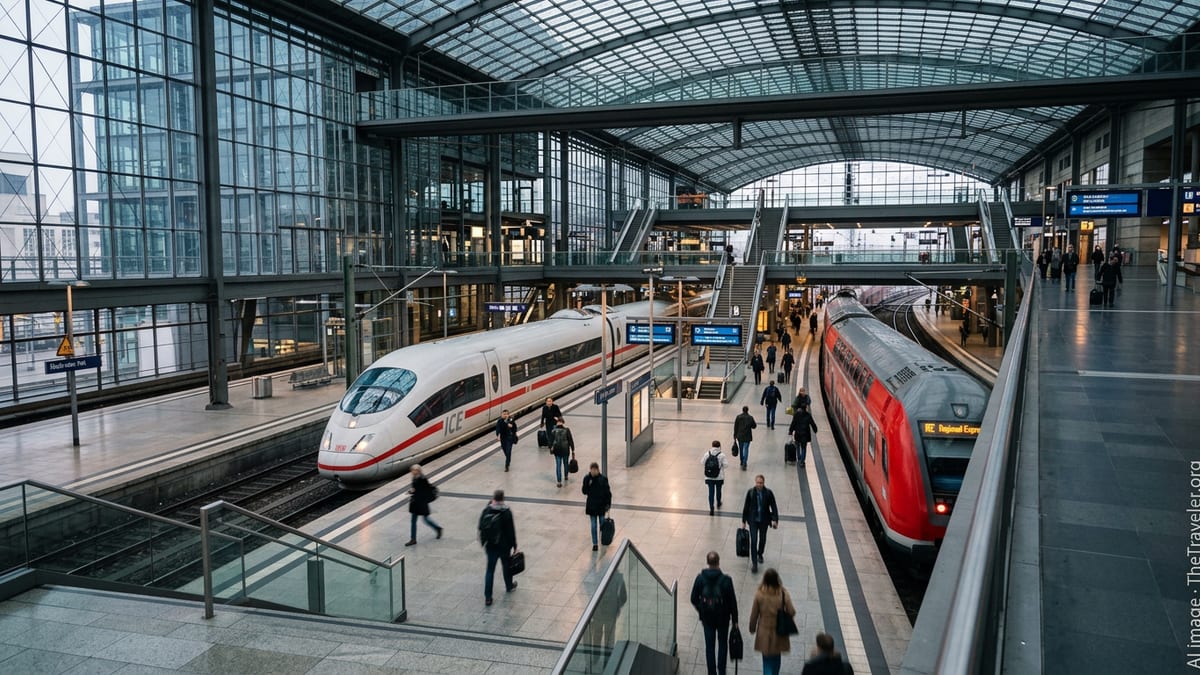
Nationwide outage brings German rail traffic to a standstill
According to published coverage, the disruption began at around 22:15 local time on June 23, when the digital railway radio network used across Germany suddenly went offline. The affected system, known as GSM-R, is the primary channel for voice and data communication between train drivers, dispatchers and control centers. As the outage unfolded, passenger, regional and long distance services were progressively stopped at stations or on open track, while freight operations were also brought to a halt.
Reports from national media indicate that the immediate response was to suspend train movements for safety reasons, since dispatchers could no longer reliably communicate with drivers. Images and eyewitness accounts described crowded concourses and long queues at information counters in major hubs such as Munich and Duisburg as passengers tried to replan late night journeys.
Published information shows that a backup analogue network, identified as PGSM in operator notices, also failed to provide relief. Regional operators such as Bayerische Regiobahn reported that all moving trains were ordered to stop wherever space allowed, underscoring how central the digital radio has become to everyday rail operations in Germany.
Deutsche Bahn stated in public updates that the disruption of GSM-R had a nationwide scope. After approximately two to three hours, services began to restart gradually once the radio network was stabilized, but residual delays and cancellations extended into the following day.
Focus on component change as trigger for GSM-R collapse
DB InfraGO, the state owned company responsible for Germany’s rail infrastructure, has confirmed through public statements that a planned technical intervention is viewed as the starting point of the failure chain. Media summaries of remarks by DB InfraGO chief Philipp Nagl note that a scheduled replacement of a technical component in the GSM-R environment took place shortly before the outage.
According to multiple reports, DB InfraGO has described the component change as “planmäßiger Tausch,” indicating that it formed part of routine maintenance or modernization work rather than an emergency repair. How this change propagated into a nationwide loss of radio coverage remains the subject of internal technical analysis, which the company has indicated is being pursued with high priority.
Specialist commentary in German outlets highlights that GSM-R, derived from second generation mobile technology, is normally designed with geographic segmentation and redundancy to avoid single points of failure on a national scale. The breadth of the disruption raises questions about how configuration management, fallback systems and network segmentation were implemented across the DB InfraGO radio backbone.
As of June 25, publicly available information suggests that DB InfraGO has not yet disclosed the specific hardware or software element involved, nor whether the disruption was purely the result of internal errors or may have intersected with external factors such as cyber risks. Security agencies and regulators are expected to review the findings once the technical root cause analysis is complete.
Passenger impact and knock on effects for regional operators
For travelers, the timing of the outage late in the evening created particular challenges. Long distance services were stopped en route with limited onward transport alternatives, while regional last trains of the day were unable to complete their journeys. Media photos from major stations showed passengers sitting on stationary trains for extended periods or waiting in overnight queues for rebookings.
Rail operators reported using taxis and hotel accommodation to assist stranded passengers where possible. Some companies also kept parked trains open at stations so that people could remain inside in relative comfort while waiting for the radio network to return. Nonetheless, reports indicate that many travelers arrived home several hours later than planned, while others were forced to postpone trips until the following day.
Regional railway companies that use DB InfraGO’s infrastructure and communications services were directly affected. Statements from operators in Bavaria and North Rhine Westphalia described how all moving trains had to be brought to a standstill, even on largely rural lines, because dispatchers could no longer guarantee safe passage without GSM-R communication. The resulting disruption continued into the next morning’s rush hour in several regions as equipment and crews were out of position.
Freight traffic was similarly hit, with trains halted overnight on key north south and east west corridors. While most cargo services were able to restart as the network recovered, logistics industry organizations have warned that even short interruptions can ripple through just in time supply chains for days.
What GSM-R is and why its reliability matters
GSM-R, short for Global System for Mobile Communications Railway, is the standardized digital radio platform used by most European railways for critical operational communication. Built on the foundations of commercial GSM technology, it provides secure voice channels between drivers and traffic controllers, as well as data services for signaling, train control and operational messaging.
In Germany, DB InfraGO operates the GSM-R network as part of the national rail infrastructure. The system underpins core safety processes, including the ability for dispatchers to issue movement authorities, emergency stop orders and route changes. Because of this role, widespread loss of GSM-R connectivity effectively removes the ability to safely coordinate train operations, forcing operators to slow or stop services until communication is restored.
European rail policy has long viewed GSM-R as a pillar of interoperability, allowing trains and staff to move across borders using standardized devices. At the same time, the technology is in a transitional phase, with work under way to migrate toward the Future Railway Mobile Communication System, which will be based on more modern cellular standards. Industry commentators note that this transition heightens the importance of robust change management and incident response for existing GSM-R installations.
The German outage is likely to feed into wider European discussions about how to harden rail communications networks against both technical errors and potential malicious interference. Questions are emerging about whether regional segmentation, independent fallbacks and more granular change control could have limited the scope of the failure.
Scrutiny grows over resilience of critical rail infrastructure
The GSM-R incident has quickly become a test case for how operators manage the growing complexity of digital rail infrastructure. In the wake of earlier IT and signaling disruptions in Germany and elsewhere in Europe, transportation analysts argue that the railway sector faces the same resilience challenges as energy grids and telecommunications networks.
According to available reporting, political leaders have already signaled interest in receiving a detailed account of what went wrong and how similar incidents will be prevented. Consumer advocates are also calling for clearer compensation rules and communication standards for large scale, systemwide breakdowns that leave passengers stranded.
For DB InfraGO, the investigation into the GSM-R failure will shape not only technical upgrades, but also public trust. The company has emphasized in public statements that identifying the root cause and reinforcing the network are top priorities. Outcomes could include changes to maintenance procedures, a review of single points of failure and accelerated investments in backup systems.
As rail networks expand their reliance on software controlled signaling, digital radio and real time data flows, the lessons drawn from this failure in Germany’s GSM-R network are likely to resonate far beyond one country. For travelers and freight customers across Europe, the episode has underlined how invisible communications infrastructure can, when it fails, bring an entire rail system to an abrupt stop.