


Naples is a city of churches, from quiet neighborhood sanctuaries to grand cathedrals crowned with Baroque marble. For many visitors, two sites in particular emerge as crucial stops: the Basilica of Santa Maria della Sanità in the working-class Rione Sanità district and the Naples Cathedral, commonly called the Duomo di San Gennaro. Both are powerful, deeply local expressions of Neapolitan faith and history, yet they offer very different kinds of experiences. If you have limited time in the city, which one is likely to leave a bigger impression?
Get the latest updates straight to your inbox!
First Impressions: Neighborhood Feel vs Monumental Grandeur
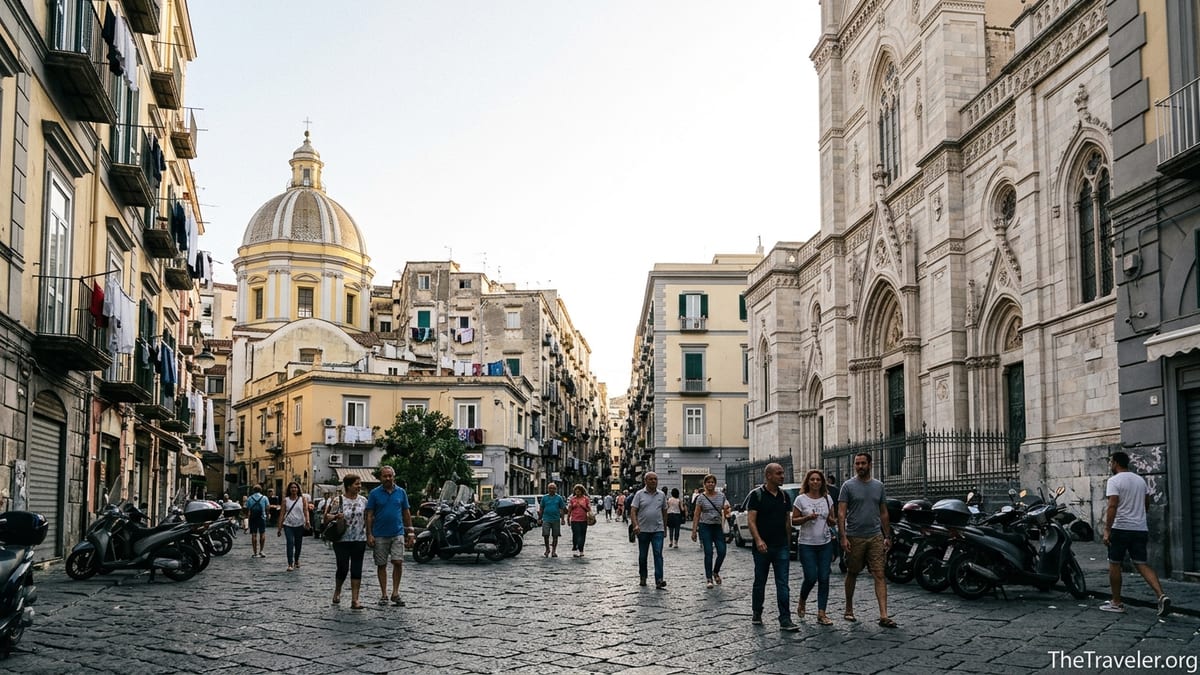
Arriving at Santa Maria della Sanità, the first thing that strikes most visitors is the neighborhood. Rione Sanità is dense, noisy and intensely lived-in, with scooters slipping through narrow streets and laundry strung between weathered palazzi. The basilica rises unexpectedly above a busy traffic junction, its yellow and white facade and small dome almost hidden among the buildings. Stepping inside feels like stepping into a community’s living room rather than a set-piece monument.
By contrast, the Naples Cathedral sits right in the heart of the historic center, a short walk from Via dei Tribunali and San Gregorio Armeno. The approach feels more formal. You pass tourist-filled streets, souvenir stands and cafes before the Gothic facade of the Duomo suddenly opens onto a broad forecourt. Here the scale is immediately imposing: tall spires, heavy bronze doors, and a sense that you are entering one of the city’s most important institutions.
For many travelers, Santa Maria della Sanità leaves a stronger emotional first impression because it feels like a discovery. You do not stumble on it by accident. You choose to cross into a real Neapolitan neighborhood, which lends a sense of authenticity and small adventure. The Duomo, in comparison, is more predictable in its grandeur, closer in feel to other major European cathedrals, although still distinctly Neapolitan once you step inside.
If you are the type of traveler who is fascinated by local life and urban texture, the urban chaos around Santa Maria della Sanità may stay with you longer than the more curated streets leading to the Duomo. If you prefer a clear, polished “highlight,” the cathedral’s monumental silhouette will probably make the bigger initial impact.
Architecture and Interior: Baroque Experiment vs Layered Centuries
Architecturally, Santa Maria della Sanità is a Baroque basilica built in the late 16th and early 17th centuries directly above earlier Christian catacombs. Inside, its most memorable feature is the raised, centralized nave and the sense of verticality it creates. Light filters through the dome and side windows, catching on white stucco, restrained gilding and colorful marble altars. Compared to many Baroque churches in Italy, the decoration here feels relatively sober, which lets the geometry of the space speak for itself.
The Duomo, on the other hand, is an amalgam of styles. Originally built in the 13th century in Gothic form, it was later reshaped with Baroque and 19th-century elements. As you walk down the long central nave, the vertical stone columns, high ribbed ceiling and side chapels give you that classic medieval-cathedral sense of procession. The star of the interior is the Royal Chapel of the Treasury of San Gennaro, a Baroque jewel box exploding with silver, marble and frescoes, housing the miraculous blood of Naples’s patron saint.
For many architecture lovers, the Duomo’s layered history and the theatrical splendor of the San Gennaro Chapel are unforgettable. The contrast between the relatively austere nave and the chapel’s opulence is striking. At Santa Maria della Sanità, the impression is subtler but very cohesive: the whole church feels like a single, carefully conceived Baroque experiment anchored on an ancient foundation.
If visual drama is your priority, the Naples Cathedral generally wins. If you are drawn to more intimate, spatially interesting churches where you can sit quietly and feel the architecture envelop you, Santa Maria della Sanità may well leave a deeper, more personal imprint.
Spiritual Atmosphere: Pilgrimage Site vs Neighborhood Shrine
Naples Cathedral is the city’s spiritual stage. It is the seat of the Archbishop and the heart of Naples’s relationship with its patron saint, San Gennaro. Three times a year, crowds gather here for the ritual of the liquefaction of the saint’s blood, an event so woven into the city’s identity that locals talk about it on the news and in bars. Even on an ordinary weekday, you are likely to see pilgrims praying in front of the silver reliquary in the San Gennaro Chapel, lighting candles and leaving ex-votos.
This atmosphere of formal devotion can be moving, especially if you witness a Mass or a smaller liturgical celebration. For visitors, the sense that “history is still happening” here is strong. You are not just looking at relics behind glass; you are in the place where tens of thousands of Neapolitans come to ask for protection from earthquakes, disease and hardship.
Santa Maria della Sanità, by contrast, feels more like a neighborhood shrine with a reputation that extends beyond the district. The basilica became famous after an image of the Madonna and Child was rediscovered in the ancient crypt, and for centuries people have come here to ask for healing and protection. The devotion is deeply local: you may encounter older residents praying softly in dialect, children running in after school, or a baptism or wedding spilling out into the piazza.
For travelers who value an immersive, everyday spiritual experience, this humility and familiarity can be more affecting than the grandeur of the Duomo. The basilica’s connection to the catacombs beneath it also adds a powerful sense of continuity between the earliest Christians of Naples and the people who live above them today.
Underground Worlds: Catacombs vs Archaeological Layers
One decisive factor for many visitors is what lies beneath each church. Under Santa Maria della Sanità you find the Catacombs of San Gaudioso, accessible only on guided tours. These are early Christian burial chambers carved into tufa rock, with frescoes, tomb niches and striking wall paintings where skulls are set above painted, robed bodies. The experience is atmospheric: cool, slightly damp air, low ceilings and the guide’s flashlight revealing details as you walk.
Tours typically last around an hour and are led by young guides from the neighborhood, often part of a local cooperative that manages both these catacombs and those of San Gennaro on the nearby Capodimonte hill. Ticket prices are usually in the low to mid teens in euros for adults, sometimes with combined options that include other catacombs. The guiding is a highlight: you get historical context blended with contemporary stories about the district’s revival.
At the Duomo, the underground experience is more archaeological than sepulchral. Beneath the cathedral are remains of earlier churches and Roman-era structures, accessible with a separate ticket as part of the archaeological area. The visit here is more about stratified building phases: you walk past fragments of ancient walls, columns and mosaic floors that reveal how the site evolved over centuries.
If you are drawn to evocative burial sites and want a guided immersion into early Christian Naples and community life today, Santa Maria della Sanità’s catacombs are likely to be a standout memory. If you are especially interested in the city’s ancient urban history and architecture, the Duomo’s underground area, while less atmospheric, can be more intellectually satisfying. Many travelers remember their time in San Gaudioso as one of the most intense experiences of their trip.
Practicalities: Access, Hours, Dress Code and Costs
From a logistical point of view, the Duomo is easier. It is located within the UNESCO-listed historic center and is a short walk from popular streets such as Via dei Tribunali and Spaccanapoli. Entry to the main cathedral is free. The Chapel of the Treasure of San Gennaro and the adjoining museum require a separate ticket, typically in the low teens in euros for adults; this often includes an audio guide. The archaeological area beneath the church is also ticketed separately, and combined tickets are occasionally available.
As an active cathedral, the Duomo observes a fairly strict dress code. Shoulders should be covered, and shorts or skirts should be at least knee-length. In practice, this means bringing a light scarf or shawl in summer and avoiding very short shorts or crop tops. Security staff at the entrance may turn away visitors they consider inappropriately dressed, especially during Mass times or special events.
Reaching Santa Maria della Sanità typically involves a 15 to 20 minute walk uphill from the historic center or a short ride on a city bus or taxi. The church itself is usually open during typical daytime hours, though schedules can change for local feasts and events. Entry to the basilica is free. Access to the Catacombs of San Gaudioso is by guided tour only, with timed departures; tickets are generally priced similarly to other catacomb sites in Naples, often just over ten euros for adults, sometimes less when booked in combination.
In terms of safety, Rione Sanità has seen significant revitalization in recent years, with community-led projects, new cafes and cultural tours. Official tourism sources and local residents often describe it as fine to visit by day with normal city precautions. At night, especially in quieter side streets, it can feel rougher, so many visitors choose taxis or stay in busier areas after dark. The Duomo’s surroundings, being part of the central tourist grid, tend to feel more familiar to first-time visitors, though common sense is still essential, particularly near the central station area.
Art, Stories and Local Color
Inside the Duomo, the most eye-catching art and decoration center on San Gennaro and other saints important to the city. The silver busts, reliquaries and paintings in the treasury museum are among the finest religious artworks in southern Italy. Even if you are not a believer, the dazzling craftsmanship and the sheer volume of ex-votos and offerings tell a story of a city that sees its saints as real protectors rather than distant figures.
Stories here are big and public: processions, miracles, royal patronage. Guided visits and audio guides focus on the drama of the liquefaction miracle and the political symbolism of the chapel’s wealth. You learn how kings, nobles and ordinary citizens all contributed to this treasury, and how the rituals still shape civic life in the 21st century.
Santa Maria della Sanità tells a different kind of story. Here the focus tends to be on the rediscovered image of the Madonna, the African bishop San Gaudioso whose remains once rested in the catacombs, and the popular healing cult that grew around the site. The basilica’s art is less about glittering treasure and more about local devotional painting, sculpted altars and memorials that anchor families to this neighborhood.
Many visitors find that the art and narrative at Santa Maria della Sanità are easier to connect with emotionally precisely because they feel smaller and more intimate. When a local guide explains how the district once suffered from deep neglect and how the catacombs project created jobs and pride, the church becomes a symbol of renewal as much as a religious monument. This contemporary story can leave as strong an impression as any 17th-century fresco.
Which Church Leaves a Bigger Impression for Different Travelers?
Ultimately, the church that leaves the bigger impression depends on what you seek from Naples. If your mental image of the city is one of grand religious events, miracles and a skyline punctuated by spires, then the Duomo di San Gennaro is likely to be your key reference point. Its scale, the drama of the San Gennaro Chapel, the relic of the saint’s blood and its role in city-wide ceremonies make it an obvious highlight, especially for first-time visitors and those with limited time.
If, instead, you are drawn to Naples precisely because it is messy, layered and full of tight-knit neighborhoods, Santa Maria della Sanità often resonates more deeply. It combines a striking Baroque interior with the raw reality of Rione Sanità outside and the atmospheric catacombs below. For many travelers, that mixture of ancient burial site, community church and contemporary social project feels more distinctive than the grandeur of the cathedral.
In practical terms, most visitors who make the effort to see both remember the Duomo as the “official” image of Neapolitan faith and Santa Maria della Sanità as the place where they felt closest to everyday Naples. If you only have a single morning in the city, the Duomo is the more straightforward and central choice. If you have a full day or more and want at least one experience off the standard route, Santa Maria della Sanità is the church that often lingers in memory.
The strongest recommendation, if time and mobility allow, is to see both on different days. Walk to the Duomo via the bustling streets of the historic center, then, on another morning, head up to Rione Sanità, book a catacombs tour and sit for a few quiet minutes under the dome of Santa Maria della Sanità. Experiencing these two very different expressions of Neapolitan Catholicism side by side is what makes Naples’s church landscape so uniquely powerful.
The Takeaway
When travelers debate whether Santa Maria della Sanità or the Naples Cathedral leaves a bigger impression, they are really asking what kind of Naples they want to remember. The Duomo represents Naples at its most official, ceremonial and historically central: a city gathered around its patron saint, its fears and hopes expressed in grand processions and glittering chapels. Santa Maria della Sanità represents a more intimate, grassroots Naples, where faith, daily life and community reinvention all meet in a single building above an ancient necropolis.
If monumental architecture, famous relics and easily accessible sightseeing are your priorities, the Duomo will probably stand out as the defining religious site of your trip. If you are moved by places where history is tied to present-day social change and neighborhood identity, Santa Maria della Sanità may well be the church that stays with you long after you have left. In the end, Naples’s real power lies in the dialogue between these two worlds: the cathedral of the whole city and the basilica of a single, unforgettable district.
FAQ
Q1. Is entry to the Naples Cathedral free?
Entry to the main body of the Naples Cathedral is generally free, but there is a paid ticket for the San Gennaro Treasury museum and the archaeological area underneath.
Q2. Do I need a ticket to visit Santa Maria della Sanità?
Access to the basilica itself is free. Tickets are required only if you want to join a guided tour of the Catacombs of San Gaudioso beneath the church.
Q3. Which church is easier to reach without a car?
The Naples Cathedral is easier, as it sits in the historic center within walking distance of many sights. Santa Maria della Sanità usually requires a longer uphill walk, bus ride or short taxi trip.
Q4. Is Rione Sanità safe to visit during the day?
Most recent reports suggest that Rione Sanità is fine to visit in daylight with normal big-city precautions. It can feel rougher at night, so many visitors prefer to leave the area before it gets very late.
Q5. How strict is the dress code at the Duomo?
The Duomo enforces a relatively strict dress code. Shoulders should be covered and shorts or skirts should reach at least the knee, especially during services and special events.
Q6. Can I take photos inside both churches?
Photography without flash is generally allowed in both the Duomo and Santa Maria della Sanità, though rules can vary in chapels, museums and the catacombs. Always check posted signs and respect any restrictions.
Q7. Which site is better if I am interested in early Christian history?
If you want an evocative experience of early Christian burial practices, the Catacombs of San Gaudioso under Santa Maria della Sanità usually feel more atmospheric. The Duomo’s archaeological area focuses more on structural remains and urban history.
Q8. Do I need to book the catacombs tour in advance?
Booking ahead is recommended, especially in high season and on weekends, as catacomb tours run at set times and group sizes are limited.
Q9. Which church is more suitable for travelers with limited mobility?
The Duomo, located on relatively level ground in the historic center, is usually easier to access. Santa Maria della Sanità and its surrounding streets can involve steeper approaches and more uneven pavements.
Q10. If I only have time for one church, which should I choose?
If it is your first visit and you want the city’s main religious landmark, choose the Naples Cathedral. If you prefer a more local, off-the-main-route experience with catacombs, choose Santa Maria della Sanità.