


More news on this day
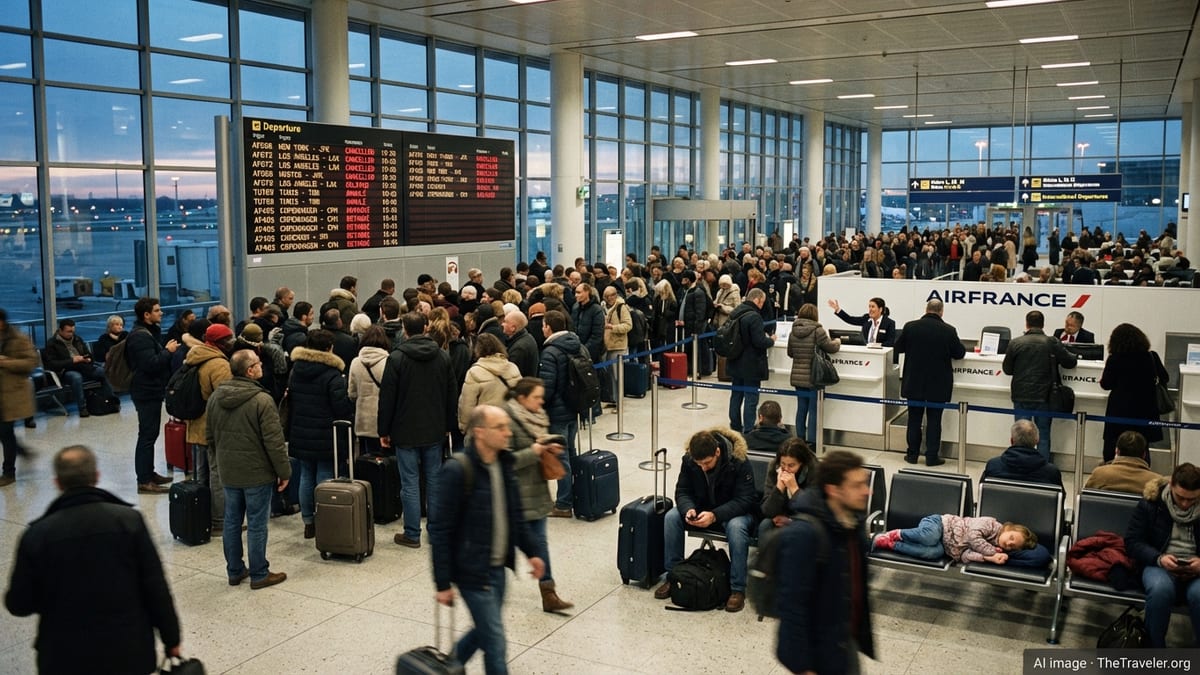
Hundreds of travelers faced hours-long delays and missed connections after widespread disruptions affected at least 892 flights and led to 30 cancellations across Charles de Gaulle, Nice Côte d’Azur, Paris Orly, Basel-Mulhouse, and Gustaf III airports, impacting operations for Air France, easyJet, Lufthansa, KLM, British Airways, and other European and transatlantic carriers.
Get the latest news straight to your inbox!
Widespread Delays Across Major European Hubs
Publicly available operational data and day-of-travel monitoring indicate that a wave of disruptions rippled through several of Europe’s busiest airports, including Paris Charles de Gaulle, Paris Orly, Nice Côte d’Azur, and Basel-Mulhouse. Flight-tracking dashboards showed a spike in delayed departures and arrivals, with additional knock-on effects at regional and leisure-focused airports such as Saint Barthélemy’s Gustaf III in the Caribbean.
Across these hubs, a combined 892 flights were reported delayed, alongside 30 outright cancellations. The impact was most visible at the two Paris airports and Nice, which serve as key gateways for both intra-European routes and long-haul services linking North America, the Middle East, and Africa. Even when flights remained scheduled, extended ground times and late inbound aircraft created rolling delays throughout the day.
The disruption coincided with a peak early-summer travel period in Europe, when passenger volumes typically increase sharply as schools break for holidays and major events drive additional demand. That seasonal pressure meant even relatively short operational slowdowns translated into crowded terminals, longer queues, and significant schedule slippage.
Traffic-flow statistics for the European network in recent seasons already point to a fragile balance between capacity and demand, with relatively modest disturbances capable of creating substantial delays. The pattern of staggered departure holds, late inbound flights, and congested arrival banks seen during the latest disruption aligns with those broader network dynamics.
Air France, easyJet, Lufthansa, KLM and British Airways Among Those Hit
The disruptions affected a cross-section of carriers that rely heavily on these airports as bases or focus cities. Public schedules and same-day status boards show Air France bearing a significant share of the issues at both Charles de Gaulle and Orly, where the airline concentrates its French and international operations and funnels a large volume of connecting traffic.
Low-cost operator easyJet appeared prominently among delayed services at Nice Côte d’Azur and Basel-Mulhouse. Both airports are central to the airline’s Mediterranean and cross-border networks, meaning that each delayed sector had the potential to cascade into subsequent rotations. Similar patterns were visible for other budget and leisure-focused carriers with a strong presence at these gateways.
Full-service giants such as Lufthansa, KLM, and British Airways also experienced knock-on delays on flights routed through the affected airports, particularly on European feeder services connecting into long-haul banks. These airlines typically rely on tight turnaround times and carefully sequenced waves of departures and arrivals, leaving little margin when airspace or ground operations slow down.
In several cases, publicly accessible flight-status data showed aircraft departing significantly behind schedule yet still attempting to maintain connections at onward hubs. This approach may have reduced the number of missed long-haul links but contributed to an overall increase in late-evening arrivals at destination airports, shifting the disruption further along the network.
Network Strain, Weather, and Capacity Constraints Combine
While a single, clear-cut trigger is not evident across all affected airports, several structural pressures appear to have played a role in the scale of the disruption. Recent European traffic briefings highlight that air traffic volumes have been running at or above pre-pandemic levels, even as some air navigation service providers and airport operators continue to manage staffing and resource constraints.
At major hubs such as Charles de Gaulle and Orly, any temporary reduction in runway throughput, air traffic control capacity, or ground handling resources can quickly lead to extended queues for departures and holding patterns for arrivals. That congestion can then radiate outward, affecting flights inbound from regional airports such as Basel-Mulhouse or outbound to leisure destinations served by Gustaf III.
Localized weather variations can amplify these operational bottlenecks. Even short-lived thunderstorms, strong winds, or reduced visibility can require spacing aircraft further apart or temporarily suspending arrivals and departures. When this occurs during peak afternoon or evening banks, delays can accumulate rapidly, particularly on dense routes linking Paris, Nice, and key European capitals.
The current environment of high demand, constrained capacity in some parts of the network, and complex cross-border routings means that disruptions often arise from a combination of factors rather than a single incident. The latest episode across France and the broader region fits that pattern, with small timing shifts in one location resonating across multiple airports and airlines.
Travelers Confront Missed Connections and Overnight Disruptions
For passengers on affected flights, the operational challenges translated into missed connections, long queues at customer-service desks, and in some cases unexpected overnight stays. With nearly 900 delays and 30 cancellations spread across several airports, rebooking options quickly became limited on popular routes, particularly for those needing to continue to long-haul destinations or remote island airports.
Reports from travelers using publicly available forums described extended waits to secure alternative flights, as well as difficulty accessing real-time information when airline and airport apps or websites struggled with high traffic. Some described being re-routed through alternative hubs or shifted onto partner carriers, which in turn altered arrival times by many hours.
At leisure-oriented airports such as Nice Côte d’Azur and Gustaf III, the disruption also affected cruise connections, island transfers, and holiday villa check-ins. Tour operators and local accommodation providers often have limited flexibility, meaning delayed arrivals can result in lost first nights or compressed itineraries, especially for shorter trips.
In addition, evening curfews and noise restrictions at certain European airports can limit the ability to operate heavily delayed flights later into the night. When departure slots are lost, flights may be forced to wait until the following morning, turning a delay into an overnight cancellation and further complicating onward travel plans.
What Passengers Can Do When Disruptions Hit
Consumer advocates point to a set of practical steps travelers can take when faced with large-scale delays of the kind seen at Charles de Gaulle, Orly, Nice, Basel-Mulhouse, and Gustaf III. One consistent recommendation in public guidance is to monitor flight status through multiple channels, including airline apps, airport displays, and independent flight-tracking tools, in order to spot changes as early as possible.
When disruptions appear likely, passengers on connecting itineraries may benefit from proactively contacting their airline via digital channels to explore earlier rerouting options, rather than waiting for rebooking queues at the airport. In major irregular operations events, the most attractive alternative flights often fill quickly, particularly on heavily traveled transatlantic and intra-European routes.
There is also heightened interest in the application of European air passenger rights regulations in such situations. Under EU and UK rules, travelers may be entitled to meals, refreshments, accommodation, and in some circumstances financial compensation, depending on the length of delay, distance of travel, and cause of disruption. Public guidance encourages passengers to keep all receipts and to document the timing of events carefully.
For now, the latest wave of delays and cancellations across key French and regional airports underscores how sensitive the European network remains to periods of strain. With the peak summer season continuing, travelers heading through hubs like Charles de Gaulle, Orly, Nice Côte d’Azur, Basel-Mulhouse, and Gustaf III are likely to keep a close eye on departure boards and backup plans.