


More news on this day
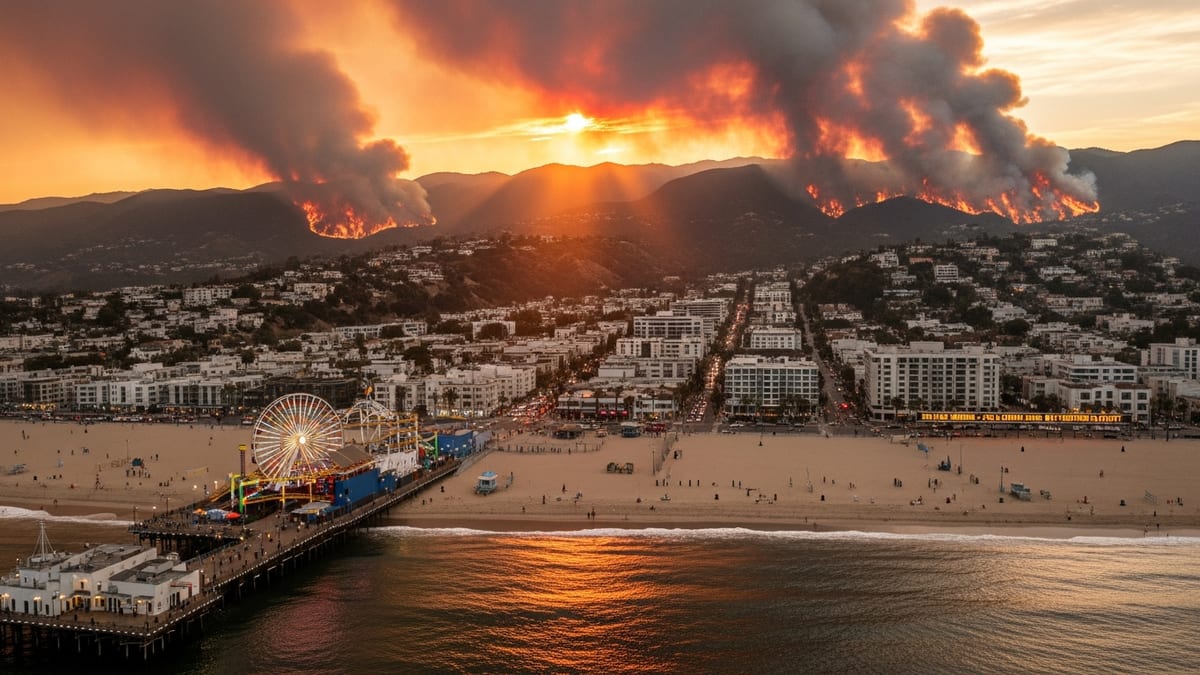
Spain is preparing for a landmark tourism moment on August 12, 2026, when a rare total solar eclipse sweeps across the country. At the same time, an increasingly severe wildfire pattern over the Iberian Peninsula is prompting fresh concerns that smoke and safety pressures could yet overshadow one of Europe’s most anticipated sky events.
Get the latest news straight to your inbox!
Astronomy Showcase Poised To Draw Millions
The total solar eclipse of August 12, 2026 will cross northern Spain from the Atlantic to the Mediterranean, placing cities such as A Coruña, Bilbao, Zaragoza, Valencia and Palma squarely in the path of totality. Astronomical agencies describe it as a once in a century style opportunity for much of Spain, since the last comparable event visible across such a wide area of the country dates back many decades.
Tourism planners see the eclipse as the centerpiece of a three year run of major celestial events in Spain, with another total eclipse in 2027 and an annular eclipse in early 2028. Government briefings on the so called trio of eclipses highlight projections of a sharp rise in domestic and international visitors to regions beneath the path, especially along the northern coast and in the Balearic Islands.
Official economic studies made public in July indicate that hotel bookings for August 2026 in key eclipse provinces are already significantly ahead of last year, while airlines have added capacity for the week of the event. Astro tourism operators are promoting itineraries that pair eclipse viewing with stargazing in dark sky reserves, wine routes and coastal getaways, turning the phenomenon into a broader travel season rather than a one day spectacle.
On social platforms and travel forums, prospective visitors from North America and northern Europe report difficulties securing accommodation in some coastal hotspots, with demand strongest for clifftop viewpoints and higher elevation locations that offer a clear western horizon at sunset, when totality will occur in Spain.
Wildfire Seasons Grow Longer And More Intense
The eclipse arrives as Spain confronts some of its most challenging wildfire seasons on record. Recent summers have brought extensive blazes to multiple regions, with European monitoring programs documenting large burned areas across the Iberian Peninsula and elevated fire related emissions compared with long term averages.
In 2025, a combination of heat waves and prolonged drought contributed to widespread fires in both Portugal and Spain, and early statistics for 2026 from Spain’s ecological transition ministry show substantial burned territory by mid July. Media reports this month describe the current season as among the deadliest in decades, with at least a dozen fatalities linked to fires nationwide and extensive evacuations in some rural and peri urban zones.
Scientists affiliated with European climate services note an increasing frequency of extreme fire weather days in southern Europe, including parts of Spain, tied to rising temperatures and drier summer conditions. Studies published this year point to a trend toward longer fire seasons, with significant activity extending well into August and September compared with earlier decades.
In response, Spain has advanced the official start of its national wildfire campaign to June 1 and announced what the government describes as the largest deployment of state resources ever for a fire season. The strategy involves additional aerial firefighting assets, expanded ground crews and closer coordination with European civil protection mechanisms for cross border support.
Could Smoke Obscure The Eclipse?
For eclipse travelers, the most direct impact of wildfires is not flames but smoke. Major fires in Spain and neighboring countries in recent years have repeatedly generated long lasting plumes that affected air quality and visibility far from the burn zones, at times dulling the sky over major cities and resort areas for days.
Atmosphere monitoring services run by the Copernicus program documented especially high wildfire smoke emissions over southern Europe in August 2025, with particulate matter transported across the continent. Similar episodes have been reported during the 2026 season, including hazy conditions over tourist regions when large fires were active hundreds of kilometers away.
For a low altitude, near sunset eclipse such as Spain’s 2026 event, even moderate haze could soften or partially obscure the view of the solar disc. Astronomers point out that the Sun will sit only a few degrees above the western horizon during totality in much of Spain, making clear skies and minimal aerosols particularly important for a sharp visual experience and safe use of eclipse glasses before and after totality.
However, specialists caution that predicting specific smoke conditions weeks or months ahead is not possible. Seasonal climate outlooks from Spain’s meteorological agency provide probabilities for hotter and drier trends in August, but they do not directly translate into a forecast for fire locations or smoke thickness on a single evening. Travelers are therefore advised to treat smoke as a risk factor rather than a certainty.
Authorities Tighten Safety And Mobility Planning
Concerns about overlapping pressures from tourism and wildfires are shaping Spain’s preparations. National and regional institutions have launched coordination groups to manage the eclipse period, covering crowd control on roads, emergency access routes and public information campaigns on safe viewing practices.
Spain’s interior ministry has brought forward fire response planning and emphasized the need to keep evacuation corridors clear, particularly on secondary roads that may also be attractive as makeshift viewing points. The traffic directorate has already issued initial guidance on avoiding roadside parking in high risk forested areas and is expected to refine restrictions as August approaches.
In regions such as Galicia, Asturias, Cantabria, the Basque Country and parts of Aragon and Valencia, where both wildland fire risk and eclipse popularity are high, local administrations are reviewing contingency measures. These include temporary bans on certain outdoor activities during heat waves, stricter controls on agricultural burning and limits on vehicle access to sensitive natural parks that might attract eclipse watchers.
European Union initiatives on integrated wildfire risk management, adopted this year, encourage member states to factor in mass tourism peaks when designing prevention measures. Spain’s planning for the eclipse has become an early test case for how to balance visitor influx with landscape protection during an era of more volatile fire behavior.
How Travelers Can Weigh Their Options
For visitors still deciding whether to chase the 2026 eclipse in Spain, the primary tension lies between the rarity of the event and the uncertainties of late summer fire conditions. Travel industry analysts describe strong demand for flights and hotels in the path of totality, but also note a parallel interest in flexible booking policies and travel insurance that covers disruption from natural hazards.
Tour operators and independent experts generally recommend favoring larger cities and coastal areas with multiple access routes, which are less likely to face full closures even in a severe fire episode. Inland mountainous regions promise darker skies and dramatic scenery but may also be more exposed to road restrictions or local evacuations if fires break out nearby.
Travelers are encouraged to monitor meteorological bulletins, air quality updates and wildfire situation reports in the weeks before August 12. Some eclipse enthusiasts are already discussing backup viewing locations within Spain or in nearby countries also under partial eclipse conditions, allowing them to shift plans at short notice if smoke or clouds threaten the path of totality.
Despite the risks, tourism forecasts released by Spanish institutions still point to a net positive impact from the eclipse, with the event framed as an opportunity to spotlight sustainable tourism, rural destinations and environmental awareness. Whether skies remain clear of smoke on the evening itself will depend on how the 2026 fire season unfolds, but for now Spain is pressing ahead with plans to host one of the most watched astronomical moments of the decade.