


More news on this day
US military aircraft stationed at Israel’s Ben Gurion Airport are increasingly competing with commercial traffic for limited parking and runway space, prompting warnings of possible delays during the upcoming peak vacation season.
Get the latest news straight to your inbox!
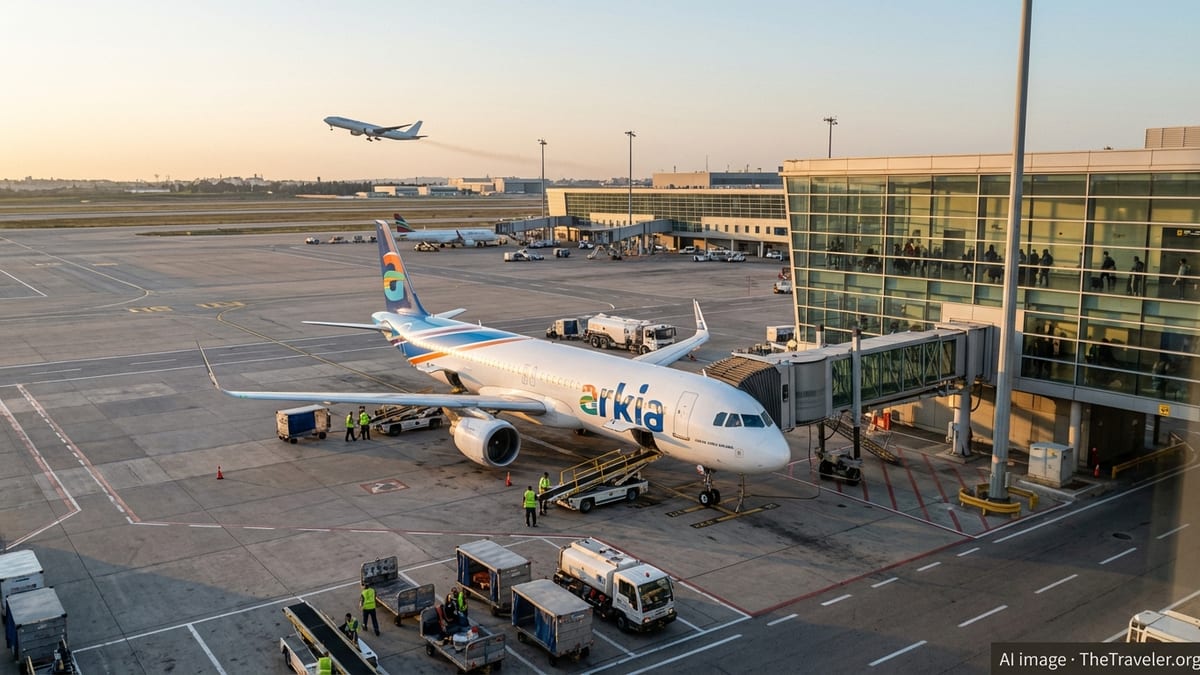
Military Presence Tightens Capacity at Israel’s Main Gateway
Ben Gurion Airport, Israel’s primary international gateway, has hosted a significant contingent of United States aerial refueling aircraft for months as part of regional military deployments. Publicly available information and recent commentary indicate that dozens of US tankers and associated support aircraft are parked on the airport’s aprons, occupying a notable share of available stands normally used for civilian jets.
Reports circulating in Israeli and international media describe a parking layout in which US aircraft take up many of Ben Gurion’s roughly 99 parking positions, leaving fewer gates and remote stands for scheduled passenger operations. Some analyses characterize the effect as turning parts of the airport into a quasi-military logistics hub, with long-duration deployments rather than short rotational visits.
Airport capacity is determined not only by runways and airspace but also by how many aircraft can be parked, serviced and turned around at any given time. With a larger portion of stands blocked for military use, airlines operating in and out of Tel Aviv face tighter scheduling windows and less room for irregular operations such as late arrivals and equipment changes.
Public data from Israel Airports Authority traffic reports already show that Ben Gurion has been handling rising passenger volumes compared with earlier in the conflict period, underscoring how the civilian rebound is colliding with prolonged military demand for space on the ground.
Warning of Possible Flight Reductions and Schedule Squeeze
According to recent coverage highlighted in aviation and defense forums, Israel Airports Authority figures have warned that the current mix of military and civilian aircraft on the ground could translate into fewer commercial slots once the busiest part of the summer schedule begins. Some assessments suggest that around 10 commercial flights per day may need to be removed from the timetable if the parking squeeze continues, particularly in peak morning and late-night departure banks.
Additional reporting referenced by commentators notes that Israeli officials initially requested a reduction in the number of US tankers parked at Ben Gurion, with a compromise reportedly leaving around twenty refueling aircraft at the airport and shifting others to military bases in Israel. Even with that adjustment, the civilian side is expected to operate with narrower margins for last-minute operational changes.
In practical terms, a reduction of several daily rotations at a hub that can handle tens of thousands of passengers per day may sound small, but it can create knock-on effects. Flights that do operate may face longer waits for parking, ground handling and pushback slots, especially during concentrated waves of European and North American departures and arrivals.
Travel industry observers note that such operational constraints tend to be most visible during peak holiday periods, when airlines schedule aircraft close to theoretical capacity. Under those conditions, any loss of flexibility on the ground can quickly translate into rolling delays across multiple departures.
Peak Vacation Season Collides With Operational Constraints
Ben Gurion traditionally experiences its heaviest passenger loads during the northern hemisphere summer, when Israeli families travel for school holidays and inbound tourism normally rises. Recent Israel Airports Authority statistics for previous August and September periods illustrate how peak months can bring some of the highest daily passenger totals of the year.
For summer 2026, the airport is preparing for a vacation season shaped by two opposing pressures. On one side, demand from Israeli residents, diaspora visitors and limited segments of the tourism market is expected to concentrate on key departure days, including Sundays and mid-week mornings. On the other side, ongoing regional tensions, security considerations and the presence of foreign military assets on the field continue to limit the airport’s ability to operate at its pre-crisis patterns.
Aviation planning studies show that when an airport operates close to its declared capacity, small disruptions in available parking or runway throughput can trigger disproportionate delays. If multiple afternoon departures are compressed into shorter time windows due to stand availability, late-arriving aircraft may have to wait for a gate, creating a chain reaction that extends into the late evening.
Industry analysts therefore see Ben Gurion’s situation as particularly sensitive during school holiday peaks, when airlines may have less room to retime flights and passengers are less flexible about changing travel dates. Any sustained bottleneck related to parking or runway sequencing could be quickly felt in queues at check-in, security and passport control as airlines adjust their operations in real time.
Risk of Cancellations Versus Efforts to Maintain Service
Despite the concerns, some recent interviews and public remarks from Israel Airports Authority leadership, cited in local media reports, have emphasized that wide-scale cancellations are not currently expected. Statements summarized in press coverage describe an operating plan focused on preserving the existing schedule as much as possible, while acknowledging that crowded aprons and runway management challenges could make day-of-travel disruptions more likely.
Commentary on aviation forums and social media has highlighted an estimated figure of up to 50,000 tickets that might be at risk of disruption across the season if capacity pressures intensify. Other posters have pointed out that this number has been cited as a worst-case scenario rather than a formal forecast, and that many flights could still proceed on time if the military footprint on the field is gradually reduced or redistributed.
Travel specialists caution that, historically, large-scale cancellations at Ben Gurion have tended to be associated with acute security incidents or temporary flight bans, rather than slow-building congestion. In the current case, the risk is more diffuse: a combination of heavy summer demand, constrained parking, and the possibility of unscheduled military movements that could temporarily reorder runway priorities.
Observers also note that airlines operating to Tel Aviv have already become accustomed to adjusting schedules, aircraft types and load factors since the October 2023 escalation and subsequent regional developments. That experience may help carriers and the airport cooperate on contingency plans for the coming season, even if the underlying constraints remain.
What Travelers Using Ben Gurion Should Expect
For international travelers planning trips to or from Israel in the coming months, publicly available information points to a mixed picture. On most days, flights are still operating and passenger volumes have been rising from earlier lows. At the same time, the structural constraints created by the US military presence and heightened security environment suggest that the margin for smooth operations is thinner than in typical years.
Airline and airport performance data from other busy hubs indicate that passengers are most likely to feel the impact of congestion in the form of longer ground times, delayed departures and occasional missed connections rather than immediate mass cancellations. Early-morning and late-night waves, when multiple long-haul flights compete for limited stands, are especially vulnerable to cascade effects if a handful of aircraft arrive late.
Analysts therefore advise a cautious approach for those connecting through Ben Gurion during the peak season. While each traveler’s situation is different, longer-than-usual minimum connection times, flexible itineraries and careful monitoring of flight-status updates are commonly recommended strategies when an airport is operating near its limits.
Ultimately, the evolving balance between security requirements, military deployments and civilian air service will shape how visible the disruptions become. For now, the presence of US aircraft at Ben Gurion is widely viewed in public reporting as a key operational factor that could test the resilience of Israel’s main international airport as the summer holiday rush approaches.