


More news on this day
Passengers on an Emirates Airbus A380 service to China have described being stranded for close to 24 hours after a protracted disruption that involved an unscheduled stop, extended ground delays and a late-night wait for rebooking and accommodation.
Get the latest news straight to your inbox!
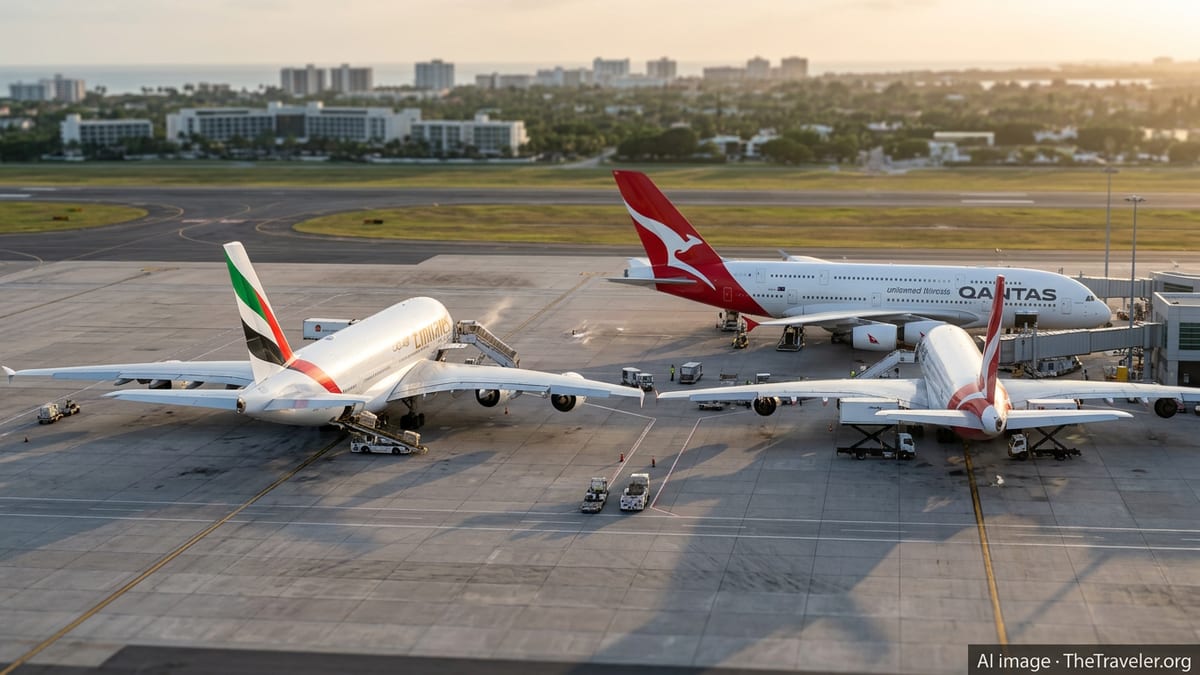
Disrupted Emirates A380 Service Sparks Passenger Frustration
Publicly available flight-tracking data and social media posts indicate that the disruption began when an Emirates A380 operating a China-bound service encountered operational issues that forced a diversion before reaching its intended destination. The aircraft, configured for several hundred passengers, landed at an alternate airport in China, where travelers remained on board for an extended period while ground handling and onward arrangements were assessed.
Information shared by affected travelers suggests that the total disruption approached a full day from the scheduled departure time to the eventual clearing of passengers through the terminal. Many reported uncertainty about when they would be allowed to disembark, whether they would be permitted to enter China, and how their onward journeys would be handled.
According to published coverage in regional media, the A380 remained on the ground for many hours while coordination continued between the airline, airport operators and local service providers. Passengers were eventually allowed to leave the aircraft and proceed into the terminal, but for many, that only marked the start of a long wait for hotel transfers and rebooking.
The incident has drawn attention in China and in key Emirates markets, as travelers describe a confusing sequence of announcements, changing departure estimates and unclear information about luggage and visa status.
Complexities of Handling a Superjumbo at Alternate Airports
A key factor in the length of the disruption appears to have been the size and type of aircraft involved. The Airbus A380 is among the largest passenger aircraft in service, and not all airports in China are routinely prepared to handle it at short notice. Reports indicate that accommodating the jet required specific parking stands, high-capacity jet bridges or buses, and additional coordination for refueling, catering and ground support.
Aviation analysts note that while major Chinese hubs are certified to receive the A380, smaller or less frequently used alternates may face challenges in processing several hundred extra passengers without advance notice. That can translate into bottlenecks in immigration processing, baggage handling and coach capacity to move travelers to nearby hotels if an overnight stay is required.
Commentary in specialist aviation outlets points out that a diversion involving a very large aircraft can have a cascading impact on airport operations, particularly if it arrives during a peak traffic period or when staffing is already stretched. The combination of language barriers, visa rules and time-of-day constraints can further complicate the experience for international passengers.
In this case, travelers reported that it took hours to secure accommodation and confirm new flight options, with some receiving paper hotel vouchers and manual updates at airline desks inside the terminal late into the night.
Limited Information and Customer Care Under Scrutiny
The episode has prompted renewed scrutiny of how airlines manage communication and customer care during major disruptions on long-haul routes. Passengers posting on social networks cited a lack of timely updates and inconsistent explanations for the delay, with some saying they were uncertain if the disruption was caused by weather, airport capacity constraints, technical checks or a combination of factors.
Travel industry observers say that lengthy delays and diversions are not uncommon on complex intercontinental operations, but the way information is delivered has a strong bearing on customer perception. When hundreds of travelers are confined to an aircraft cabin or crowded gate area for many hours, clear and frequent announcements about expected timelines, food and water provision, and hotel arrangements can significantly reduce frustration.
Published accounts from those on the affected Emirates flight describe crew providing basic refreshments and eventually distributing meal and hotel vouchers once a plan was in place. Some passengers, however, reported difficulty accessing detailed rebooking information for connecting flights to other Chinese cities, Southeast Asia and Australia.
Consumer advocates in key outbound markets have long urged carriers to adopt more transparent disruption protocols, including automatic messaging through apps, clearer signage at transfer desks and more systematic care standards when delays pass certain thresholds.
Operational Pressures on Gulf–China Routes
The incident comes at a time when Gulf carriers have been rebuilding and expanding their operations into mainland China. Flight schedules show that Emirates has been restoring A380 services on several high-demand Asian routes as travel demand rebounds and capacity constraints in some markets ease.
Aviation schedule data indicates that routes linking Dubai with major Chinese hubs such as Shanghai and Beijing are core components of the carrier’s Asia network, supporting both point-to-point traffic and onward connections to Europe, Africa and the Americas. The use of the A380 on these routes allows the airline to consolidate demand into fewer frequencies, but it also means that any disruption can affect a particularly high number of passengers.
Industry analysis notes that airports and airlines are still working through post-pandemic adjustments, including staffing levels, maintenance scheduling and the reintroduction of large aircraft. Weather-related disruptions, air traffic constraints and evolving regulatory requirements in different jurisdictions add further complexity to day-to-day operations.
Observers say that while the Emirates disruption in China appears to have been an isolated operational incident, it underscores how quickly a combination of factors can turn a routine long-haul flight into a prolonged ordeal for travelers.
What Passengers Can Expect After Major Disruptions
Travel experts advise that in cases of severe delays or diversions on international flights, passengers should be prepared for extended processing times, particularly when entering a country unexpectedly. Even when airlines arrange hotel accommodation and meals, formalities linked to entry rules and local procedures can be slow, especially late at night or during busy travel periods.
Publicly available guidance from carriers suggests that travelers affected by irregular operations can usually expect access to meals, refreshments and overnight accommodation when delays stretch into many hours, subject to the specific circumstances and local regulations. Rebooking on the next available flight to the original destination is generally prioritized, though on heavily booked routes that may involve longer waits or alternative routings.
In the aftermath of the Emirates A380 disruption in China, many passengers have turned to travel insurance providers and credit card companies to explore compensation for missed connections, lost hotel nights at their original destinations and additional expenses. Policies vary widely, but documentation such as boarding passes, delay notifications and receipts typically helps support claims.
While airlines and airports continue to refine contingency plans for large-aircraft diversions, the China incident serves as a reminder that long-haul travelers may still encounter rare but significant disruptions, and that patience and preparation remain essential parts of flying on some of the world’s busiest international corridors.