


More news on this day
North Korea is increasingly looking to China for technology, investment and operational models as it seeks to modernise an ageing railway network and refresh Pyongyang’s showcase metro system, according to recent public reporting from both sides of the border.
Get the latest news straight to your inbox!
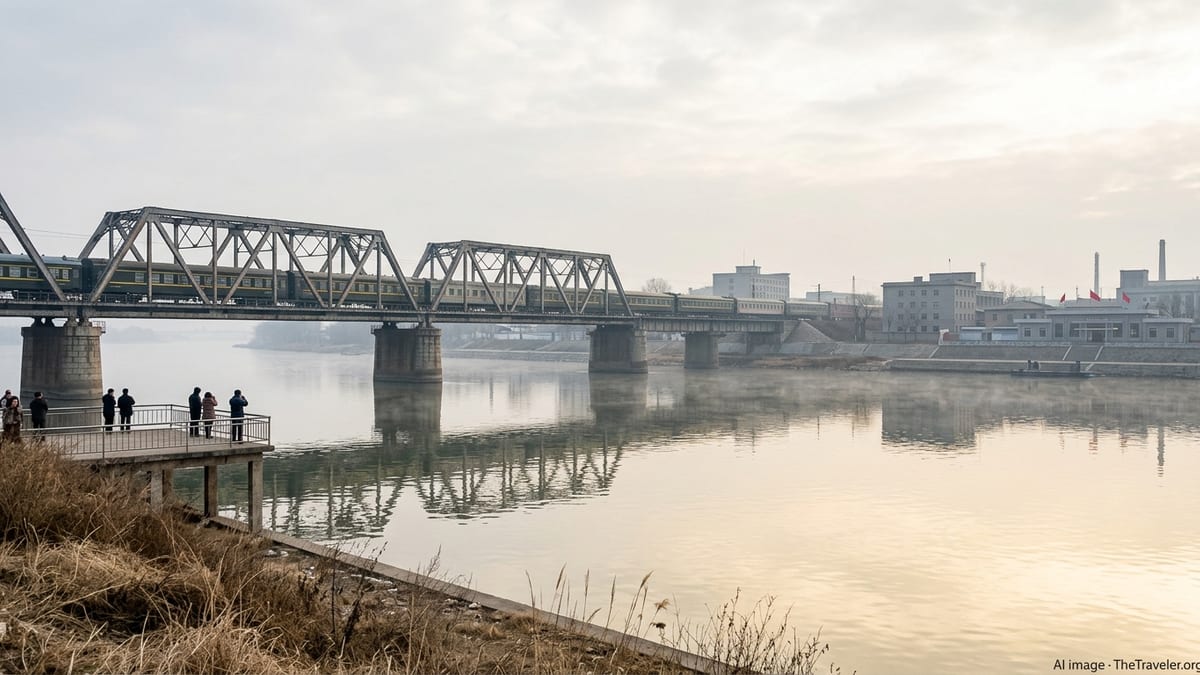
Cross-border rail links return as cooperation deepens
Recent moves to restore regular passenger rail services between China and North Korea have highlighted how rail connectivity sits at the centre of the two countries’ relationship. Public announcements from China State Railway Group in March 2026 confirmed the resumption of direct trains between Beijing and Pyongyang, as well as services linking the border city of Dandong with the North Korean capital after a suspension that dated back to the start of the COVID-19 pandemic.
Media coverage in South Korea and China indicated that the Pyongyang to Beijing service is now calling at a series of Chinese regional hubs, including Tianjin, Shanhaiguan, Shenyang and Dandong, before crossing the Yalu River to Sinuiju. The cross-border route effectively reconnects North Korea’s domestic rail grid with China’s dense passenger network, providing both a political and practical channel for expanding cooperation on rolling stock, signalling and station upgrades.
Observers note that the resumption of passenger links follows earlier phases of freight-only traffic and investments in border infrastructure. Chinese and North Korean outlets have described the renewed trains as a symbol of “friendship” and recovery in bilateral ties, after several years in which Pyongyang’s growing military partnership with Moscow appeared to overshadow its traditional reliance on Beijing.
The growing volume of passenger and cargo movements through the border corridor is expected to generate new pressure on North Korea’s domestic lines, where aging locomotives, limited electrification and post-war alignments have long constrained speeds and capacity. That in turn is increasing the incentive for Pyongyang to draw on Chinese rail expertise.
Modernising an ageing national rail network
North Korea’s railways have been the backbone of domestic transport since the Korean War, but much of the core network still reflects mid twentieth century construction and technology. Open-source reference materials describe a system dominated by single-track routes, heavy freight dependence and a mix of electrified and non-electrified lines, with chronic power shortages frequently disrupting operations.
While the government has periodically announced plans for electrification, new lines and even high-speed corridors, implementation has been uneven. Past attempts to attract foreign capital for large-scale modernisation, including an agreement in the early 2010s with a consortium of Chinese firms to build a fast line between Kaesong, Pyongyang and Sinuiju, have been slowed or derailed by sanctions, financing challenges and political risk concerns.
Against this backdrop, recent reports from North Korea-focused outlets suggest that the authorities are once again courting Chinese partners for rail-related projects. Daily NK, which monitors economic activity inside the country, has described new efforts by Pyongyang’s external economic agencies to interest Chinese private investors in infrastructure-linked ventures, including logistics and commercial developments that would rely on upgraded rail access.
Analysts point out that any large-scale renewal of the mainline network is likely to require Chinese involvement, whether through the supply of locomotives and carriages, provision of technical standards and training, or participation in joint ventures that bundle rail improvements with industrial parks and mining projects. China’s experience in building out one of the world’s largest high-speed and conventional rail systems gives it a ready-made template if political and financial conditions align.
Pyongyang metro becomes a showcase for Chinese technology
Nowhere is North Korea’s interest in Chinese transport solutions more visible than in the Pyongyang metro. Originally equipped with Soviet and Chinese-built rolling stock in the 1970s, the underground network has undergone waves of refurbishment in recent years, turning key stations into set pieces for visiting delegations and domestic propaganda.
Footage and photographs released through pro-North Korean media and analysed by outside observers show newly renovated stations fitted with brighter lighting, large digital information screens and refreshed wall decor. Reports carried by South Korean news agencies, citing coverage from the Japan-based outlet Choson Sinbo, describe Pyongyang’s metro platforms receiving modernised trains alongside upgraded ticketing and passenger information systems.
Specialist commentary on urban rail has highlighted the arrival of new metro cars that closely resemble contemporary Chinese designs, as well as the continued use of Chinese-made locomotives to move trains between depots and tunnels. These visual clues, combined with historical records that the original DK4 passenger cars were supplied by a Chinese manufacturer, underscore how deeply intertwined Chinese and North Korean rail technology have become beneath the streets of Pyongyang.
Some of the newest flagship trainsets showcased by state media are promoted domestically as symbols of indigenous innovation. However, technical analyses in open sources often point to Chinese components or design influence, suggesting that cooperative arrangements, technology transfers or licensed production are helping Pyongyang present a more modern image to both its citizens and foreign visitors.
China’s rail playbook as a model for Pyongyang
For Beijing, closer engagement with North Korea’s transport infrastructure fits into a broader pattern of using rail to bind neighbouring economies more tightly to China. Chinese academic and policy research has explored how high-speed and conventional rail projects can reshape regional economic structures, support export of Chinese technology and standards, and deepen political influence along key corridors.
In the North Korean context, this approach is likely to be expressed less through marquee high-speed projects and more through incremental upgrades. These can include replacing diesel locomotives with newer electric or hybrid models sourced from Chinese factories, installing signalling and control systems compatible with Chinese networks, and rehabilitating border-adjacent lines to improve reliability for freight and passengers.
Reports from think tanks and international organisations have suggested that such connectivity projects are often linked with broader economic cooperation plans, ranging from special economic zones near the border to expanded mining and manufacturing ventures that depend on efficient rail logistics. North Korea’s recent hosting of Chinese inspection delegations in sectors such as agriculture, light industry and construction, as described by regional monitoring outlets, points to a growing interest in bundled projects where transport improvements and industrial development proceed in tandem.
At the same time, sanctions and reputational concerns continue to weigh on large state-backed investments. Chinese firms with past experience in North Korea have been described in independent reporting as cautious, remembering cases where contracts were altered or assets effectively nationalised. That has prompted speculation that any new rail and metro cooperation may favour arrangements that limit exposure, such as equipment sales, technical assistance or smaller joint ventures rather than sweeping build-operate-transfer schemes.
Implications for future travel and tourism
For travellers and tourism operators, the emerging rail and metro cooperation has mixed implications. On one hand, the resumption of scheduled Beijing to Pyongyang passenger trains provides a predictable surface route into North Korea, complementing limited air links and supporting niche tour itineraries that highlight overland journeys through Dandong and Sinuiju.
The progressive refurbishment of Pyongyang’s metro, with cleaner stations, digital signage and newer rolling stock, also enhances one of the capital’s most distinctive attractions. Organised tours routinely include metro rides, and recent imagery suggests a more polished experience than in the past, with trains and platforms that more closely resemble contemporary systems in major Chinese cities.
On the other hand, the broader environment for international travel to North Korea remains highly constrained. Entry is subject to tight political controls, and public information indicates that visa policies, health measures and restrictions on independent movement can change with little notice. While rail modernisation may make domestic journeys smoother for residents and permitted visitors, it does not in itself signal a wholesale opening to mass tourism.
Looking ahead, analysts of regional transport expect that the trajectory of China–North Korea rail cooperation will be shaped by geopolitics as much as engineering. If political conditions allow, a more modernised railway and metro network anchored to Chinese technology could gradually improve connectivity for trade and tightly managed tourism, even as wider sanctions and security concerns continue to limit the scale of international travel to and within the country.