


More news on this day
A U.S. federal appeals court has overturned a U.S. Department of Transportation decision to terminate the joint venture between Delta Air Lines and Aeromexico, clearing the way for the cross-border alliance to continue coordinating routes, fares and capacity on one of North America’s busiest international travel markets.
Get the latest news straight to your inbox!
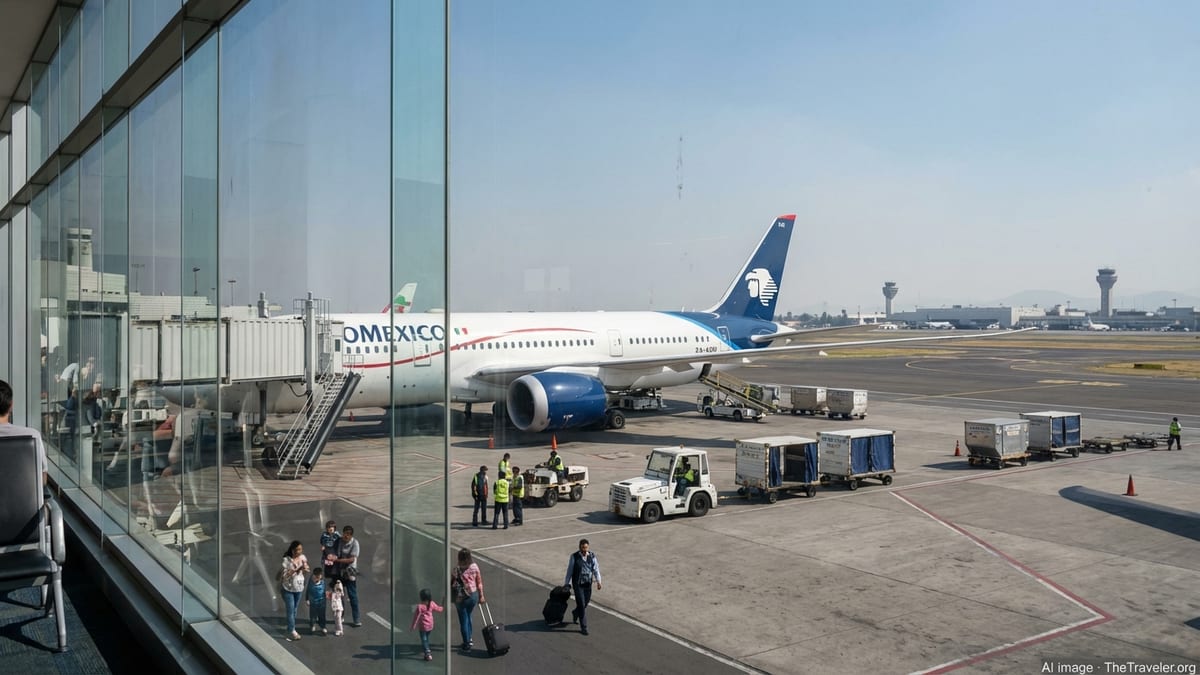
Appeals court overturns DOT order
According to published coverage of the decision, the U.S. Court of Appeals for the Eleventh Circuit set aside a 2025 Department of Transportation order that would have ended approval of the Delta–Aeromexico Joint Cooperation Agreement and withdrawn its antitrust immunity as of January 1, 2026. The DOT order had directed the carriers to unwind their price and capacity coordination, revenue sharing and joint scheduling on U.S.–Mexico routes after a multiyear review of competition and airport access issues.
Reports indicate the court concluded that the department exceeded its authority or did not adequately justify key elements of its rationale for forcing the breakup of the nearly decade-old venture. The ruling means the joint venture and its accompanying immunity from U.S. antitrust law remain in effect while the agencies involved assess their next steps.
Publicly available information shows that the decision ends a period of intense uncertainty for travelers and the airlines alike, which had already begun planning for a potential separation of schedules, pricing and network planning if the DOT’s order had remained in place.
Background to a high-stakes aviation dispute
The Delta–Aeromexico joint venture dates back to regulatory approvals granted in 2016, allowing the carriers to coordinate on flights between the United States and Mexico. In exchange, the airlines surrendered valuable takeoff and landing slots at Mexico City and New York in an effort to address competition concerns. Since then, the partnership has grown into one of the most important links between the two countries, with tightly coordinated schedules and integrated frequent flyer benefits.
Published filings and company disclosures indicate that from the start of the agreement in 2017 through the end of 2025, the carriers transported more than 60 million passengers under the cooperation framework, reflecting double-digit annual growth. The joint venture became especially significant as tourism, business travel and migration-related traffic between the United States and Mexico surged in recent years.
The DOT’s 2025 order to terminate the venture stemmed from concerns over Mexico’s management of key airport infrastructure, including slot allocation at Mexico City’s main international airport, and whether the Mexican government’s policies complied with bilateral air services commitments. U.S. competition authorities had argued in earlier public comments that allowing an immunized alliance under such conditions could disadvantage rival U.S. carriers that lacked similar access.
Significance for travelers on the U.S.–Mexico corridor
For travelers, the court’s decision preserves a level of integration that goes beyond typical codeshare arrangements. Under the joint venture, Delta and Aeromexico can jointly plan schedules, align departure and arrival times for connections, and coordinate pricing on overlapping routes, which has allowed for dense frequencies on major city pairs such as Atlanta–Mexico City, New York–Mexico City and Los Angeles–Mexico City.
Industry analysis published after the ruling notes that maintaining the alliance should help sustain connection options through both carriers’ hubs, with coordinated bank structures that allow passengers to connect between U.S. domestic flights and Mexican domestic or regional services on a single itinerary. Travelers also continue to benefit from reciprocal frequent flyer accrual and redemption, as well as aligned elite benefits across both networks.
Consumer advocates and competition specialists are likely to continue debating the impact on fares and choice. Some analysts have argued in recent commentary that immunized alliances can reduce head-to-head competition and keep prices elevated on certain routes, while others point to increased connectivity and scheduling efficiency that can expand overall capacity and route options in transborder markets.
What it means for airline strategy in North America
The ruling comes at a time when joint ventures and global alliances remain central to long-haul and cross-border airline strategy. The Delta–Aeromexico partnership is one of several immunized ventures used by major U.S. carriers to stitch together international networks, alongside Delta’s partnerships in Europe and Asia and similar arrangements pursued by competitors.
According to industry commentary, had the DOT’s order been upheld, Delta and Aeromexico would have been forced to revert to arm’s-length cooperation limited to codesharing, basic marketing coordination and frequent flyer reciprocity. That structure would have restricted deeper revenue and capacity planning, potentially prompting aircraft redeployments, reduced frequencies or schedule shifts by both airlines.
The appeals court decision therefore preserves a key plank in Delta’s broader Latin America strategy and maintains Aeromexico’s access to a powerful feed of U.S. traffic through Delta’s hubs. Analysts suggest the outcome will be closely watched by other carriers and regulators as a test case for how far transportation authorities can go in revisiting previously approved alliances when government policies or market conditions change.
Next steps for regulators and the carriers
Following the court ruling, publicly available statements from the companies indicate that Delta and Aeromexico are reviewing the opinion with legal advisers while keeping the market informed of material developments. The DOT retains the option to reassess its approach, including the possibility of revising its analysis or considering alternative remedies that might address airport access and competition concerns without fully terminating the joint venture.
Legal specialists note in post-decision commentary that the case underscores the importance of clear statutory authority and detailed economic justifications when regulators seek to unwind long-standing commercial arrangements. Any further action by transportation authorities would likely face heightened scrutiny from both the courts and industry stakeholders.
For now, airlines and travelers can expect continuity in schedules and joint offerings on Delta–Aeromexico routes as the alliance continues to operate under the existing approval and antitrust immunity framework, preserving one of the most integrated air corridors between the United States and Latin America.