


More news on this day
Israel has begun organizing special repatriation flights from the United Arab Emirates to bring home thousands of travelers stranded after a violent cockpit attack on a FlyDubai jet led the airline to suspend services to Tel Aviv.
Get the latest news straight to your inbox!
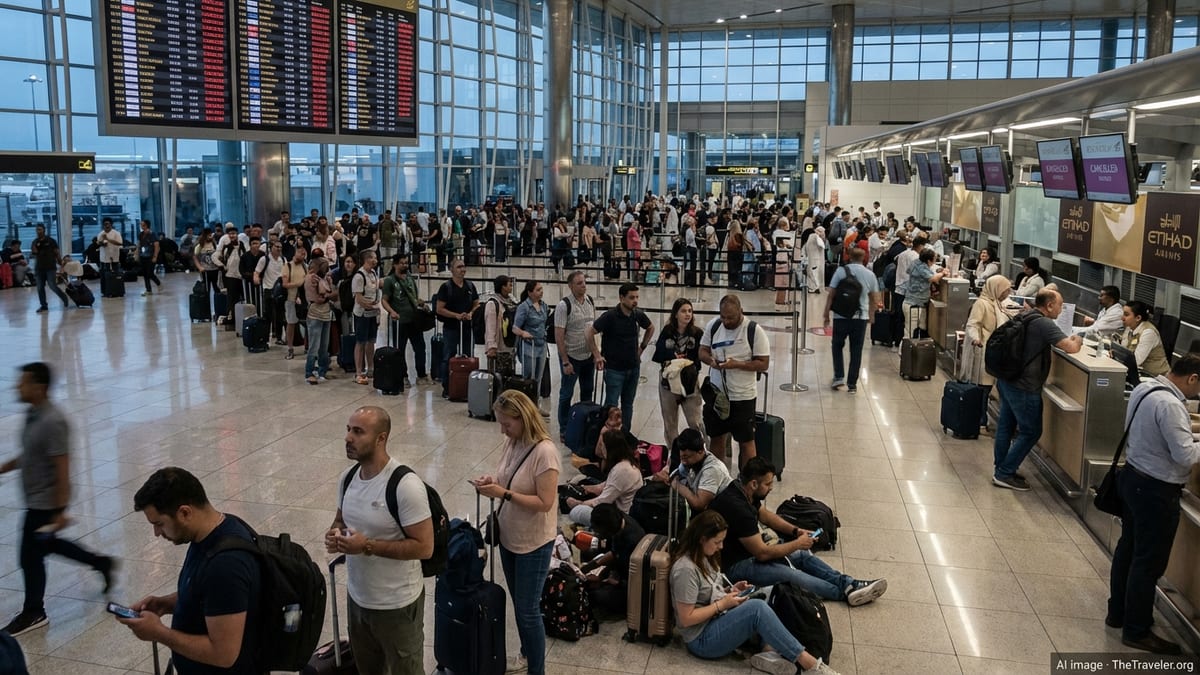
Emergency air bridge after near-disaster on FZ1073
The repatriation effort follows an incident on September 30, 2026, involving FlyDubai flight FZ1073 from Dubai to Tel Aviv. Publicly available reports describe how the aircraft rapidly descended and diverted to Tabuk in northwestern Saudi Arabia after a struggle in the cockpit in which the co-pilot is alleged to have attacked the captain.
Coverage from regional and international outlets indicates that passengers and off-duty crew helped stabilize the situation before the aircraft landed safely in Tabuk. All 182 people on board were reported to have survived, though both pilots required medical treatment. Authorities in the United Arab Emirates have described the episode as a terrorist attack and opened a wide-ranging investigation into the co-pilot’s background and possible motives.
In the immediate aftermath, FlyDubai suspended all flights to and from Israel while the inquiry continues. The pause, combined with existing regional security sensitivities, left thousands of passengers whose itineraries depended on the Dubai to Tel Aviv corridor without an obvious route home.
Israeli carriers step in to retrieve stranded travelers
With FlyDubai’s Israel operations on hold, Israeli airlines have begun operating one-way repatriation services from the UAE. According to published airport schedules and local media coverage, El Al, Arkia and Israir received approval to mount special flights from Dubai to Tel Aviv’s Ben Gurion Airport starting Friday, October 2.
These flights are focused on bringing passengers back to Israel rather than restoring normal two-way traffic. Reports indicate that the initial services carried several hundred travelers, with priority given to Israeli citizens and others who had originally been ticketed on FlyDubai’s now-suspended Tel Aviv route.
Industry coverage suggests that Arkia operated one of the first such flights, landing in Israel early on Saturday with passengers who had been stranded in Dubai since midweek. Additional rotations by El Al and Israir are expected over the coming days, subject to operational and security clearances coordinated between Israeli and Emirati authorities.
How the repatriation program works for affected passengers
Information made public so far indicates that repatriation flights are being organized around passenger lists supplied by FlyDubai and travel agents, rather than on a general open-sale basis. Travelers whose return journeys were booked on FlyDubai are being advised in published notices to contact the airline or their original booking channels for updated arrangements, rather than going directly to the airport without confirmation.
Reports from Israeli media describe a system in which eligible passengers are reassigned to special one-way flights operated by Israeli carriers, often on short notice as new slots and approvals are secured. Checked luggage handling has emerged as a complicating factor, with some services prioritizing passenger movements while sending baggage separately in order to comply with strengthened screening procedures.
For travelers still in the UAE, airport and airline advisories emphasize the importance of monitoring messages from carriers, confirming flight numbers and departure times before leaving hotels, and allowing extra time at Dubai International Airport for security checks. Some coverage also notes that travelers connecting through the UAE from third countries may need to rebook their onward legs entirely if those segments were tied to the FlyDubai route to Israel.
Security reviews reshape the Israel–UAE air corridor
The FlyDubai incident has prompted extensive security reviews on both sides of the Israel–UAE air bridge. Public statements from regional officials and aviation regulators show that investigators are examining how the co-pilot was cleared to operate a flight with a large number of Israeli passengers despite earlier reported concerns about his views in another jurisdiction.
According to open-source reporting, security agencies in Israel, the UAE and Saudi Arabia are also assessing whether the cockpit attack meets legal definitions of terrorism and what changes may be needed in vetting, mental health monitoring and cockpit access protocols. These reviews are occurring against the backdrop of heightened regional tensions, adding sensitivity to any decisions affecting cross-border aviation.
In practical terms, the enhanced scrutiny has translated into additional checks for crews and passengers on repatriation services, careful coordination of overflight permissions, and tighter control of flight manifests. Analysts note that the Israel–UAE route, once marketed as a symbol of growing normalization and tourism, is now likely to operate under more restrictive conditions even after commercial schedules resume.
Uncertain outlook for regular tourism and business travel
Before the incident, FlyDubai and other carriers had built a busy corridor between Tel Aviv and Dubai, serving leisure travelers, business visitors and transit passengers using the UAE as a global hub. Data shared in corporate reporting shows that FlyDubai alone carried more than 15 million passengers in 2025 across its network, with the Israel route playing a prominent role in its expansion since 2020.
The temporary suspension of FlyDubai’s Israel flights has not only stranded passengers but also disrupted forward bookings for autumn and winter travel. Tourism operators tracking the situation report a wave of itinerary changes as visitors seek alternative routings via third countries such as Cyprus or Greece, or postpone travel altogether while safety reviews continue.
For now, there is no publicly confirmed date for FlyDubai to restart operations to Tel Aviv. The scale and duration of the repatriation program will depend on how many stranded travelers remain in the UAE and how quickly investigations conclude. Until then, the special flights operated by Israeli airlines provide a narrow but crucial lifeline for those still waiting to return home, while the broader future of routine travel on this high-profile route remains uncertain.