


More news on this day
A Virgin Voyages passenger has highlighted an unusually positive outcome to a high-stress documentation error, praising the cruise line after a passport mix-up in New York left a member of their travelling party stranded ashore while the ship departed for Bermuda.
Get the latest news straight to your inbox!
Passport Error Stops Boarding in New York
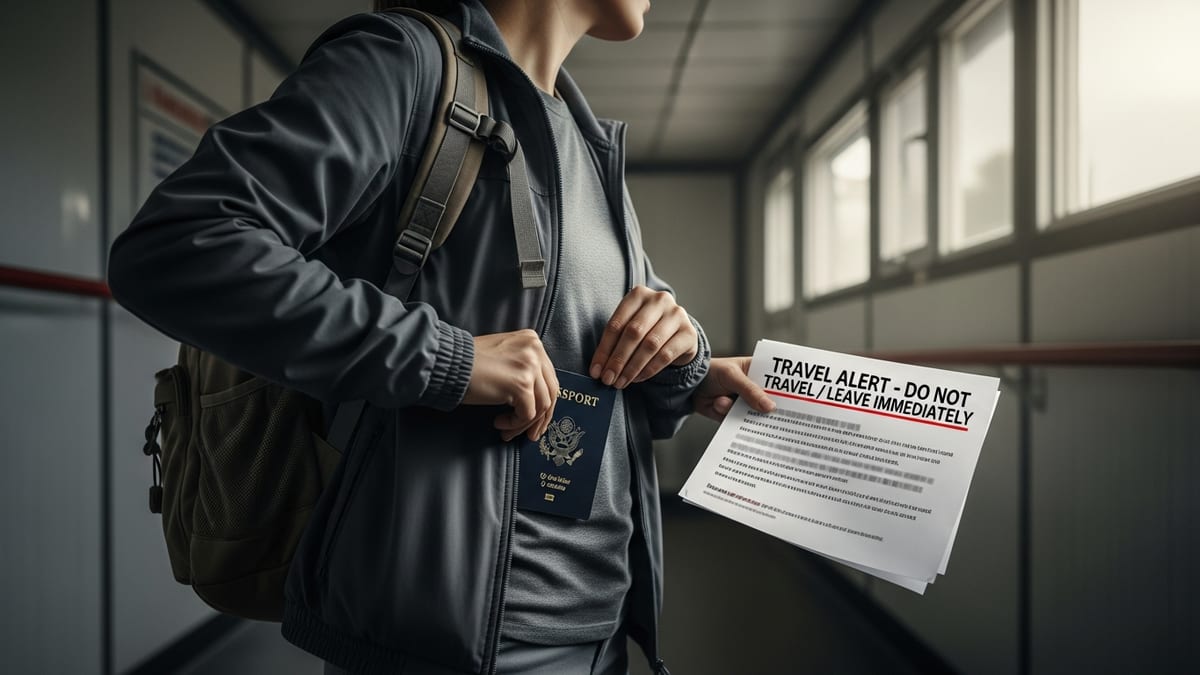
According to published coverage and a detailed account shared on social media, the incident took place at Brooklyn Cruise Terminal, where Virgin Voyages’ Valiant Lady was preparing to sail from New York to Bermuda. A group of six travellers arrived at check-in only to discover that one member of the party had brought her fiancé’s passport instead of her own.
The error was reportedly identified during document checks at the terminal, a point in the process where cruise lines are required to verify passengers’ identities and travel eligibility before allowing boarding. Because passports are individual biometric documents, the mismatch meant the traveller could not be cleared to sail, even though she held a valid ticket and was part of a confirmed booking.
Publicly available information on standard cruise contracts shows that responsibility for carrying correct travel documents typically lies with guests, not operators. Under most ticket terms, an incorrect or missing passport is treated as a guest-side problem, with no automatic refund or alternative transportation owed when boarding is denied.
Those conditions meant the stranded traveller in New York could easily have faced the prospect of arranging her own accommodation and onward travel while also losing the value of the sailing. Instead, the situation unfolded differently once Virgin Voyages staff became involved.
Cruise Line Arranges Hotel and Future Credit
Reports of the case indicate that Virgin Voyages staff worked directly with the affected traveller after the mistake was confirmed, arranging accommodation in New York for the night she should have been at sea. Coverage of the incident notes that the cruise line also issued future voyage credit, allowing her to rebook a sailing at a later date rather than losing the entire cost of the trip.
The account shared online describes front-line staff who remained calm and empathetic while explaining that they could not override passport rules but would try to ease the immediate impact. The traveller’s companion later wrote that, although the couple were disappointed to miss the Bermuda cruise, they were impressed by the way the company handled a problem that stemmed from their own oversight.
Observers in consumer travel media point out that such gestures go beyond what is generally required under standard cruise ticket contracts. In many denied-boarding cases involving documentation errors, guests report being turned away with limited assistance beyond information about hotels, airlines or travel insurance claims. The Virgin Voyages response therefore stood out as comparatively generous.
The incident has since circulated widely in cruise-focused forums, where it is being referenced as an example of how a flexible approach to customer care can shape public perception even when a journey goes wrong before it begins.
Embarkation Delays Added to the Stress
The passport mix-up came during an already disrupted embarkation for Valiant Lady. Travel reports note that severe weather delayed the ship’s arrival into New York, pushing boarding at Brooklyn Cruise Terminal into Sunday evening instead of earlier in the day.
That change meant passengers faced longer waits at the terminal and a more compressed embarkation window, a combination that can heighten stress at the document-check stage. The group involved in the passport incident had travelled to New York by train and then joined queues at the terminal during the delayed check-in period, only learning of the error when documents were physically examined.
Although the weather-related disruption did not cause the documentation mistake, it likely amplified the tension when the problem emerged. Travel industry observers frequently note that delays and irregular operations can make it harder for staff and guests alike to resolve unexpected issues calmly, from baggage problems to paperwork errors.
In this case, the positive account of the cruise line’s handling suggests that clear communication and practical assistance helped offset some of that pressure, even as the ship continued with its revised schedule to Bermuda without the affected traveller.
Spotlight on Cruise Passport Rules and Passenger Responsibility
The New York incident has renewed attention on how strictly cruise lines and port authorities apply passport rules, especially on itineraries that visit foreign ports such as Bermuda. Official guidance from governments and cruise operators consistently states that passengers must travel with valid passports that match the details on their booking and comply with destination entry rules.
Consumer advocates routinely warn that boarding can be denied if a passport belongs to another person, contains inconsistent personal data, or does not meet validity requirements such as minimum months remaining before expiry. In those circumstances, carriers are generally prohibited from transporting the passenger, as they can face fines or be required to return travellers who are refused entry at the destination.
Examples documented across travel complaint sites and advice columns show that, in many comparable cases, guests left behind because of passport problems shoulder the cost of rebooking cruises, flights and accommodation. Travel insurance may sometimes help, but policies often exclude cover where the root cause is a documentation error rather than a covered event like illness or airline cancellation.
Against that backdrop, Virgin Voyages’ decision to provide both immediate assistance and a future cruise credit has been interpreted by some commentators as an attempt to reinforce its branding around customer-focused service. While not altering the underlying rules on documentation, it illustrates the discretion cruise lines can exercise when deciding how far to support guests when mistakes occur.
Lessons for Travellers Planning Future Sailings
The story has been widely shared among would-be cruisers as a cautionary tale with an unexpectedly encouraging ending. Travel writers and forum moderators are using the case to underline the importance of checking passports before leaving home, particularly when several people in a household hold similar-looking documents.
Practical suggestions put forward include storing passports in separate, clearly labelled holders and cross-checking names and passport numbers against booking confirmations a day or two before departure. Some commentators also recommend carrying printed copies or digital photos of each passport’s information page as a basic back-up in case of loss or confusion, while acknowledging that only the original document is valid for boarding.
At the same time, the New York incident serves as a reminder that cruise lines can choose to go beyond the minimum contractual obligations when guests make honest mistakes. While travellers cannot assume that accommodation, credits or refunds will be offered in every case, this example shows how flexible responses can turn a potentially damaging customer experience into one that is shared online as a positive endorsement.
For Virgin Voyages, early reaction to the story has added to a wave of word-of-mouth discussion about service standards on its relatively young fleet. For passengers preparing to sail from busy ports like New York, it is another prompt to double-check that the passport in their bag is not only valid but also the right one.