


More news on this day
Israel has begun organizing repatriation flights from the United Arab Emirates for hundreds of travelers left stranded after FlyDubai halted services to Tel Aviv in the wake of an attempted cockpit attack aboard flight FZ1073.
Get the latest news straight to your inbox!
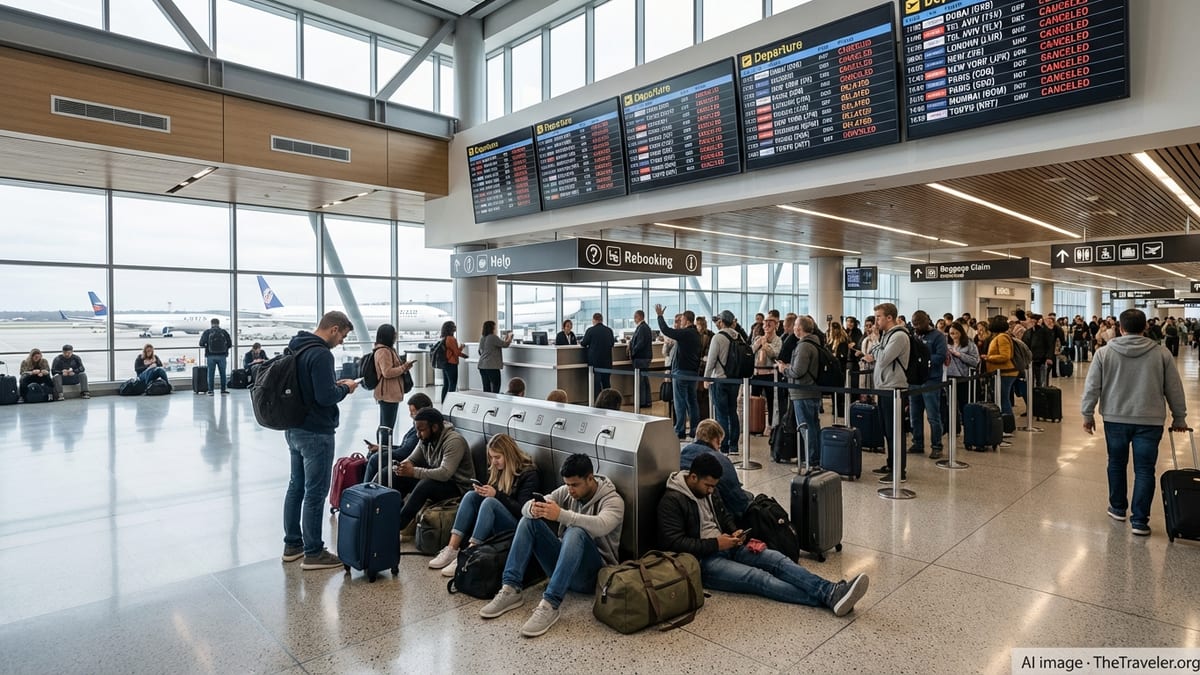
Israeli airlines step in after FlyDubai suspension
Publicly available information shows that Israeli carriers El Al, Arkia and Israir have each scheduled one-way flights from Dubai and Abu Dhabi back to Tel Aviv, starting Friday, October 2. These services are dedicated to returning passengers whose trips were disrupted when FlyDubai suspended all flights to and from Israel following the September 30 incident involving flight FZ1073.
According to published coverage in Israeli media, the three airlines announced the special operations on October 1, marketing them primarily as repatriation services for Israeli citizens and residents who had been vacationing or working in the UAE. The flights are operating under short-term arrangements coordinated with aviation regulators in both countries, separate from each airline’s regular commercial schedule.
Reports indicate that affected passengers were offered the chance to rebook on these Israeli-operated services at controlled fares agreed with authorities, although the exact pricing structure has not been made public. Travelers were advised to contact airline call centers or local travel agents in the UAE to secure seats, rather than waiting for FlyDubai to resume operations.
While the repatriation flights are formally open to all eligible passengers holding valid travel documents for Israel, early reports suggest that priority has been placed on those whose FlyDubai tickets were canceled mid-trip, including package-tour customers and travelers with urgent return needs.
Scale of the airlift from Dubai to Tel Aviv
Figures released by the United Arab Emirates General Civil Aviation Authority on October 5 indicate the scale of the airlift that followed FlyDubai’s decision to suspend its Israel route. The authority reported that 37 replacement flights were operated from Dubai International Airport to Tel Aviv’s Ben Gurion Airport between Friday, October 2 and Monday, October 5, carrying a total of 7,479 passengers.
These flights were operated by a mix of Israeli carriers and partner airlines working under coordination agreements put in place after the attempted hijacking. The operation was designed to clear the backlog of stranded travelers who had been unable to leave the UAE once FlyDubai’s Tel Aviv services were halted pending the outcome of safety and security reviews.
According to aviation statements summarized in regional news outlets, the UAE aviation regulator described the transfer operation as complete by the evening of October 5, noting that passengers whose journeys were disrupted had been returned to their destinations. The figures point to an intensive, short-term effort to restore connectivity on a route that typically sees multiple daily flights in each direction.
For passengers, the large number of recovery flights meant that most were able to depart within a few days of their original travel dates, although some reported extended waits at Dubai International Airport while seats were allocated and new boarding passes issued.
How the FlyDubai cockpit attack reshaped regional travel
The repatriation effort followed a dramatic incident on September 30, when FlyDubai flight FZ1073 from Dubai to Tel Aviv was forced to divert to Tabuk, Saudi Arabia, after a violent struggle in the cockpit. According to international news reports, the Omani co-pilot allegedly attacked the captain with a crash ax and tried to seize control of the aircraft, prompting passengers and off-duty crew to intervene.
Investigative coverage in outlets such as the Associated Press and other global media indicates that authorities are treating the event as a suspected terrorist attack. Reports also state that the co-pilot had previously been restricted from flying in Oman over concerns about extremist views, raising searching questions about vetting and information-sharing across borders.
In response, FlyDubai announced on October 1 that it was suspending all flights to and from Israel while the investigation continues. Aviation-focused publications note that the airline has been working with government authorities, regulators and airport operators to support affected customers, but has not set a specific date for resuming Tel Aviv services.
The fallout has unsettled what had become a busy air corridor between the UAE and Israel since the signing of normalization agreements in 2020. Travel industry analysts quoted in regional coverage say the incident is likely to prompt tighter background checks on cockpit crew and fresh scrutiny of security protocols on routes considered to carry elevated risk.
Coordination between Israel and the UAE for stranded travelers
According to official statements summarized in UAE-based media, coordination between the two governments and multiple airlines was central to moving thousands of stranded passengers in a matter of days. The UAE aviation regulator described working “with all relevant authorities and the airlines concerned” to support continuity of air transport and passenger service on the corridor to Tel Aviv.
On the Israeli side, publicly available information indicates that the Transportation Ministry worked with domestic airlines to authorize additional one-way services from the UAE, including aircraft and crew positioning flights. These special flights allowed carriers such as El Al, Arkia and Israir to retrieve passengers in Dubai and Abu Dhabi even while FlyDubai’s own bilateral schedule remained suspended.
The arrangement effectively created an ad hoc air bridge between the two countries during the first days after the attack, ensuring that business travelers, tourists and pilgrims could return home without waiting for the conclusion of the security investigation. Travel agents in both markets reported brisk demand for seats, particularly on the first wave of flights departing the UAE on October 2 and 3.
Regional travel media note that the rapid rollout of joint repatriation operations underscores the depth of aviation and tourism ties that have developed between Israel and the UAE in recent years. At the same time, the episode has exposed vulnerabilities in cross-border safety oversight that regulators on both sides now say they intend to examine closely.
What travelers between Israel and the UAE should know now
For travelers planning journeys between Israel and the UAE in the coming days, published guidance highlights a more limited set of direct options compared with the period before the FlyDubai incident. Reporting in UAE-based outlets notes that FlyDubai services on the Dubai–Tel Aviv route remain suspended, while other carriers have adjusted their schedules to absorb demand.
Israeli airlines are currently the primary operators of direct flights dedicated to former FlyDubai passengers, alongside additional services arranged during the repatriation phase. Travel news coverage recommends that passengers holding existing FlyDubai tickets contact the airline or their booking agent to discuss refunds or rebooking, and then explore new itineraries on alternative carriers once compensation or credit arrangements are clarified.
Industry commentators indicate that security reviews ordered by Israel for incoming flights, combined with the criminal investigation underway in the UAE, could influence capacity and pricing on the route in the short term. Travelers are being advised to allow extra time at airports for enhanced screening and to monitor airline announcements closely for any schedule changes.
While the emergency repatriation operation from Dubai to Tel Aviv is now considered complete, the longer-term shape of air links between Israel and the UAE will depend on the outcome of the FlyDubai investigation and any regulatory changes introduced as a result. Until those details are finalized, passengers moving between the two countries are likely to face a more fluid and closely managed flight environment than before the attack.