


More news on this day
Heavy cranes have been brought in to stabilize a freight train that derailed along Richmond’s canal district on July 3, disrupting riverfront access and closing a popular stretch of the Virginia Capital Trail at the start of the holiday travel period.
Get the latest news straight to your inbox!
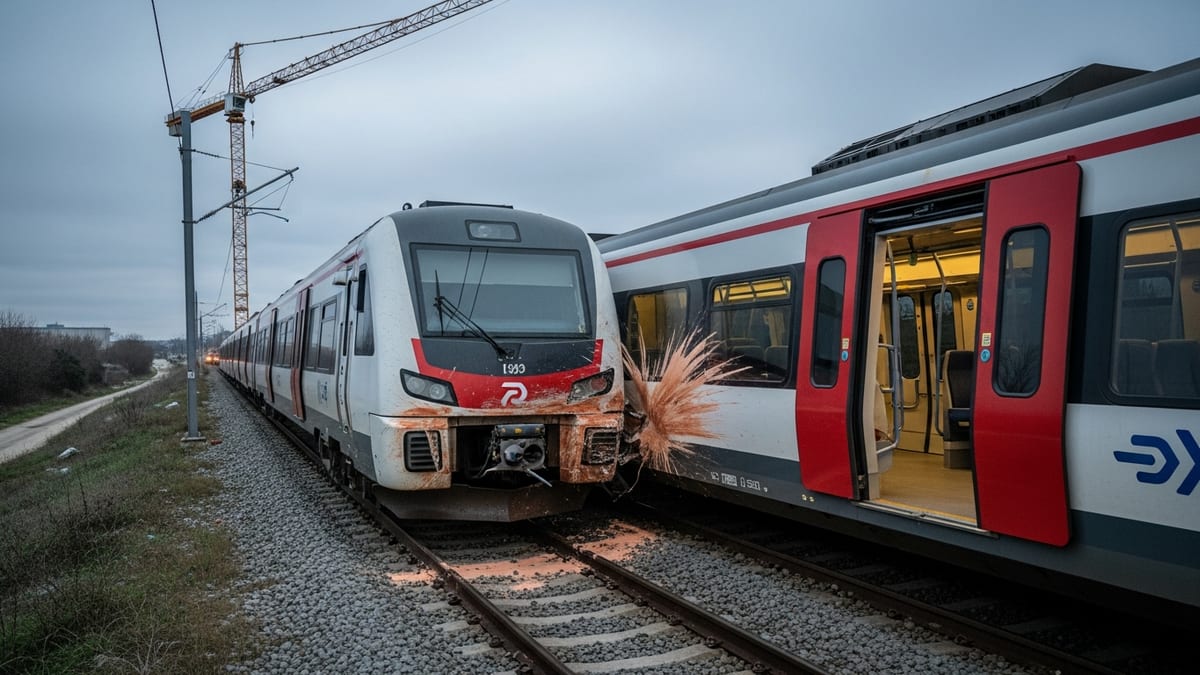
Cranes Move In After Canal-Side Freight Derailment
Publicly available information indicates that three grain cars from an approximately 200-car freight train derailed into the canal near Dock and 20th Streets in Richmond, Virginia, around 4 p.m. on July 3. Two additional cars were left unstable on the elevated structure above, prompting a complex recovery operation in a tightly confined urban setting at the edge of the city’s historic riverfront.
According to regional news coverage, the July 4 phase of the response centered on bringing in large cranes to secure and eventually remove the cars that remained perched on the structure. Images from the scene show specialized lifting equipment positioned along Dock Street and adjacent parking areas, underscoring the engineering challenge of working above a canal and close to nearby buildings and pedestrian routes.
Local reports state that all of the affected rail cars were loaded with grain and that no hazardous materials were involved. Early updates from city channels and broadcast outlets consistently describe the incident as non-injury, with no reported spills into the waterway beyond the grain already contained in the wagons.
The timing of the derailment, on the eve of the Independence Day weekend, has placed added pressure on crews to make the area safe while large numbers of residents and visitors converge on downtown Richmond’s canal walks, riverfront parks, and nearby attractions.
Street and Trail Closures Affect Visitors
City advisories compiled by local media indicate that Dock Street remains closed between 18th Street and Pear Street while cranes and work crews occupy much of the roadway. A section of the Virginia Capital Trail, a popular route for cyclists and walkers, is also closed between mile markers just east and west of the derailment site, with travelers redirected to use East Cary Street as a detour.
The closures affect a corridor that has become a key access point for Richmond’s growing urban tourism scene. The canal district connects downtown hotels and restaurants with the James River, Brown’s Island event space, and historic Shockoe Bottom, drawing visitors who come for walking tours, festivals, and waterfront activities.
Parking restrictions add another layer of disruption. Public information notes that at least one lower-level parking area along Canal Street is closed to accommodate cranes and support vehicles, requiring drivers to seek alternative garages or lots in adjacent neighborhoods. Wayfinding signs and detour markings are helping route motorists around the affected stretch, but congestion is likely at peak times.
For active travelers, the interruption of the Capital Trail at this particular point is especially significant. The trail is a well-known regional attraction for long-distance cycling and day trips between Richmond and Williamsburg, and the closed section runs through one of its most scenic urban segments alongside the canal and riverfront.
Impact on Holiday Travel and Local Businesses
Although the derailment involves a freight train rather than passenger services, the location at the heart of a downtown leisure corridor means the impact is being felt in ways more familiar to travelers than to freight customers. Visitors arriving in Richmond for the long weekend may encounter barricades, flashing work lights, and heavy equipment along streets that usually host runners, cyclists, and outdoor diners.
Travel-focused coverage suggests that nearby hotels, restaurants, and tour operators are monitoring the situation closely. While primary access routes into the city remain open, guests who expect canal-side strolls or uninterrupted use of the Capital Trail may need to adjust their plans. Some walking tours are reported to be re-routing around the affected blocks, while cyclists are encouraged to dismount or follow signed detours through surface streets before rejoining the trail farther east or west.
For drivers, the detours along East Cary Street and East Main Street may lead to longer travel times, particularly around popular event venues and riverfront parking areas. Those planning to attend evening concerts, fireworks, or riverfront gatherings are being advised through public channels and media reports to build in extra time for traffic, navigation, and parking.
Despite the disruption, publicly available information as of July 5 continues to emphasize that rail operations outside the immediate area remain largely unaffected. Intercity and regional passenger services that use separate corridors around Richmond appear to be running on their published holiday timetables, although travelers are encouraged to verify schedules in case of knock-on operational adjustments.
Technical Challenges of a Waterfront Recovery
The use of heavy cranes at the Dock Street derailment highlights the technical challenges that can arise when rail incidents occur in constrained or sensitive environments. In this case, crews must work above a canal, near elevated tracks, and within arm’s reach of roads, parking lots, and active pedestrian corridors.
Rail incident specialists note in previous high-profile cases that cranes are often essential when wagons come to rest in positions that cannot be accessed by standard on-track recovery equipment. In Richmond, the unstable cars on the structure require precise lifting and securing operations before they can be moved or dismantled, all while minimizing additional stress on the bridge and ensuring that debris does not fall into the canal.
Recent international examples of derailment recoveries, including crane-assisted removals of carriages after serious crashes in Europe, have shown that these operations can take several days and often require temporary access roads, staged lifting sequences, and round-the-clock work shifts. Though the Richmond incident is far less severe and involves only freight wagons, the same basic engineering principles apply when positioning large cranes near railway structures and waterways.
Environmental considerations also come into play. Even with non-hazardous cargo such as grain, recovery teams must account for potential impacts on water quality, wildlife, and canal infrastructure, reinforcing the need for careful planning before any lift is attempted.
What Travelers Should Know in the Coming Days
As of Sunday, July 5, reports indicate that cranes remain on site and that street and trail closures are still in effect around Dock Street and the impacted stretch of the Capital Trail. No clear timetable has yet been publicly reported for full reopening, suggesting that visitors should be prepared for ongoing detours into the early part of the week.
Travelers planning to explore Richmond’s riverfront are encouraged by public advisories and media summaries to check recent local updates before setting out, particularly if their plans involve cycling the Capital Trail or parking near the canal. Alternate routes via East Cary Street provide continued access to restaurants and attractions in Shockoe Bottom and the canal district, albeit with added congestion and occasional lane restrictions.
For those passing through Richmond on longer road trips, the derailment’s footprint remains relatively localized. Major interstates and primary approach routes into the city are operating normally, and long-distance rail itineraries across the Mid-Atlantic appear to be continuing with minimal interference related to this incident. The main effect is concentrated on those who would typically use the canal-front streets and trails as part of their visit.
In the meantime, the sight of towering cranes working above the canal has become an unexpected, if temporary, landmark for holiday travelers. It is a visible reminder of the intricate infrastructure that underpins both freight and passenger movement and of how quickly a single incident can reshape the experience of a city’s most visited corridors, even when no passenger trains are directly involved.