


More news on this day
Rail and emergency response crews are working along freight lines serving Laurens and Greenwood counties after 21 train cars derailed, disrupting service and drawing renewed attention to railroad safety in South Carolina’s Upstate region.
Get the latest news straight to your inbox!
Early Reports Describe Multi-Car Freight Derailment
Initial accounts from local and regional coverage indicate that a freight consist traveling on rail lines between Laurens and Greenwood counties left the tracks, with 21 cars reported derailed. The incident appears to have occurred along a corridor frequently used for mixed freight service that links industrial areas in the Upstate with larger regional hubs.
Publicly available information suggests that the affected train was hauling standard freight rather than passengers. As of the latest reporting, there have been no widely circulated accounts of fatalities, though details about potential injuries or medical evaluations remained limited in the immediate aftermath. Rail operators and local responders have been focused on stabilizing equipment and securing the surrounding right of way.
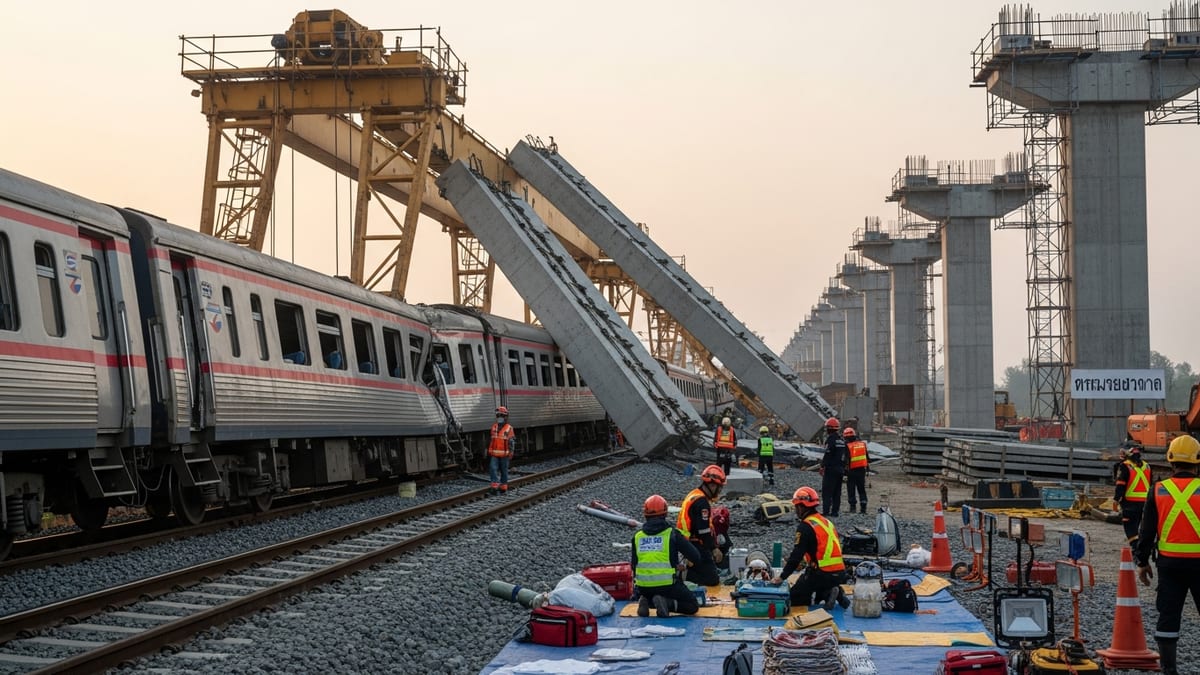
Reports describe a tangle of railcars at the site, some tipped on their sides and others leaning at sharp angles against the remaining track. Images and video shared by local outlets and residents show heavy equipment moving into position as crews begin the process of lifting and separating the derailed cars so that damaged track and ballast can be assessed.
Travelers and residents in nearby communities have reported increased activity around grade crossings, sidings, and access roads as contractors, railroad personnel, and emergency services move equipment and personnel to the scene.
Crews Focus on Containment, Recovery and Track Repairs
Response efforts have centered on three priorities: preventing any secondary incidents, clearing derailed equipment, and restoring safe operation of the line. Specialized rail cranes, excavators, and support vehicles are being used to re-rail cars where possible and to stage heavily damaged equipment for removal. Work is expected to continue for an extended period, depending on the degree of damage to track, ties, and signaling infrastructure.
Standard industry practice in derailments of this scale involves first isolating the affected section of line, stopping train movements in both directions, and establishing a controlled perimeter. Crews then assess each car individually, checking for structural damage, potential leaks, and shifting loads. Only once equipment is stabilized do teams begin the slower process of lifting and dragging cars back onto the rails or moving them to nearby sidings.
Given the number of derailed cars, travelers may see sustained closures of minor roads that intersect the line, particularly where heavy machinery must cross or operate adjacent to public rights of way. Drivers in Laurens and Greenwood counties who rely on rail-adjacent routes could experience intermittent delays as flaggers, barricades, and detours are placed and adjusted.
Railroad maintenance teams are also expected to undertake extensive inspections of rail, ties, ballast, and signaling near the derailment zone once equipment is cleared. Depending on the findings, some sections of track may require replacement, tamping, or alignment work before freight traffic can safely resume at normal speeds.
Hazardous Materials Questions and Community Concerns
Whenever a multi-car derailment occurs, one of the immediate concerns for communities along the line is whether any of the affected cars were carrying hazardous materials. Publicly available reporting related to this incident has not highlighted confirmed releases, but full details about the train’s consist and cargo were not immediately available.
In similar derailments elsewhere, rail operators and response agencies typically review shipping manifests and placards to identify loads that might pose environmental, fire, or health risks. If tank cars or other hazardous shipments are involved, additional specialist teams are often deployed to monitor air and water quality, inspect for slow leaks, and plan any necessary containment measures.
Residents along the Laurens–Greenwood corridor have become more attuned to these questions as freight traffic has remained steady in recent years, with trains transporting everything from agricultural inputs and finished goods to industrial chemicals and petroleum products. The latest incident adds to ongoing conversations about what moves through small communities and what safeguards are in place when something goes wrong.
Local media coverage and public records requests are likely to bring more clarity in the coming days about exactly what the train was carrying and whether any cars with hazardous designations were among the 21 that derailed.
Impact on Travel, Freight Flows and Local Economies
While most travelers in Laurens and Greenwood counties rely on highways rather than rail, a derailment of this size can still disrupt daily movement and economic activity. Road closures near the tracks may affect commuter routes, school traffic during the academic year, and access to industrial sites that sit along the rail corridor.
Freight operators may be forced to reroute trains to parallel lines elsewhere in South Carolina or neighboring states to keep goods moving. Such diversions can lead to longer transit times and higher costs, particularly for shippers that depend on just-in-time delivery to manufacturing plants, warehouses, and distribution centers across the Upstate.
For local industries that rely directly on the Laurens–Greenwood rail connection, temporary shutdowns or reduced service can mean adjusting production schedules, shifting to truck transport, or building in additional inventory. Businesses that move bulk commodities by rail typically face greater challenges in quickly switching to highway transport due to capacity, cost, and equipment limitations.
The incident also places a spotlight on how interconnected transportation systems are in smaller metropolitan areas. Even a single derailment can ripple through trucking routes, port schedules, and warehouse operations far beyond the immediate crash site, affecting supply chains that stretch across multiple states.
Renewed Scrutiny of Rail Safety in the Upstate
The derailment of 21 rail cars along the Laurens–Greenwood line arrives at a moment when rail safety is already under close review across the United States. Federal data and recent investigations in other states have highlighted a mix of human, mechanical, and infrastructure factors that can contribute to trains leaving the track, including track defects, equipment failures, and operational errors.
Communities in South Carolina’s Upstate have a long history with railroads, and in many towns, main lines still run close to homes, schools, and small business districts. The latest event reinforces calls by residents and advocacy groups for ongoing investment in inspection regimes, upgraded signaling, and improved training for crews and contractors working on busy freight corridors.
Policy discussions at the state and federal levels have increasingly focused on issues such as train length, the use of wayside detectors to identify defects, and transparency around what kinds of materials move through specific corridors. For Laurens and Greenwood counties, the new derailment is likely to feed into those conversations, especially if any future investigations identify particular infrastructure or operational practices that can be improved.
For travelers and residents alike, the scene of cranes, floodlights, and railcars being righted along the tracks serves as a vivid reminder that the benefits of freight rail come with ongoing responsibilities to manage risk, communicate clearly with nearby communities, and prioritize safety on routes that remain vital to local and regional economies.