


More news on this day
An early morning freight train derailment near Lake Greenwood has forced the closure of a nearby roadway and prompted temporary restrictions on boat traffic, disrupting travel on the water and on land as emergency and rail crews move in heavy equipment to stabilize and remove damaged railcars.
Get the latest news straight to your inbox!
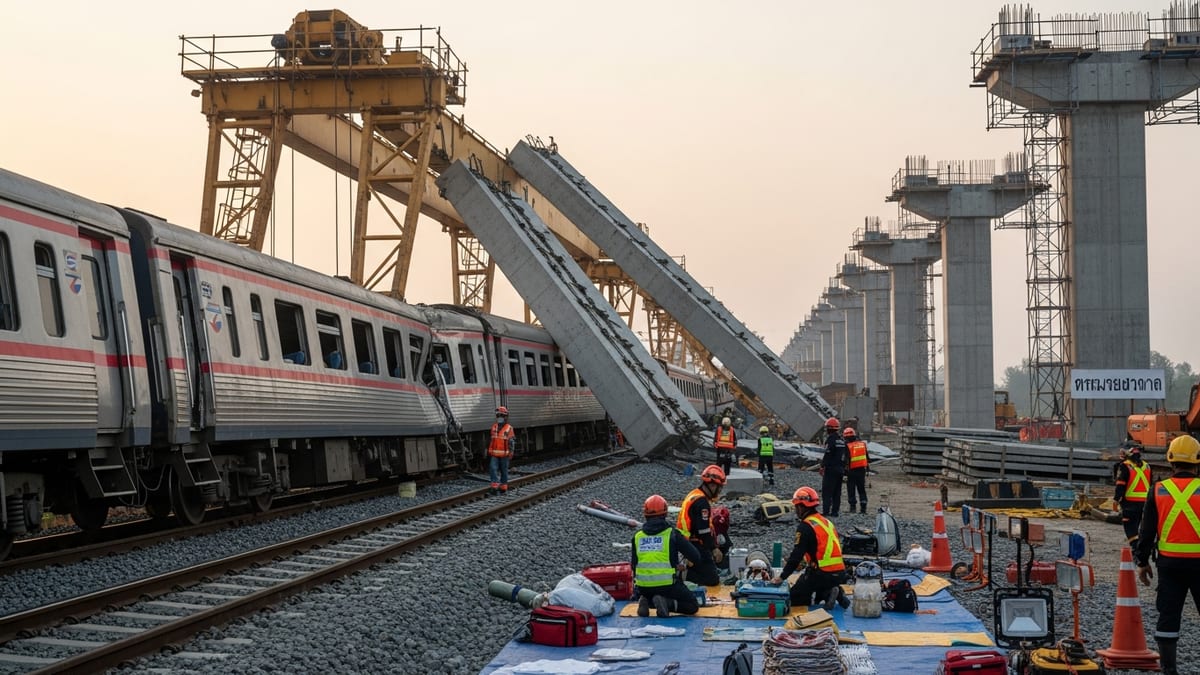
Derailment in pre-dawn hours disrupts local travel
Reports from the area indicate that the derailment occurred in the early morning hours, when a freight consist left the track along a section of rail corridor close to Lake Greenwood. The train was reportedly moving through a low-speed segment near a road crossing that provides one of the more direct approaches to the lake. Several cars left the rails, some stopping close enough to the shoreline to prompt an immediate safety review of nearby water access.
Publicly available information shows that local responders quickly moved to secure the site once the incident was reported. Initial assessments focused on confirming the contents of the affected railcars, checking for fuel leaks from locomotives and identifying any structural damage in the surrounding right of way that could affect recovery operations. Early indications point to a non-passenger freight service, which limited the risk of injuries but created an extensive debris field along the right of way.
The derailment location, positioned near a key approach route to Lake Greenwood, meant that road closures began almost immediately. Traffic cameras and local traffic reports describe a rapid buildup of congestion as drivers encountered barricades and detours on their way to morning shifts, construction sites and lakeside businesses. The timing in the pre-dawn and early commuting period magnified the impact on daily travel patterns.
Railway operations in the immediate vicinity have been halted while track and signal specialists inspect the alignment and underlying ballast. Based on recent derailment recoveries documented in other regions, observers anticipate that full rail traffic restoration could take many hours or potentially more than a day, depending on the extent of track damage and the complexity of rerailing operations.
Road closure and detours around the lakefront
The derailment has resulted in the shutdown of a primary access road that skirts Lake Greenwood and connects nearby residential areas with marinas, boat ramps and small commercial clusters. Transportation alerts circulated by local agencies describe a complete closure near the rail crossing, with only emergency and railroad vehicles permitted beyond the barricades.
Detours have been established using secondary county routes and neighborhood roads, but mapping data and traffic monitoring suggest that these alternatives add both distance and driving time for commuters and visitors. Narrower road widths and limited shoulders on the detour routes may slow heavy vehicles, including delivery trucks and service vans headed to lakeside properties or recreational facilities.
Travelers planning to reach Lake Greenwood by car are being advised through publicly available notices and local media coverage to allow extra time, follow posted detour instructions and avoid making U-turns or passing roadblocks near the rail corridor. Some reports also indicate increased patrol presence near the closure points to discourage sightseers from stopping in unsafe locations to photograph the damaged train.
While the incident is being treated as a localized transportation disruption, the road closure underscores the vulnerability of smaller lake communities that rely heavily on a limited number of access routes across rail lines, bridges and causeways. Planning documents from similar events in other regions show that such choke points can create lasting congestion if recovery work extends into peak travel periods or weekends.
Boating and lake access curtailed for safety
In addition to road impacts, boaters on Lake Greenwood are facing temporary restrictions in areas near the derailment site. According to published coverage from regional outlets, navigation limits have been introduced around the portion of shoreline closest to the rail line while crews use cranes, barges or shoreline equipment to stabilize and remove affected cars.
These restrictions vary by location but commonly involve creating a safety buffer where watercraft are asked to slow significantly or avoid passage altogether. Such measures reduce wake near the shoreline, protect temporary work platforms and give recovery teams room to maneuver heavy machinery without interference from recreational traffic.
Marinas and public launch facilities within the affected zone are reporting schedule changes and advising visiting boaters about alternate routes to open water. In some cases, access to certain coves or channels may be blocked while debris surveys are conducted to ensure that no rail components, ties or hardware have slid into shallow areas where propellers or hulls could be damaged.
Local tourism information, which highlights Lake Greenwood as a regional destination for fishing, water sports and weekend cabin stays, now includes advisories about potential noise, lighting and work activity near the derailed train. Travelers with reservations at lakeside accommodations are being encouraged, through public-facing notices, to check for the latest updates from their hosts or park operators before arrival.
Environmental checks and rail investigation underway
With freight equipment involved and railcars positioned close to the shoreline, environmental assessments are a central focus of the response. Based on initial public reporting, there have been no confirmed large-scale releases of hazardous material into the lake, but testing of water and soil is expected to continue as a precaution.
Specialized contractors commonly used in rail incidents have been observed bringing containment gear, vacuum trucks and portable tanks to similar derailment sites in recent months. In this case, observers anticipate the use of absorbent booms along the shoreline and near culverts to capture any minor fuel or lubricant sheen from locomotives or maintenance equipment.
Rail safety investigators are expected to treat the Lake Greenwood derailment within the broader pattern of recent freight incidents that have affected local communities and waterways across North America. Public records from comparable investigations show that teams typically examine track condition, train speed, wheel and axle status, and recent maintenance work to determine whether the root cause lies in infrastructure failure, equipment issues or operating conditions.
Those findings, once documented in formal reports, often feed into future infrastructure investment decisions, including potential upgrades to track geometry, added sensors to monitor bearing temperatures and rail integrity, and changes to how frequently high-tonnage trains are routed through sensitive lakefront or recreational corridors.
Travelers advised to monitor updates as cleanup continues
For residents and visitors who rely on Lake Greenwood as a recreation hub, the most immediate practical concern is how long road closures and boating restrictions will remain in place. Experience from recent derailments in other states suggests that primary roadways near a derailment can remain closed for many hours while heavy rail cranes reposition cars, followed by a second phase of track repair and inspection before full reopening.
Publicly available traffic updates and regional news coverage are advising travelers to check conditions before setting out, particularly for early morning fishing trips, delivery runs or commuting patterns that typically cross the rail corridor. Smartphone navigation applications, which draw on live sensor data and user reports, are already reflecting the closure and helping redirect vehicles around the affected segment.
For boaters, marina operators and park staff are serving as key information points, sharing posted notices about the evolving work zone on the water and any new safety measures. Those planning multi-day trips to Lake Greenwood in the coming days are being urged via public advisories to stay flexible about departure times and favored routes, given that work schedules at the rail site may shift according to weather and progress on rerailing operations.
As cleanup and investigation efforts continue, the Lake Greenwood derailment is likely to renew local discussions about infrastructure resilience, rail routing through recreation corridors and the balance between freight efficiency and community safety on and around the water.