


More news on this day
A recent gastrointestinal illness outbreak on a Princess Cruises ship has left more than one hundred passengers and crew suffering from violent vomiting and diarrhea, highlighting how quickly norovirus can spread in the confined environment of a modern cruise liner.
Get the latest news straight to your inbox!
Latest Outbreak Hits Ruby Princess on Alaska Route
Publicly available data from the U.S. Centers for Disease Control and Prevention show that the Ruby Princess, sailing a 20-day itinerary from San Francisco to Canada and Alaska in June and early July 2026, experienced a significant outbreak of gastrointestinal illness. More than 120 passengers and crew reported symptoms consistent with norovirus, including sudden-onset vomiting, diarrhea and stomach cramps.
The cases represented a small percentage of those on board, but the incident still met the CDC’s threshold for public notification. Illness surveillance rules require large passenger vessels operating in U.S. waters to report when at least 3 percent of passengers or crew show signs of gastrointestinal disease, a benchmark that the Ruby Princess crossed during the voyage.
Reports indicate that those affected were not all sick at the same time. Instead, cases appeared across several days, a pattern that points to person-to-person transmission and environmental contamination, both of which are common in norovirus events where shared dining spaces, public restrooms and high-touch surfaces can perpetuate the virus.
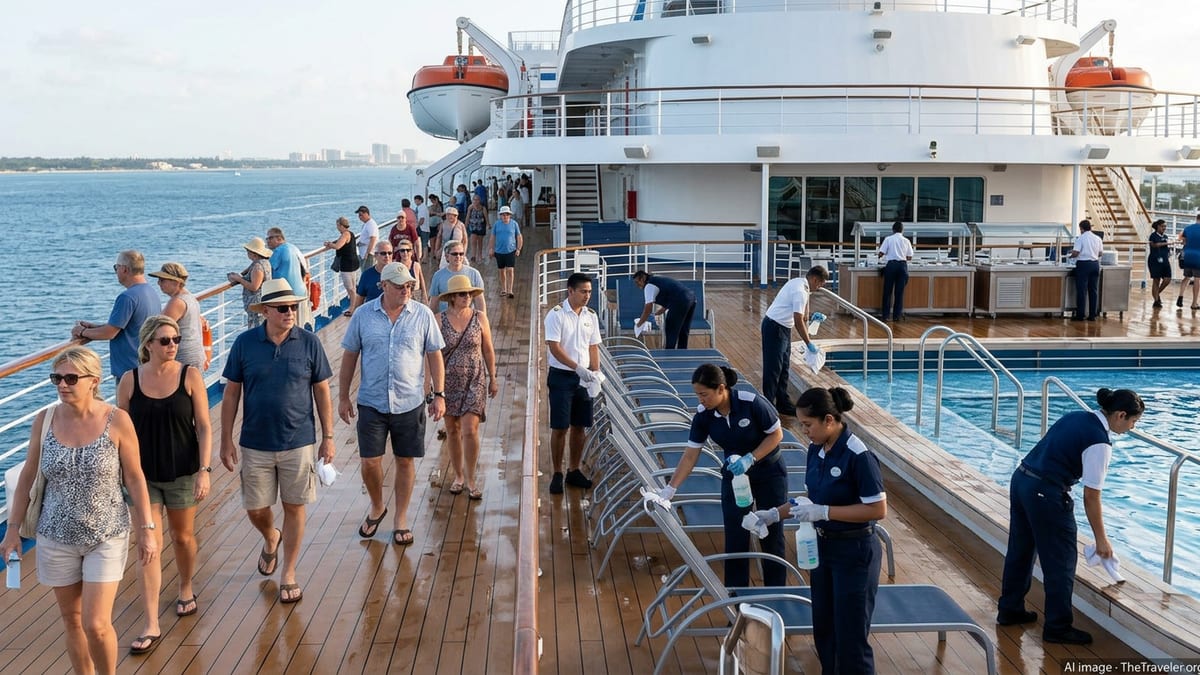
Princess Cruises adjusted onboard operations once the pattern became apparent, according to published coverage. Measures typically include intensified cleaning, temporary modifications to buffet service and announcements reminding passengers to wash hands frequently and to report symptoms to the medical center.
Part of a Wider Pattern of Cruise Illness in 2026
The Ruby Princess incident is not an isolated case. CDC outbreak listings indicate that the 2026 season has already seen multiple gastrointestinal outbreaks on large cruise ships, with several involving the same cruise line. Industry-specific publications note that this is at least the third time this year that Princess Cruises has reported a norovirus event meeting the federal reporting threshold.
Norovirus is well known in the cruise sector and remains a leading cause of vomiting and diarrheal illness in both community and travel settings. Its ability to persist on surfaces, resist some disinfectants and spread easily via contaminated hands, food or water makes it particularly disruptive at sea, where thousands of people share cabins, corridors and dining rooms over many days.
Historic investigations documented by the CDC show that once norovirus is introduced on board, it can fuel outbreaks across consecutive sailings if cleaning and quarantine measures are incomplete between turnarounds. Even a relatively small number of initial cases can be enough to keep a ship grappling with repeated bouts of passenger vomiting and cabin isolation over several weeks.
While 2026 has also seen a separate high-profile outbreak of Andes hantavirus aboard the expedition ship MV Hondius, which led to severe respiratory illness and deaths, the Ruby Princess situation is more typical of what cruise travelers encounter: short but intense episodes of gastrointestinal distress that disrupt vacations and strain onboard medical services.
Why Cruise Ships Are So Vulnerable to Vomiting Outbreaks
Experts who study shipboard health point to the basic design of cruise travel as a driver of gastrointestinal outbreaks. Thousands of passengers from different regions board in rapid succession, often having flown long distances or participated in busy pre-cruise activities where they may already have been exposed to viruses.
Shared buffets, bars and activity spaces increase the number of close contacts each traveler has every day. If someone vomits in a public area, microscopic droplets can contaminate surrounding surfaces, chairs, railings and even nearby food service equipment. Without rapid and thorough cleaning using disinfectants effective against norovirus, additional passengers can quickly fall ill.
CDC technical standards for the Vessel Sanitation Program highlight “public vomiting events” as a key trigger for intensified cleaning. The guidelines stress that apparent small incidents can signal a broader problem and require aggressive environmental response, including cordoning off affected areas and using specific cleaning agents known to inactivate hardy gastrointestinal pathogens.
Cabin design and air circulation can also play a role. Close quarters make it harder for those who are sick to fully isolate, especially in shared cabins with family members. Guests may still move through corridors to seek medical attention or return food trays, potentially leaving contamination on doorknobs, elevator buttons and railings that are touched by many others.
Industry Response and Scrutiny of Health Protocols
The Ruby Princess outbreak has renewed discussion about whether cruise lines are doing enough to prevent passengers from boarding while incubating contagious illnesses and whether onboard hygiene campaigns are effective. Public reporting indicates that Princess Cruises followed standard protocols once the number of sick passengers became clear, including stepped-up sanitation and communication to guests.
Cruise companies generally emphasize that reported outbreaks involve a minority of passengers and that their overall safety record is strong compared with the volume of voyages operated each year. Nevertheless, recurring reports of vomiting and diarrhea at sea keep the issue in the public eye, especially when multiple ships within the same brand report outbreaks in a single season.
Health agencies continue to refine guidance in response to new outbreaks. Documentation related to the Andes virus cluster aboard MV Hondius, for example, has prompted broader international cooperation on shipboard outbreak management, evacuation planning and post-disembarkation monitoring. While that event involved a very different pathogen, it has influenced thinking on how rapidly authorities and cruise operators must react when unusual patterns of illness are detected on board.
Consumer advocates argue that transparent reporting and clear pre-boarding health questionnaires are essential to reducing the risk of passengers embarking while already symptomatic or recently ill. They also point to refund and rebooking policies as a factor in whether travelers feel able to cancel when they or family members develop stomach symptoms shortly before departure.
What Passengers Can Do Before Stepping On Board
Public health agencies advise prospective cruisers to take an active role in minimizing their own risk on ships where vomiting outbreaks have been reported. Simple steps such as frequent, thorough handwashing with soap and water, avoiding touching the face and promptly reporting any stomach upset to the ship’s infirmary can help reduce onward transmission.
Travelers are also encouraged to pay attention to pre-cruise communications about illness and to consider postponing a trip if they have experienced vomiting or diarrhea in the days leading up to embarkation. Norovirus can remain contagious for a period even after symptoms subside, which means passengers who feel “almost recovered” may still be capable of seeding a shipboard outbreak.
On board, choosing served dining options instead of self-service buffets during periods of heightened concern, using handwashing stations rather than relying solely on hand sanitizer, and avoiding crowded restrooms immediately after visible vomiting incidents can further lower risk. These measures are not foolproof but can reduce the likelihood of a vacation turning into several days confined to a cabin with a bucket nearby.
Despite the unsettling headlines about passengers vomiting en masse, many cruises sail without major health incidents. For travelers considering upcoming voyages, awareness of how norovirus spreads and of the ongoing Ruby Princess situation can inform personal precautions and expectations as the industry navigates another challenging year for shipboard health.