


More news on this day
In the Port of Rotterdam, cruise passengers on AIDAmar recently found themselves witnessing a process usually hidden from public view, remaining on board while the 71,000‑gross‑ton ship was lifted into dry dock for a mandatory safety inspection at the Damen Verolme shipyard.
Get the latest news straight to your inbox!
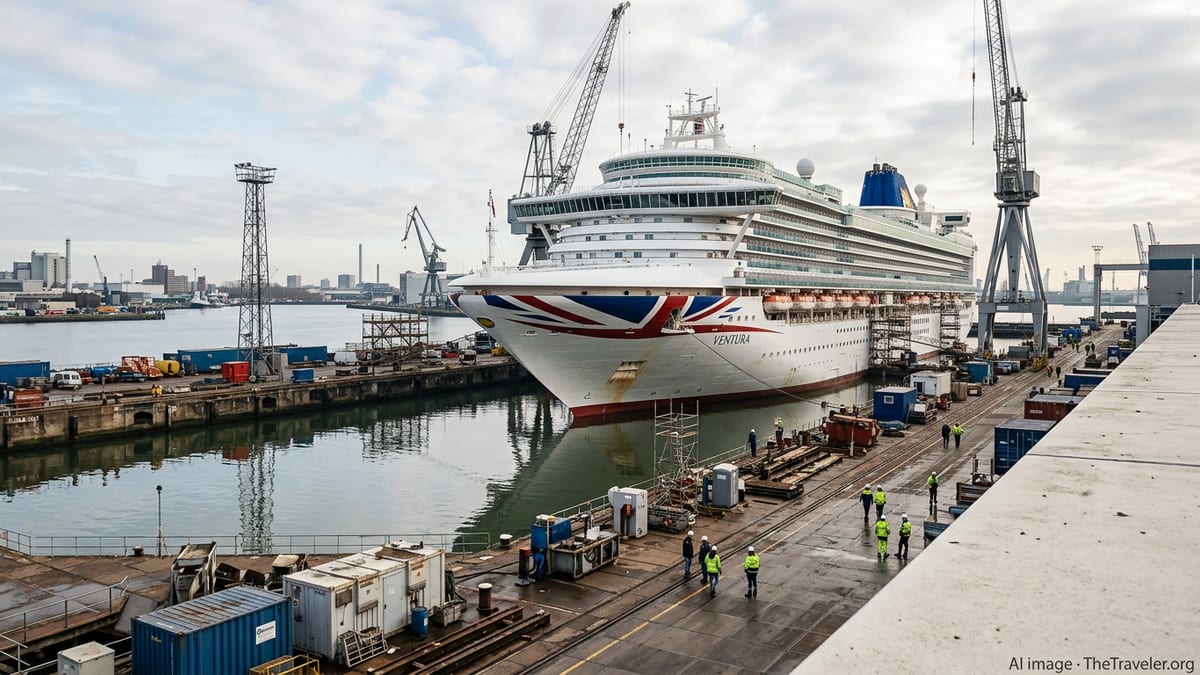
A Routine Inspection Turns Into an Unusual Sea Day
According to published coverage in maritime and cruise industry outlets, the AIDA Cruises vessel AIDAmar entered a dry dock in Rotterdam in early July with guests still on board as part of a scheduled safety inspection. The operation took place at Damen Verolme in the Botlek area, a facility known for handling large cruise and offshore projects.
Publicly available vessel tracking data and shipyard information show that the call was planned as part of an ongoing cruise, rather than a traditional layup between sailings. While the ship’s stay in dry dock was relatively short, the timing meant that paying passengers experienced the slow but dramatic transition from floating in the basin to resting on steel blocks as the water was pumped out.
For most cruise travelers, dry dock work happens out of sight during gaps in the schedule, with ships disappearing from regular itineraries for days or weeks. In this case, the schedule allowed for a different approach, turning an operational necessity into an unusual talking point and a rare live demonstration of how cruise ships are maintained.
Reports indicate that core hotel functions and many public areas remained available while the vessel was positioned and secured, with certain outdoor decks and technical zones out of bounds for safety reasons. From a guest perspective, the day felt closer to an extended port call with added technical theater than to a typical shipyard stay.
Inside Rotterdam’s High-Capacity Shipyards
The Port of Rotterdam promotes its repair and conversion facilities as among the most flexible in Europe, with large graving docks and floating docks able to accommodate modern cruise ships. Port authority features on local yards describe the ability to switch basins between wet and dry mode in less than a day, underlining how quickly a vessel can be brought out of the water for inspection or repair.
Damen Shiprepair Rotterdam and Damen Verolme, both situated within the wider port area, regularly handle complex cruise refits, propulsion upgrades and hull work. Documentation from earlier projects, including the 2024 maintenance period for Norwegian Joy at a sister facility, highlights the scale of these undertakings, with thousands of workers and contractors moving on and off the vessel while it is out of service.
The AIDAmar operation appears modest by comparison, focused on regulatory checks and targeted maintenance rather than a full interior refresh. Even so, lifting a cruise ship with passengers aboard requires careful coordination between the line, shipyard and classification society to ensure that emergency systems, gangways and access routes comply with safety requirements at each stage of the docking process.
Rotterdam’s long history as a repair hub, from the former Rotterdamsche Droogdok Maatschappij yards to today’s innovation-focused RDM and port campuses, has helped normalize large-scale maritime engineering within the city. For visiting cruise guests, however, the experience of watching a ship rise out of the water from a cabin balcony remains far from routine.
A Rare Behind-the-Scenes Look for Cruise Enthusiasts
Dry dock periods are typically when cruise lines refresh interiors, overhaul engines and thrusters, repaint hulls and install new sustainability technology such as shore power connections. Travel industry guides note that these yard stays are often the reason itineraries are canceled or redeployed, meaning guests usually encounter only the “before” or “after” of the process.
By staying on board during the initial stages of AIDAmar’s inspection, passengers effectively received a version of the behind-the-scenes technical tours that some lines sell on sea days, but on a much larger canvas. Instead of a walkthrough of restricted areas like the engine control room and provisioning stores, the entire ship became a vantage point on a major nautical maneuver.
Accounts shared via social media and enthusiast platforms describe passengers watching as tugs nudged the ship into position, lines were secured and dock gates closed, followed by the gradual lowering of the water level. The visual shift, from sea alongside the hull to a view of the dock floor and supporting keel blocks, offered a clear illustration of the ship’s true scale.
This sort of live demonstration aligns with broader trends in experiential travel, in which visitors seek insight into the infrastructure and logistics behind their vacations, not just the destinations. For cruise fans accustomed to tracking ship movements and refits online, being physically present during a dry dock entry in Rotterdam provided a story that goes beyond a typical port call.
Balancing Safety, Comfort and Yard Efficiency
Running any part of a passenger operation inside an active shipyard adds layers of planning. Industry analyses of prior dry dock projects in Rotterdam and elsewhere point to strict rules covering movements on and off the vessel, segregation between guest spaces and work areas, and limitations on external contractors while passengers remain on board.
In the AIDAmar case, publicly available information suggests that the most intensive work was scheduled for a period when guests would be disembarked, with the initial phase focused on positioning, inspections and preparations. This allowed the line to maintain essential hotel services and climate control systems, while still giving the yard access to key exterior structures below the waterline once the dock was fully dry.
Cruise-focused publications have previously noted that even on standard sailings, passengers can sometimes observe pre-drydock activity in the form of contractors measuring spaces, staging materials and cordoning off small areas. Conducting part of the docking sequence itself with guests on board represents a further step in integrating maintenance and operations, though there is no indication that this approach will become widespread.
Given the concentration of heavy equipment, scaffolding and industrial traffic around a ship in dry dock, cruise lines and shipyards are likely to restrict any future guest-present dockings to carefully controlled timetables and relatively light work scopes. For most large refits and overhauls, the traditional model of empty ships in the yard is expected to remain the norm.
Rotterdam Strengthens Its Role in Cruise Maintenance
The recent AIDAmar call underscores Rotterdam’s dual role as both a turnaround and transit port for cruise lines and a major European hub for repair and conversion work. Port publications emphasize that the city’s location near busy North Sea routes, coupled with deepwater access and extensive industrial infrastructure, makes it attractive for lines that want to combine passenger operations with technical stops.
Specialist maritime media have highlighted a series of high-profile cruise projects completed at Rotterdam-area yards in recent years, including extensive upgrades to large international ships. Those projects have ranged from sustainability-focused modifications to hotel refurbishments, reinforcing the region’s reputation for handling complex assignments against tight schedules.
For cruise travelers, the visibility of yard activity may shift perceptions of what a voyage through Rotterdam can include. While most itineraries still feature conventional sightseeing and riverfront walks, a small number of guests are now returning home with photos of their ship perched high above the dock floor, surrounded by cranes and scaffold towers.
As cruise lines continue to balance rising demand, stricter environmental rules and the need for periodic overhauls, ports capable of offering both passenger facilities and advanced repair capacity are likely to play a growing role. The brief dry dock interlude with passengers on board in Rotterdam hints at how closely those two sides of the industry can intersect, and how occasionally, infrastructure itself can become part of the travel experience.