


More news on this day
Middle East airspace restrictions tied to the Iran conflict are reshaping global flight patterns as the 2026 summer peak approaches, with Emirates, Etihad Airways and flydubai facing sustained operational pressures while foreign airlines pare back services to the Gulf’s biggest hubs.
Get the latest news straight to your inbox!
From Weekend Shock to Long Haul Crisis
The latest phase of disruption began in late February 2026 when Iranian strikes triggered coordinated airspace closures across much of the Gulf and neighbouring states. Aviation advisories show that Iran, Iraq and several Gulf countries issued emergency notices to airmen, effectively shutting major corridors used by Emirates, Etihad, flydubai and other long haul carriers.
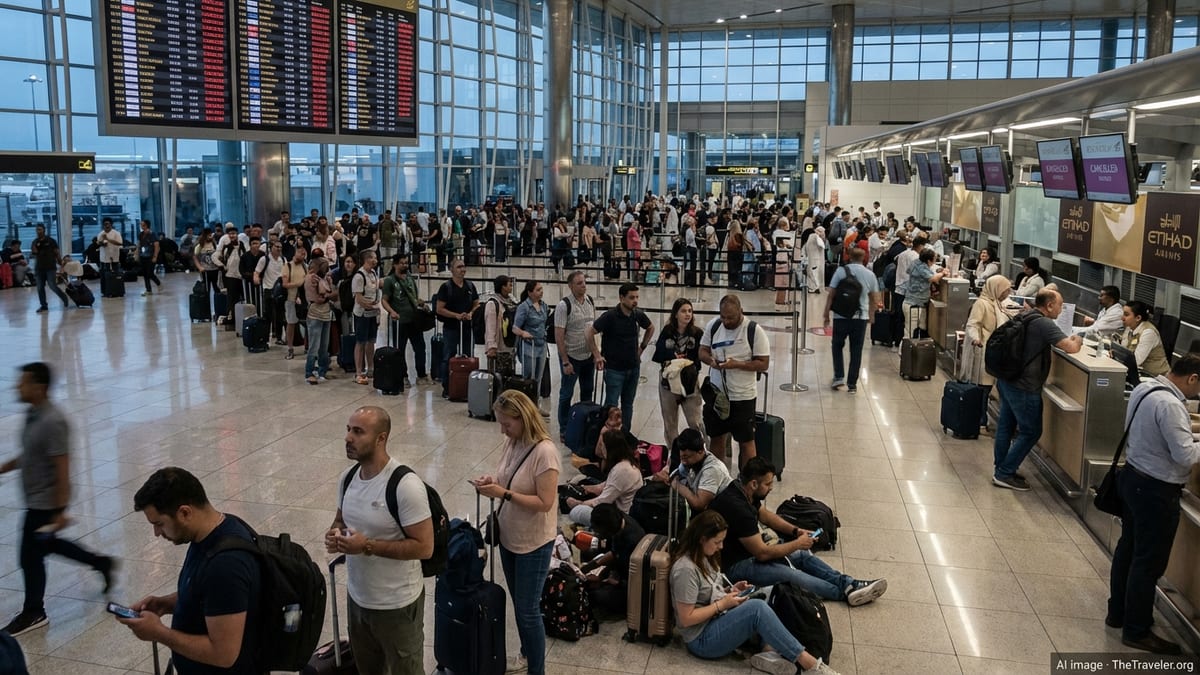
Reports from regional outlets describe how Dubai International, the world’s busiest international hub, together with Abu Dhabi and Doha, halted most operations over that weekend as debris damage and security concerns mounted. Airlines scrambled to divert or cancel thousands of flights, creating one of the sharpest shocks to the industry in recent years.
Subsequent updates indicated that airports in Dubai and Abu Dhabi restarted limited operations from early March, but with heavily curtailed schedules. Publicly available airline advisories showed Emirates, Etihad, flydubai and Air Arabia extending broad suspensions and rerouting plans into the first week of March, as airspace over parts of Iran and Iraq remained unusable and services to Lebanon and other Levant destinations were paused.
Industry analyses published in the weeks that followed emphasised that while some flight information regions have technically reopened following short ceasefires, risk assessments and national restrictions continue to limit the ability of airlines to rely on the traditional shortest routes between Europe, the Gulf and Asia.
Emirates, Etihad and flydubai Confront Prolonged Detours
For the United Arab Emirates’ big three carriers, the crisis has moved beyond a temporary interruption to a structural summer planning headache. Hub and spoke models built on dense waves of connecting traffic are being tested by longer routings around Iranian and Iraqi airspace and intermittent restrictions involving Lebanon and the eastern Mediterranean.
Specialist aviation coverage shows that Emirates, based in Dubai, has had to rework east west connections that would normally transit the Baghdad and Tehran flight information regions, instead funnelling more traffic over Saudi Arabia and Egypt. Each additional hour in the air adds fuel burn, crew duty complexities and knock on schedule risk, particularly during the time sensitive overnight banks that underpin its network.
Etihad Airways in Abu Dhabi faces similar constraints. With portions of regional airspace designated as high risk or subject to new diplomatic permissions, the airline has adjusted frequencies and upgauged aircraft on certain routes to consolidate demand. Public timetables for the northern summer indicate selective capacity growth has been tempered by the need to bake in generous block times and recovery buffers.
Flydubai, which combines point to point services with feed into Emirates’ long haul operation, has been caught between short haul volatility and long haul disruption. Its dense network into Iraq and the wider region has been periodically reduced or suspended as local airspace conditions shift, while rerouted flights into Europe and Central Asia must compete for constrained slots at Dubai amid continuing congestion from earlier cancellations.
Foreign Carriers Scale Back Gulf Exposure
The pressure is not limited to home carriers. Global airlines from Europe, Asia and North America that rely on overflying Iran, Iraq or Lebanon to reach the broader Middle East and South Asia have adopted a more cautious stance, with some suspending or sharply reducing Gulf services deep into the summer schedule.
Data compiled by flight tracking and schedule analytics firms in March and April indicated that thousands of flights involving Dubai, Abu Dhabi, Doha, Kuwait City and other regional airports were cancelled or rerouted as the conflict intensified. Some European network airlines temporarily halted operations to several Gulf hubs, citing the complexity of maintaining reliable rotations when both destination airports and key overflight regions were constrained.
In subsequent weeks, long haul carriers have restored selected frequencies but often on more circuitous routings that avoid Iranian and parts of Iraqi airspace. That has led to longer flight times between the Gulf and major European capitals, increased fuel surcharges on some itineraries and tighter aircraft utilisation, prompting airlines to prioritise the most commercially critical routes.
Low cost and leisure oriented operators, which typically have less flexibility to absorb fuel and crew cost spikes, have been slower to return. Industry observers note that some charter and seasonal services into the Gulf for summer 2026 remain suspended or downgraded, redirecting capacity to Mediterranean and Atlantic markets where overflight risks are lower.
Regulators, NOTAMs and a Patchwork of Risk
The evolving patchwork of restrictions is being codified through a steady stream of NOTAMs and safety directives. International bodies and regional coordination teams have outlined contingency corridors and recovery plans, but publicly available documents show that many carriers are still choosing conservative routings even where formal closures have been lifted.
Guidance from European and United States aviation authorities continues to flag parts of the Tehran and Baghdad flight information regions as areas of heightened risk. Some state regulators maintain prohibitions or strong advisories against their airlines using certain airways at higher altitudes, reflecting concerns over potential military activity and limited coordination between civil and defence operators.
In April 2026, Iran’s civil aviation organisation announced a partial reopening of its eastern airspace for international overflights following a national safety review. However, subsequent freight and operational reports for June indicate that traffic patterns between the Middle East and Europe remain heavily concentrated over Saudi and Egyptian skies, with Iraq classified as highly constrained and Lebanon operating under variable routing requirements.
This regulatory landscape has turned route planning into a day by day exercise for dispatch teams. Each carrier must weigh its own risk appetite and legal obligations against commercial imperatives, making network decisions that can change with little notice as advisories are updated.
Summer 2026: Reliability and Fares Under Strain
With northern hemisphere summer approaching, the accumulated disruptions are feeding into traveller experience and pricing. Analysts tracking Gulf capacity say that while published schedules into Dubai and Abu Dhabi show a broad recovery compared with the immediate aftermath of the February strikes, resilience is fragile and subject to further geopolitical shocks.
Longer routings around Iran and Iraq are raising operating costs on many trunk routes linking the Gulf to London, Frankfurt, New York, Sydney and other major markets. These higher costs, combined with tighter aircraft availability, are contributing to higher average fares and more frequent schedule changes, particularly on departures in the busiest July and August travel windows.
For passengers, the most visible impacts are extended flight times, an uptick in missed connections when knock on delays cascade through hub banks, and a continuing pattern of short notice cancellations as new restrictions appear. Consumer advisories across the region consistently encourage travellers to check flight status and airline notifications before heading to the airport, and to allow generous connection times where possible.
For Emirates, Etihad and flydubai, the coming months will test the flexibility of their multi hub ecosystem and their ability to preserve the Gulf’s role as a premier global transit crossroads. The outcome will depend not only on operational ingenuity but also on whether the political and security climate over Iran, Iraq and Lebanon stabilises enough to reopen the most direct skies that underpin their long haul business models.