


I did not fully understand the strength of Four Seasons’ reputation until I started looking closely at how the brand actually works on the ground. It is easy to dismiss the name as another shorthand for expensive rooms and marble lobbies, but trip after trip, from Toronto to Bangkok to the reopened New York flagship, you hear the same story from frequent travelers: the details feel different here. Once you see how those details add up, the power of the Four Seasons name starts to make sense.
Get the latest updates straight to your inbox!
A Reputation Built Property by Property, Not Just by Branding
Four Seasons has been around since the 1960s, but its influence today comes less from nostalgia and more from a remarkably consistent guest experience across more than 120 hotels and resorts worldwide. In practical terms, that means a traveler flying from Los Angeles to Paris or from Miami to the Maldives has a reasonable expectation that a Four Seasons will deliver a similar level of polish, attentiveness, and comfort, even though each property feels rooted in its own destination. Travel advisors who specialize in high-end hotels often point out that when clients are overwhelmed by choices, the Four Seasons name acts as a shortcut: you may pay a premium, but the risk of a disappointing stay is comparatively low.
You see this clearly in cities where travelers have plenty of alternatives. In Montreal, for example, the Four Seasons has become a favorite among design-focused guests for its contemporary interiors, strong spa, and service that reviewers consistently describe as "world-class" while still feeling distinctly local to the city’s cosmopolitan, French-inflected character. In markets like this, the hotel is not coasting on a global logo. It has to outperform excellent independent boutiques and other luxury chains every night, and when it does, that performance reinforces the brand’s wider reputation.
Critically, the brand is also present in destinations where the wrong hotel choice can derail a once-in-a-decade trip. Think of honeymooners choosing between a resort in Bora Bora, the Seychelles, or the Maldives, or families committing to a long-haul vacation on Hawaii’s Lanai or the Big Island. When travelers repeatedly report that the service at the Four Seasons outposts in these remote, resort-style locations is among the best they have ever experienced, that trust spreads. In a crowded luxury market, that blend of reliability and local flavor is rare, and it quietly strengthens the perception that Four Seasons is a “safe bet” for big trips.
Human-Centered Service in a Tech-Obsessed Era
Luxury hotels everywhere talk about “personalized service,” but Four Seasons has embedded that idea into the daily routines of its people in a way that is still surprisingly analog. At the flagship Toronto property, for instance, the concierge team is known for turning one-off requests into carefully sequenced experiences: a last-minute anniversary dinner might evolve into a tailored evening with a hard-to-get restaurant table, a driver waiting outside, and flowers appearing in the room while the couple is out. For regular guests, staff often remember preferences that were mentioned only once on a previous stay, from a favorite tea to a jogging route along the waterfront, and quietly replicate those touches on the next visit.
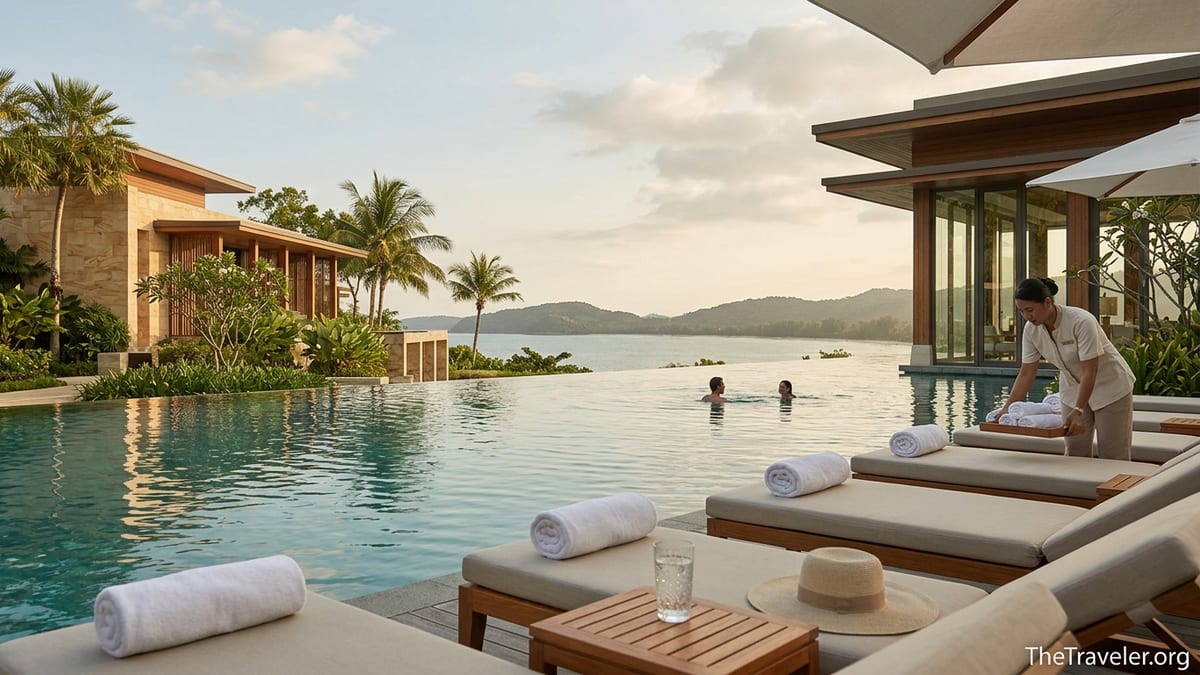
What stands out is how much of this is still driven by individual staff judgment rather than an app or an algorithm. Where some chains push guests toward chatbots and generic digital concierges, Four Seasons has largely doubled down on the idea that luxury is delivered by humans who are empowered to make decisions. A front-desk agent spotting a family with jet-lagged toddlers might offer a complimentary snack setup and an early-room access solution without needing to “check with a manager.” A pool attendant in Maui or Koh Samui may remember which lounger you preferred yesterday and have a fresh towel and iced water waiting before you even sit down.
That human-first approach becomes obvious in small crises. A frequent luxury traveler who shifted his loyalty to Four Seasons after a bad experience elsewhere recalls arriving at a Four Seasons resort to find a housekeeping oversight in his room. Before he could escalate the issue, the manager appeared with an apology, moved him to a new suite, arranged an on-the-house dinner, and followed up the next morning. In a competitive field where missteps happen, guests remember not whether a problem occurred, but how personally and decisively it was handled. Four Seasons properties, more often than not, turn those moments into trust-building stories.
Design That Feels Like a Home You Wish You Owned
Another reason Four Seasons inspires such strong allegiance is its commitment to a particular design philosophy: not the showiest lobby, but the most livable space. In New York, the reopened Four Seasons Hotel New York emphasizes large, light-filled rooms, with even entry-level categories starting around 500 square feet and specialty suites spanning entire floors. The look is more clean-lined apartment than grand palace, with floor-to-ceiling windows framing Central Park or the skyline, generous closets, and seating that you can actually sink into rather than simply admire.
This “residential luxury” aesthetic repeats in very different contexts. In resort destinations like Costa Rica’s Papagayo Peninsula, villas are often spread out for privacy, with shaded outdoor living areas, private plunge pools, and sliding glass doors that blur the boundary between inside and outside. The interiors lean into local materials and crafts, but the underlying comfort language is the same: mattresses that many guests end up purchasing for home, thick towels, quietly powerful air conditioning, and intuitive lighting where you do not spend ten minutes trying to turn off a lamp.
Four Seasons also tends to invest heavily in public spaces that feel welcoming rather than intimidating. At Four Seasons Hotel Montreal, for example, the bar and restaurant areas have become hangouts for locals as much as for hotel guests, which is usually a good sign: stylish locals will not put up with mediocre design or weak drinks for long. In Washington, D.C., the Four Seasons’ lobby and adjacent spaces function almost like a clubhouse for Georgetown, with business travelers, diplomats, and weekend leisure guests all moving through the same comfortable, art-filled environment.
For travelers, the benefit of this design language is simple: after a long-haul flight or a day of meetings, the room feels like a private sanctuary that actually works. You know the shower pressure will be strong, the blackout curtains will function, there will be a desk you can really work at, and the Wi-Fi will quietly do its job. In practice, these basics matter far more than a statement chandelier, and Four Seasons’ commitment to getting them right is a core part of why guests describe its hotels as places they could imagine living in, not just passing through.
Experiences That Go Beyond the Room Key
Where Four Seasons truly separates itself from many traditional luxury brands is in the range of curated experiences it has built around its hotels. The most dramatic example is the Four Seasons Private Jet, a custom-configured aircraft that carries a small group of guests on multi-week itineraries to a string of Four Seasons properties around the world. These trips, which can cost well into six figures per person, bundle business-class or better air travel, top-tier accommodations, curated excursions, and on-board staff into a seamless journey where every detail, from visas to luggage transfers, is handled behind the scenes.
Not every traveler will board the Private Jet, but the philosophy behind it trickles down. At city hotels, concierges are encouraged to design deeply local days rather than simply handing out a standard list of attractions. A stay in Bangkok might include a private long-tail boat ride at sunrise arranged through trusted partners, a street food crawl curated to match your spice tolerance, and a last-minute spa booking timed to your overnight flight home. In ski destinations, Four Seasons teams often coordinate everything from lift passes and boot fittings to off-mountain activities for non-skiers, such as art gallery tours or guided snowshoeing.
On the resort side, the spectrum of experiences has grown more ambitious in recent years. At oceanfront properties in places like the Caribbean and French Polynesia, guests can arrange private sandbar picnics, marine biologist-led reef explorations, or sunset sails with mixologists on board shaking bespoke cocktails. Families might find that the kids’ club is not an afterthought but a thoughtfully programmed space where staff lead everything from cooking classes to treasure hunts, giving parents a genuine break without the guilt of “parking” children in front of a screen.
Even wellness has become a differentiator. Many Four Seasons spas, especially in urban flagships, have evolved into standalone reasons to book the hotel. In Montreal, the Guerlain-branded spa is frequently highlighted as one of the city’s strongest, with unhurried therapists, careful attention to sensory details, and treatments that feel indulgent yet genuinely restorative. At beach resorts, open-air treatment pavilions, thoughtful hydrotherapy circuits, and locally inspired rituals help the spa experience feel deeply linked to the destination rather than imported from somewhere else.
Value, Loyalty, and Why Guests Keep Coming Back
For all the talk of service and design, it is reasonable to ask a blunt question: is Four Seasons worth the price? In many cities, nightly rates often start in the high hundreds of dollars and climb quickly into four figures for suites or peak-season resort stays. Yet a large cohort of repeat guests continues to choose the brand, even without a traditional points-based loyalty program. That, more than anything, signals that travelers are finding value beyond the room rate.
The key is that Four Seasons has structured loyalty around recognition and tangible on-property benefits rather than free nights. The brand keeps detailed guest profiles that travel with you from property to property, so once you have indicated a preference for, say, feather-free bedding, a high-floor room away from elevators, or a certain type of pillow, you should not have to repeat yourself on every trip. Over time, staff begin to anticipate needs: stocking a favorite non-alcoholic drink in the minibar, placing a yoga mat in the room before you arrive, or quietly assigning a room with a bathtub if you usually request one.
There is also a little-known advantage available through the Four Seasons Preferred Partner program, an invite-only network of specialist travel advisors. When you book a standard Flexible or Bed & Breakfast rate through one of these advisors, many hotels will include daily breakfast for two, a hotel credit often around 100 US dollars per stay, welcome amenities, and priority for room upgrades, usually without increasing the base rate. For a three-night city break, that can easily translate into several hundred dollars’ worth of included value, especially when breakfast alone might otherwise cost 50 to 70 dollars per person, per day at a luxury property.
Compared with big-chain loyalty schemes that require dozens of stays to reach meaningful status, this approach appeals to travelers who care more about the stay in front of them than about banked points. They may not be chasing a free night in two years’ time, but they notice when the hotel adds a late checkout where it can, quietly celebrates a birthday with a small cake, or ensures that adjoining rooms are confirmed in advance for a family. Over repeated visits, these small gestures create a sense of being known and welcomed, which in turn makes guests more willing to keep paying a premium for the Four Seasons experience.
How Four Seasons Stacks Up Against Other Luxury Brands
In a landscape that includes names like Aman, Rosewood, Mandarin Oriental, and the top-tier brands inside giant groups such as Marriott and Hilton, Four Seasons occupies a particular niche. It is rarely the most flamboyant or trend-chasing option in a market. Instead, it has cultivated a reputation for dependable high-end comfort and service that resonates strongly with travelers who value consistency. Analysts looking at guest-review data often group Four Seasons with other established five-star names at the top of the global hierarchy, but what stands out is how frequently travelers describe its service as the decisive factor in choosing it over competitors.
Consider a common scenario: a traveler comparing a Four Seasons to a top-branded competitor such as a St. Regis or Ritz-Carlton in the same city at a similar price point. The competing hotel might offer a slightly grander lobby or more overtly opulent interiors, but when loyal guests explain their preference for Four Seasons, they frequently return to the same themes: smoother check-in and check-out, fewer service misfires at breakfast or housekeeping, quicker response times from staff, and a general sense that the hotel is always trying to quietly say “yes” rather than citing rules.
This is not to say that every Four Seasons stay is perfect. Like any global brand, it has properties that feel older or less inspired, and some frequent guests openly rank certain locations as “basic” compared with the standouts. What distinguishes the brand, however, is that even at its weaker hotels, the fundamental hardware and service baseline tend to remain strong. Beds are still excellent, bathrooms are spacious, and staff are usually eager to fix issues when given the chance. In contrast, some nominally equivalent luxury brands show a wider gap between their flagship stars and their more ordinary outposts.
For travelers planning a big trip, this relative consistency is powerful. It means you can combine a Four Seasons beach resort in Mexico or Costa Rica with an urban Four Seasons in a gateway city like Paris, Tokyo, or London and have confidence that, while the style will differ, the core experience of being looked after will feel familiar. For many guests, that reliability is exactly what they are paying for, and it is a large part of why the Four Seasons name carries so much weight in travel discussions and booking decisions.
The Takeaway
Once you look beyond the marble and the brand name, the real reason Four Seasons has such a powerful reputation becomes clear: it has turned hospitality back into a human craft, supported by thoughtful design and smart systems rather than driven by them. Rooms tend to feel like homes you wish you owned. Staff are empowered to solve problems and personalize stays without fuss. Experiences reach far beyond the room key, whether that means a perfectly timed spa appointment in Montreal or a multi-week Private Jet journey across continents.
Is it always the best or most exciting hotel in every city? Not necessarily, and seasoned travelers will happily debate which Four Seasons properties are truly exceptional and which ones are merely “very good.” But in a world where high nightly rates do not always guarantee high standards, Four Seasons has managed to convince a global audience that its name on the door still means something concrete: strong service, residential comfort, and a serious effort to understand and remember who you are as a guest. Once you experience that combination a few times, the strength of the brand’s reputation stops feeling like marketing and starts feeling like common sense.
FAQ
Q1. Is Four Seasons really worth the higher nightly rates?
For many travelers, yes, particularly on important trips. While rates can be significantly higher than upscale competitors, guests often find the combination of service, room quality, and included extras via programs like Preferred Partner delivers value that cheaper options rarely match, especially when you factor in stress saved and problems avoided.
Q2. Does Four Seasons have a traditional points-based loyalty program?
No. Four Seasons does not run a typical points or miles program. Instead, it focuses on detailed guest profiles, on-property recognition, and benefits delivered through preferred travel advisor channels. The trade-off is fewer “free nights” but more immediate, stay-by-stay personalization.
Q3. How can I get added perks like free breakfast or credits at Four Seasons?
The most reliable way is to book through a travel advisor who is part of the Four Seasons Preferred Partner network. On many stays, you can receive daily breakfast for two, a property credit, and priority for upgrades without paying a higher base rate than if you booked directly.
Q4. Are all Four Seasons properties at the same standard?
Standards are generally high across the portfolio, but there are differences. Flagships in major cities and marquee resorts often feel a level above smaller or older properties. Even so, the baseline for room comfort and service tends to remain strong compared with much of the wider luxury market.
Q5. How does Four Seasons compare with brands like Aman or Rosewood?
Four Seasons is usually more about polished, consistent luxury than ultra-rare exclusivity. Aman and some Rosewood properties can feel more intimate or remote, but Four Seasons typically offers a wider global footprint, very reliable service, and strong options in both big cities and resort destinations.
Q6. Can families with children feel comfortable at Four Seasons?
Very much so. Many Four Seasons resorts and even some city hotels have well-developed kids’ clubs, children’s menus, family-friendly pools, and connecting room options. Staff are generally used to welcoming multi-generational groups and will often remember children’s names and preferences.
Q7. What kind of guest typically stays at a Four Seasons?
You will see a mix of affluent leisure travelers, business executives, families, and special-occasion guests celebrating honeymoons or anniversaries. The common thread is a willingness to pay more in exchange for a high level of comfort, privacy, and reliability.
Q8. Are there ways to experience Four Seasons without booking the most expensive rooms?
Yes. Booking entry-level room categories during shoulder seasons, staying midweek instead of weekends, and working with a Preferred Partner advisor can keep costs more manageable while still giving you access to the hotel’s public spaces, spa, and signature service.
Q9. What should I expect from service at a well-run Four Seasons?
You can expect staff to address you by name, remember key preferences during the stay, respond quickly to requests, and handle problems with empathy and practical solutions. The tone is usually polished but warm rather than stiff or overly formal.
Q10. If something goes wrong during my stay, how should I raise it?
Say something as soon as possible to the front desk or a duty manager, ideally while you are still on property. Four Seasons teams are generally empowered and motivated to fix issues quickly, and in many cases they will offer proactive gestures, from room moves to amenity credits, to restore your confidence.