


More news on this day
A 17-car CSX freight train derailed near the Laurens–Greenwood county line in South Carolina, disrupting freight traffic through the Upstate and prompting an extensive response from rail crews and local emergency agencies.
Get the latest news straight to your inbox!
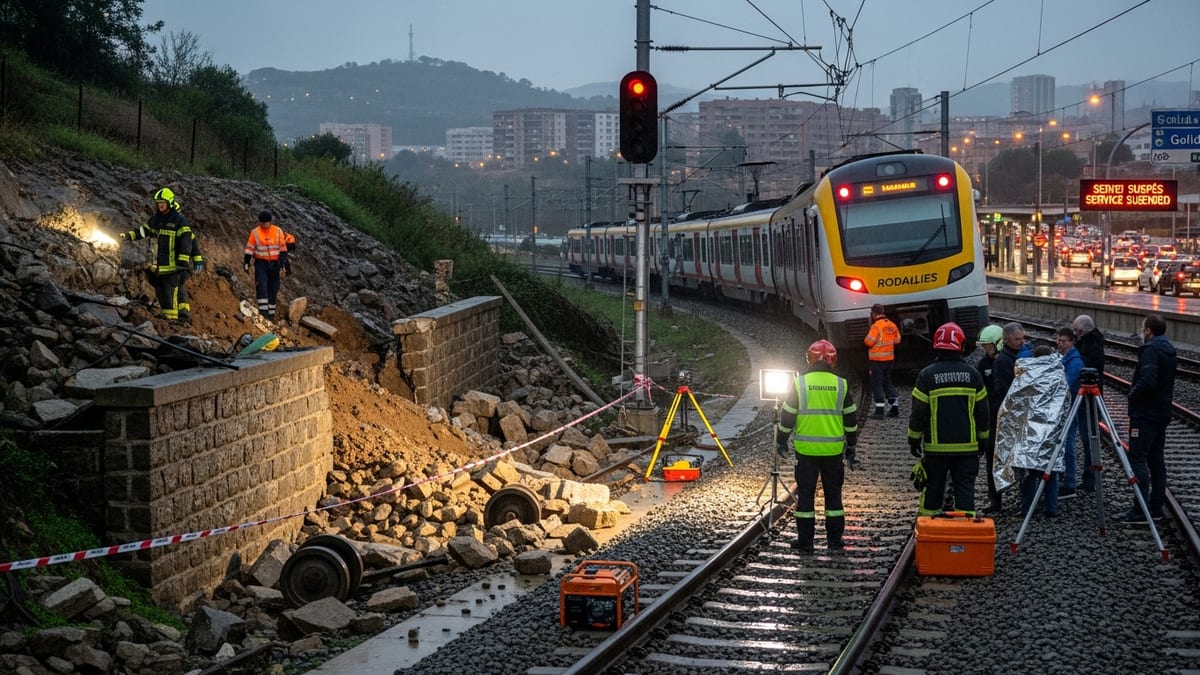
Derailment Near Laurens–Greenwood Line Disrupts Freight Corridor
Reports indicate that the derailment occurred along a CSX freight route that links Laurens and Greenwood counties, an important connector for rail traffic in the western part of South Carolina. Early information from regional news coverage and rail incident summaries describes 17 freight cars leaving the tracks, some coming to rest at angles along the right of way.
Publicly available information suggests the incident took place on a line that carries mixed freight, including agricultural products and industrial goods serving the Upstate. Initial images shared through local outlets and social platforms show railcars off the main line but largely contained within the railroad’s corridor, with no immediate impact to nearby homes or businesses.
Rail traffic on the affected subdivision has reportedly been halted or rerouted while CSX and partner agencies assess damage to the track structure, signaling equipment, and embankments. Nearby grade crossings along the Laurens–Greenwood line experienced temporary closures as crews moved heavy equipment into position.
While derailments involving multiple cars can raise alarm, early accounts from the scene emphasize that this incident, while disruptive, appears to have been confined to railroad property, limiting broader community impacts beyond traffic and noise.
No Hazardous Release Reported, Focus on Containment and Safety
According to published coverage drawing on early rail assessments and regional emergency bulletins, there have been no reports of a hazardous material release connected to the 17-car derailment. Freight trains in this corridor often include tank cars and other specialized equipment, but initial manifests reviewed by investigators point primarily to conventional freight loads.
Rail safety summaries show that CSX, like other major freight carriers, follows federal requirements for documenting and classifying hazardous cargo on each train. When incidents occur, those records are referenced by responders to quickly determine whether specialized protective gear, evacuations, or environmental monitoring are necessary. In this case, information shared so far indicates that such extraordinary measures were not required.
Environmental concerns remain part of the ongoing review. Crews typically examine drainage ditches, culverts, and nearby streams for signs of fuel leaks or material spills from locomotives or railcars. Any disturbed ballast or soil can be removed and replaced as part of the cleanup process to reduce longer-term impacts to the immediate corridor.
Residents in parts of Laurens and Greenwood counties have become accustomed to the presence of freight rail in their communities, and recent attention to other CSX incidents in the Southeast has sharpened interest in how railroads manage risk. This derailment is expected to factor into broader discussions about safety performance and the transparency of incident reporting in South Carolina.
Rail Operations, Detours and Local Travel Impacts
The Laurens–Greenwood segment functions as a link in CSX’s regional network, tying Upstate South Carolina into broader north–south and east–west freight flows. When a segment is taken out of service, dispatchers generally route trains along alternate lines where possible, though available options can be limited in more rural sections of the network.
Local drivers experienced delays at crossings near the derailment site as law enforcement and transportation crews controlled access. Detours along county roads and state highways were implemented while cranes, maintenance-of-way vehicles, and support trucks moved in and out of the rail corridor. For travelers headed to recreation areas, small towns, and rural attractions between Laurens and Greenwood, the combination of blocked crossings and work vehicles produced intermittent congestion.
Regional tourism officials often promote the Upstate’s small-town charm, lakes, and outdoor recreation, and while the rail incident did not directly affect major interstate routes, it did add an unexpected layer of complexity for visitors navigating local roads. Travelers using navigation apps may have encountered temporary re-routing around closed crossings and staging areas as cleanup continued.
Freight congestion can also ripple into nearby yards and junctions, potentially affecting passenger travel where freight and passenger services share track. While this corridor is primarily freight-oriented, disruptions often prompt broader schedule adjustments, which can affect long-distance trips connecting through larger Southern hubs.
Cleanup, Track Repairs and Timeline for Service Restoration
Public updates from regional outlets describe a multiday recovery effort, with CSX contractors and specialized rail equipment dispatched to re-rail salvageable cars, remove damaged rolling stock, and restore the right of way. In similar CSX derailments across the Southeast, grain or other loose commodities have been vacuumed or scooped from damaged cars, while heavy cranes lift car bodies back onto trucks or onto flatbeds for removal.
Once the track area is cleared, engineering teams typically inspect ties, rails, ballast, and supporting structures to determine the extent of damage. Portions of rail and crossties can be replaced in a matter of hours when materials and crews are on hand, but signal and communication systems sometimes require more careful testing before trains are allowed to pass at normal speeds.
Railroad practice in comparable incidents suggests that limited operations may resume at restricted speeds before full capacity is restored. This staged return allows railroads to keep freight moving while ongoing inspections and adjustments are completed. For shippers in the Laurens–Greenwood region, this can mean brief delays or schedule changes rather than extended service suspensions.
Travelers planning drives or regional trips through this part of South Carolina in the coming days may continue to see rail repair crews working along the corridor, as finishing work such as shoulder stabilization, signal calibration, and corridor clean-up can stretch beyond the initial reopening of the line.
Derailment Renews Focus on Rail Safety in South Carolina’s Upstate
This incident near the Laurens–Greenwood line arrives at a time of heightened public interest in rail safety, following a series of freight accidents involving multiple cars elsewhere on the CSX network. Federal reports and state-level rail plans have highlighted the importance of modern signaling, crossing protections, and track maintenance in reducing derailments in both urban and rural areas.
South Carolina’s statewide rail planning documents point to increased investment in warning devices and grade-crossing upgrades, particularly in counties where freight traffic is dense and residential growth is pressing closer to existing rail lines. The Upstate’s mix of industrial facilities, small towns, and rural corridors makes it a focal point for these safety conversations.
Analysts note that most rail incidents do not involve catastrophic releases of hazardous materials, but they can still produce significant economic and logistical disruption, as well as localized environmental damage. Each event, including this 17-car derailment near the Laurens–Greenwood line, becomes part of a broader data set used by regulators and railroads to refine standards and practices.
For travelers, residents, and businesses along the corridor, the derailment serves as a reminder of both the importance of freight rail to the regional economy and the need for continued investment in infrastructure and oversight to keep trains operating safely through South Carolina’s Upstate.