


More news on this day
Flights at Sydney Airport faced cancellations and lengthy delays on Friday, September 11, after a shortage of air traffic controllers forced capacity cuts at Australia’s busiest aviation gateway, disrupting thousands of passengers and reigniting debate over how resilient the national air traffic system really is.
Get the latest news straight to your inbox!
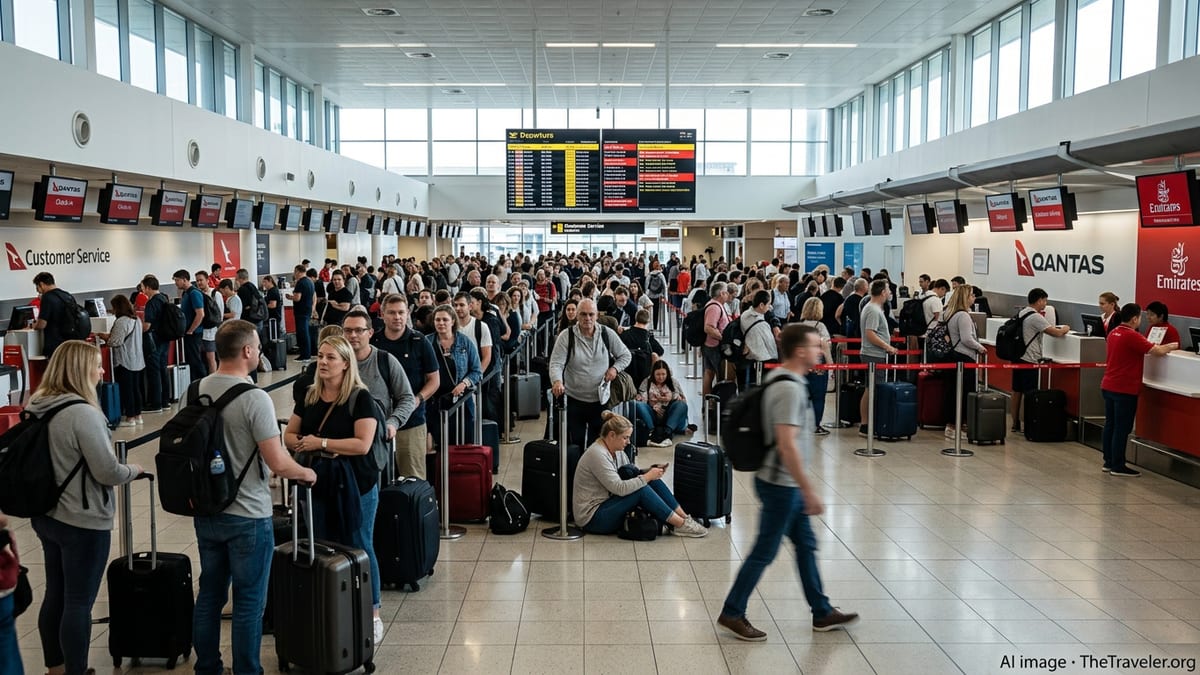
Morning disruption ripples across Australia’s busiest hub
Publicly available information shows that Airservices Australia imposed air traffic flow management restrictions on Friday morning, limiting the number of aircraft that could land and depart at Sydney Kingsford Smith Airport while it worked through an unexpected staffing shortfall in the control tower and terminal airspace operations. These measures reduced hourly movements and quickly created a backlog in the morning peak, when domestic business services and inbound international flights typically crowd the schedule.
According to multiple media reports, the restrictions led to around 14 inbound flight cancellations and pushed some delays beyond one hour for early services. As aircraft queued on the ground and in the air, knock-on delays spread into later waves of departures and arrivals, affecting not only Sydney passengers but also travellers connecting through the city to other parts of Australia and overseas.
The disruption mirrors previous episodes in which short-notice controller absences have forced ground delay programs at Sydney, underscoring how sensitive the network remains to staffing gaps at a single critical node. With around 70 percent of Australia’s domestic flights touching Sydney on a typical day, even modest reductions in its capacity can quickly cascade across airline schedules.
Recent safety scares sharpen focus on staffing levels
The latest disruption comes only weeks after a near-miss incident at Sydney involving a Jetstar aircraft and a Qatar Airways jet, which is now the subject of ongoing investigations. Coverage of that event highlighted how controller staffing levels and operational pressures have been under scrutiny for much of 2026, with aviation safety officials pointing to Sydney as a complex and demanding operating environment.
ABC News reporting in August outlined concerns from industry figures about chronic staffing pressures in the Sydney control tower, with references to controllers working significant overtime and the system relying heavily on a small pool of highly trained specialists. Publicly available briefings from the Australian Transport Safety Bureau and the federal transport portfolio have also drawn attention to the link between rostering resilience, safety management and the risk of operational errors at busy airports.
Analyses in Australian and international media have noted that while the total number of controllers across the national network has grown compared with the immediate post-pandemic period, Sydney remains a particular pinch point because of its traffic density, long operating day and complex runway and airspace configuration. That combination means even a handful of unplanned absences can tip the system into reduced-capacity mode, with safety-managed delays the preferred alternative to running the operation at the limits of available staffing.
Structural shortages and slow training pipeline
The controller shortage at Sydney is not a new problem. A series of reports over the past two years, including evidence to a federal Senate inquiry into aircraft noise and submissions to a Productivity Commission review of regional airfares, have documented how thin staffing margins at key towers have translated into repeated delays and cancellations when staff call in sick or are unavailable at short notice.
Industry submissions and government statements indicate that Airservices Australia is attempting to address the gap by increasing training throughput and improving rostering practices. A recent ministerial statement on air traffic control issues referenced commitments to new rostering arrangements at Sydney from early September and highlighted investment in a dedicated tower simulator intended to accelerate the endorsement of new controllers for local operations.
However, the training pipeline for air traffic controllers is long, often taking 18 months or more from recruitment to full endorsement, and failure rates during training remain relatively high by aviation standards. Analysts note that this creates a lag between policy announcements and tangible relief in the roster, especially at complex hubs like Sydney where additional local ratings are required. Until more recruits graduate and are assigned to Sydney, the system is likely to remain exposed to single-point failures when illness or other absences occur.
Travellers advised to plan for ongoing schedule volatility
For passengers, the most immediate impact of Friday’s shortage was felt in extended waits, missed connections and disrupted travel plans. Airlines used their public channels to encourage travellers to check flight status before heading to the airport and to allow extra time for check-in and security, particularly for early morning departures most affected by the reduced movement rates.
Recent travel advisories and airport guidance for Sydney have consistently urged passengers to monitor their flights closely via airline apps and websites, given the combination of staffing constraints, occasional severe weather and sustained demand growth through 2025 and 2026. Aviation network overviews from Airservices Australia have also acknowledged that, despite improvements in overall on-time performance, service disruptions at Sydney on several days this year have had outsized effects on the wider domestic network.
Travel industry observers suggest that, while Friday’s cuts were imposed to keep operations within safe limits, the recurrence of such events may influence how business travellers and airlines plan their schedules, including building in longer connection times and adjusting aircraft rotations to account for potential delays. Until the promised staffing and rostering reforms at Sydney are fully implemented and tested, the prospect of further short-notice disruption remains a key risk factor for anyone flying through the city.
Freemalaysiatoday.com: Sydney Airport flights disrupted due to air traffic controller shortage
The Star: Sydney Airport flights disrupted due to air traffic controller shortage
ABC News: Another near miss at Sydney Airport raises safety concerns
Australian infrastructure portfolio: Meeting with Airservices media release