


More news on this day
Thailand is moving to shore up its airport rail connectivity in Bangkok, with reports indicating that the capital’s Airport Rail Link is set for a temporary operating extension to 2027, ensuring continuity for millions of air travelers while long-term rail restructuring and high-speed projects remain unresolved.
Get the latest news straight to your inbox!
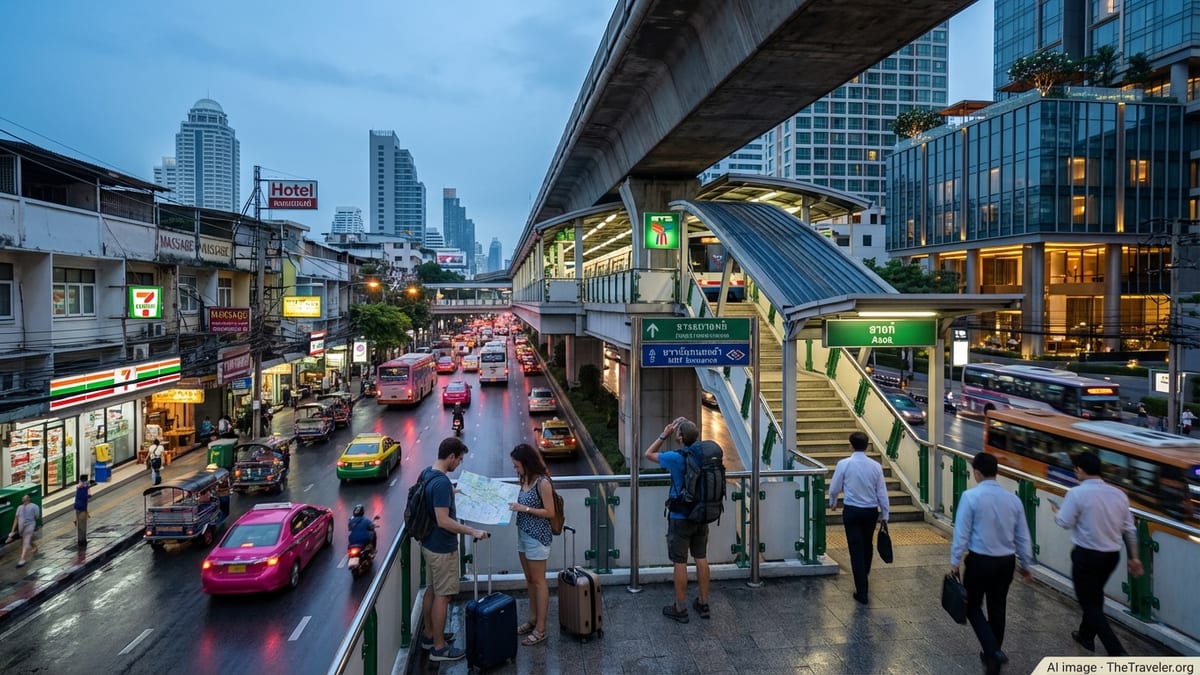
Short-Term Extension Aims to Prevent Service Disruption
Publicly available information shows that the current operating arrangement for Bangkok’s Airport Rail Link (ARL) between the State Railway of Thailand (SRT) and private concessionaire Asia Era One is scheduled to end on 30 September 2026, raising concerns over potential disruption on the key line linking downtown Bangkok with Suvarnabhumi Airport.
Coverage in Thai media indicates that the government has opted for a temporary extension of ARL services through 2027 while negotiations over the longer-term structure of the three-airport high-speed rail project continue. Recent reporting describes an evolving package of short extensions and emergency operating plans designed to keep trains running as the handover from the CP Group-led concession to an SRT affiliate is finalized.
Reports from Bangkok-based outlets describe how SRT Electric Train Company (SRTET), which currently operates the city’s Red Line commuter service, has been preparing to assume control of the ARL if needed. This backup framework, paired with a negotiated extension for the existing operator through at least early 2027, is framed as a way to guarantee continuity on a corridor that carries tens of thousands of passengers per day between the city and the country’s main international gateway.
The emerging solution is characterized as a bridge arrangement, buying time for the state and private partners to resolve contract issues tied to the broader Eastern Economic Corridor (EEC) rail package that would ultimately fold the ARL into a high-speed route linking Don Mueang, Suvarnabhumi and U-Tapao airports.
Key Link in Bangkok’s Expanding Airport and Urban Rail Network
The ARL currently runs 28.6 kilometers from Phaya Thai in central Bangkok to Suvarnabhumi Airport, forming one of the fastest and most predictable connections between the city and Thailand’s primary international hub. Background data shows that the line is owned by SRT and has in recent years been operated under concession by Asia Era One, part of a larger public private partnership connected to the planned three-airport high-speed line.
While the ARL has long been positioned as a mid-capacity airport express and commuter line, successive transport master plans envision the route as a backbone for wider inter-airport connectivity. Official rail planning documents outline how the three-airport high-speed project would use sections of the existing ARL alignment, with additional stations and upgraded infrastructure to accommodate faster services linking Bangkok’s two main airports with U-Tapao on the eastern seaboard.
In parallel, Bangkok’s broader mass transit expansion is continuing, with multiple new metro, monorail and light rail schemes at various stages of approval and construction. The ARL’s interface with the BTS Skytrain, MRT lines and Red Line suburban network is seen in planning literature as a core element of a more integrated metropolitan rail grid, allowing passengers to transfer between airport services and urban lines with fewer bottlenecks.
Extending ARL operations through 2027 therefore maintains a vital node in this emerging network, avoiding a sudden service gap while other capital rail projects, including high-speed connections and additional airport-focused routes, proceed through design, tender and financing milestones.
Negotiations Highlight Complexities Around the Three-Airport Rail PPP
The temporary extension is closely tied to the wider saga surrounding the high-speed rail project linking Don Mueang, Suvarnabhumi and U-Tapao. Public reporting over recent months describes ongoing discussions between the Ministry of Transport, SRT and the CP Group consortium over contract terms, investment responsibilities and risk-sharing under the Eastern Economic Corridor PPP framework.
According to published coverage, Asia Era One has previously indicated its intention to return ARL operations to SRT at the end of September 2026, even while elements of the three-airport high-speed scheme remain unresolved. This has prompted a series of contingency plans, from short stopgap extensions of a few months to a broader temporary operating framework reaching into 2027 while regulatory and financial issues are addressed.
Reports also reference debates over interim subsidies and operational support if the existing private operator is to continue running the ARL beyond its original time frame. These deliberations underscore the financial and legal complexities of reconfiguring a line that simultaneously functions as a core airport link, a daily commuter route and a key asset within a much larger intercity high-speed rail vision.
By setting out a clearer, time-limited extension to 2027, the government is portrayed as seeking to demarcate a planning window in which the EEC board, SRT and private investors can clarify the future of the three-airport project without jeopardizing day-to-day airport access for travelers.
Implications for Travelers Using Suvarnabhumi Airport
For travelers, the headline impact of the extension is continued access to a direct rail link between central Bangkok and Suvarnabhumi Airport, avoiding the uncertainty that had surrounded the looming end of the current operating agreement. Publicly available information suggests that service patterns, journey times and station stops on the ARL are expected to remain broadly unchanged during the temporary extension period.
Travel industry observers emphasize that the ARL’s reliability relative to road traffic is especially important at peak hours, when congestion on the expressway and surface streets can be unpredictable. Maintaining service through 2027 reduces the risk of a forced mode shift back to taxis, ride-hailing and buses, which would put additional pressure on airport access roads and could lengthen door-to-gate travel times during busy travel seasons.
While detailed fare or timetable changes linked directly to the extension have not yet been highlighted in public reporting, previous government statements on Bangkok rail policy have generally emphasized efforts to keep airport rail fares competitive with road-based options. Any eventual integration with high-speed services or additional airport lines is likely to trigger a broader review of fare structures and ticketing systems, including the potential for common payment platforms across multiple rail modes.
In the meantime, tourism stakeholders are likely to welcome the reassurance that Bangkok’s core airport rail service will remain in operation as Thailand continues to rebuild and diversify inbound travel markets, with Suvarnabhumi serving as the principal gateway for long-haul arrivals.
Part of a Wider Push to Strengthen Thailand’s Rail-Based Connectivity
The ARL extension sits alongside a series of other rail initiatives that together aim to strengthen Thailand’s domestic and regional connectivity. Transport planning documents highlight ongoing construction of new mass transit lines in Bangkok, progress on the north eastern high-speed corridor toward Nakhon Ratchasima and studies into further intercity rail upgrades in support of trade and tourism.
Within the capital region, the Mass Rapid Transit Master Plan and its follow-up frameworks map out additional routes designed to connect new residential areas, business districts and logistics hubs with existing rail lines. Among these is a proposed light rail route between Bang Na and Suvarnabhumi that would complement, rather than replace, the ARL by offering more local access to the airport’s southern perimeter and adjacent development zones.
Further afield, planning materials and economic reports link rail expansion under the EEC program with wider regional objectives, including facilitating smoother connections between Bangkok, the eastern seaboard’s industrial base and seaports. Strengthening the ARL in the short term, and ultimately integrating it with higher speed inter-airport and intercity services, is presented in this context as part of a broader vision to anchor Thailand’s tourism and logistics growth in a more sustainable, rail-oriented transport system.
The decision to extend operations on the existing airport rail corridor through 2027 therefore appears as both a practical short-term step to protect travelers and an incremental move in a longer-term strategy to expand and integrate the country’s rail network across metropolitan, regional and international scales.
Nation Thailand: SRT unit prepares Airport Rail Link takeover
Pattaya Mail: Minister seeks CP extension for Airport Rail Link handover