


Portugal has become one of Europe’s most immigrant‑dense countries, with foreign nationals now accounting for roughly 14 percent of residents. While policy frameworks for migrant integration are generally well rated in international indices, the everyday cultural experience for incoming expats is more nuanced. This briefing examines how newcomers typically integrate into Portuguese society, what social dynamics they are likely to encounter, and which behavioral adaptations matter most for long‑term inclusion.
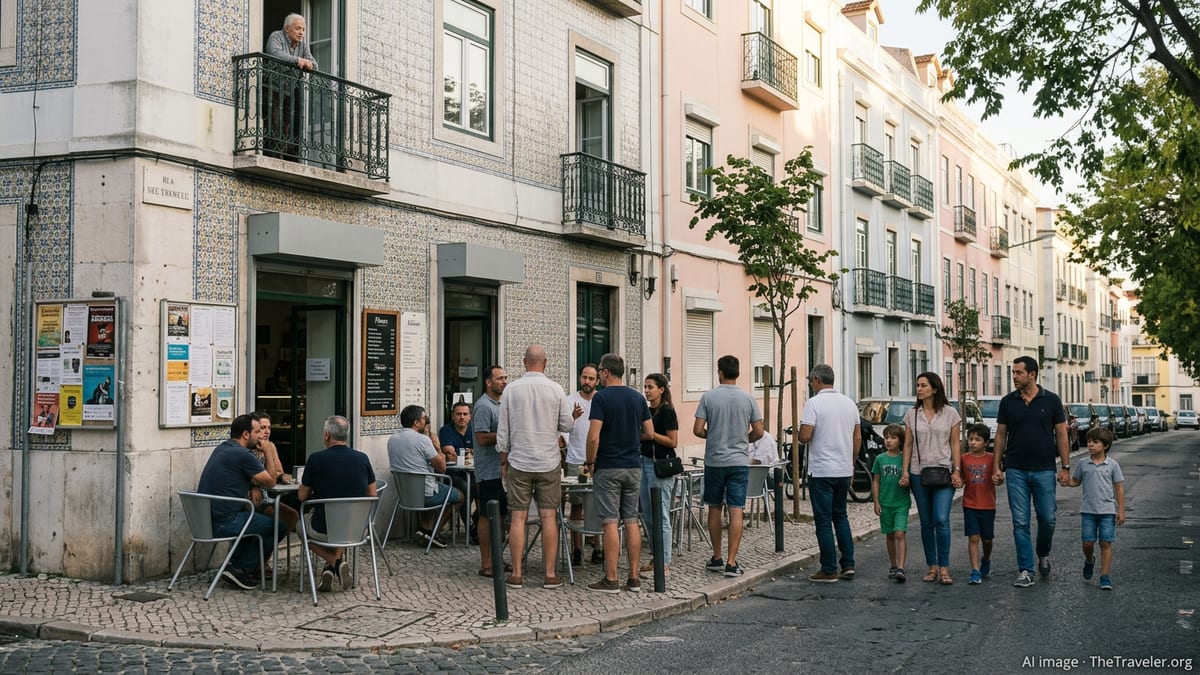
Cultural Integration Context: A Welcoming Yet Cautious Society
Portugal has seen a rapid rise in foreign residents, with official data indicating more than 1.5 million foreign citizens in a population of around 10.7 million, or approximately 14 percent, by 2024. This is a marked increase compared with a decade ago and places Portugal near the top of the EU in relative immigrant population. The largest groups are Brazilians, followed by other Lusophone nationals and Europeans. This demographic shift shapes how local communities perceive and interact with newcomers.
On paper, Portugal ranks near the top of the Migrant Integration Policy Index, with recent editions placing the country among the top three EU destinations for integration policy design. Strong scores are recorded in areas such as equal rights, long‑term residence, family reunification, and access to education. From a policy standpoint, the country projects a broadly inclusive model that formally encourages integration and anti‑discrimination.
Public attitudes, however, are mixed and can vary by region, social class, and political orientation. Survey data show that a majority of Portuguese residents acknowledge the economic contribution of immigrants, yet significant shares also express concern about crime and wage competition. Social norms tend to discourage open hostility, and overt discrimination is less acceptable than in some other European states, but expats should still expect to encounter pockets of skepticism or social distance, especially in areas experiencing fast demographic change.
For potential movers, the key implication is that the policy environment is comparatively favorable, but cultural integration depends strongly on individual behavior, language learning, and willingness to engage with local norms. Those who remain in expat‑dense, English‑speaking enclaves may find that their practical needs are met while deeper integration into Portuguese networks remains limited.
Language Expectations: English Reach vs. Need for Portuguese
Portugal consistently ranks among the top non‑native English‑proficient countries worldwide. In major urban centers such as Lisbon and Porto, and in tourism‑intensive coastal regions, it is common to find service workers and younger professionals able to hold a conversation in English. In these areas, expats often manage daily errands, dining, and many work situations without immediate Portuguese proficiency.
However, this apparent convenience can be misleading from an integration perspective. While English helps at the surface level, most institutional life still operates in Portuguese. Public sector offices, health providers, and local associations may offer some English support informally, but documentation, forms, local media, and community meetings are mostly monolingual. Expats who rely solely on English frequently report feeling excluded from local debates, unable to follow municipal news, and dependent on intermediaries for important decisions.
International research on integration highlights host‑country language proficiency as one of the strongest predictors of social inclusion, and Portugal follows this pattern. Foreign residents who achieve at least intermediate Portuguese are noticeably better positioned to build friendships with locals, participate in parent‑teacher interactions, and understand subtle workplace expectations. Conversely, those who stay at survival level often find their social circles limited to other foreigners.
Practically, expats should expect that meaningful integration will require sustained language learning. Informal conversation practice with neighbors, participation in local clubs, and consumption of Portuguese‑language media are often more decisive than formal classes alone. High‑income professionals who work in English‑only environments face a particular risk of remaining on the margins of Portuguese social life, even after many years in the country.
Social Norms and Interpersonal Style
Portuguese social interaction typically combines warmth with caution. First encounters may seem polite but reserved, especially outside major cities. Overt displays of enthusiasm are less common than in some Anglophone cultures, and people often prefer to build trust gradually. Long‑standing personal and family networks are strong, and friendships formed in school or early adulthood can remain central throughout life. For expats, this means that initial friendliness does not automatically translate into rapid inclusion in tight social circles.
Formality markers are still relevant. In many contexts, using the polite “você” or even surname‑plus‑title with older people, public officials, and professionals is considered respectful, while first‑name familiarity is introduced more slowly. Physical greetings such as cheek kisses are normal among acquaintances, but are not automatically extended to new foreign arrivals until a certain comfort level is reached. Observing and mirroring the behavior of local colleagues or neighbors is the safest strategy.
Communication style is moderately indirect. Criticism or disagreement is often expressed softly, framed in suggestions rather than blunt refusals. Nonverbal cues, tone, and context carry significant weight. Expats from highly direct cultures may misinterpret this as avoidance or indecision, while locals may perceive very direct communication as rude or aggressive. Being tactful, lowering one’s volume in public spaces, and avoiding confrontational language are important micro‑adaptations for smoother integration.
Social trust in Portugal is moderate by European standards. People are usually helpful with practical questions and daily interactions, but trust at the level of sharing personal issues or business risks builds slowly. Newcomers who demonstrate reliability, punctuality, and modesty tend to gain acceptance more quickly than those perceived as displaying entitlement or cultural superiority.
Community Integration: Everyday Life and Social Circles
At the community level, integration is influenced by where expats choose to live. In Lisbon, Porto, and parts of the Algarve, dense foreign communities have emerged, including substantial numbers of Brazilians, French, British, Americans, and digital professionals from multiple regions. In these areas, English‑speaking social networks, international schools, and expat‑oriented activities are easy to access, which can significantly reduce culture shock but also create social segmentation.
Outside the main hubs, foreign residents are more dispersed. Smaller towns and interior regions often exhibit stronger local identity and fewer English‑language resources. Here, expats who learn Portuguese and participate in local events, parish activities, sports clubs, or parent associations tend to be noticed and appreciated. Those who expect services and interactions to adapt to their language and habits may encounter more resistance or isolation.
Religious participation and volunteering can be relevant integration channels, especially in smaller communities where the church or local associations act as key social nodes. Portugal remains officially secular but culturally influenced by Catholic heritage. Attendance patterns vary generationally, with older residents more involved. Expats should not expect overt proselytizing, but they should recognize that certain public holidays and informal norms still reflect this background.
Parents face specific integration dynamics. Portuguese families often prioritize extended family ties and long‑term friendships, and children’s social circles are frequently mediated by school networks. Expats who engage in school committees, extracurricular activities, and informal gatherings typically report faster family‑level integration. However, some foreign families also report subtle social distance, particularly in more traditional areas, where local parents may be polite but slow to initiate closer contact.
Workplace Culture and Professional Integration
In professional settings, many international companies and technology firms operate in English, particularly in Lisbon and Porto. In these environments, multicultural teams are common, and foreign hires may initially experience relatively smooth functional integration. Nonetheless, important aspects of career progression, reputation, and informal influence often occur through Portuguese‑language conversations and networks, especially at senior levels or in interactions with local clients and regulators.
The Portuguese workplace is generally hierarchical but collegial. Respect for authority and seniority remains significant, and managers may expect deference in meetings, even when they encourage open discussion. Decision‑making can be slower than in some Anglo‑Saxon contexts, with more emphasis on consensus‑building and personal relationships. Foreign professionals who push aggressively for rapid change without investing in relationship‑building risk being perceived as disruptive.
Work‑life balance is culturally valued, and many employees prioritize family time and social life. Long working hours exist but are less openly celebrated than in highly competitive corporate cultures. Expats who expect constant availability or who blur professional and personal boundaries may find their style at odds with local expectations. Conversely, demonstrating respect for colleagues’ time off and family commitments is generally well regarded and can support integration.
For expats in smaller Portuguese companies or public institutions, Portuguese proficiency becomes more critical. Internal documents, staff meetings, client interactions, and informal mentoring are usually conducted in Portuguese. Without active language learning, foreign employees may find themselves technically present but socially peripheral, limiting both professional development and the sense of belonging.
Values, Diversity, and Social Sensitivities
In comparative European perspective, Portugal scores as moderately individualist but with strong family and community orientation. Collective well‑being, social equality, and modesty are widely valued. Displays of ostentatious wealth or status can be viewed negatively, particularly in regions that have experienced economic hardship. Expats who adopt a low‑key, respectful approach to material display typically encounter smoother integration than those who project conspicuous affluence.
Attitudes toward diversity are evolving. Surveys in recent years show relatively high support in Portugal for LGBT rights compared with many other EU states, as well as broad support for anti‑discrimination principles. At the same time, certain public opinion studies suggest that a majority considers current immigration levels high and expresses concern about pressure on public services. This duality means that foreigners are generally protected by law and rarely face open hostility, but may still be exposed to negative narratives in political debate or media commentary.
Race and post‑colonial history add complexity. Portugal’s ties with Brazil, Angola, Mozambique, Cape Verde, and other Lusophone countries contribute to a culturally diverse immigrant population, but they also surface unresolved issues around inequality and stereotyping. Experiences differ significantly between white European expats and migrants from African or Latin American backgrounds. Companies with strong diversity policies can mitigate some of these disparities, but expats should be aware that integration outcomes are not uniform across all groups.
Social sensitivities include attitudes toward religion, politics, and national pride. Many Portuguese are proud of national history and cultural heritage, yet also critical of domestic politics and bureaucracy. Foreigners who quickly disparage the country or make sweeping comparisons can be poorly received. A constructive, curious posture that acknowledges both strengths and weaknesses is generally more conducive to respectful dialogue and long‑term integration.
The Takeaway
For prospective expats, cultural integration in Portugal is neither automatic nor unattainable. The country’s legal and policy frameworks are among Europe’s more inclusive, and many foreign residents report feeling welcomed and safe. At the same time, social networks are relatively closed, communication styles are nuanced, and meaningful participation in community and professional life usually depends on deliberate effort by newcomers.
Key success factors include committing to Portuguese language learning beyond basic survival level, choosing neighborhoods and schools that enable contact with locals rather than only other foreigners, and adapting to local norms of politeness, hierarchy, and modesty. Those who invest in these areas tend to report a growing sense of belonging over time, while those who remain in English‑speaking bubbles often experience a persistent cultural distance, even if their material living conditions are satisfactory.
Ultimately, Portugal offers a relatively favorable environment for cultural integration compared with many other destinations, but the outcome is highly path‑dependent. Early choices about language, social networks, and engagement with local institutions can shape the entire trajectory of an expat’s experience. Candidates considering relocation should assess not only the country’s advantages but also their own readiness to adapt behaviorally and linguistically to Portuguese society.
FAQ
Q1. Can I integrate in Portugal if I only speak English?
It is possible to manage daily life in major cities with English, but deeper integration into local networks, institutions, and professional hierarchies generally requires at least intermediate Portuguese.
Q2. How long does cultural integration usually take for expats in Portugal?
Most expats who actively learn Portuguese and engage with local communities report feeling reasonably integrated after 2 to 4 years, though full fluency and strong local networks can take longer.
Q3. Are Portuguese people generally welcoming to foreign residents?
Surveys and expat rankings indicate that many foreigners experience Portuguese people as friendly and helpful, but social circles can remain relatively closed until trust is built over time.
Q4. Is it easier to integrate in Lisbon and Porto than in smaller towns?
Large cities offer more English use and international communities, which ease initial adaptation. Smaller towns can offer deeper integration opportunities but usually demand faster language and cultural adjustment.
Q5. How important is workplace culture for overall integration?
Workplace culture is central, as many social connections form through colleagues. Understanding local expectations around hierarchy, communication, and work‑life balance strongly influences integration outcomes.
Q6. Do international schools help or hinder family integration?
International schools ease academic transition and language barriers, but they can keep families in predominantly expat networks unless parents deliberately seek Portuguese‑language activities and friendships outside school.
Q7. Are there noticeable regional differences in how expats are received?
Yes. Lisbon, Porto, and tourist regions are more accustomed to foreigners and English, while interior and northern areas may be more traditional, with fewer English speakers but potential for closer long‑term ties.
Q8. What social behaviors are most valued by Portuguese communities?
Politeness, modesty, reliability, and respect for family and community obligations are widely valued. Expats who display these traits usually find it easier to earn trust and acceptance.
Q9. How do local attitudes toward diversity affect integration?
Legal protections and public support for equality are comparatively strong, but experiences vary by ethnicity and nationality. European professionals often encounter fewer barriers than migrants from poorer or post‑colonial countries.
Q10. What practical steps best accelerate cultural integration in Portugal?
Consistent Portuguese study, participation in local clubs or associations, engagement with neighbors, volunteering, and following Portuguese media are among the most effective accelerators of integration.