


Spain has shifted in three decades from a relatively homogeneous society to one of the most diverse in Europe, with foreign born residents now representing around one fifth of the population. For prospective relocators, understanding how cultural integration works in this context is essential to anticipate daily life, workplace dynamics, and the likely trajectory of social inclusion over time.
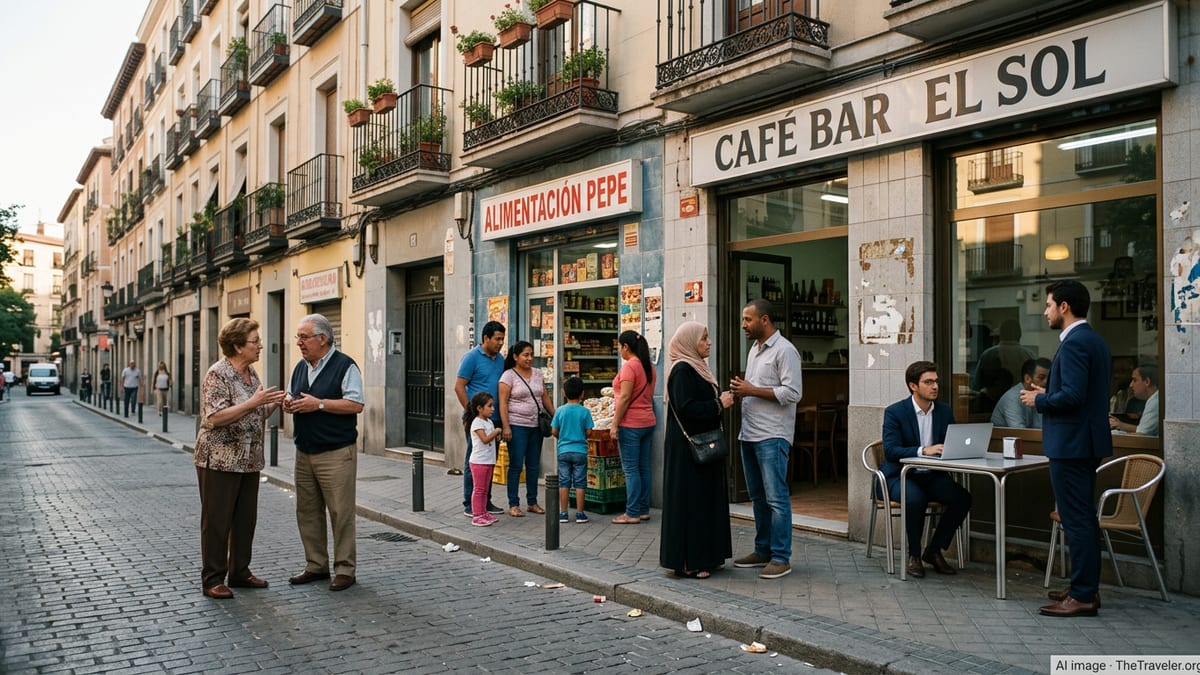
Cultural Diversity and Integration Context in Spain
Spain is now among the four main destinations for foreign born residents in the European Union, hosting roughly 8.8 to 10 million foreign born people, or close to 20 percent of the total population according to recent Eurostat and national statistics. This transformation has occurred rapidly: in the late 1990s, immigrants represented well under 5 percent of residents, while by the mid‑2020s immigration is responsible for the majority of net population growth. For any foreign professional or family, cultural integration will unfold in an environment where diversity is widely visible in large cities and increasingly present in medium‑sized towns.
The composition of immigration in Spain also shapes integration dynamics. The largest non‑EU groups originate from Latin America, North Africa, and Eastern Europe, with Latin Americans alone accounting for a high single‑digit share of the total population. Shared language and cultural references between Spain and much of Latin America support relatively smoother integration for Spanish‑speaking newcomers, both socially and institutionally. By contrast, migrants from North Africa, Sub‑Saharan Africa, and Asia often face more pronounced cultural and religious distance, and therefore more complex integration trajectories.
Spain’s demographic situation creates strong structural demand for newcomers. Natural population growth has been negative since the mid‑2010s, and recent press releases from the National Statistics Institute attribute most job creation and population gains since 2019 to immigration. This context matters for integration: many sectors such as hospitality, caregiving, agriculture, logistics, and parts of technology rely heavily on foreign workers, which increases everyday contact between locals and newcomers and gradually normalizes diversity in the public sphere.
Despite this reliance on immigration, social attitudes are mixed. Surveys conducted in 2024 indicate that a narrow majority of Spaniards view immigration levels as “high,” yet other European surveys show Spain ranking among the less hostile EU states in terms of overt anti‑immigrant sentiment. The result is an integration context where foreign residents are generally tolerated and often welcomed in urban areas, but may still encounter stereotypes, political debates over numbers, and occasional discrimination, particularly where economic pressures are acute.
National and Local Approaches to Cultural Integration
Spain does not operate a single, highly centralized integration program. Instead, policy is shared between the national government, autonomous communities, and municipalities, creating a layered environment for cultural integration. At the national level, strategic plans on citizenship and integration emphasize equal rights, non‑discrimination, and access to education and health, framed within a broader discourse of coexistence and interculturality. Unlike some countries, Spain does not impose formal nationwide civic integration or cultural tests for long‑term residents, although language and civic knowledge requirements apply in naturalization processes.
Autonomous communities such as Catalonia, Madrid, the Basque Country, and Andalusia operate their own integration and interculturality plans. These typically bundle language training, mediation services between administrations and migrant communities, anti‑discrimination programs, and support to NGOs working in neighborhoods with high foreign born density. For example, regions where foreign residents approach or exceed 20 percent of the population have invested in intercultural mediation in schools, health centers, and social services to reduce misunderstandings and support inclusion.
At municipal level, integration policies become more tangible for everyday life. Major cities like Madrid, Barcelona, Valencia, and Seville maintain dedicated immigrant attention centers that offer guidance in multiple languages, basic legal information, and referrals to schooling, training, and cultural activities. City councils frequently fund local associations that run after‑school support, cultural exchange workshops, and neighborhood festivals where long‑term residents and newcomers interact. For relocators, especially families, the availability and quality of these local services often has more practical impact on cultural integration than national‑level policy statements.
This decentralized model creates both opportunities and disparities. On the positive side, regions and cities can adapt integration initiatives to local realities, such as specific migrant communities or linguistic contexts in bilingual regions. On the negative side, support for integration can vary significantly between territories and even between municipalities, leading to different experiences for similarly situated newcomers. Relocators should therefore treat “cultural integration in Spain” as a national framework overlaid with very local conditions.
Language Environment and Communication in Daily Life
Spanish (Castilian) is the primary vehicular language for integration in most of the country, and command of Spanish remains the single most important factor for effective cultural integration. While no universal data exist on immigrant language proficiency, surveys consistently show that newcomers with good Spanish report higher levels of social trust, broader friendship networks, and easier access to qualified employment. For many foreign professionals, conversational competence can be reached within one to two years of immersion, but high‑level fluency for complex professional roles generally takes longer.
The linguistic context is complicated by Spain’s co‑official languages. Catalan in Catalonia and the Balearic Islands, Valencian in the Valencian Community, Galician in Galicia, and Basque in the Basque Country have strong institutional presence in education, public administration, and local media. In Catalonia and the Basque Country, regional authorities actively promote the regional language as a vehicle for integration, providing subsidized courses for foreign residents and encouraging its use in schools and public services. For relocators heading to these regions, integration will typically involve at least passive understanding of both Spanish and the regional language over time.
In major cities and tourist areas, basic daily interactions can often be handled in English, particularly in service sectors. However, relying on English alone significantly limits integration prospects. Many administrative procedures, neighborhood associations, and local professional networks operate almost exclusively in Spanish or in the relevant co‑official language. This can create a dual reality: expatriates employed by multinational firms or working remotely may function in English at work while remaining linguistically peripheral in the local community, reducing opportunities for deeper cultural connection.
Public and NGO‑run language programs play a supporting role. Across Spain, town halls and civil society organizations offer free or low‑cost Spanish classes targeted at immigrants, sometimes linked to job search support and cultural orientation. Participation tends to be higher among non‑European migrants than among European free movers, the latter often relying on informal learning. For families with school age children, the education system acts as a strong language integration mechanism, as children are schooled in Spanish or a co‑official language and typically achieve fluency and local accents within a few years, often outpacing adult family members in integration through peer networks.
Workplace Culture and Professional Integration
Work is a central arena of cultural integration in Spain. Labor market data show that foreign born residents are over‑represented in several sectors with high interpersonal contact, including hospitality, domestic work, caregiving, agriculture, and some construction and logistics segments. At the same time there is a growing presence of international professionals in technology, finance, higher education, and creative industries, particularly in Madrid, Barcelona, Valencia, and Malaga. For relocators, this bifurcation means that integration paths differ sharply between lower‑skilled migration and higher‑skilled, often corporate expatriation.
Spanish workplace culture typically emphasizes relationship building, informality in interpersonal communication, and a relatively high value placed on face‑to‑face interaction. Meetings may be less strictly time‑bound than in Northern Europe, and decision making can be more consensus‑driven, involving multiple conversations outside formal settings. For foreign professionals, successful integration often depends on adapting to these norms, including comfort with frequent socialization around coffee breaks and lunches, and acknowledging the importance of personal rapport in business negotiations and internal collaboration.
Hierarchical structures can appear contradictory. In many organizations management retains strong authority and final decision power, yet day‑to‑day interactions between supervisors and staff are collegial and informal. Titles and formal distinctions are less emphasized than in some other European countries, but implicit hierarchies can still guide promotion and project allocation. Newcomers who misread this combination of informality and hierarchy may underestimate the importance of seniority and networks in career progression, which can indirectly affect integration if foreign workers remain concentrated in lower rungs of organizational structures.
From an inclusion perspective, discrimination complaints are not rare but Spain has an evolving legal framework on non‑discrimination and equality. Reports from equality bodies and NGOs point to recurring issues such as overqualification among foreign workers, wage gaps in low‑skilled sectors, and occasional bias in recruitment, particularly affecting visibly different minorities and non‑EU nationals. Nonetheless, sectors such as technology, research, and international business services show higher levels of openness, often using English as a working language and valuing diverse profiles. Relocators entering these sectors generally encounter smoother professional integration and more internationally oriented corporate cultures.
Social Networks, Everyday Life and Identity
Social integration in Spain is mediated by family networks, neighborhood structures, and a dense calendar of local festivities and community events. Spaniards tend to sustain strong family and long‑term friendship circles, which can present an initial barrier for newcomers attempting to enter established social groups. At the same time, everyday sociability in public spaces is high, with frequent use of bars, plazas, and community centers. For foreign residents, this offers many low‑stakes opportunities for casual interaction, though translating these into deeper friendships may require persistence and language competence.
Patterns of residential concentration affect integration outcomes. In large metropolitan areas, specific districts may host migrant communities clustered by origin, such as Latin American, Moroccan, Chinese, or South Asian neighborhoods. These enclaves provide support networks, access to familiar goods and services, and community organizations, but can also slow exposure to broader Spanish society if daily life remains contained within the enclave. Mixed neighborhoods, increasingly common in central zones of major cities and in some commuter towns, tend to favor contact between groups and more shared public life.
Second generation residents play a particular role in Spain’s integration landscape. Children of foreign born parents who grow up in Spain often speak Spanish or a regional language as their dominant tongue, attend local schools, and consume the same media as their Spanish peers. Data from educational and sociological studies indicate that many identify simultaneously with their parents’ origin and with a Spanish or regional identity. This dual identification is gradually normalizing multicultural belonging and is visible in classrooms, local sports, and youth culture, which in turn influences how new arrivals are perceived by the younger population.
Religious diversity is another factor. Spain remains historically Catholic in cultural terms, but active religious practice has declined, and sizable Muslim, Evangelical, Orthodox Christian, and other communities have emerged, alongside a growing non‑religious segment. Acceptance of religious diversity is higher in large cities than in rural areas. Visible expressions of Islam, for example, can be more contested in certain municipalities, affecting the everyday integration experiences of Muslim residents. Relocators should therefore anticipate that religious or cultural markers may be read differently depending on local context.
Regional Variation and Local Integration Climate
Spain’s autonomous communities differ markedly in foreign born presence and in public discourse on immigration. Regions such as Catalonia, Madrid, the Valencian Community, the Balearic Islands, and parts of Andalusia register foreign born or foreign national shares close to or above 20 percent of the population. In these territories, diversity is integrated into the labor market and school system to a greater extent, and institutional frameworks for intercultural dialogue are more developed. By contrast, some inland and northern regions maintain lower foreign born proportions, where newcomers may be more visible and encounter more curiosity or skepticism.
Major metropolitan areas concentrate foreign residents and tend to offer more multicultural amenities, from international schools and community associations to foreign language media and religious centers. Barcelona and Madrid, for example, each host hundreds of thousands of residents with roots in Latin America, North Africa, Eastern Europe, and elsewhere, and are accustomed to international populations in both professional and working‑class districts. For many relocators this creates an environment where speaking with an accent or coming from abroad is socially unremarkable, which can reduce integration barriers.
At the same time regional political dynamics influence integration climates. Parties with restrictive positions on immigration have support in some regions and municipalities, which can shape local debates on security, public space, and social benefits. While Spain as a whole has avoided the most extreme anti‑immigration policies seen elsewhere in Europe, foreigners may still encounter variable rhetoric in local media and politics. Prospective residents who prioritize a welcoming environment may therefore prefer larger urban centers or regions with long experience of managing diversity.
For families, school systems are a key regional differentiator. Autonomous communities control education policy and language models, resulting in different approaches to integrating pupils with migrant backgrounds. Some regions strongly promote inclusive schooling with additional language support and intercultural curricula, while others provide more limited targeted measures. Over time, these differences influence not only educational outcomes but also the ease with which children from foreign families form peer networks and develop a sense of belonging.
The Takeaway
Cultural integration in Spain is shaped by rapid demographic change, a relatively open yet fragmented policy framework, and strong regional and local variation. Foreign born residents now account for close to one fifth of the population, and immigration is central to sustaining Spain’s labor market and demographic balance. This structural reliance on newcomers has facilitated broad social exposure to diversity, particularly in major urban centers, even as public opinion remains divided over immigration levels.
For prospective relocators, successful integration will depend heavily on language acquisition, choice of region and city, and the type of labor market insertion pursued. Spanish proficiency remains indispensable for full participation in local life, while knowledge of a co‑official language becomes progressively important in certain regions. Professional environments in internationalized sectors can offer smoother on‑ramps to social and cultural integration, but may also create insulated expatriate bubbles if not balanced with local engagement.
Spain’s strong neighborhood traditions, family networks, and public sociability provide fertile ground for building connections, especially for those who engage actively in local associations, school communities, and shared public spaces. However, newcomers should anticipate that deep integration may take several years, with potential encounters with bureaucratic complexity, occasional discrimination, and regional political sensitivities along the way. Overall, Spain presents a moderately favorable integration environment compared with many peer countries in Europe, especially in large cities, but outcomes remain highly contingent on individual strategies and local conditions.
FAQ
Q1. How culturally diverse is Spain today compared with other European countries?
Spain is now among the most diverse EU member states, with foreign born residents representing close to 20 percent of the population, similar to France and slightly below Germany in absolute numbers, though ahead of many mid‑sized European countries in relative terms.
Q2. Is speaking Spanish essential for cultural integration in Spain?
Yes. While English may suffice in some workplaces and tourist districts, meaningful integration into local communities, public administration, and most professional networks requires at least intermediate Spanish.
Q3. How long does it typically take newcomers to feel integrated socially?
Experiences vary, but many foreign residents report needing two to five years to build stable local friendships, navigate institutions comfortably, and feel at ease in social settings, assuming active language learning and local engagement.
Q4. Are some Spanish regions more welcoming to foreigners than others?
Large urban regions such as Madrid, Catalonia, the Valencian Community, and parts of Andalusia and the Balearic Islands generally show higher diversity and more developed integration programs, which many newcomers experience as more welcoming than smaller or less diverse areas.
Q5. How do schools in Spain handle children from foreign families?
Public schools routinely receive pupils with migrant backgrounds and provide language support, though the intensity and quality of these measures vary by region. Children typically adapt quickly, often becoming the most integrated members of the household.
Q6. Do foreign professionals face significant workplace discrimination?
Most foreign professionals integrate without major conflict, but studies and equality bodies highlight issues such as overqualification and subtle bias in promotion. The technology, research, and international business sectors tend to be more meritocratic and internationally oriented.
Q7. Is it possible to integrate in Spain without living in a major city?
Integration outside large cities is possible but can be slower. Smaller towns may offer closer community ties but fewer multicultural networks and language support services, and foreign residents can be more visible as newcomers.
Q8. How important are local languages like Catalan or Basque for integration?
In regions with co‑official languages, understanding and, ideally, using the regional language significantly improves integration in schools, public sector jobs, and community life, although Spanish remains widely understood and used.
Q9. Are there active community or cultural organizations that help newcomers integrate?
Yes. Most cities have immigrant associations, cultural centers, and NGOs that provide language courses, orientation sessions, and community events, often supported by municipal funding and designed to foster intercultural contact.
Q10. How do social attitudes toward immigration affect daily life for foreigners?
While political debate over immigration exists, daily interactions in most urban environments are generally neutral to positive. Many foreigners report occasional stereotyping but relatively infrequent open hostility, with experiences improving as language skills and local networks deepen.