


Landing at Alejandro Velasco Astete International Airport in Cusco is both exhilarating and a little disorienting. You step off the plane at more than 3,300 meters above sea level, the air feels thinner, and within 15 to 20 minutes you can be standing in the cobbled heart of the historic city at Plaza de Armas. This guide walks you through that first airport-to-square journey in detail, so you know exactly what to expect from the moment you collect your bags to your first glimpse of Cusco’s colonial balconies and Inca walls.
Get the latest updates straight to your inbox!
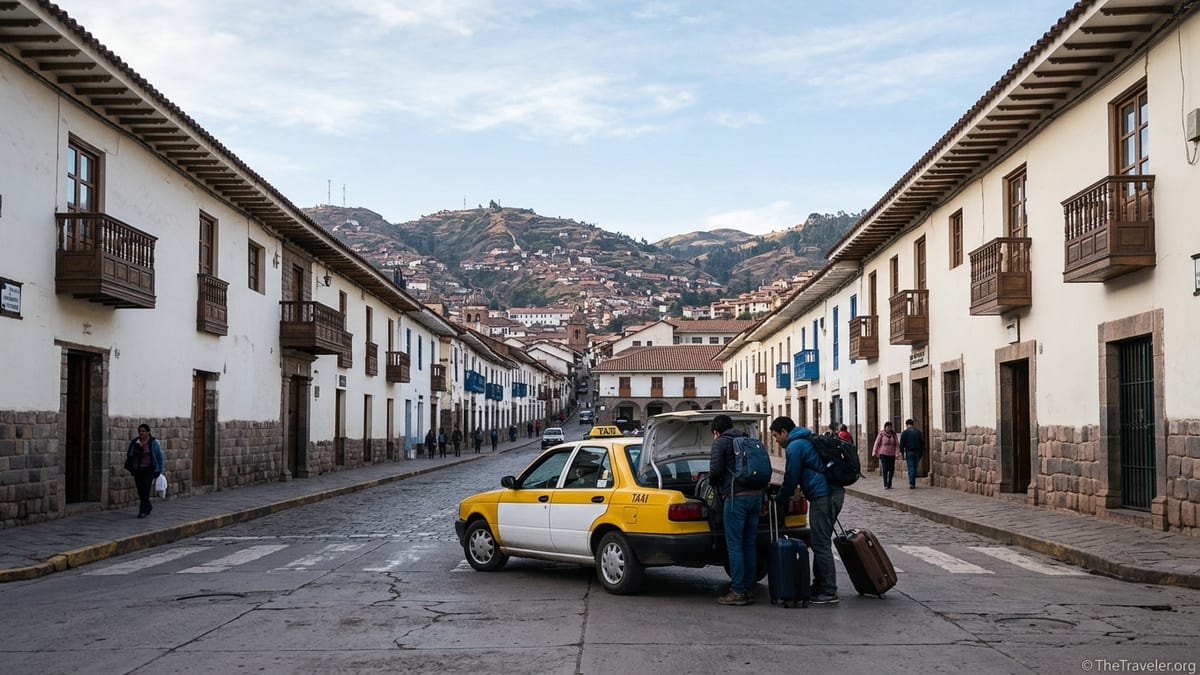
From Runway to Road: Arriving at Alejandro Velasco Astete International Airport
Cusco’s Alejandro Velasco Astete International Airport sits surprisingly close to the city. The distance to Plaza de Armas is roughly 4 to 5 kilometers, and in typical traffic the ride takes about 10 to 20 minutes. In practical terms, this means that many travelers are checked into their hotel and unpacking within an hour of touchdown, which is rare for a major tourist hub.
The airport itself is compact and straightforward. After disembarking, you pass through immigration if you are arriving from abroad, then move directly into a small baggage claim area. Because of the airport’s size and the concentration of flights in the morning, wait times can vary, but luggage for domestic arrivals often appears within 15 to 30 minutes. Both national carriers and regional airlines serving Cusco use standard conveyor belts and announcements are frequent in Spanish and often repeated in English.
Once you collect your baggage and pass customs screening, you emerge into the public arrivals hall. This is where the transition to the city begins in earnest. You will see a mix of official taxi counters, hotel and tour representatives holding name signs, and independent drivers calling out “taxi, taxi” as you walk past. It can feel hectic, especially at peak morning arrival times when several Lima and international connections land close together, but the space is small enough that you will not get lost.
Most travelers pause here for a moment to adjust. The altitude can make you feel short of breath, so rolling your suitcase slowly and avoiding rushing up stairs or ramps is wise. Bathrooms and small kiosks selling bottled water and snacks are available before you exit the terminal, and it is worth topping up your cash at an ATM if you plan to pay for your first ride in Peruvian soles.
Choosing Your Ride: Taxis, Apps and Pre-booked Transfers
The two most common ways to reach Plaza de Armas from the airport are by regular taxi or by ride-hailing app. Because the distance is short, fares remain relatively modest compared with many other cities of similar importance. Travelers in 2025 and 2026 frequently report paying around 15 to 25 soles for a standard taxi ride to the historic center if they negotiate directly with a driver, and app fares are often in the same band, depending on time of day and demand.
Inside the arrivals hall you may find official taxi desks that quote fixed prices. These counters usually offer slightly higher but predictable fares, appealing if you prefer to avoid bargaining after a long flight. For example, a counter might quote around 30 to 40 soles to hotels around Plaza de Armas, emphasizing licensed drivers and marked vehicles. Outside the terminal doors, freelance drivers often start with higher quotes, perhaps 30 to 50 soles, but generally accept a lower amount when you politely counter with a price closer to what local riders pay.
Ride-hailing and taxi apps are increasingly common in Cusco. Uber and Cabify have a presence, but many locals and frequent visitors report using inDrive or similar services more often for their flexibility on price. With inDrive, for instance, you enter your destination and propose a fare based on what you know a typical taxi costs from the airport to the center, then drivers either accept or counter. One traveler described opening a mainstream app to see the estimated fare to the Plaza, then offering slightly less in inDrive and consistently getting quick matches.
If you prefer everything arranged ahead of time, many hotels and local agencies can organize a private transfer. A mid-range hotel within walking distance of Plaza de Armas might charge 40 to 70 soles for a pre-booked pick-up, often including a driver waiting in the arrivals hall with a sign and assistance with luggage. This option is particularly attractive to families, older travelers or anyone landing late in the evening, as it removes the need to negotiate after arrival.
Travel Time, Traffic Patterns and First Impressions on the Drive In
Once you are in the car, your driver will exit the airport area and merge onto city streets that lead toward the center. The route begins with relatively wide urban roads, passing low-rise residential buildings, local shops, and small businesses. Within a few minutes you start to feel how close the airport is to daily Cusco life, as you pass neighborhood markets, schoolchildren in uniform, and colectivos, the small minibuses used by locals.
In light traffic, such as mid-morning or mid-afternoon outside major holidays, the ride to the edge of the historic center can take as little as 10 minutes. During the busiest windows, particularly around 7 to 9 in the morning and 5 to 7 in the evening, congestion at key intersections can extend the journey to 20 or even 30 minutes. The last stretch near the core slows down further, not because of gridlock, but because cobblestones, pedestrians and one-way loops prevent high speeds.
The final approach into the historic center is usually via avenues like Avenida El Sol or nearby feeder streets that converge close to the Plaza. Avenida El Sol is one of the main arteries and a good reference point. Many hotels use it as a landmark when explaining how close they are to the square, and several shuttle services set drop-off points here because it remains accessible to vehicles even when smaller streets are congested. Looking out the window at this stage, you will start to see colonial facades with wooden balconies, Inca stone foundations, and the dense mix of travel agencies, banks, and cafes that orbit the Plaza de Armas.
As you near your destination, do not be surprised if your driver slows almost to a walking pace or stops briefly to ask for directions. The grid of narrow streets around Plaza de Armas can be confusing, and some lanes change direction or are blocked for events. This is normal and not a sign that you are being driven far off route. Cusco’s center is compact, and a two-minute detour rarely translates into more than a few additional blocks.
Navigating Narrow Streets and Limited Vehicle Access
One of the first things visitors notice is how narrow and steep many Cusco streets are, especially within the historic center. The Plaza de Armas itself is pedestrianized, and vehicle access is restricted in the immediate blocks around it. Taxis and private cars cannot drive directly onto the square, so even if your hotel claims to be “on the Plaza,” expect to be dropped on a corner or small side street a very short walk away.
In practice, taxis use specific drop-off points close to the square. If you are staying at a property on or just off Plaza de Armas, you might be let out on Calle Plateros, Calle Mantas, or along Avenida El Sol near the intersection that feeds into the square. From there, walking distances range from about one to five minutes, almost always over cobblestones or stone slabs. Hotels on quieter heritage streets such as Calle Palacio, Calle Loreto or near Plazoleta Nazarenas typically instruct drivers to drop guests at the nearest accessible corner and then send staff with a luggage trolley or offer clear walking directions.
Because of long-standing vehicle restrictions in the historic core, certain types of older or smaller taxis once common in Cusco are now limited or banned from entering the central streets. The result for visitors is fewer very small, informal cars circulating close to the Plaza and more standardized sedans and vans. It also means that you may see your driver pause before a “no entry” sign, then circle one or two blocks to find a legal and convenient place to stop.
The combination of tight curves, pedestrians stepping off sidewalks, and delivery vans making quick stops can make the last kilometer of your ride feel slow and slightly chaotic. This is part of the character of Cusco’s center. Your first glimpse of the Plaza de Armas, with the Cathedral, Church of the Society of Jesus, and rows of arched colonnades, usually comes on foot as you emerge from one of the surrounding streets and step into the open space.
Handling Luggage: From Carousel to Cobbles
How you manage luggage on this route shapes your first impressions of Cusco. The short driving distance encourages some visitors to overpack, only to struggle on the final, pedestrian-only stretch. If your hotel is right on or above Plaza de Armas, count on pulling or carrying your bags over uneven cobblestones, and possibly up a short hill or staircase, for at least a few minutes.
Most standard taxis and app-based rides at the airport are small sedans or hatchbacks that comfortably handle one large suitcase and one smaller bag per passenger. If you are traveling with bulkier gear such as hiking backpacks, camera equipment, or multiple large cases for a group, it is worth stating this when you book a transfer or choosing a larger vehicle type in your app. For example, a family of four carrying luggage for a week in the Sacred Valley might pre-book a van through their hotel rather than rely on finding two separate small taxis on arrival.
At many mid-range and higher-end hotels near Plaza de Armas, staff are accustomed to helping guests bridge the gap between drop-off point and lobby. At properties on pedestrian lanes like Calle Loreto or in elevated neighborhoods like San Blas, porters sometimes meet taxis at a designated corner, load luggage onto a cart, and guide you on foot to reception. Smaller guesthouses and hostels might not have formal porter service but are usually happy to send someone out if you call or message them once you arrive near their street.
If you are traveling light with a backpack and one rolling carry-on, the experience is much simpler. Many travelers report being dropped on a side street off Plaza de Armas and reaching their accommodation in under five minutes on foot, even with the slight breathlessness that altitude brings. For this first day in Cusco, keeping luggage compact does more than save time at the airport: it reduces fatigue on the streets, especially if you arrive during a busy festival period when sidewalks and plazas are crowded.
Arriving After Dark: Safety, Services and First-Night Logistics
Although many flights to Cusco land in the morning due to weather patterns and visibility, there are also afternoon and early evening arrivals. Even after dark, the road from the airport to the historic center remains active and well used. Taxi services continue operating, and the main avenues into town are generally considered safe, particularly for direct point-to-point rides to established hotels.
Travelers arriving around 8 or 9 in the evening often find the city center still lively. Around Plaza de Armas, restaurants remain open, people stroll under the arcades, and tour agencies and small shops may be operating. The square and surrounding streets are well lit, and you will notice police presence or municipal security officers, especially on weekends and during peak tourism months. Many visitors comment on feeling comfortable walking the short distance from their drop-off point to their hotel door at these hours, while still taking normal big-city precautions with valuables.
Late-night arrivals closer to midnight or after are less common because of airport operating patterns, but when they do occur, app-based rides and official taxis are typically still available, though you might wait a little longer to be matched with a driver. If you know you are landing very late, arranging an airport pick-up directly with your hotel or a reputable transfer company is advisable. In that case, a driver will track your flight, wait in the arrivals hall with a sign, and bring you directly to your accommodation even if your plane is delayed.
One practical detail for after-dark arrivals is access to your hotel’s front desk. Many properties in the historic center operate a 24-hour reception, especially those that cater heavily to international tourists and trek groups with early departures. For example, hotels right off the Plaza often advertise check-in windows that extend into the early morning hours, aware that guests may arrive at unconventional times due to connections through Lima. Smaller guesthouses might ask you in advance for your flight details so they can make sure someone is awake to open the door. In all cases, keeping your confirmation handy with the exact hotel address in Spanish helps your driver find the right street at night.
Hotel Access Around Plaza de Armas: What Your Driver Can and Cannot Do
Because Plaza de Armas is the symbolic and geographic center of Cusco, many hotels describe themselves in relation to it: “on the Plaza,” “half a block from the Plaza,” or “two blocks uphill from the Plaza.” This is helpful for orientation, but vehicle access varies significantly within these few hundred meters, and that affects how close your driver can bring you to the door.
Properties directly facing Plaza de Armas occupy buildings above ground-floor arcades and usually have entrances on narrow lanes or short corridors leading off the square. Drivers cannot drive onto the Plaza itself, so they will aim to leave you at the closest legal stopping point. In some cases, this means stepping out onto a side street lined with restaurants and walking under the arches into the square, then crossing to your hotel’s doorway. The walk is typically one to three minutes but can feel longer if you are tired from travel and carrying heavy bags.
Hotels within two or three blocks of the Plaza, such as those on Calle Plateros, Tecsecocha, or the lower part of San Blas, may be on streets open to vehicles but narrowed by parked cars, delivery vans and pedestrians. Drivers sometimes pull partially onto a sidewalk or pause briefly in the lane to let you and your luggage out. This is common practice and usually tolerated as long as the stop is quick. Be prepared to step carefully onto the cobblestones and look for low curbs or uneven surfaces when opening the car door.
If your accommodation is in the higher part of the historic center, such as the steeper sections of San Blas, your driver may stop at the base of a hill where car access ends. The remaining distance might be a five to ten-minute uphill walk, which can feel strenuous at altitude. Many boutique hotels in these areas emphasize their views over the city but also offer to coordinate porters or explain the easiest walking route from taxi-accessible points. Confirm these details with your lodging before arrival, particularly if you have reduced mobility or are recovering from illness.
What to Expect on Your First Ride: Altitude, Atmosphere and Practical Tips
Beyond logistics, your first ride from Alejandro Velasco Astete Airport to Plaza de Armas introduces you to what Cusco feels like. The altitude is often the first physical sensation. As you settle into your seat and the car starts moving, you may notice your breathing feels slightly faster than normal, especially after wrestling luggage or climbing into a high vehicle. This is a typical response to the thinner air and does not necessarily indicate altitude sickness, but it is a reminder to move slowly and hydrate.
Out the window, you see layers of Cusco’s past and present. On one side of the road, you might glimpse modern Peruvian chain stores and bus lines serving local commuters. A few minutes later, the landscape shifts to ochre-tiled roofs, adobe walls and, eventually, stonework that traces directly back to the Inca period. This contrast is especially striking for travelers who have connected straight from Lima or another coastal city; the drive from airport to center becomes a visual bridge between Peru’s contemporary urban life and its highland heritage.
Inside the vehicle, conversations with drivers are often friendly and practical. Many are used to first-time visitors and will offer basic advice in Spanish, and sometimes in English, about weather, good areas for dining, or the importance of taking it easy on your first day. Some may point out landmarks as you pass them, such as the large market area or the direction of the train station for Machu Picchu excursions. Tipping practices are modest; rounding up the fare by a few soles or adding a small extra amount for help with heavy bags is generally appreciated but not obligatory.
On a practical level, it is wise to keep your most important items in a small personal bag that stays with you on the seat, particularly passports, phones, and cameras. While the route between airport and center is not known for high levels of crime, common-sense precautions apply as they would in any busy city. Close your bag securely, do not display large amounts of cash, and check the back seat before you step out to ensure you have taken all of your belongings.
The Takeaway
The journey from Alejandro Velasco Astete International Airport to Cusco’s Plaza de Armas is short in distance but rich in first impressions. In less than half an hour, you move from runway tarmac to one of South America’s most evocative historic squares. Along the way you encounter compact airport facilities, a spectrum of taxi and app-based ride options, the realities of narrow colonial streets, and the small but noticeable effects of altitude.
With realistic expectations, the ride is straightforward. Budget enough cash for a taxi or app fare in the 15 to 25 soles range, have your hotel address ready in Spanish, and be prepared to walk the last short stretch over cobbles from your drop-off point to your accommodation. If you are arriving late or carrying substantial luggage, consider arranging a transfer or confirming porter help in advance.
Most importantly, allow yourself to absorb the atmosphere from your first moments in the city. The glimpse of tiled roofs climbing the hills, the sudden openness of Plaza de Armas after the tight streets, and the mix of Inca and colonial stonework are all part of why Cusco leaves such a lasting mark on travelers. Your first ride from the airport is not just a transfer; it is the opening chapter of your time in the former capital of the Inca Empire.
FAQ
Q1. How long does it usually take to get from Cusco airport to Plaza de Armas?
The drive typically takes around 10 to 20 minutes in normal traffic, and up to 30 minutes during peak morning or evening congestion.
Q2. How much should I expect to pay for a taxi from the airport to the historic center?
Most visitors report paying roughly 15 to 25 soles when negotiating directly with a taxi driver, while official desks and private transfers may charge a bit more.
Q3. Can ride-hailing apps like Uber or inDrive pick me up at Alejandro Velasco Astete Airport?
Yes, services such as Uber, Cabify and inDrive operate in Cusco, and many travelers successfully use them to go from the airport to Plaza de Armas.
Q4. Will my taxi be able to drop me directly in Plaza de Armas?
No, the Plaza is pedestrianized and closed to regular traffic, so your driver will drop you on a nearby street, usually one to three minutes away on foot.
Q5. Is it safe to arrive in Cusco and take a taxi to the center at night?
Generally yes, especially if you use official taxis, reputable apps, or a pre-booked hotel transfer. The main routes and the Plaza area are usually well lit and active.
Q6. What if I have a lot of luggage or heavy trekking gear?
In that case, consider pre-booking a larger vehicle or a hotel transfer and ask your accommodation if they can provide porter assistance from the drop-off point.
Q7. Do drivers in Cusco accept card payments for airport rides?
Many street taxis are cash-only, so it is best to have soles on hand. Some app rides and hotel-arranged transfers may allow card or digital payments.
Q8. How will the altitude affect me during the ride from the airport to the center?
You may feel slightly short of breath or light-headed, especially if you rush or carry heavy bags, so move slowly, stay hydrated and avoid strenuous effort.
Q9. What is the best way to make sure my driver finds my hotel near Plaza de Armas?
Have the exact address and hotel name written in Spanish, and if possible, a nearby landmark such as a known street or square to show the driver.
Q10. Should I pre-book an airport transfer or is it fine to decide on arrival?
Both approaches work. Pre-booking offers peace of mind, especially for late arrivals or families, while many solo travelers simply take a taxi or app ride on the spot.