


More news on this day
Custom-designed Stadler electric trains are beginning commercial service on Naples’ Circumvesuviana network, marking a long-awaited upgrade for the narrow-gauge railway that links Mount Vesuvius with the city and the surrounding tourist hubs.
Get the latest news straight to your inbox!
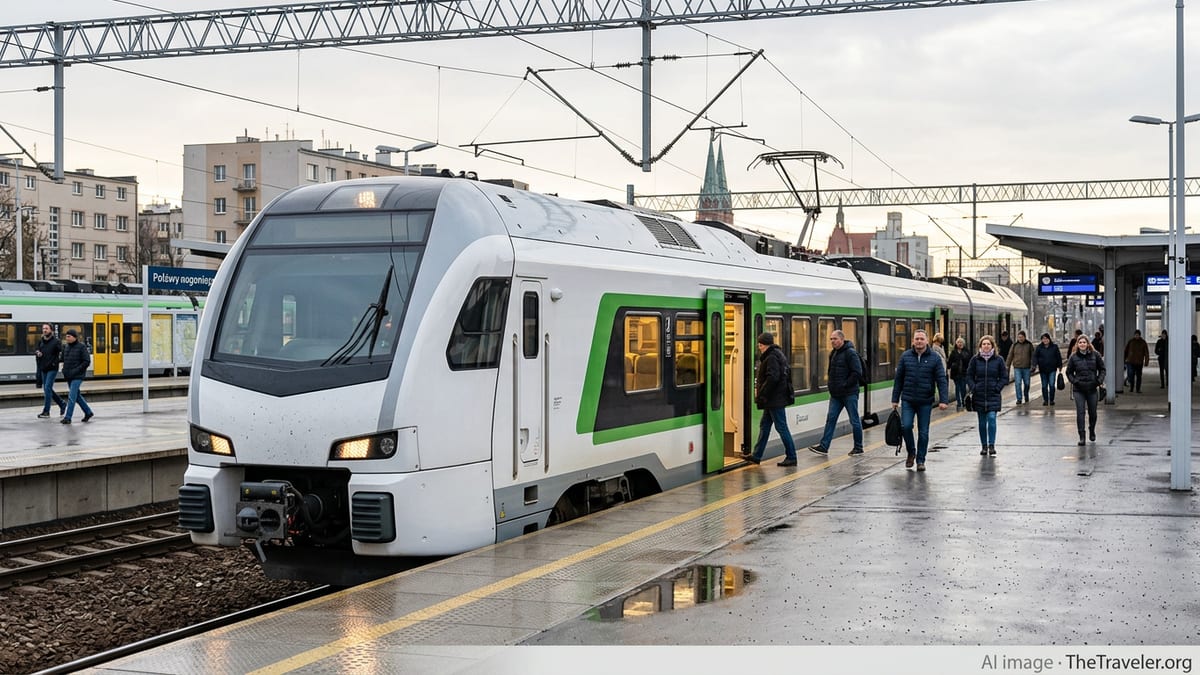
A bespoke fleet for the Vesuvian narrow-gauge network
The new electric multiple units, built by Stadler for Ente Autonomo Volturno (EAV), have been engineered specifically for the 950-millimetre-gauge lines that circle Mount Vesuvius. Publicly available information shows that the order forms part of a broader framework agreement for up to 100 trains, of which 56 are earmarked for the Vesuvian lines.
Reports indicate that the first completed trainset for the Circumvesuviana was delivered to the EAV workshops at San Giovanni a Teduccio in September 2024, after construction at Stadler’s Valencia plant. Subsequent coverage notes that the prototype was unveiled to the public at Napoli Porta Nolana later that year, as test runs and certification procedures intensified.
According to published technical documentation from Stadler, the trains are derived from its family of modular electric units but incorporate a customised bodyshell, cab profile and on-board systems to fit the clearances, curves and platform geometry of the Circumvesuviana. The tailor-made configuration is intended to allow modern standards of comfort and performance on infrastructure that dates back more than a century.
EAV has described the project as a key pillar in a renewal strategy for the Vesuvian lines, alongside new signalling supplied by other contractors and infrastructure improvements across the network. Regional investment plans cited in local coverage refer to a programme worth around one billion euros, aimed at stabilising and then expanding services that are vital to daily commuting and tourism.
Authorisation clears the way for passenger service
For many months after the first train’s arrival in Naples, the new fleet remained in testing, undergoing dynamic trials on the Circumvesuviana and static checks in the depot. Because the lead unit is a unique prototype tailored to the Vesuvian network, certification involved an extended approval process.
In late June 2026, regional news reports highlighted that Stadler had secured the necessary safety authorisation for the first new train, removing the final regulatory obstacle before entry into service. Publicly available statements from EAV at the time indicated that commercial operations could begin shortly thereafter, once driver training and final operational checks had been completed.
The operator’s projections, cited in Italian media, foresee up to a dozen new trains in traffic by the end of 2026, with several dozen more to follow in stages through 2027. The initial units entering service are expected to work the core Circumvesuviana routes between Napoli Porta Nolana and key destinations such as Sorrento, Poggiomarino and Sarno, progressively replacing older rolling stock that has been prone to failures and crowding.
Timetables and deployment plans are being adjusted as more units become available, with the aim of improving reliability on lines that are frequently used by commuters from the Vesuvian municipalities as well as by international visitors heading to archaeological sites and the volcano’s slopes.
Passenger-focused interiors and accessibility upgrades
Technical material on the project indicates that the new Stadler trains place particular emphasis on accessibility and passenger comfort, reflecting both European standards and lessons learned from other regional fleets. The interior layout features wide gangways between cars, low-floor access aligned with existing platforms and dedicated spaces for wheelchairs and strollers.
Climate control is standard across all cars, with air conditioning intended to offer a more consistent environment during the hot summer months, when loadings on the Sorrento and Pompeii corridors peak. Seating has been specified in a modern 2+2 arrangement to balance comfort and capacity, while large windows are designed to enhance views of the Bay of Naples and the volcanic landscape.
Real-time passenger information systems, LED lighting and on-board CCTV bring the trains in line with contemporary suburban standards. Public information released by EAV notes that the design also incorporates energy-efficient traction equipment and regenerative braking, with the goal of reducing electricity consumption on the intensively used routes around Vesuvius.
These features represent a qualitative step up from the older Circumvesuviana fleets, some of which date from the 1970s and 1990s. Travel reports in recent years have frequently highlighted crowded conditions, service disruptions and limited accessibility, making the arrival of the new trains a visible symbol of renewal for both residents and tourists.
Tourism and mobility around Mount Vesuvius
The Circumvesuviana network, operated by EAV, is a crucial transport artery for the eastern metropolitan area of Naples. It links the city centre with a ribbon of towns built on the slopes of Mount Vesuvius, as well as with major archaeological attractions including Pompeii, Herculaneum and Oplontis.
According to background information from transport references and travel guides, the line between Napoli Porta Nolana and Sorrento is particularly important for tourism, serving as the main rail access for visitors heading to Pompeii and onward bus services to the Vesuvius National Park. Seasonal express services, marketed separately from the regular Circumvesuviana trains, have been used to manage peak demand.
The introduction of custom-designed Stadler units is expected to support this role by providing more reliable and comfortable rolling stock on the busiest sections. Improved punctuality and reduced cancellations are seen as essential to restoring confidence among daily passengers and tour operators, following years of complaints about aging trains and infrastructure-related disruptions.
Local and regional planning documents point to an ambition to integrate the renewed Circumvesuviana more closely with other public transport in the Naples area, including metro lines and regional rail. The modernisation of the Vesuvian fleet is therefore framed not only as an upgrade for a single railway, but as part of a broader shift towards more sustainable mobility in one of Italy’s most visited regions.
Delivery timelines and the scale of the investment
Contractual information published by Stadler and EAV shows that the Vesuvian order is being delivered in batches, with the first trains built in Valencia and subsequent units following a standardised production schedule. Earlier statements from the parties outlined a target of having around ten trains in operation within the first full year of service, before ramping up to several dozen trains by the middle of the decade.
Recent updates from regional news outlets suggest that, based on the latest schedule, approximately twelve trains could be active on the Circumvesuviana by the end of 2026, with the wider programme extending deliveries through 2027. As more trains are commissioned, EAV is expected to retire some of its oldest vehicles, easing maintenance pressures and allowing for a more regular interval timetable.
The financial scale of the renewal is significant for a regional railway. Publicly available figures associated with the investment around the Vesuvian lines refer to a total of roughly one billion euros, covering not only rolling stock but also signalling, track renewal and station works. The Stadler trains represent the most visible element of this expenditure, but they are closely linked to less visible digital and infrastructure upgrades intended to support higher standards of safety and reliability.
For travellers heading to and from Mount Vesuvius, the entrance into service of the first custom-designed Stadler units signals the beginning of a transition period. Over the next few years, services on the Circumvesuviana are expected to feel progressively more modern, even as work continues behind the scenes to complete one of southern Italy’s most ambitious rail modernisation efforts.