


More news on this day
New custom-designed Stadler electric trains are beginning to enter passenger service on the Circumvesuviana network skirting Mount Vesuvius, marking a long-awaited modernization of one of southern Italy’s busiest and most scrutinized rail corridors.
Get the latest news straight to your inbox!
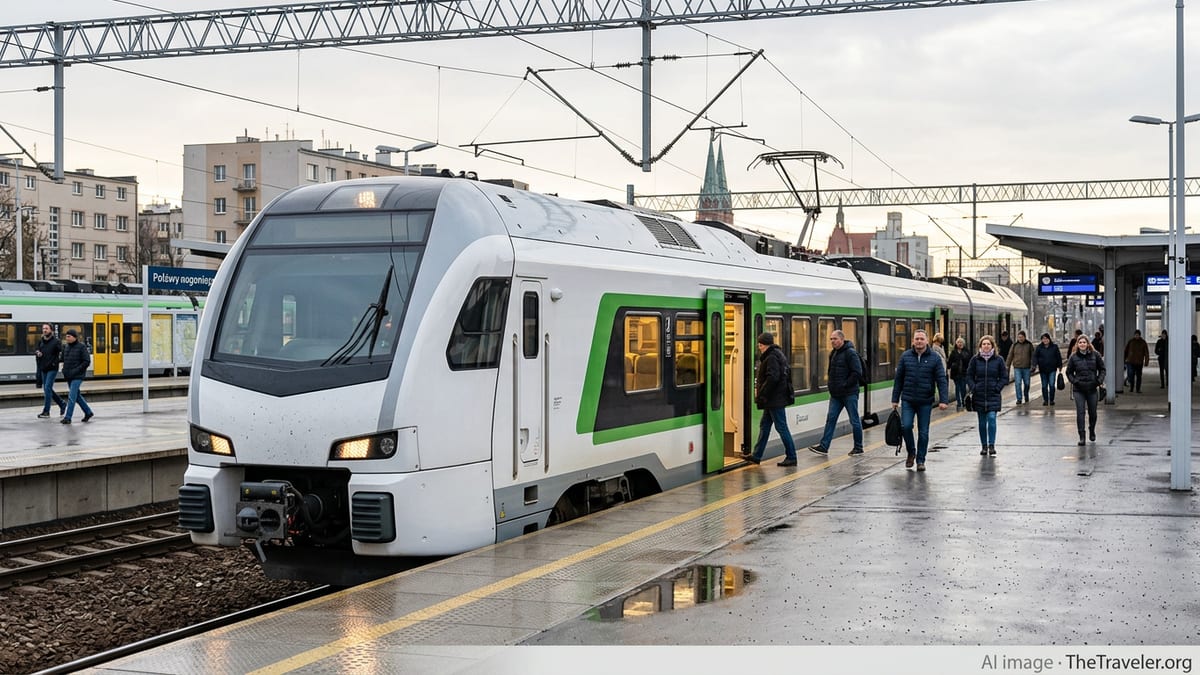
A tailor-made fleet for the Circumvesuviana
The new trains are part of a broader fleet renewal program commissioned by regional operator Ente Autonomo Volturno for the narrow-gauge Circumvesuviana lines that connect Naples with towns and resorts around Mount Vesuvius, including Pompeii, Ercolano and Sorrento. Publicly available contract documentation describes a framework agreement that foresees up to 100 electric multiple units, with an initial batch of 16 trains built by Stadler and customized specifically for the tight curves, short platforms and intense stop-start patterns of the Vesuvian network.
Technical material released by Stadler highlights a 950-millimetre narrow gauge configuration, distributed traction for rapid acceleration, and a continuous low-floor interior to ease movement along the train. Interior layouts are designed to accommodate heavy commuter flows while keeping door areas clear, with wide gangways and large vestibules intended to speed up boarding and alighting at the many closely spaced stations.
Unlike off-the-shelf regional models used elsewhere in Europe, the Vesuvian units incorporate bespoke solutions for clearances, platform heights and signalling interfaces unique to the Circumvesuviana. Industry notes point out that this approach aims to reduce the operational compromises that have historically burdened older rolling stock on the line.
The exterior styling, visible in test runs and delivery images, reflects a modern metro-inspired profile with generous window areas and prominent front-end lighting, a visual break from the angular 1990s-built trains that still dominate much of the fleet.
From factory floor to the shadow of Vesuvius
Construction of the trains has been carried out at Stadler’s facilities, with earlier project updates citing the Valencia plant as a key production site before completed units were transferred to the Naples area for testing and acceptance. Specialist rail media trace the first pre-series delivery to late 2024, followed by additional trainsets arriving at EAV depots through 2025 and early 2026.
Throughout this period, regulatory approval remained a decisive milestone. According to recent coverage from Italian news outlets, Stadler secured the crucial authorization to place the first unit into service in late June 2026, clearing the way for revenue operations on the Circumvesuviana after months of dynamic tests and fine-tuning on non-commercial runs.
Reports of test campaigns on lines such as Nola–Baiano in early 2026 described repeated trial journeys under real operating conditions, with data gathered on braking performance, interaction with existing infrastructure and behaviour in dense peak-hour timetables. These test phases were especially important on a network noted for its demanding gradients and sharp curves around the Vesuvius slopes.
The transition from static tests in depots to full in-service deployment is now under way, with the first routes expected to host the new trains on a limited basis before more units are phased in and diagrams adjusted to exploit their higher performance.
Passenger experience and accessibility upgrades
Passenger-facing improvements are central to the new design. Stadler’s technical brochures describe air-conditioned, walk-through interiors with dedicated areas for passengers with reduced mobility, wide doors and level boarding at compatible platforms. These features are intended to align the Circumvesuviana more closely with contemporary European suburban rail standards, after years in which outdated rolling stock and crowded conditions reinforced a reputation for discomfort.
The open, continuous interior is designed to offer clear sightlines throughout the train, which can support both perceived security and easier distribution of passengers along the cars. Seating mixes longitudinal and transverse arrangements to balance capacity and comfort, while large windows are set to improve visibility of the dramatic landscapes that line the route, from Vesuvius itself to the Bay of Naples.
Information systems form another visible upgrade. Project documents and manufacturer material refer to modern passenger information displays, audio announcements and provision for digital connectivity, features increasingly expected by both local commuters and international visitors headed to archaeological sites at Pompeii and Herculaneum.
Accessibility has been a particular focus, with multi-purpose spaces for wheelchairs, strollers and luggage. Combined with the low-floor layout and carefully positioned grab rails, the trains are intended to reduce barriers for those with reduced mobility, an area where the ageing legacy fleet has frequently been criticised.
Relief for a strained but strategic network
The Circumvesuviana network occupies a pivotal role in regional mobility, carrying large volumes of daily commuters from the Vesuvian towns into Naples while also serving as a primary public-transport gateway to major tourist destinations. Over recent years, local press and passenger groups have repeatedly highlighted overcrowding, service disruptions and mechanical failures on the older trains, underlining the urgency of fleet renewal.
Published analyses emphasize that the new Stadler units are expected to support more frequent, more reliable services, in part through better energy efficiency and higher availability compared with the veteran rolling stock they will gradually replace. Their performance characteristics should also help operators recover more quickly from minor delays, an important consideration on a timetable with dense stopping patterns.
The deployment comes against the backdrop of wider infrastructure works on the Circumvesuviana, including station modernizations and track upgrades on key sections. Taken together, these investments are viewed by transport observers as essential to stabilizing a network that has long struggled to meet demand, particularly in the summer months when visitor numbers spike.
Improving the perception of the Circumvesuviana also carries broader economic implications, as easier rail access to Mount Vesuvius and the surrounding archaeological areas can support more sustainable tourism flows by reducing reliance on private cars and tour buses along already congested roads.
Next steps: scaling up around Mount Vesuvius
While a single train entering service represents a symbolic breakthrough, the real impact will depend on the speed at which additional units are commissioned and integrated into daily operations. Previous planning documents and media reports have mentioned targets for several dozen trains to be delivered by 2026 under the current program, with further options available under the overarching framework agreement.
As more trains clear authorization and enter the timetable, EAV is expected to reconfigure diagrams to concentrate the new fleet on the busiest Vesuvian corridors, including lines to Sorrento and Poggiomarino that serve Pompeii and key interchange points for buses to the Vesuvius National Park. Rail commentators note that this strategy could maximise benefits for both local commuters and international travellers.
The rollout will also be a test of maintenance and support arrangements. Under the contracts described by Stadler, the manufacturer is responsible for full-service maintenance over an initial period, with dedicated facilities and trained staff intended to keep availability high and unplanned downtime low during the critical early years of operation.
For now, the first commercial journeys of the custom-designed Stadler trains around Mount Vesuvius mark a visible shift for one of Italy’s most distinctive regional railways, signalling the start of a new phase in how residents and visitors move through this densely populated and historically significant landscape.