


Standing in front of a Travelex counter at the airport, it can be tempting to buy a prepaid travel card on the spot and feel “sorted” for your trip. The Travelex Money Card is heavily marketed as a safe, simple way to lock in exchange rates before you go. But in 2026, with dozens of no-foreign-transaction-fee credit cards and low-cost multi-currency cards on the market, it is worth asking whether a Travelex Money Card is really the best tool for your travels.
Get the latest updates straight to your inbox!
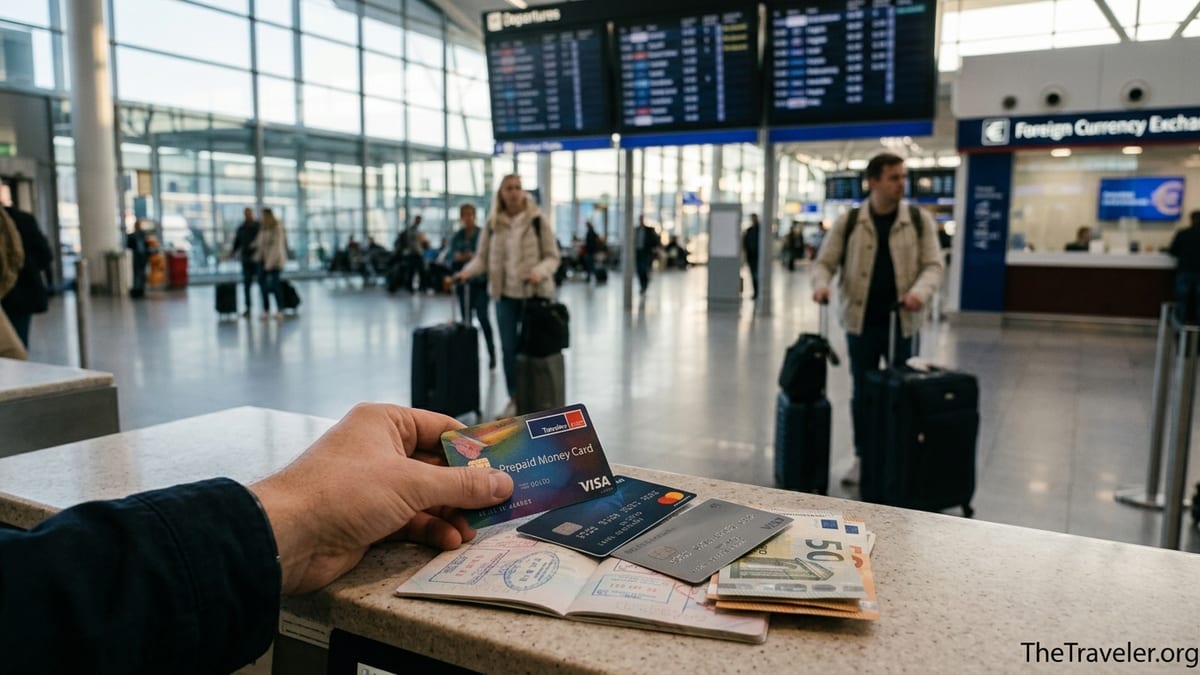
How the Travelex Money Card Works in Practice
The Travelex Money Card is a prepaid Mastercard you load with supported currencies before you travel. You can typically choose from major options such as US dollars, euros, British pounds, Australian dollars and a handful of others depending on where you buy the card. You load money at a Travelex store or online, accept the offered exchange rate, and then spend or withdraw cash abroad like you would with any other card.
In real life, many travelers first meet the Travelex Money Card at an airport kiosk on the way to Europe or Asia. A typical scenario: a US traveler landing in London with no British pounds is offered a Money Card loaded with GBP “at today’s rate” plus a fixed card purchase fee. The rate is fixed, so you will not get a surprise mid-trip, but you pay for that certainty through a markup on the exchange rate and sometimes additional fees buried in the product disclosure documents.
Travelex’s own terms and conditions describe charges such as card issue or replacement fees, ATM withdrawal fees in some regions, and inactivity fees if you leave the card unused for a set period. While the specifics vary by country version of the Travelex Money Card, the underlying model is the same: Travelex makes money by selling currency at a spread above market rates and by charging a menu of fees around card usage.
That does not automatically make the card bad, but it means you need to compare its all-in cost against other ways of paying abroad. When you factor in that many modern travel credit cards in the US now have zero foreign transaction fees and competitive exchange rates, the value proposition of a prepaid product like the Travelex Money Card becomes less straightforward.
Fees, Exchange Rates and the Real Cost of Using Travelex
The biggest cost difference between a Travelex Money Card and a good travel credit card lies in the exchange rate. The Travelex rate you are offered when you load or reload the card is usually less favorable than the mid-market rate you might see on a currency website. The gap, called the spread, is part of Travelex’s revenue. Even a 3 to 5 percent spread can be significant on a long trip where you load several thousand dollars worth of currency.
Consider a traveler from New York loading 1,500 US dollars onto a Travelex Money Card in euros for a two-week Italy trip. If the true mid-market rate is 1 USD to 0.90 EUR, the traveler should receive about 1,350 euros. If Travelex is selling at 0.86 EUR per USD after spreads and fees, the traveler instead gets around 1,290 euros. That 60-euro difference might cover two decent restaurant meals in Rome, purely lost to the exchange markup.
In addition to the rate, you may face ATM usage fees when withdrawing cash overseas. Some versions of the Travelex Money Card include a certain number of “free” withdrawals but then charge a fixed fee for each additional cash withdrawal abroad. On top of that, the local ATM operator in countries such as Thailand or Spain may impose its own fee for using a foreign card. These costs can multiply for travelers who prefer to carry cash and withdraw smaller amounts more frequently for safety reasons.
There are also maintenance-style fees to consider. Product disclosure statements for Travelex Money Card variants in markets like Australia and New Zealand outline inactivity fees if the card goes unused for a defined period, and replacement card fees if you lose it and need a new one sent out. For an occasional traveler who forgets about a leftover balance, these charges quietly chip away at remaining funds over time.
How Modern Travel Credit Cards Compare
In 2026, US-based travelers have access to a wide selection of credit cards with no foreign transaction fees. Guides from outlets such as The Points Guy, Forbes Advisor and Bankrate routinely highlight cards like the Chase Sapphire Preferred, Capital One Venture Rewards, Capital One Venture X, Bank of America Travel Rewards and Wells Fargo Autograph as strong options with zero foreign transaction charges and globally accepted Visa or Mastercard networks.
Take the Chase Sapphire Preferred as a practical example. It charges no foreign transaction fees, runs on the widely accepted Visa network, and typically processes purchases abroad at or very close to the wholesale exchange rate set by Visa. For a 50-euro dinner in Paris, the card will convert that charge to US dollars based on the day’s rate without layering on extra percentage fees. If the card’s effective rate is only a fraction of a percent away from the mid-market rate, your total cost is likely to be lower than if you had first converted dollars to euros via a prepaid card at a higher spread.
Even no-annual-fee cards can compete. The Wells Fargo Autograph, for instance, is highlighted in multiple 2026 roundups for offering no annual fee, no foreign transaction fees, and bonus rewards on travel and dining. A casual traveler who goes abroad once a year could use a card like this for everyday purchases overseas at a low effective FX cost, then keep it in their wallet at home without worrying about paying an ongoing fee for the privilege.
Credit cards also bring built-in benefits that prepaid products rarely match. Many travel-oriented cards provide trip delay or cancellation coverage when you pay for your flights with them, rental car collision damage waivers, and purchase protection on things you buy abroad. If an airline misplaces your baggage in Lisbon or a rental car is damaged in Costa Rica, those benefits can sometimes offset the entire cost difference between a credit card and a prepaid travel card many times over.
Where Travelex Money Card and Other Prepaid Cards Still Make Sense
Despite the cost disadvantages, there are still situations where a Travelex Money Card or similar prepaid product can be useful. One common case is when a traveler cannot qualify for a credit card, either because they have limited credit history, recent financial difficulties or are simply not comfortable using credit. A prepaid card gives access to electronic payments in places where cash is awkward or unsafe, such as hotels that insist on card details for incidentals or car rental counters that want a card on file.
Parents sometimes choose cards like the Travelex Money Card for teenagers studying abroad or on group trips. By loading a defined amount of euros or pounds, a parent can cap a student’s spending and avoid the risk of a large surprise bill. The student can withdraw cash at ATMs and tap to pay at supermarkets in Berlin or Barcelona without carrying large amounts of cash or controlling a full credit line.
Prepaid cards can also help with budgeting for people who tend to overspend on vacation. Imagine a couple planning a two-week Japan trip with a strict budget of 3,000 US dollars for day-to-day expenses. They might load the yen equivalent onto a prepaid card and commit to using only that balance for meals, transport and souvenirs, while keeping their credit card for emergencies only. The psychological impact of watching the prepaid balance decline can keep spending in check more effectively than an open credit limit.
Another niche case is when you want to lock in an exchange rate before traveling to a country whose currency you expect might strengthen. For instance, someone planning a safari in South Africa might choose to preload South African rand months in advance on a prepaid card if they believe the rand is likely to get more expensive relative to the US dollar. This is speculative and far from guaranteed, but for travelers extremely sensitive to currency swings, rate locking is part of the appeal.
Alternatives: Multi-Currency Accounts and Debit Cards
Beyond classic credit cards, a growing number of travelers in 2026 rely on multi-currency accounts and debit cards from providers such as Wise and Revolut, or on bank accounts like Charles Schwab’s investor checking, which rebates many ATM fees worldwide. These tools often combine lower exchange rate margins with flexible funding options and smartphone controls for freezing or replacing cards.
For example, Wise typically lets you hold balances in multiple currencies at close to the mid-market exchange rate and spend directly in those currencies with a Wise debit card. When you buy coffee in Madrid, the transaction is deducted from your euro balance if available, otherwise Wise converts from dollars at transparent, published fees. ATM withdrawals are free up to a limit each month and then incur modest fees. Travelers using this setup often find that their all-in exchange loss is narrower than with traditional prepaid cards.
Similarly, Revolut users can convert dollars to euros or pounds at rates that often track market levels closely during the week, then pay with their card overseas without a separate foreign transaction fee. Some tiers of Revolut charge monthly subscription fees in exchange for wider fee-free ATM limits and travel perks. For frequent travelers, this can offer a middle ground between an expensive premium credit card and a basic prepaid card purchased at an airport kiosk.
Traditional banks are also catching up. Charles Schwab’s checking account is well known among US travelers for reimbursing many ATM fees charged abroad. Pairing such a debit card with a no-foreign-transaction-fee credit card creates a strong toolkit: the credit card for purchases in restaurants, hotels and shops, and the debit card for withdrawing local cash at ATMs with minimal penalty.
Real-World Scenarios: When Each Option Wins
Picture two friends, Maya and Daniel, both heading from Chicago to Paris for a week. Maya, anxious about debt, stops at an airport Travelex counter and loads 1,000 US dollars onto a Travelex Money Card in euros. Daniel, after reading a few travel finance guides, applies before the trip for a no-annual-fee Wells Fargo Autograph card and uses it across the trip. If Travelex’s exchange spread and fees effectively cost Maya about 4 percent on her initial loading, she starts the week with roughly 40 dollars less in spending power. Daniel pays a competitive Visa exchange rate with no added foreign transaction fee and also earns rewards on every euro he spends.
Now consider Sandra, an Australian student heading to Canada for a semester abroad. She does not yet qualify for a premium credit card, but her parents want her to have secure access to funds. They choose a Travelex Money Card, load a few thousand Australian dollars converted to Canadian dollars, and tell her to use it for day-to-day supermarket and transit purchases in Vancouver. Because she is likely to withdraw cash occasionally from ATMs and keep the card active throughout the semester, the relative impact of inactivity fees and card replacement charges is low. For this family, the convenience and spending control of a prepaid card outweigh the higher FX cost.
Finally, imagine a retiree couple from Texas planning a two-month trip through Portugal and Spain on a structured budget. They rely on a combination of a no-foreign-transaction-fee credit card for most restaurant and hotel charges, plus a multi-currency Wise account for ATM withdrawals and smaller expenses in local currency. They consciously skip prepaid products like the Travelex Money Card because they value keeping their exchange costs as close as possible to the mid-market rate, and they are comfortable managing more than one card and app.
The Takeaway
When you compare the Travelex Money Card against modern travel credit cards, multi-currency debit cards and smart bank accounts, it rarely comes out as the cheapest option for travelers who qualify for mainstream financial products. The combination of exchange rate spreads, possible ATM and inactivity fees, and limited ancillary protections make it a convenience product rather than a value leader.
That does not mean you should never use a Travelex Money Card. It can still be a useful solution if you cannot or do not want to use credit, if you are equipping a teenager or student for an overseas trip, or if strict budgeting and rate locking are more important to you than squeezing every last percentage point of value out of your foreign exchange.
Before accepting the first prepaid offer pushed at an airport counter, step back and consider your full toolkit. For many US travelers in 2026, the strongest combination is a no-foreign-transaction-fee credit card paired with a low-fee debit or multi-currency card for ATM withdrawals. A Travelex Money Card may still have a role, but it is now a niche player in a much more competitive landscape.
FAQ
Q1. Is a Travelex Money Card cheaper than using my regular credit card abroad?
In many cases no. If your regular credit card charges a foreign transaction fee of around 3 percent, a Travelex Money Card might look competitive, but many modern travel credit cards now charge zero foreign transaction fees and use more favorable exchange rates. When you compare those no-fee cards to a prepaid product with spreads and extra charges, the credit card often wins on total cost.
Q2. Is the Travelex Money Card safe to use when traveling?
Yes, it is generally safe. It runs on the Mastercard network and includes PIN protection and standard security features. If the card is lost or stolen, your liability for unauthorized transactions is limited if you report it promptly. However, you should still treat it as you would any payment card, keep emergency contact numbers handy and consider carrying a backup card in case of problems.
Q3. Can I withdraw cash from ATMs with a Travelex Money Card?
Yes. You can use the Travelex Money Card to withdraw local currency from ATMs that accept Mastercard. Depending on the version of the card and the country where you bought it, Travelex may charge its own withdrawal fee after a certain number of free transactions, and local ATM operators can add their own surcharges. It is usually cheaper to withdraw larger amounts less frequently while still balancing safety concerns.
Q4. What happens if I come home with money left on my Travelex Money Card?
You can often spend the remaining balance at home where Mastercard is accepted, withdraw it from ATMs in your home currency if allowed, or request a refund subject to any applicable fees. It is important to read your specific card’s terms, because inactivity fees can start reducing a leftover balance if the card is unused for a set period, and some refund processes involve service charges.
Q5. How does a Travelex Money Card compare with a Wise or Revolut card?
Wise and Revolut focus on low, transparent currency conversion fees and mid-market exchange rates, while Travelex typically builds more of its revenue into the spread between its rates and the market rate. Multi-currency accounts from Wise or Revolut also allow you to hold and move money in multiple currencies from a smartphone app. For frequent or cost-conscious travelers, these services often work out cheaper overall than a traditional prepaid travel card, though they may have their own subscription or ATM limits.
Q6. Are there situations where a Travelex Money Card is better than a travel credit card?
Yes. If you cannot qualify for a credit card, want to avoid any possibility of running up debt, or are giving a payment method to a teenager or student with a fixed budget, a prepaid card can make sense. It caps spending at the loaded amount and separates travel money from your main accounts. In these scenarios, the control and simplicity may justify paying a bit more in fees.
Q7. Will using a Travelex Money Card help me build my credit score?
No. Prepaid cards like the Travelex Money Card are generally not reported to credit bureaus, because they are not credit products. They work more like a stored-value wallet. If you want to build credit history, you need a credit card, loan or similar product that is reported to the major bureaus and that you use responsibly.
Q8. What is the best card setup for most US travelers in 2026?
For many travelers, the most efficient setup is a primary credit card with no foreign transaction fees and good travel rewards, plus a low-fee debit or multi-currency card for ATM withdrawals. Cards often recommended in 2026 include options like the Chase Sapphire Preferred, Capital One Venture or Wells Fargo Autograph on the credit side, paired with a bank or fintech debit card that reimburses or minimizes global ATM fees.
Q9. Should I buy a Travelex Money Card at the airport or online before I go?
Buying at the airport is convenient but often comes with the least favorable exchange rates and rush decisions. If you decide a prepaid card is right for you, checking offers online in advance, reading the full fee schedule and comparing against other options is wiser. In many cases, arranging a no-foreign-transaction-fee credit card and a low-cost debit or multi-currency card well before departure will give you better overall value than a last-minute airport purchase.
Q10. How can I quickly tell if a travel card is a good deal?
Look for three things: foreign transaction fees, exchange rate quality and extra charges such as ATM, reload, inactivity or refund fees. A strong travel card in 2026 usually has zero foreign transaction fees, uses near-market exchange rates and keeps the fee schedule short and simple. If a card relies on high spreads and a long list of small-print charges, it is likely designed more for the provider’s benefit than for yours.