


More news on this day
DB Regio is moving to dissolve its subsidiary Regionalverkehre Start Deutschland and absorb its portfolio of regional rail contracts, in a restructuring that will simplify Deutsche Bahn’s group structure while stirring debate over competition in Germany’s already concentrated local rail market.
Get the latest news straight to your inbox!
From challenger brand to full integration
Regionalverkehre Start Deutschland was created as a wholly owned DB Regio subsidiary to compete in tenders for regional passenger services under a separate brand identity. Publicly available company information shows that the unit initially focused on diesel networks and corridors where local authorities were seeking fresh competition after years of contracts with established operators.
Over the past few years, Start Deutschland secured several notable contracts, including services in Saxony Anhalt and parts of Lower Saxony, often taking over routes from private competitors. Industry coverage indicates that awarding bodies saw the company as a way to maintain some distance from the dominant DB Regio brand while still drawing on the resources of the wider Deutsche Bahn group.
In January 2026, however, DB Regio’s management decided to wind down the subsidiary and integrate it directly into the parent company. Corporate registry updates and reporting on the German rail sector describe a step by step merger process, targeting full consolidation of Start Deutschland’s activities into DB Regio’s regional divisions.
The move aligns with a broader simplification drive within Deutsche Bahn, which has been reviewing overlapping structures in its regional business amid pressure to improve punctuality, reliability and cost efficiency.
What happens to existing regional transport contracts
The integration means that DB Regio will take over all of Start Deutschland’s existing regional transport contracts, including service obligations, staffing and rolling stock deployments. Available documentation on past tenders suggests that these contracts typically run for eight to fifteen years and cover substantial annual train kilometre volumes.
Transport associations and regional ordering bodies award such contracts to an operating company, rather than to a brand. Because Start Deutschland has always been a 100 percent DB Regio subsidiary, industry commentary indicates that most contracts can transfer internally as part of an intra group restructuring, provided that service levels, timetables and vehicle standards remain unchanged.
Specialist rail media and discussion in sector forums highlight questions around cases where Start Deutschland has been selected but full operations have not yet begun. In these instances, DB Regio is expected to step in as the contractual operator from day one of revenue service, effectively inheriting obligations that were originally tendered under the Start brand.
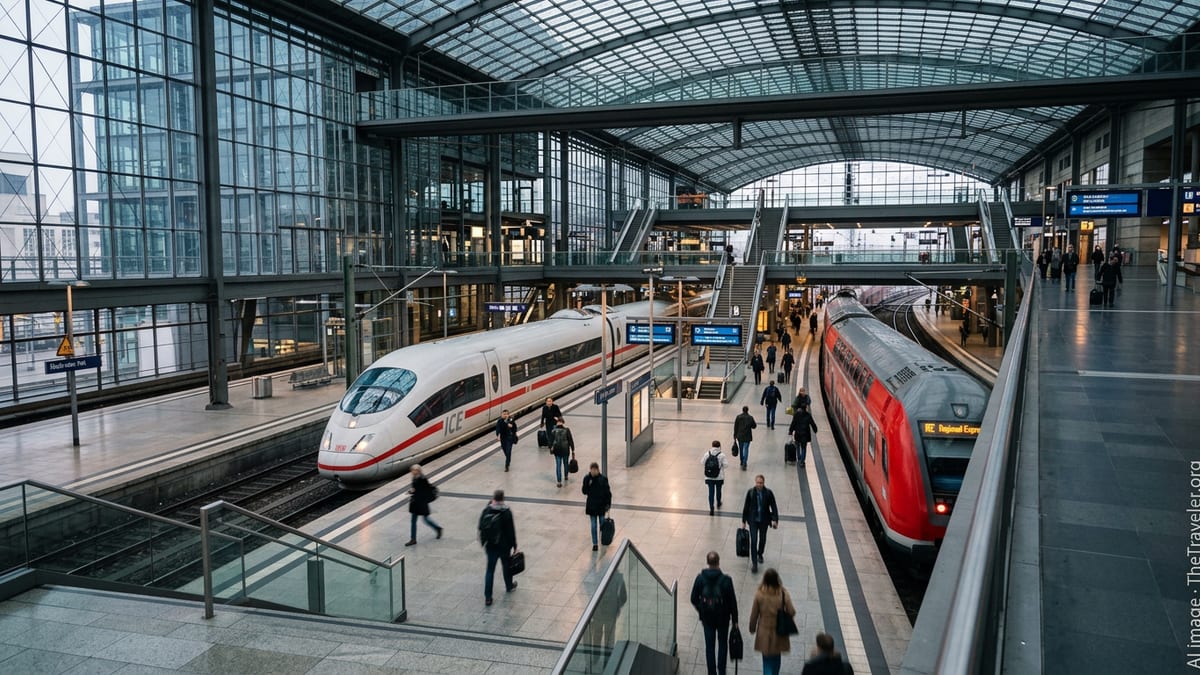
For passengers, the change is likely to be most visible in branding. Reports point to a gradual replacement of Start liveries with the familiar red DB Regio scheme, alongside updates to on board information systems and digital channels that will present services as part of DB’s mainstream regional portfolio.
Implications for market structure and competition
The consolidation of Start Deutschland into DB Regio comes at a time when Germany’s regional passenger rail market remains under scrutiny for its level of competition. Market analyses published in recent years show that DB group companies still account for a substantial share of awarded contract volumes, even as international and independent operators have gained ground in some federal states.
Observers note that Start Deutschland once served as a kind of internal challenger brand within the DB group, positioned to win back routes from private competitors or to present an alternative bid structure to contracting authorities. Folding these activities back into DB Regio could be interpreted as a signal that the group no longer sees value in maintaining separate bidding entities for similar service types.
At the same time, Deutsche Bahn’s most recent financial and interim reports emphasize a growing regional order book for DB Regio, reflecting both renewals and new contract wins. Integrating Start Deutschland’s contracts further enlarges that pipeline, consolidating risk and revenue streams under a single business unit and potentially strengthening DB Regio’s bargaining position in future negotiations over rolling stock and maintenance capacity.
Critics of high market concentration argue that such consolidation may reduce the diversity of bidders in future tenders, especially on medium sized networks where Start Deutschland had been active. Others point out that ordering bodies remain free to design tenders that favor operational performance and innovation, regardless of whether bids come from DB Regio or independent operators.
Operational transition on the ground
On the operational side, the integration process involves harmonizing staffing structures, depots and control centers that previously fell under the Start Deutschland umbrella. Trade publications on the German rail labor market underline that employees are expected to move across to DB Regio with existing protections, given the longstanding ownership link between the two companies.
Rolling stock management is another key element. Many of the networks served by Start Deutschland make use of modern multiple units and refurbished diesel or electric trains that are either owned by regional rolling stock companies or provided by public authorities. Publicly available contract information suggests that these vehicles will remain assigned to the same routes after the merger, with DB Regio taking over maintenance and operational responsibilities within existing frameworks.
Timetable planning and dispatch are also set to be absorbed into DB Regio’s regional organizations. Analysts note that this could unlock some efficiencies, such as better integration of crew diagrams across neighboring networks and more flexible use of spare fleets during disruptions, although it may take several timetable periods before such benefits materialize fully.
For regional transport authorities, the day to day interface shifts from Start Deutschland to DB Regio’s established account management teams. Industry reporting indicates that many of these relationships already existed informally, which may smooth the transition and reduce administrative overhead.
What travelers can expect in the coming years
For passengers using services formerly operated by Start Deutschland, immediate changes are likely to be modest. Reports from previous internal brand consolidations within the DB group suggest that the core offering timetable, stopping patterns and fare structures normally stays the same, especially where services are tightly specified in public service contracts.
Over time, travelers can expect a closer alignment of these routes with the wider DB Regio product. That may include standardized seat reservation policies where applicable, unified real time information in national journey planners and more consistent use of DB’s digital ticketing platforms. Integration into wider regional marketing campaigns could also make it easier for visitors and occasional users to understand network structures in areas where Start Deutschland had developed its own branding.
The restructuring coincides with broader shifts in German regional transport policy, including the ongoing roll out of nationwide tariff products and debates over how best to finance infrastructure upgrades. Analysts of the sector suggest that having a streamlined operator structure at DB Regio could support faster implementation of new service concepts, provided that capacity and workforce challenges are addressed in parallel.
How far the integration will affect competition in upcoming tenders remains an open question. Ordering bodies in several federal states are preparing new procurement rounds in the next few years, and their decisions on contract design and award criteria will help determine whether DB Regio’s enlarged portfolio translates into a stronger long term grip on Germany’s regional rail market or simply marks an internal reorganization within an already complex landscape.