


More news on this day
Rail passengers traveling between Cardiff and Newport faced major disruption after a fire near the railway line forced the temporary suspension and diversion of services on one of South Wales’ busiest commuter corridors.
Get the latest news straight to your inbox!
Trackside Fire Halts Trains on Key South Wales Corridor
Reports indicate that a fire close to the tracks between Cardiff and Newport led to extensive disruption across the South Wales Main Line, affecting both local and long distance services. The incident occurred on a section of route that carries frequent commuter trains as well as intercity services linking South Wales with Bristol, the Midlands and London.
Initial information from public transport alerts suggests that services were halted while the fire was brought under control and safety checks were carried out on nearby railway infrastructure. Trains already on the route experienced significant delays, while later departures were cancelled or re-routed. The disruption quickly spread beyond the immediate Cardiff to Newport section as operators attempted to reposition trains and crew.
The line between the two cities is a critical part of South Wales’ transport network, with frequent services used by daily commuters, leisure travelers and visitors heading to major events in Cardiff’s city center. Even short term closures on this stretch tend to have an outsized impact on the wider timetable, with knock on effects felt on routes toward Swansea, Bristol and beyond.
Although the fire was brought under control within a relatively short timeframe, the need to inspect signalling and power equipment, as well as trackside structures, kept the line partially restricted for several hours. Replacement road transport and diversions via alternative routes were used where possible, but capacity remained limited during the peak of the disruption.
Delays, Cancellations and Diversions for Passengers
Publicly available journey planners and live departure boards showed widespread delays and cancellations on services passing through Cardiff Central and Newport. Some trains were turned back short of their advertised destinations, while others were diverted along slower routes to keep part of the timetable moving.
Great Western Railway and Transport for Wales services bore the brunt of the disruption, with long distance trains between South Wales and London facing extended journey times. Passengers heading east toward Bristol Parkway and the Severn Tunnel reported having to change to alternative services or transfer to road transport at intermediate stations.
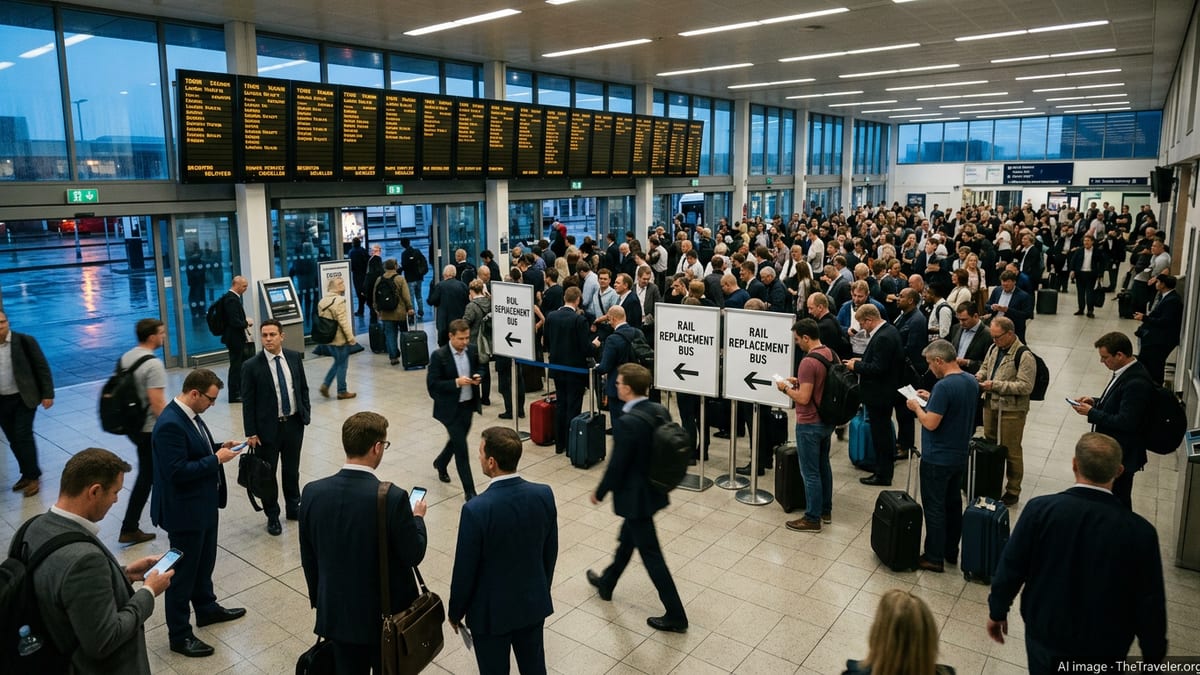
Commuters traveling between Newport and Cardiff, one of the most heavily used flows in Wales, faced crowded replacement buses and revised stopping patterns once limited services resumed. For many regular travelers, the incident added to a perception that the corridor is increasingly vulnerable to disruption from infrastructure issues, severe weather, and capacity constraints.
Travel information platforms advised passengers to check services before setting out and to allow additional time for their journeys. Some ticket acceptance arrangements were put in place, enabling travelers to use different operators or alternative routes during the height of the disruption, although options remained constrained by the large number of trains normally using the line.
Impact on Events, Tourism and Regional Connectivity
The Cardiff to Newport corridor is not only a commuter artery but also a vital link for visitors arriving for sporting fixtures, concerts and conferences in the Welsh capital. The timing of the fire related disruption meant that some travelers heading to and from events faced missed connections, rescheduled plans and longer travel days.
For tourists relying on rail to connect Cardiff with coastal destinations further west, as well as with English cities to the east, the incident highlighted the importance of having backup options, including flexible itineraries and awareness of coach or local bus alternatives. Travel planners often recommend allowing extra time on days with planned engineering work; an unscheduled event such as a trackside fire introduces even more uncertainty into the journey.
Regional business travelers were also affected, particularly those making day trips between Cardiff, Newport and Bristol. With fewer trains running and journey times extended, many faced curtailed meetings or were forced to switch to road travel at short notice. Given that the Cardiff to Newport stretch is relatively short in distance but central to many cross border journeys, even a few hours of closure can significantly affect productivity and scheduling.
South Wales has invested heavily in improving connections with the rest of the United Kingdom, including electrification works and service upgrades. Incidents that temporarily remove capacity from key sections of line underscore the continuing vulnerability of the network to localised failures, whether caused by technical faults, external events or severe weather conditions.
Ongoing Checks and Gradual Restoration of Services
According to published coverage and operator updates, services were restored gradually after the fire, with speed restrictions and altered stopping patterns in place while engineers assessed the condition of signalling, power supply equipment and trackside structures. Rail operators typically proceed cautiously after such incidents to ensure that there is no hidden damage that could compromise safety.
Passengers were advised that residual delays could continue even after the main line reopened, due to trains and crew being out of position and the need to rebalance the timetable. Experience from previous incidents on the South Wales Main Line suggests that it can take several hours, and occasionally most of a day, for services to return to normal patterns once a major blockage has cleared.
Infrastructure managers are expected to review the incident, focusing on how quickly the fire was detected, how communication with train operators and passengers was handled, and whether any further mitigation is needed around the affected section of track. Such reviews often inform future contingency plans, including where to position replacement buses and how best to prioritise which services are reinstated first.
In the short term, travelers between Cardiff and Newport are encouraged to continue checking the latest journey information before departure, as timetables may be subject to short notice changes. For those planning trips involving onward connections to other parts of Wales or England, allowing extra time and considering earlier departures remains a prudent strategy until the service pattern fully stabilises.
What Travelers Should Know for Upcoming Journeys
For visitors and regular passengers alike, recent disruption between Cardiff and Newport is a reminder that contingency planning is an essential part of rail travel on busy main lines. When booking tickets, travelers may wish to opt for more flexible fares where possible, enabling changes if a sudden incident affects the network on the day of travel.
Checking real time information from operators and national journey planners shortly before setting out can help travelers spot emerging issues and adjust routes early, whether by choosing a different departure, diverting via another station, or switching to road based options. Those heading to time critical events or flights may also want to build extra margin into their schedules when traveling along this corridor.
Local tourism bodies and accommodation providers in South Wales often advise guests to consider alternative routes, including connections via Bristol or different stations in the Cardiff area, during periods of major rail disruption. Keeping contact details for hotels, tour operators and ticket retailers close to hand can make rearranging plans easier if trains are cancelled at short notice.
While the fire near the tracks between Cardiff and Newport appears to have been contained within a limited area, the scale of disruption it caused underlines the importance of resilient infrastructure and clear passenger information. For one of Wales’ most important rail corridors, continued attention to both is likely to remain a priority as travel demand grows.