


More news on this day
Operations at Manchester Airport were heavily disrupted on 3 August, with widespread reports indicating that departures and arrivals were subject to mass cancellations and significant delays, leaving thousands of passengers facing long waits, missed connections and rerouted journeys across the UK and Europe.
Get the latest news straight to your inbox!
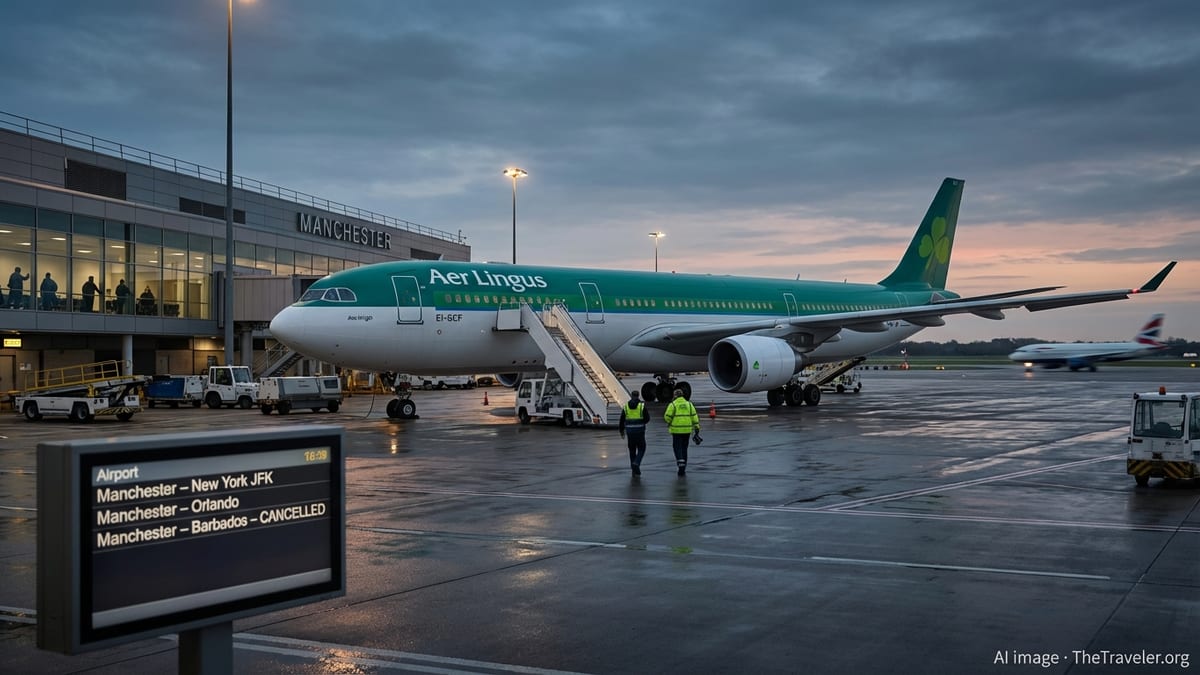
Widespread Cancellations and Long Delays Reported
Publicly available flight-tracking information and media coverage on 3 August indicate that Manchester Airport faced severe operational disruption, with a large proportion of scheduled departures either cancelled outright or subject to extended delays. Passengers reported waiting for hours in terminals as airlines attempted to reorganise schedules and secure new departure slots.
The disruption affected both short haul and long haul services, impacting flights to European hubs as well as popular holiday destinations. In a number of cases, aircraft that were due to depart from Manchester were instead rerouted to other UK airports, while some inbound flights diverted rather than land into the affected operation.
Although some services were able to operate, overall capacity through the airport remained significantly reduced for much of the day. Travellers were frequently advised through airline channels to check the latest status of their flight before heading to the airport, reflecting the scale and fluid nature of the disruption.
The situation drew comparisons to previous episodes of disruption at Manchester Airport, including earlier incidents in which power and technical issues led to widespread cancellations and long queues. For many passengers, the 3 August problems reinforced concerns about the resilience of one of the UK’s busiest aviation hubs.
Operational Issues Echo Earlier Power Cut Chaos
Recent history at Manchester Airport provides important context for the events of 3 August. In June 2024, a major power cut led to the cancellation of all flights from two of the airport’s three terminals, with reports describing long queues, baggage system failures and significant delays that continued into the following day. Although the causes of the 3 August disruption are distinct in timing, the operational pattern of cancellations, diversions and lengthy waits has clear similarities.
In that earlier incident, publicly available statements and media reports described how a failure affecting power and key systems forced the airport to advise passengers not to travel to certain terminals until further notice. Airlines rearranged services where possible and diverted inbound flights to other UK airports when capacity at Manchester was severely reduced. Those measures left many travellers stranded or separated from their baggage while operators worked through the backlog.
On 3 August, passengers again encountered long check in lines, crowded departure areas and departure boards heavily populated with delay and cancellation notices. While each disruption has its own operational causes, the repeated experience of large scale interruption has kept Manchester Airport in the spotlight for reliability and customer experience.
Observers note that a combination of high passenger volumes, infrastructure constraints and the complexity of airline schedules can leave major airports vulnerable when key systems or processes are interrupted. When such issues arise, recovery can take many hours, even after the initial trigger has been resolved.
Passengers Face Missed Holidays, Rerouting and Extra Costs
The disruption on 3 August translated directly into missed holidays, broken connections and unexpected expenses for passengers departing from and arriving into Manchester. Travellers reported abandoned weekend breaks, disrupted family visits and missed onward flights where connections through other European hubs became unworkable once the initial Manchester departure was delayed or cancelled.
In some cases, passengers whose flights were cancelled were offered alternative departures later in the day or on subsequent days, subject to seat availability. For others, rerouting via different UK or European airports became the only immediate option. Such changes can require additional ground transport, overnight accommodation or new bookings for rail and coach services, all of which add cost and complexity to journeys.
Families travelling with young children and those heading to time sensitive events, such as weddings or cruises, were among those most severely affected. With school holidays in full swing, the timing of the disruption added to the pressure on both passengers and airlines, as spare seats on alternative services were already in high demand.
Consumer advice organisations typically recommend that affected travellers keep records of boarding passes, booking confirmations and receipts for reasonable additional expenses when flights are heavily delayed or cancelled. Depending on the cause of the disruption and the applicable regulations, some passengers may later be able to pursue compensation or reimbursement through airlines or travel insurers.
Guidance for Travellers Using Manchester Airport
Following a day of disruption on 3 August, travel experts recommend that anyone due to fly from Manchester in the coming days pays close attention to guidance issued by their airline. Even after the most acute phase of an incident passes, schedules can remain fragile as carriers reposition aircraft and crew, and work through any residual backlog.
Checking in online as early as permitted, arriving at the terminal within the recommended pre departure window and travelling with carry on luggage where practical can all help reduce the impact of any further disruption. Experience from previous events at Manchester shows that baggage systems and security can quickly become bottlenecks when operations are under strain, and passengers with only cabin bags are sometimes able to move more quickly through the airport.
Travellers are also encouraged to monitor broader transport conditions in and around the airport. On days of significant disruption, local roads, nearby rail services and car parks can become congested as departure and arrival patterns shift. Allowing extra journey time to reach the terminal and staying alert to updates through airline and transport operators can help mitigate the risk of missing any rescheduled flight.
While Manchester Airport continues to invest in infrastructure upgrades and operational improvements, repeated episodes of large scale disruption highlight the importance for passengers of planning ahead and understanding their rights. For now, the events of 3 August serve as another reminder that even major airports can face sudden and severe interruptions, with consequences felt far beyond the terminal buildings.