


More news on this day
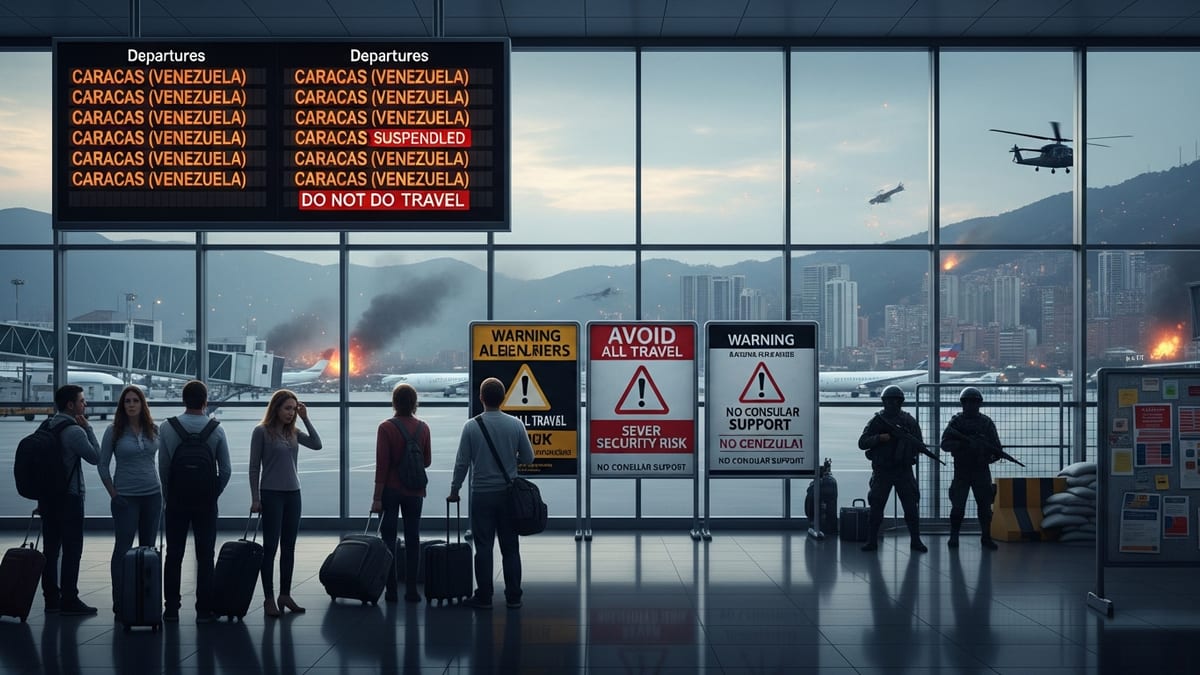
Deadly security risks linked to escalating regional tensions have prompted the United States to update travel advisories for 13 countries across the Middle East, with officials flagging heightened dangers of armed attacks, kidnapping and rapid security deterioration for travelers.
Get the latest news straight to your inbox!
Advisories updated after surge in Houthi-linked attacks
According to recent coverage of the changes, the United States revised the advisories on October 23, 2026, after a series of attacks and attempted strikes attributed to Houthi forces based in Yemen. Reports indicate that these incidents targeted commercial and strategic interests in the Red Sea region and nearby airspace, raising wider concerns about spillover risks for civilians and international visitors.
The 13 affected countries lie along or near key air and sea corridors used by travelers transiting between Europe, Asia and Africa. Publicly available information shows that the updated notices warn of potential armed attacks, indirect fire, and missile or drone activity in areas where Houthi capabilities could reach, even beyond Yemen’s borders.
While individual risk levels vary by country, the coordinated timing of the advisory updates underscores how quickly regional security conditions can shift. The move does not necessarily mean new conflicts in each of the 13 states, but it reflects a higher regional threat environment in which localized violence, proxy activity or cross border strikes may occur with limited warning.
Travelers are being urged in open sources to pay close attention to route planning, particularly when flights, cruises or overland journeys pass near the Bab el Mandeb Strait, the Gulf of Aden or adjoining coastal areas, where the risk of disruption and security incidents has increased in recent months.
Which countries are affected and what is changing
Coverage of the advisory updates indicates that the 13 countries are concentrated in the broader Middle East and adjacent regions that could be affected by Houthi operations or related tensions involving Iran and its partners. In many cases, the overall numeric advisory levels, such as Level 3 or Level 4 on the four point scale used by the United States, remained the same, but the underlying text was revised to emphasize new or intensified threats.
Publicly available information from the State Department’s advisory system notes that Level 4 is reserved for locations where travelers face a higher chance of life threatening dangers, while Level 3 urges people to reconsider nonessential travel. Level 2 points to a heightened risk environment that still permits travel with extra caution, and Level 1 is the lowest level for routine precautions.
In the latest changes, several of the 13 countries already carried Level 3 or Level 4 ratings due to ongoing conflict, terrorism or civil unrest. The revised language now adds specific references to armed attacks linked to regional tensions, kidnapping or hostage taking, and the possibility of swift escalations that could disrupt transportation or lead to temporary closures of borders and airports.
Travelers who had already booked itineraries to or through these countries are being advised in public guidance to check whether their airline or tour operator has altered schedules, re routed flights or added security related conditions. Insurance providers may also adjust coverage based on the new wording, particularly where policies exclude travel to Level 4 destinations.
Kidnapping, wrongful detention and terrorism highlighted
The advisory framework used by the United States attaches lettered risk indicators to each country notice, such as C for crime, T for terrorism, U for civil unrest, K for kidnapping or hostage taking, and D for wrongful detention. Safety documents published by the government explain that these codes are intended to show the predominant security concerns at a glance.
Recent media reports on the October 2026 changes emphasize that kidnapping and hostage taking risks have become more prominent across several of the 13 countries. In some locations, criminal networks and armed groups have previously targeted foreign nationals for ransom or political leverage, raising concerns that further instability could increase opportunities for such activity.
At the same time, coverage of policy statements related to China and other destinations shows that wrongful detention and state led restrictions on movement are a growing focus in travel guidance. Travelers are being reminded that in certain countries, exit bans, opaque legal procedures and intensive electronic surveillance can affect visitors as well as residents, even when they believe they have complied with local laws.
The terrorism indicator remains central in many of the updated Middle East advisories, reflecting both organized groups and smaller cells capable of striking hotels, transportation hubs, religious sites and public gatherings. Analysts cited in open reporting note that high profile attacks outside traditional conflict zones can have an outsized effect on tourism by prompting airlines and cruise lines to reassess risk.
Knock on effects for Kenya, China and global travel flows
The wave of Middle East updates follows separate changes for other regions that illustrate how diverse security concerns are reshaping global travel patterns. In the week before the 13 country revisions, Kenya’s advisory was raised from Level 2 to Level 3, according to recent coverage, citing a combination of crime, civil unrest, health concerns, kidnapping and terrorism.
The Kenya update is significant because the country is a major gateway for East African tourism, including safaris and beach destinations along the Indian Ocean. Travel industry reporting notes that higher advisory levels can influence booking decisions, group tour planning and corporate travel approvals, even when popular tourist areas remain far from hotspots of unrest.
Meanwhile, advisories related to China continue to draw attention from travelers and businesses. Publicly available notices warn of the possibility of wrongful detention, extensive electronic monitoring and restrictions that may prevent individuals from leaving the country in some circumstances. These concerns intersect with broader geopolitical and economic tensions, which can add layers of uncertainty for visitors.
Taken together, the recent updates for the Middle East, Kenya and China reflect a wider trend in which security, legal and technological risks are now central factors in international trip planning. Industry analysts writing in outlets such as Fox affiliates and regional media describe a more complex risk landscape in which incidents in one part of the world can quickly prompt advisory changes across multiple regions.
What travelers can do before and during a trip
Government travel advisories are not binding bans, and many travelers continue to visit countries with Level 2 or higher notices. However, information provided through official channels and secondary aggregators stresses that trips to regions flagged for terrorism, kidnapping or active conflict require careful preparation and constant attention to local developments.
Prospective visitors are encouraged in public guidance to review the full text of the most recent advisory for each country, rather than relying solely on the numeric level. The detailed sections often explain which regions face the greatest danger, where travel might still be feasible, and what specific tactics criminals or armed groups have used in recent incidents.
Recent documents outlining the advisory system also highlight the value of enrolling in alert programs that push security updates directly to travelers, as well as sharing itineraries with trusted contacts at home. Travelers are often advised to maintain flexible plans that allow for rapid changes to routes or departure dates if local conditions deteriorate.
For those considering travel to any of the 13 Middle Eastern countries affected by the latest advisories, published information suggests weighing the purpose of the trip against the potential for rapid escalation, restricted movement or limited consular support during a crisis. In many cases, travelers and organizations are reassessing whether nonessential journeys can be postponed, rerouted through lower risk hubs or replaced with remote alternatives.