


More news on this day
A collision between two London-bound passenger trains near Bedford in central England has killed at least one person and injured dozens more, according to early reports from the scene and rail operators, in one of the most serious rail incidents in the United Kingdom in recent years.
Get the latest news straight to your inbox!
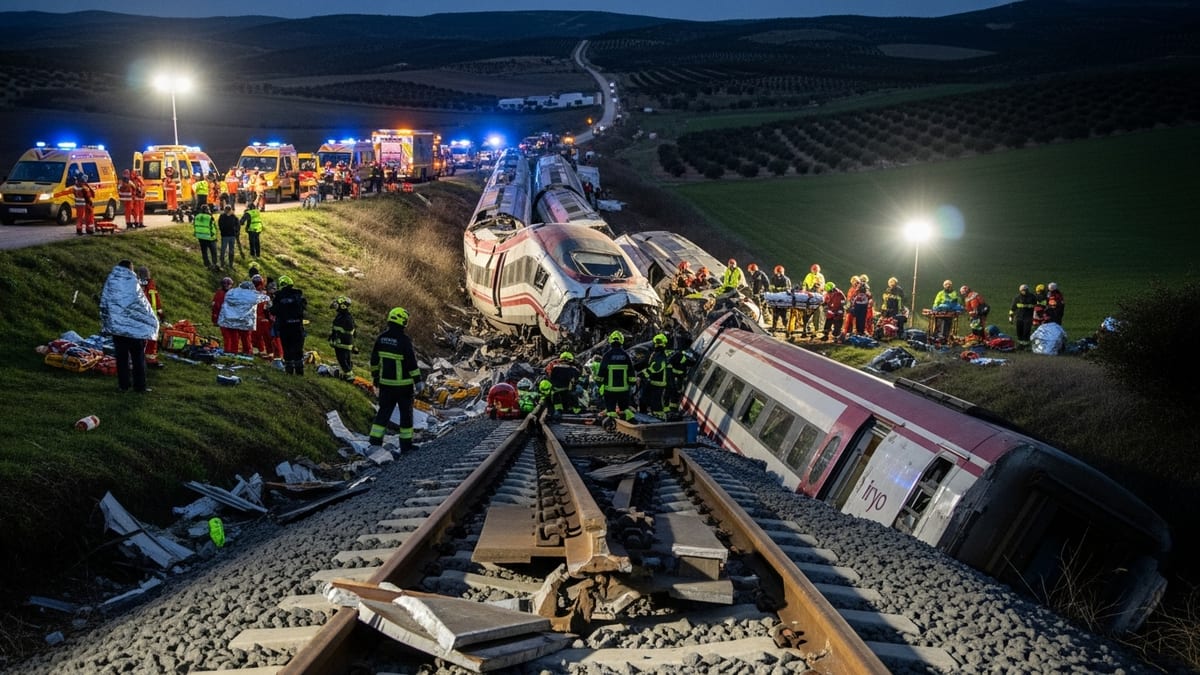
Collision on Busy London Commuter Route
Initial information compiled from publicly available coverage indicates that the crash occurred on Friday, June 19, 2026, on a main line north of London, near the town of Bedford. Both trains were traveling toward London St Pancras International, a major hub for commuters, regional services and international connections to continental Europe.
Reports describe the incident as a rear-end collision between two East Midlands Railway services on the same southbound route. One train had departed Corby for London, while the other had set off from Nottingham toward the capital. Rail tracking data cited in news coverage suggests the collision happened in the late afternoon, at a time when many travelers were heading into or across the city.
Images shared by passengers and local media show multiple carriages at a standstill beside a rural stretch of track, with emergency vehicles lining an adjacent road. Some passengers appear to have exited onto the trackside and surrounding fields as responders worked to assess injuries and stabilize the trains.
Early accounts from those on board describe a sudden impact with no obvious warning, followed by smoke, debris and scenes of confusion as people attempted to help one another and make their way to safety.
Casualties and Emergency Response
Publicly reported figures emerging on Friday evening indicate that at least one person has died in the collision, believed to be the driver of one of the trains. Dozens of passengers and crew members have been reported injured, including a significant number with serious or very serious trauma.
Ambulance services covering the East of England deployed a large response, including road ambulances, specialist hazardous incident teams and at least one air ambulance. Published updates reference a structured triage effort, with the most seriously injured transported rapidly to hospitals in the region and in London, while those with minor injuries were treated at the scene or taken to local facilities for further evaluation.
Descriptions from passengers cited in news reports refer to broken limbs, head wounds and people briefly unable to speak or move immediately after the impact. Others described being thrown forward into seats or tables in front of them as the trains suddenly decelerated.
Local authorities activated a major incident plan, which coordinated the work of police, fire and ambulance services, as well as rail staff managing evacuations along the tracks. The surrounding area, including nearby roads, was closed to routine traffic to allow free movement for emergency vehicles.
Severe Disruption for Rail Travelers
The collision has caused significant disruption along a critical route that connects London with the East Midlands and parts of northern England. East Midlands Railway announced the suspension of many services into and out of London St Pancras on Friday evening, with cancellations and diversions affecting both intercity and regional trains.
Rail operators have advised passengers to check live service information before traveling, warning that disruption is likely to continue into the weekend while the site is secured and investigators carry out their work. Replacement road transport is being arranged on some sections, but limited road capacity near the crash location is complicating contingency plans.
For domestic and international travelers who rely on St Pancras as a gateway to airports or to Eurostar services, the incident has prompted missed connections and rebooked journeys. Travel industry observers note that the accident comes at a busy time for leisure and business travel, with summer trips underway and weekend events scheduled across London and the Midlands.
Hotels in the region and in central London are expected to see a short-term uptick in unexpected overnight stays as stranded passengers arrange alternative connections.
Early Focus on Safety Systems and Signaling
While it is too early for definitive conclusions about the cause, rail specialists and transport correspondents are already drawing attention to signalling systems, train protection technology and operational procedures on the affected route. Modern British mainline railways are equipped with multiple layers of safety intended to prevent precisely this type of rear-end collision.
Commentary in national and regional outlets notes that serious train-to-train collisions within the United Kingdom remain rare events, particularly on intensively used electrified main lines. Previous high-profile incidents have often led to wide-ranging reviews of signalling, driver training and infrastructure maintenance, resulting in steady improvements over recent decades.
Analysts observing the Bedford collision are likely to examine whether any temporary speed restrictions, engineering works or degraded signalling modes were in place at the time, and how effectively onboard safety systems responded. The performance of carriage structures, crumple zones and interior fittings will also be scrutinized to understand how injuries were sustained and how many lives may have been saved by modern crashworthiness standards.
For everyday rail users and industry workers alike, the incident is expected to reignite conversation about the balance between dense timetabling on busy lines and the operational margins needed to maintain robust safety under pressure.
Implications for UK Rail Travelers and Tourism
For travelers, the Bedford collision is a stark reminder that while rail remains one of the safest forms of transport in the United Kingdom, rare but serious incidents can still occur. The main line affected is a key artery not only for daily commuters but also for visitors accessing historic cities, countryside destinations and onward links to airports and international rail.
Tourism bodies and travel companies will be monitoring public reaction closely, particularly among overseas visitors who may be seeing dramatic images of the crash site without the wider context of the network’s overall safety record. Industry voices typically respond to such events by emphasizing the rarity of major collisions compared with the very high volume of daily journeys completed without incident.
In the short term, those planning trips that involve London St Pancras, Bedford, Nottingham, Corby and intermediate stations are being encouraged by travel operators to build in additional time, retain flexibility on departure days and stay alert to timetable changes. Some travelers may temporarily opt for alternative routes or modes of transport while the line is fully inspected and repairs completed.
Looking ahead, the findings of the eventual safety investigation are expected to influence infrastructure investment, operational rules and potentially the design of future rolling stock. For the many people who rely on this corridor every day, attention will remain focused on when full services can safely resume and how any lessons from the tragedy are translated into further protections across the UK rail network.