


More news on this day
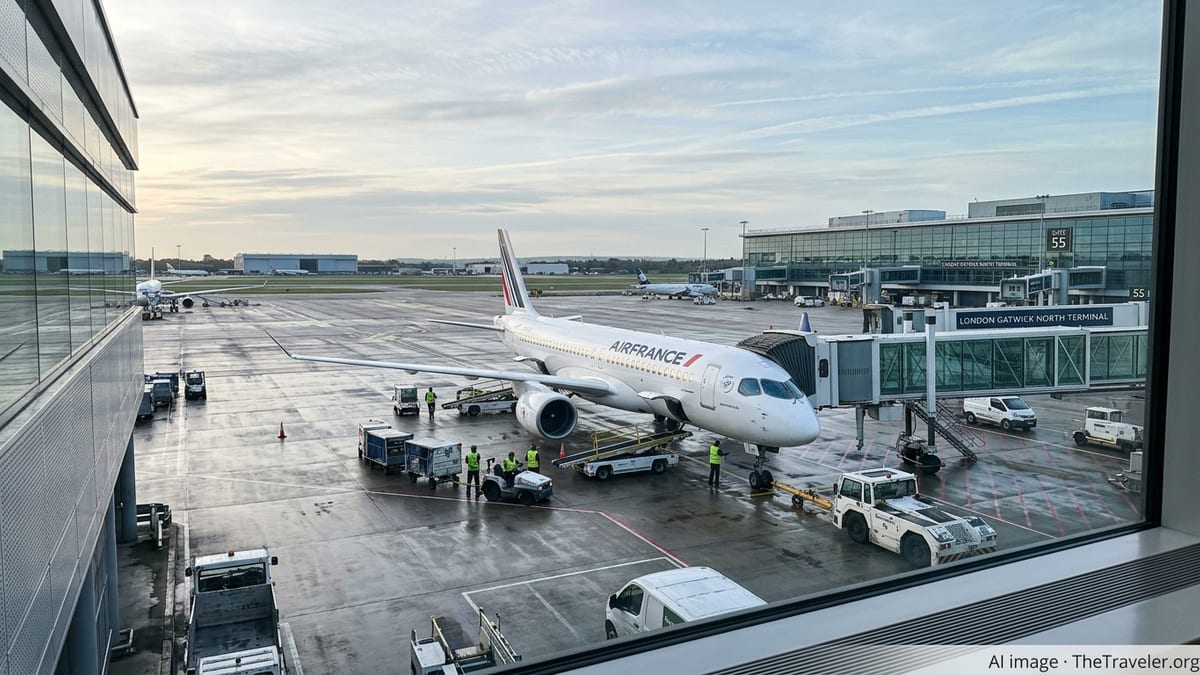
London Gatwick is seeing a mixed picture of punctuality this Sunday, June 7, with scattered flight delays, a small number of cancellations and wider transport disruptions affecting how smoothly passengers move through one of the United Kingdom’s busiest airports.
Get the latest news straight to your inbox!
Flight operations: a patchy but functioning schedule
Publicly available live departure and arrival boards for London Gatwick on Sunday indicate that most flights are operating, but with noticeable pockets of disruption. Morning and early afternoon services show clusters of departures running behind schedule, particularly on some short-haul European routes where turnaround times are tight at the start of the busy summer season.
Arrivals into Gatwick display a similar pattern, with many flights landing close to scheduled times but others reporting delays that appear to stem from upstream congestion at other European hubs. These knock-on effects follow a broader weekend of strain across parts of the transatlantic and European network, where earlier delays have continued to ripple forward into Sunday schedules.
Despite these issues, flight boards do not suggest a systemic shutdown or mass wave of cancellations at Gatwick today. Instead, the picture resembles a typical high-traffic summer Sunday, with airlines working within constrained capacity and reacting to weather, air traffic flow restrictions and operational challenges elsewhere in the network.
For passengers, the practical effect is that many flights are still running, but departure and arrival times may be less predictable than timetables suggest, and individual services can be subject to late changes at relatively short notice.
Weather conditions and their impact on punctuality
Weather around Gatwick on Sunday is relatively benign compared with more severe conditions that have affected southern England at other points this season. Forecasts for the Gatwick area point to temperatures in the high teens Celsius and only light to moderate rainfall, without the kind of sustained high winds or thunderstorms that typically cause large-scale suspensions or runway constraints.
However, forecasts and recent national weather coverage highlight unsettled patterns across the wider south of England, including warnings of stronger winds and bouts of heavier rain in some coastal and western areas. These broader conditions can translate into more conservative air traffic control spacing and occasional holding for aircraft arriving into London’s airspace, causing modest but cumulative delays over the course of the day.
London Gatwick’s own planning documents and performance reports underline how sensitive the airport is to weather events, with wind and visibility identified as key factors that can quickly reduce operating capacity. While those thresholds do not appear to be fully tested on Sunday, slight changes in wind direction, cloud base and showers can still nudge schedules away from ideal timings.
The result is that passengers may encounter flights that are technically operating but leave later or arrive later than expected, as airlines and controllers work within the day’s shifting weather envelope.
Rail engineering works intensify access problems
Even where flights are operating relatively normally, getting to and from Gatwick is more complicated than usual today. National Rail and regional travel update services report significant engineering work on Sunday, June 7, affecting lines between Guildford, Reigate, Redhill and Gatwick Airport. Trains on these sections are replaced by buses for parts of the day, disrupting direct rail links that many passengers rely on.
According to these rail updates, Great Western Railway services between Reading and Redhill or Gatwick Airport are being substituted with buses on some stretches, while Southern services between Reigate and London Victoria are also affected by replacement road transport. Passengers travelling via Redhill, Reigate or Guildford must factor in extra time and at least one additional change, with some buses running instead of through trains that would normally serve Gatwick directly.
These planned works come on top of recent rail reliability issues in southern England, where a technical fault on the rail radio system earlier in May led to heavy delays and cancellations across operators including Gatwick Express and other routes serving the airport. While that specific incident has been resolved, it has underscored the vulnerability of the airport’s rail links when infrastructure is constrained.
On Sunday, the engineering schedule is clearly signposted in advance, but the practical effect remains longer journey times, busier trains on alternative routes and more uncertainty for travellers connecting between rail and air. Those relying on tight rail-to-flight connections are particularly exposed to minor timetable slippage.
Passenger experience and what today’s disruption means
For passengers at Gatwick today, the combination of scattered flight delays and disrupted rail access translates into a more stressful experience than timetables alone might suggest. Travellers arriving at the airport from the affected rail corridors are likely to encounter longer overall journey times and less predictable connections, especially if replacement buses encounter congestion on local roads.
Inside the terminals, Gatwick’s own performance reports from earlier in the year show that the airport has been working to keep the majority of flights within punctuality targets, but that high utilisation of runway slots leaves limited room to recover once delays start to build. That pattern appears to be reflected today: the airport is functioning, but the schedule is tight, and recovery from even minor disruption can take time.
Passengers with later departures on Sunday may find that earlier delays either compress turnaround windows or lead airlines to adjust schedules further into the day. Those transiting through Gatwick on separate tickets, or relying on narrow connection margins to continue their journey by rail or air, are the most at risk of missed links when the system is under this kind of strain.
Travel advisers and public information platforms generally recommend allowing generous buffers on days like this, particularly where journeys involve multiple operators or modes. The situation at Gatwick today reinforces that guidance, as rail engineering, unsettled weather and a busy summer flight schedule combine to leave little slack in the system.
Looking ahead to the rest of Sunday
By early Sunday, reports show that London Gatwick has avoided the kind of full-scale operational crisis seen during previous episodes of extreme weather, airspace restrictions or technical failures. The airport’s single-runway operation remains in use, and airlines continue to move large numbers of passengers through both terminals, albeit with more variability in timings than travellers might ideally expect.
The extent of further disruption over the rest of the day will depend on how quickly airlines can recover from inbound delays and how smoothly ground handling processes run as traffic peaks and then tapers off into the evening. The ongoing engineering work on the rail network will continue to shape how easily passengers can reach the airport, especially from Surrey and the broader south-western rail catchment.
Travellers still to fly on Sunday are being encouraged, through airline and transport operator channels, to check the latest status of both flights and ground transport before setting out. With conditions changing hour by hour, the picture can improve or worsen quickly, and same-day information remains the best guide to whether an individual journey will be unaffected, slightly delayed or significantly disrupted.
For now, London Gatwick’s experience on Sunday, June 7, illustrates how even moderate weather, planned rail work and residual knock-on effects from the wider European network can combine to create a challenging day for passengers, without pushing the airport into outright shutdown.