


More news on this day
London Gatwick is experiencing scattered disruption on Friday, May 22, with live tracking data showing modest delays across several early departures and a limited number of flight cancellations on busy short haul routes.
Get the latest news straight to your inbox!
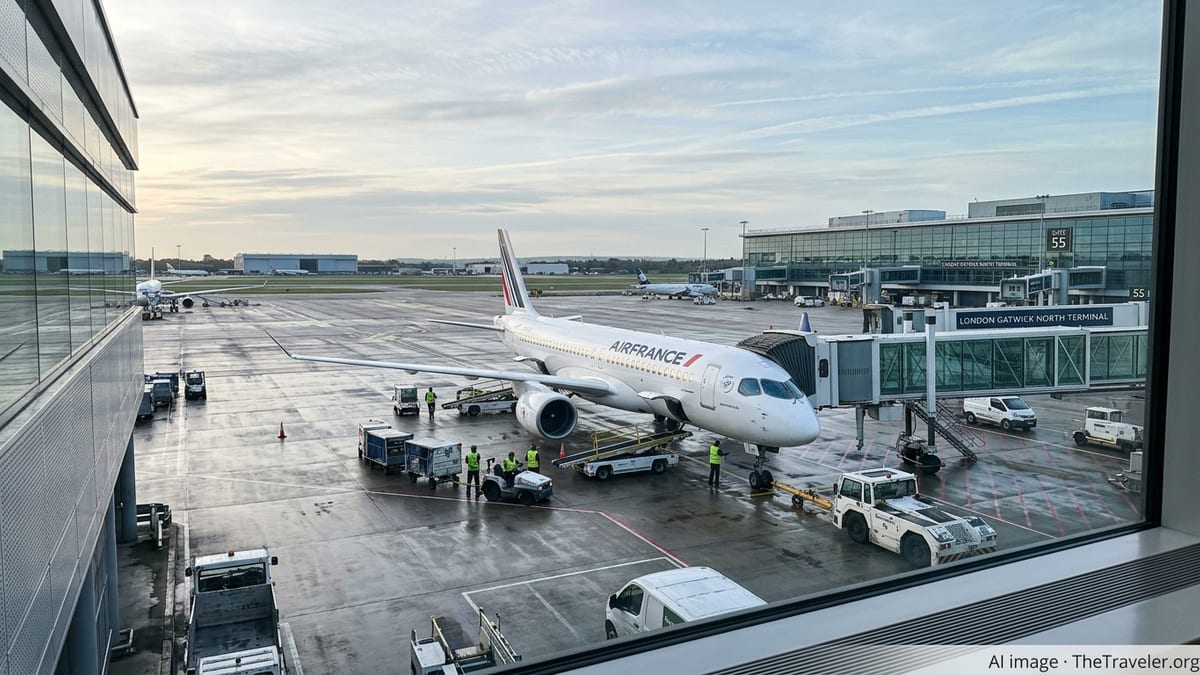
Overall picture of operations at Gatwick
Publicly available flight tracking boards for London Gatwick on Friday, May 22 indicate that most services are operating, but with a noticeable cluster of short departure delays around the early morning wave. Average delay figures on independent monitoring dashboards are showing hold-ups of around 20 minutes for departing services, suggesting operational pressure but not a full-scale breakdown of schedules.
The data points to a typical late spring leisure day at Gatwick, with dense traffic patterns to Mediterranean destinations and other European holiday spots. In this type of operating environment even small constraints in airspace or turnaround times can create knock-on delays, and that pattern appears to be emerging in parts of today’s schedule.
Industry performance summaries for Gatwick in recent seasons have highlighted how quickly the airport’s busy single-runway operation can feel the effects of congestion in surrounding air corridors. Today’s early indications fit that broader trend, with delays generally measured in minutes rather than hours, but still enough to compress connection windows and lengthen time spent in the terminal for some passengers.
Early departures see pockets of delay
Review of early-morning departure feeds from airlines using Gatwick’s North Terminal shows several flights marked as delayed by modest margins rather than cancelled outright. Short haul leisure services to popular southern European destinations are among those seeing revised departure times, with some pushed back by around 15 to 30 minutes compared with schedule.
Operational data for the morning wave suggests that aircraft turnarounds and air traffic flow management are contributing factors, rather than a single dominant cause such as severe weather or technical failure. With many aircraft operating multiple sectors in a day, small schedule slippages on the first rotation can quickly ripple into later services.
For departing passengers, the practical effect of these delays is primarily longer waiting times airside and a greater likelihood that boarding is called later than printed on original itineraries. Travellers with tightly timed onward connections from other European hubs may need to monitor gate and departure boards more closely as the day progresses.
Cancellations remain limited but impactful
In contrast to the wider pattern of short delays, cancellations at Gatwick so far today appear to be relatively limited in number but still significant for those affected. Publicly accessible disruption trackers focused on London Gatwick are currently listing only a small share of the day’s overall schedule as cancelled, mostly concentrated on select short haul services.
Historic Civil Aviation Authority statistics indicate that Gatwick’s cancellation rates can spike during periods of severe weather or large-scale air traffic control restrictions. Today’s picture does not match those peak disruption days, but the presence of even a few grounded flights means some passengers face rebooking, rerouting or overnight stays, especially where alternative services are already heavily booked for the weekend.
Consumer flight rights advice websites continue to underline that travellers whose flights are cancelled may, depending on the circumstances, be entitled to care, rerouting options or compensation under applicable regulations. The level of support can vary by airline and reason for disruption, so passengers are encouraged to review their carrier’s published policies and any notifications received through official apps or email.
Airlines and routes most affected today
Gatwick’s role as a major base for low-cost and leisure-focused airlines means that today’s disruption is falling disproportionately on routes to sunshine destinations around the Mediterranean and to select European city-break markets. Live route trackers for carriers using Gatwick show time adjustments on flights linking London with Spanish coastal airports, Greek islands and Italian regional cities.
Full-service airlines operating from Gatwick are also adjusting some departure and arrival times, though most of these services currently remain within a window that aviation analysts would describe as minor delay territory. Long haul operations, which are fewer in number at Gatwick compared with Heathrow, appear for now to be less affected than the dense short haul schedule, though late-running inbound aircraft always retain the potential to influence evening departures.
Historic movement reports for Gatwick underline that busy Friday schedules in late May, ahead of school holidays and peak summer traffic, are inherently sensitive to disruption. With aircraft and crews heavily utilised, there is limited slack in the system to absorb additional delays without visible impact on departure boards.
Advice for travellers using Gatwick this afternoon and evening
For those due to travel through London Gatwick later today, publicly available guidance from aviation and consumer groups consistently emphasises the importance of checking flight status as close to departure as possible. Airline apps, text alerts and airport display boards remain the primary sources of real-time information on gate changes, revised timings or cancellations.
Given the pattern of modest but widespread delays, passengers are generally advised to allow extra time for check-in, bag drop and security, particularly during the late afternoon and early evening peaks when the airport is typically at its busiest. Real-time airport busyness indicators are currently showing moderate queueing, but these conditions can change quickly as delayed departures overlap with new waves of passengers.
Travel planners also note that surface transport to and from Gatwick, including rail and coach services, can be affected indirectly when flights arrive or depart later than scheduled. Passengers connecting to late-night trains or buses may wish to consider slightly more generous connection times, especially if their flight is already showing as delayed on live trackers.