


More news on this day
China’s busiest aviation corridors are once again under strain as widespread delays and targeted groundings at Beijing, Shanghai, Guangzhou and Shenzhen ripple through the networks of China Eastern, Air China and Shenzhen Airlines, leaving passengers across the country racing to rebook disrupted trips.
Get the latest news straight to your inbox!
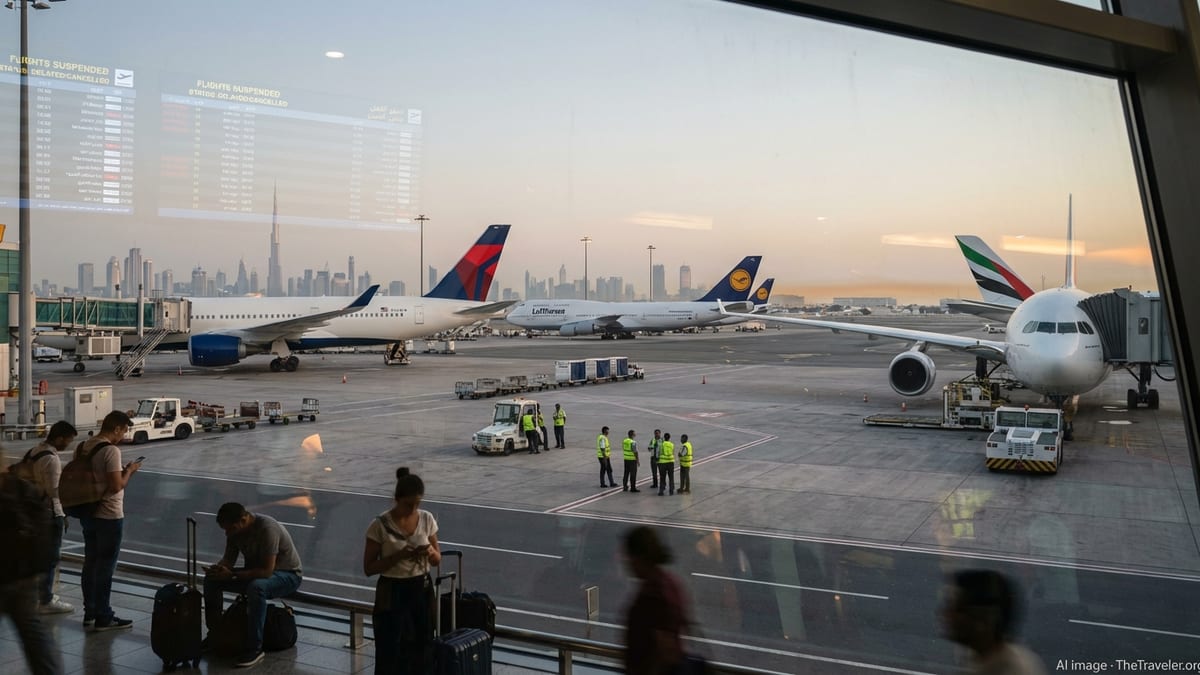
Disruptions Sweep China’s Core Aviation Hubs
Publicly available flight tracking dashboards and airport departure boards reviewed in recent days indicate that China’s main aviation gateways are enduring another intense wave of disruption, with large numbers of services arriving late and a cluster of flights grounded altogether. Across key carriers including Air China, China Eastern and Shenzhen Airlines, at least 60 flights have been recorded as canceled or grounded while close to 600 additional services have operated behind schedule, congesting terminals and constraining capacity on high demand domestic routes.
The brunt of the impact has been felt at the country’s four primary business and political hubs: Beijing, Shanghai, Guangzhou and Shenzhen. These cities sit at the center of China’s trunk route system, meaning that any breakdown in punctuality quickly spills beyond one airport or airline and begins to affect connections nationwide. As delays accumulate, aircraft and crew are pushed out of position, creating knock on effects that can last well into subsequent days of operations.
Recent disruption patterns mirror earlier episodes this spring, when several hundred cancellations and thousands of delays were logged across China’s main hubs in a single operating day. The latest figures, while somewhat smaller in scale, reinforce concerns that the domestic aviation system remains highly sensitive to localized weather, air traffic constraints and operational bottlenecks, particularly along the busy eastern seaboard.
Reports from Chinese and international travel media describe crowded departure halls, long queues at airline counters and extensive boards of delayed flights at major coastal airports. For travelers attempting to move between the country’s commercial centers, the practical impact has been prolonged waiting times, missed connections and last minute attempts to secure alternative seats on already busy services.
China Eastern, Air China and Shenzhen Airlines Under Pressure
China Eastern and Air China, two of the country’s largest network carriers, are at the center of the latest operational turbulence. Publicly available performance snapshots suggest that both airlines have experienced elevated rates of delayed departures and arrivals from their primary hubs in Beijing and Shanghai, with Shenzhen Airlines also facing rolling schedule knock backs on routes into and out of southern China.
China Eastern, which operates dense schedules from Shanghai Hongqiao and Shanghai Pudong to Beijing, Guangzhou and Shenzhen, has a long history of battling congestion related delays on these corridors. Aviation analytics and academic studies focusing on Shanghai have previously highlighted China Eastern and Air China among the carriers with significant average delay minutes at the city’s airports, reflecting structural congestion and limited runway capacity relative to demand.
Shenzhen Airlines, a Star Alliance member and a major subsidiary of Air China, is similarly exposed on heavily trafficked coastal routes linking Shenzhen and Guangzhou with Beijing and Shanghai. Data on its focus cities underscores how deeply embedded the airline is in the country’s busiest airspace, where even minor air traffic control measures or weather deviations can cascade into prolonged ground holds and arrival queues.
Although the precise mix of causes behind the latest wave of disruption varies by airport and day, publicly accessible weather bulletins and airspace advisories for eastern and southern China have pointed to intermittent storms, low cloud and visibility issues alongside ongoing air traffic management constraints. In such an environment, airlines with dense hub schedules and extensive domestic networks tend to see the most visible impact in passenger facing delay statistics.
Why Beijing, Shanghai, Guangzhou and Shenzhen Are So Vulnerable
China’s four primary aviation hubs form the backbone of the country’s domestic and international air transport system. Beijing and Shanghai handle a large proportion of political, corporate and international traffic, while Guangzhou and Shenzhen anchor the manufacturing and technology driven economy of the Pearl River Delta. The majority of trunk routes either begin, end or connect through these cities, which amplifies the impact of even modest operational disruptions.
Industry analyses and traveler accounts have long pointed to structural factors that make punctuality particularly difficult in this region. A significant portion of China’s airspace is reserved for military use, leaving relatively narrow corridors for commercial traffic. When storms or low visibility affect one sector, rerouting options can be limited, forcing air traffic controllers to meter departures and arrivals more tightly and triggering holding patterns that quickly translate into delays on the ground.
Compounding the issue, robust post pandemic demand has pushed passenger numbers back toward, and in some cases beyond, pre 2020 levels on key domestic routes such as Beijing Shanghai and Shenzhen Shanghai. Airlines have scheduled frequent departures to capture this demand, but runway and taxiway infrastructure at major airports has not expanded at the same pace, leaving little slack to absorb irregular operations. When delays begin to accumulate, aircraft quickly fall out of their planned rotations and crew duty time limitations can further restrict the ability to recover.
These structural pressures help explain why isolated incidents in recent weeks, ranging from localized storms to isolated aircraft handling issues on the ground in Shanghai, have led to outsized knock on delays for China Eastern, Air China and Shenzhen Airlines. Travelers often experience the result as a long day of queues and gate changes, even when conditions at their specific departure airport may appear calm.
How Passengers Are Coping and Rebooking Trips
For passengers already on the move, the most immediate challenge has been securing new itineraries when original flights are severely delayed or canceled. Publicly available guidance from travel advisory services and consumer advocates in China emphasizes the importance of checking real time flight status through airline apps, airport displays and independent flight tracking platforms, then proactively approaching the carrier’s official channels to request rebooking.
In practice, travelers affected by the latest disruptions have turned to a mix of tools, including airline mobile applications, Chinese super apps with integrated ticketing functions and staffed customer service counters in the terminal. On heavily constrained days, alternative flights on the same route may be sold out or significantly delayed as well, pushing some passengers to consider nearby secondary airports or alternative modes of transport such as high speed rail on corridors like Beijing Shanghai or Shanghai Guangzhou.
Reports from recent disruption days have highlighted long waits at service counters as airline staff work through backlogs of customers seeking new boarding passes, hotel vouchers or meal coupons. Some passengers have reported success obtaining overnight accommodation and meal support, particularly when they are rebooked onto next day departures, while others have indicated that assistance levels vary by carrier, route and specific circumstances surrounding the delay.
Travel planners recommend that passengers keep detailed records of any disruption including boarding passes, delay notifications, receipts for meals or accommodation and revised itineraries. These documents can later support claims for reimbursement under airline policies or, in some cases, applicable Chinese civil aviation regulations covering extended delays and cancellations. Even when cash compensation is limited, documented disruptions may help travelers secure refunds of unused segments or fee free changes to future bookings.
Practical Tips for Travelers Flying Through China’s Big Four Hubs
With operational volatility likely to persist at least in the short term, travelers with upcoming itineraries through Beijing, Shanghai, Guangzhou or Shenzhen may wish to build additional flexibility into their plans. Travel advisors frequently recommend scheduling longer connection windows at these hubs, particularly when linking domestic and international sectors on separate tickets, to reduce the risk of missed onward flights when delays develop.
Booking early departures on critical routes can also provide a buffer, as morning flights are often less affected by accumulated knock on delays from earlier in the day. Where possible, choosing nonstop services instead of itineraries with multiple domestic connections can limit exposure to compounding disruptions across several airports.
Travelers are also encouraged to familiarize themselves with the disruption policies of their chosen airline before departure. China Eastern, Air China and Shenzhen Airlines each publish rules covering involuntary changes due to schedule irregularities, including conditions for refunds, rebooking and accommodation support. Understanding these provisions in advance can help passengers frame their requests more effectively at the airport or via customer service channels when a delay or cancellation occurs.
Finally, pairing airline notifications with independent flight tracking tools and local weather information can offer a clearer picture of evolving conditions across China’s aviation network. While travelers cannot eliminate the risk of disruption in a system as complex and capacity constrained as China’s major hubs, informed preparation and flexible planning can significantly improve the chances of reaching their destinations with manageable inconvenience.