


More news on this day
Brazil’s tightly interconnected aviation network faced fresh disruption as more than 200 delays and over 40 cancellations were recorded across the country’s busiest hubs in São Paulo and Rio de Janeiro, unsettling schedules for major domestic and international carriers and complicating travel plans at the start of the busy Southern Hemisphere winter holiday period.
Get the latest news straight to your inbox!
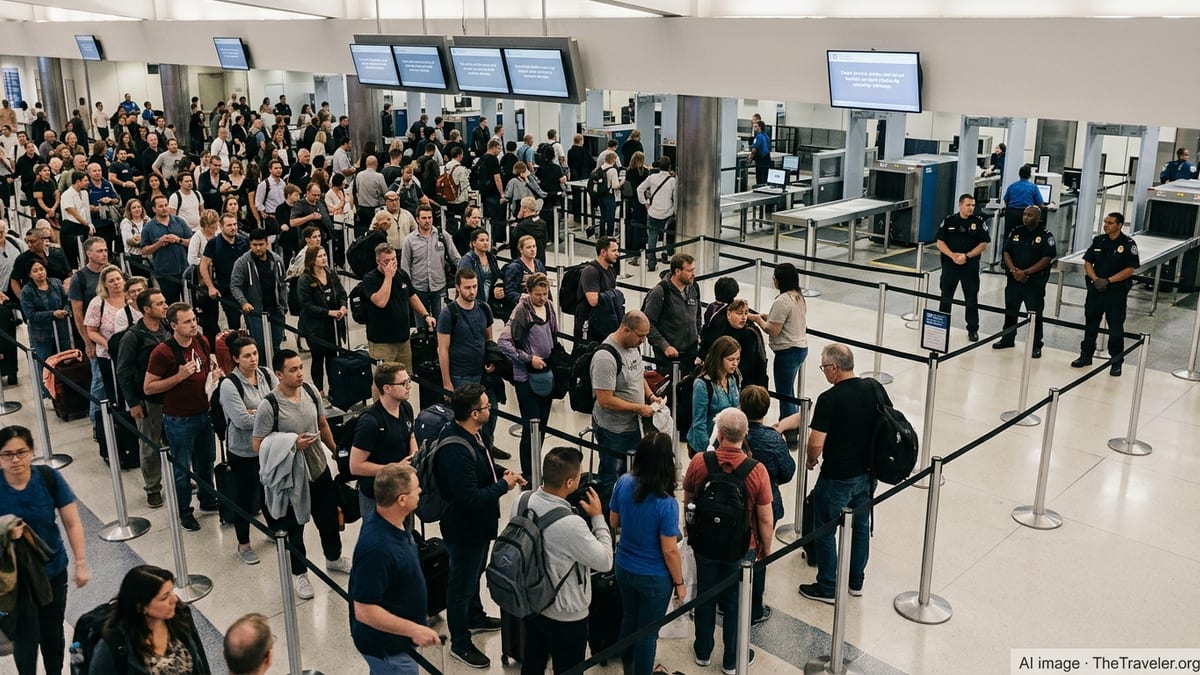
Disruptions Concentrated on São Paulo and Rio de Janeiro Corridors
Operational data compiled from airport-monitoring platforms and local media coverage indicate that the latest wave of disruption involved 204 delayed flights and 45 cancellations, with the majority clustered around the metropolitan hubs of São Paulo and Rio de Janeiro. The two regions jointly handle a substantial share of Brazil’s domestic and international air traffic, meaning even localized disruptions can quickly produce nationwide effects.
At São Paulo’s Guarulhos and Congonhas airports, delays on short-haul shuttle services to Rio de Janeiro created knock-on effects for onward connections across Brazil’s North and Northeast, as well as for long-haul departures to North America and Europe. In Rio de Janeiro, operations at Santos Dumont and Galeão saw a similar pattern, with early schedule slippages compounding into later cancellations as aircraft and crew rotations fell out of sequence.
The concentration of delays on the high-frequency São Paulo–Rio de Janeiro shuttle market was particularly significant. These routes form a core trunk of Brazil’s domestic network, feeding passengers into longer legs operated by LATAM, Gol and Azul. When those shuttle flights are disrupted, missed connections tend to ripple through the wider system, magnifying the headline totals of delayed and canceled services.
Publicly available information showed that many of the affected flights were short sectors of under one hour, yet the cumulative impact on aircraft availability, passenger connections and airport congestion was far greater than the individual stage lengths might suggest.
Major Carriers Face Cascading Operational Challenges
Brazil’s three largest airlines, LATAM Brasil, Gol Linhas Aéreas and Azul Linhas Aéreas, were among the most exposed to the latest operational turbulence, given their reliance on the São Paulo–Rio de Janeiro corridor and on the country’s main hubs. Network statistics published in recent weeks show that LATAM’s principal hub remains São Paulo–Guarulhos, Azul concentrates its operations at Campinas–Viracopos and Gol has been deepening its presence at Rio de Janeiro–Galeão, reinforcing the strategic weight of the two metropolitan areas for the country’s aviation system.
Industry analyses of recent irregular operations in Brazil describe a familiar pattern in which a relatively contained disruption in the morning, such as a batch of late arrivals or a temporary capacity restriction, cascades into widespread delays and cancellations by afternoon and evening. Airlines then face difficult decisions balancing recovery of schedules with crew duty limits, aircraft maintenance windows and airport slot constraints.
Recent corporate disclosures and regulatory bulletins have also underscored the structural pressures facing carriers. Caps on movements and passenger volumes at inner-city airports like Rio de Janeiro’s Santos Dumont, introduced to protect traffic at Galeão, limit the flexibility airlines have to re-time flights or add extra services when irregular operations occur. Similar capacity constraints at São Paulo’s airports have been the subject of academic and policy analysis, which link rising congestion to higher delay exposure.
The result, according to aviation specialists who monitor Brazil’s domestic market, is a system that operates close to its capacity limits on peak days, leaving airlines with little margin to absorb operational shocks. When weather, technical issues or airspace restrictions arise, the accumulated strain is most visible in the form of delayed and canceled flights at the main hubs.
Weather, Airspace Restrictions and Infrastructure Strain
While detailed attribution for each delay and cancellation is still being compiled, recent operational bulletins and air navigation notices highlight a mix of contributing factors that have affected flights to and from São Paulo and Rio de Janeiro this season. Short periods of low visibility, strong winds and winter weather have periodically reduced runway capacity at key airports, particularly at Santos Dumont and Congonhas, which have shorter runways and more restrictive approach paths than the main international fields.
In parallel, airspace notices for the Rio de Janeiro region have flagged temporary restricted areas linked to special events and security operations. Such restrictions can oblige airlines and air traffic control to reroute traffic flows, extend flight times or impose spacing that reduces the number of landings and departures per hour, adding to the risk of holding patterns and late arrivals during busy periods.
Infrastructure capacity is another important backdrop to the current pattern of disruptions. Studies on the São Paulo macrometropolitan airport system have pointed to physical constraints on expansion at Guarulhos and Congonhas, alongside the ongoing process of consolidating long-haul operations at Viracopos and Galeão. Until additional capacity or operational efficiencies are brought online, Brazil’s busiest corridors remain vulnerable to compounding delays whenever demand peaks.
Travel industry observers note that these structural issues mean that even modest surges in passenger numbers, such as those seen in school holidays or long weekends in July, can push airports and airlines closer to saturation, making widespread delays and cancellations more likely when any unplanned disruption occurs.
Passenger Impact and Advice for Travelers
The immediate impact of the latest 204 delays and 45 cancellations has been felt most acutely by passengers with tight connections or complex itineraries involving multiple domestic legs. Missed onward flights from São Paulo and Rio de Janeiro to secondary cities have forced many travelers to accept rebooking on later services or to reroute via alternative hubs, often extending total journey times by several hours.
Travel forums and consumer platforms have increasingly reflected concerns from visitors planning to combine multiple domestic flights in Brazil within short time windows. Recent discussions highlight apprehension about relying on same-day connections between São Paulo and Rio de Janeiro when an international long-haul flight is involved, given the increased likelihood of disruption on heavily used shuttle sectors.
Based on patterns observed in recent irregular operations, aviation analysts commonly recommend that travelers allow generous connection windows when transferring between domestic and international flights in Brazil’s main hubs. Where possible, itineraries that include overnight stays between legs, or that rely on a single through-ticket rather than separate bookings, may offer better protection when widespread delays occur.
Passengers are also encouraged, by consumer advocates and travel experts, to monitor flight status closely in the days and hours before departure, to keep airline apps and contact details updated, and to review their rights to assistance and rebooking in the event of significant delays or cancellations. Given the current strain on Brazil’s busiest airport pairs, a more cautious approach to scheduling can help reduce the risk of missed connections and extended disruption when operational pressures mount.
Network Resilience Under Scrutiny
The disruption affecting São Paulo and Rio de Janeiro once again highlights broader questions about the resilience of Brazil’s aviation network. Although the country’s airlines have rebuilt capacity after the pandemic and have invested in fleet modernization and digital tools, the underlying reliance on a small number of heavily trafficked hubs means that a localized shock can quickly become a national issue.
Policy debates in recent months have focused on how best to rebalance traffic between inner-city airports and larger international fields, as well as on the incentives required to attract more long-haul and connecting traffic to secondary hubs. Any future adjustments may influence how exposed travelers remain to disruption along the São Paulo–Rio de Janeiro axis.
For now, the latest tally of 204 delays and 45 cancellations serves as a reminder that Brazil’s main air corridors are operating near their practical limits during peak periods. For international visitors and domestic travelers alike, careful planning and realistic expectations about potential disruption are likely to remain essential parts of flying through São Paulo and Rio de Janeiro in the current environment.