


More news on this day
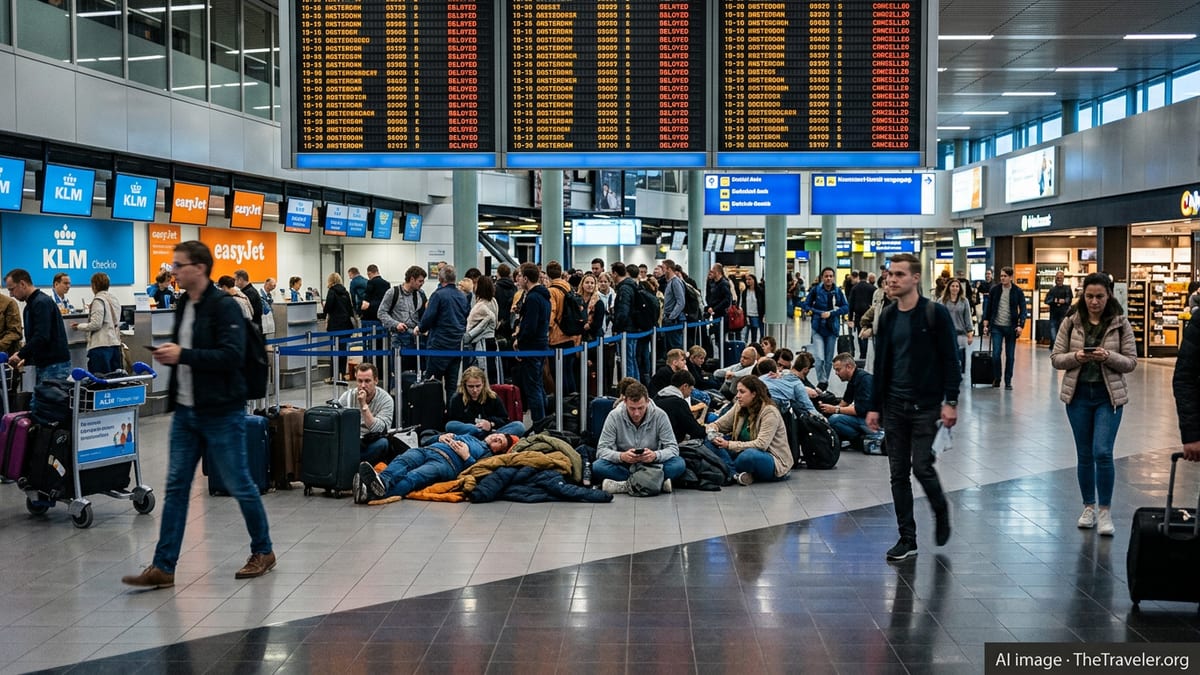
Ryanair is warning passengers of significant disruption at the height of the summer holidays, alerting travellers to long passport queues and delays at nine major European airports as new EU border checks continue to strain capacity.
Get the latest news straight to your inbox!
Nine airports highlighted as summer bottlenecks
According to information published by the airline and summarised in recent news coverage, Ryanair has identified a cluster of European airports where processing bottlenecks are already generating long lines and late departures. The carrier’s warnings focus on passport control queues it describes as lengthy and repetitive at several of its busiest leisure gateways.
Reports indicate that Ryanair has singled out airports including Tenerife South, Palma de Mallorca, Alicante, Malaga, Milan Bergamo, Krakow and Paris Beauvais, alongside two other high-volume leisure hubs, as particular trouble spots this summer. These locations handle large numbers of short-haul holiday flights, especially from the United Kingdom and Ireland, amplifying the impact of any slowdown at border control.
The warning comes just as school holidays begin in many key markets, pushing daily passenger numbers towards their annual peak. With flights heavily concentrated in morning and evening “waves,” even modest hold-ups at passport control can cascade into missed departure slots and aircraft departing behind schedule.
Publicly available information shows that Ryanair is urging customers travelling through these airports to factor in extra time for border checks, particularly on peak changeover days such as Fridays, Saturdays and Sundays, when arrival and departure banks are most intense.
New EU Entry/Exit System blamed for longer queues
The primary concern centres on the European Union’s new Entry/Exit System, a digital border control scheme that records the movements of non-EU nationals entering and leaving the Schengen area. The system requires additional biometric and identity checks for many passengers, particularly those from the United Kingdom, who are now treated as third-country nationals following Brexit.
According to published coverage, the rollout has been uneven, with some airports struggling to adapt staffing levels and infrastructure to the added processing demands. In practice, this has meant passengers being funnelled into fewer open booths, facing lengthier questioning, or needing multiple attempts at automated gates that are not yet operating smoothly.
Ryanair’s recent statements argue that the transition to the new regime has collided with the busiest travel period of the year, rather than being phased in during quieter months. The airline maintains that this timing has contributed to congestion in passport halls, with queues reportedly stretching for more than an hour at some airports during peak periods.
Industry observers note that the Entry/Exit System is intended to strengthen security and improve record-keeping in the long term, but acknowledge that early operational challenges are adding pressure to already crowded terminals during the summer surge.
Calls for temporary flexibility and government action
In its latest public communications, Ryanair has urged European governments to make greater use of flexibilities available within the border rules in order to ease the immediate strain. The airline is calling for a temporary extension of transition measures, arguing that this could help airports clear backlogs and stabilise operations while longer-term solutions are put in place.
Reports from European aviation and travel media indicate that Ryanair has repeatedly asked national authorities to delay or soften the implementation of full Entry/Exit requirements until after the school holiday peak. The airline contends that a short postponement would reduce the risk of serious disruption for families and tourists who booked trips months in advance.
Some governments and airport operators have responded by increasing staffing at border checkpoints, adding signage, or opening additional lanes at peak times. However, coverage suggests that these measures have delivered mixed results, with performance still varying significantly between airports and days of the week.
Industry analysts point out that air traffic control staffing issues in certain countries, alongside seasonal thunderstorms and other summer-weather disruptions, are compounding the impact of prolonged border checks, making it harder for airlines to recover schedules once delays build up.
What travellers can expect at affected airports
For passengers, the most visible consequence of the current situation is likely to be extended waits at passport control, particularly on arrival into busy holiday destinations. Travellers may also encounter congestion at security checkpoints and gate areas as queues spill over into adjacent parts of the terminal.
Published guidance from airlines and airports increasingly advises non-EU passengers to arrive significantly earlier than usual for departure, often three hours or more before their scheduled flight time. At some locations, carriers have adjusted check-in opening hours and urged customers to proceed directly to security and border control rather than lingering in landside retail areas.
Ryanair has indicated that, where long queues are linked to border procedures or airport management rather than airline operations, any resulting delays may not qualify for compensation under European air passenger rights rules. Travel experts note that this distinction can leave passengers frustrated, as they experience significant disruption without automatic entitlement to financial redress.
Nonetheless, consumer advocates recommend that travellers keep detailed records of delays, including photographs of queue conditions and screenshots from airline apps, in case there is later scope to seek reimbursement for out-of-pocket expenses or to make formal complaints to national enforcement bodies.
Advice for passengers flying this summer
Travel industry commentary suggests several practical steps for those planning to fly through the affected airports in the coming weeks. First, passengers are encouraged to check their airline’s latest guidance before travelling, as carriers continue to update advice on recommended arrival times and documentation requirements.
Second, travellers are being urged to allow additional buffer time not only for departure, but also for connections and onward ground transport on arrival. Longer-than-expected waits at passport control may affect train reservations, shuttle buses and pre-booked taxis, especially at busy resort airports where services are tightly scheduled around flight banks.
Third, some experts advise considering early-morning or late-evening departures where possible, as mid-day peaks tend to produce the longest queues. However, with demand high across the board during July and August, there is no guarantee that off-peak timings will avoid disruption entirely.
Finally, passengers are reminded to ensure that travel insurance is up to date and that policies explicitly cover delays and missed connections arising from airport or border-control issues. While such cover does not resolve the inconvenience, it can mitigate the financial impact if the current wave of delays and long queues continues across the rest of the summer season.