


More news on this day
Severe summer storms linked to the weather system known as Storm Pedro have caused widespread disruption across France’s main Mediterranean and Parisian air hubs, with 68 flights cancelled and 1,178 delayed across Paris, Nice, and Marseille in the peak of the July 2026 holiday season.
Get the latest news straight to your inbox!
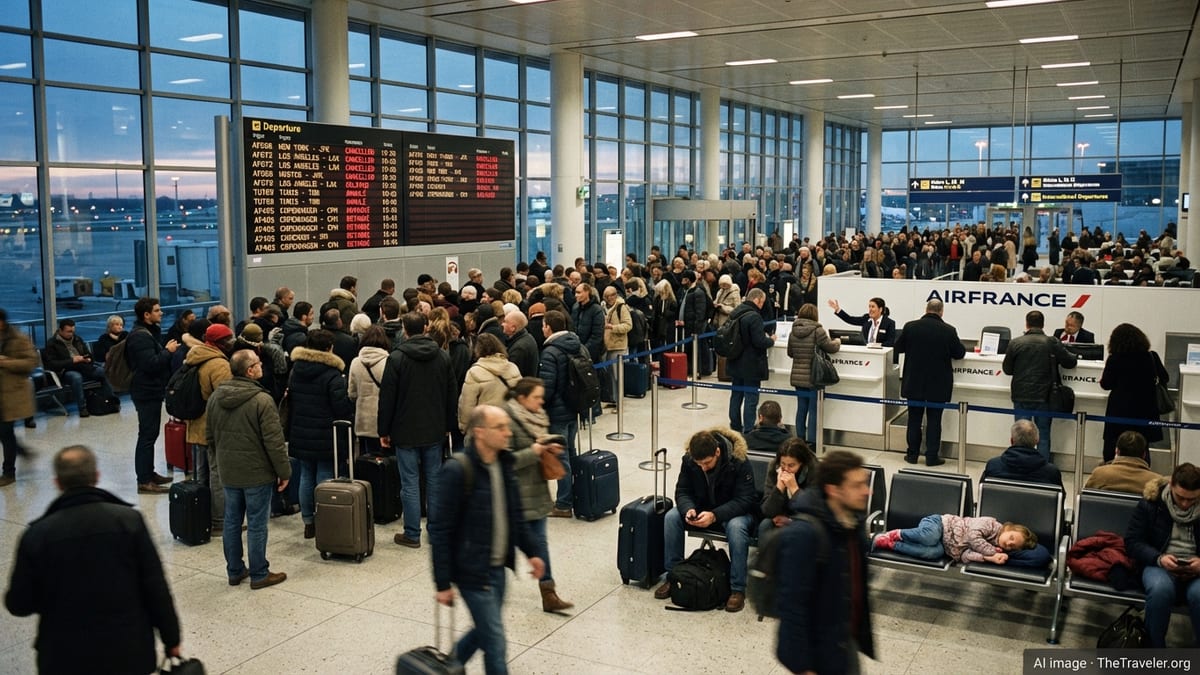
Storm Threats Collide With Peak Summer Traffic
The disruption unfolded as powerful storm cells swept across much of France in mid July, bringing intense rainfall, lightning and turbulent conditions on key approach paths into Paris Charles de Gaulle, Paris Orly, Nice Côte d’Azur and Marseille Provence airports. The timing coincided with one of the busiest outbound holiday weekends of the summer, when leisure demand on routes to and from the French capital and Mediterranean coast was already near capacity.
Operational data compiled from airport and flight tracking dashboards for the 24 hour window most affected in July show 68 outright cancellations and 1,178 delays across departures and arrivals touching the three main hubs. The heaviest concentration of disruption occurred on short haul European links and domestic corridors such as Paris to Nice and Paris to Marseille, where tight turnarounds left airlines little flexibility once the storm bands intensified.
Publicly available information indicates that air traffic managers responded by spacing aircraft more widely in the storm affected airspace and briefly suspending some arrival flows during the most active thunderstorm cells. Those measures, designed to preserve safety margins amid strong gusts and wind shear, had a knock on effect across schedules that continued well into the evening wave of flights.
The weather related disruption added to a season already marked by heat alerts and wildfire risks across parts of France, compounding pressure on transport infrastructure in both the Paris region and along the Mediterranean arc.
Paris Area Airports Cut Schedules as Storm Bands Intensify
Paris Orly, which handles a large share of France’s domestic and European leisure traffic, emerged as one of the focal points of the storm related disruption. According to published coverage on the evening of July 16, France’s civil aviation administration requested that carriers trim their Orly operations by around one fifth for several hours because of the increased risk of storms and associated turbulence in the terminal airspace.
At nearby Charles de Gaulle, Europe’s second busiest hub, the same storm system produced significant arrival and departure delays even though large scale cancellations were more limited. Airport monitoring platforms showed rolling delays on many evening flights as controllers sequenced aircraft through breaks between storm cells and temporarily held traffic on the ground until conditions stabilised along departure routes.
With both major Paris airports affected at the same time, knock on delays spread to regional links feeding Nice, Marseille and other French destinations. Travellers on late evening departures to the south reported extended waits on the tarmac as lightning and heavy rain periodically halted ramp operations, slowing boarding, refuelling and luggage handling.
The impact was felt across multiple airlines operating at Paris, including national and low cost carriers, as shared runways and airspace constraints limited the options to reroute or accelerate specific flights once the storm restrictions were in place.
Nice and Marseille Face Disruptions on Mediterranean Corridors
Along the Mediterranean coast, Nice Côte d’Azur and Marseille Provence airports experienced their own wave of storm related challenges as bands of unstable air moved inland from the sea. Flight tracking snapshots from the affected period show clusters of delayed arrivals from northern Europe and Paris, with several services diverted or held in holding patterns offshore while thunderstorm cells passed over the approach paths.
Nice, which had entered the summer with an expanded 2026 route network and higher seat capacity on key European markets, saw parts of that additional capacity constrained by weather across several peak travel hours. Operators that had planned rapid turnarounds on popular leisure routes were forced to extend ground times, contributing to a backlog of late evening departures and missed onward connections.
At Marseille, the combination of turbulent conditions and reduced approach rates similarly produced a series of rolling delays on domestic links, with some rotations between the city and Paris either cancelled outright or merged into later departures. The situation added complexity to operations at an airport that was already contending with broader regional weather concerns, including high temperatures and heightened wildfire vigilance across Provence and the Mediterranean hinterland.
Across both coastal hubs, local disruptions were amplified by upstream issues in Paris and other European gateways where crews, aircraft and inbound passengers were delayed by the same storm system.
Travellers See Long Queues, Missed Connections and Rebookings
For passengers, the 68 cancellations and more than one thousand delays translated into long queues at customer service desks, missed evening connections and, in some cases, overnight stays. Public posts from affected travellers described waits stretching into hours as carriers attempted to rebook disrupted itineraries on already crowded weekend services.
The imbalance between high summer demand and limited spare capacity meant that alternative seats were not always available on the same day, particularly on popular Paris to Mediterranean routes. Some travellers reported being reprotected on flights departing one or two days later, while others turned to high speed rail where seats remained open.
Airline information channels and airport departure boards showed that even flights that did ultimately operate often departed significantly behind schedule, leaving travellers in a limbo where services were neither clearly cancelled nor operating on time. That uncertainty complicated decisions about whether to seek refunds, rebook proactively, or wait at the gate for updated departure estimates.
Consumer advocates note that in the European Union, compensation rules for weather related disruptions differ from those covering technical or staffing issues, and travellers often have to distinguish between what counts as extraordinary circumstances and what falls within an airline’s control when pursuing claims.
Storm Pedro Highlights Climate and Infrastructure Pressures
The July storm disruption comes against a backdrop of recurring extreme weather episodes affecting French transport in recent years, including intense heatwaves, heavy rain events and strong windstorms during the cooler months. Climate analysis released by national meteorological services has pointed to a rising likelihood of both prolonged heat episodes and more intense convective storms in a warming atmosphere.
In the aviation sector, those patterns are increasing the operational complexity of managing hub schedules, particularly in peak leisure periods when margin for absorbing disruption is thin. Airports that simultaneously face heat related infrastructure stress, such as runway and ramp limitations, and sudden thunderstorm outbreaks must balance passenger throughput with shifting safety thresholds for storm proximity and turbulence risk.
For travellers planning trips through Paris, Nice or Marseille in the coming weeks, publicly available guidance from meteorological and transport agencies continues to emphasise close monitoring of forecasts and flight status updates, especially on busy Fridays and Sundays. Flexible itineraries, longer connection times and preparedness for last minute rebookings are likely to remain key considerations as airlines and airports navigate a summer shaped by both heat and storms.